

If you keep wondering, “why are my feet always cold”, it can be hard to know whether it’s simply chilly weather or something that needs attention. Cold feet can have everyday causes, but persistent or recurring symptoms may also be linked to circulation, health conditions or some medicines.
Cold feet alone don’t point to one diagnosis. This article explains common possible causes, what you can safely try for comfort, and which accompanying symptoms call for medical advice.
You’ll also learn when to contact your GP and how a podiatrist can assess foot health and identify concerns that may need referral. If you have diabetes, changes in foot sensation or circulation deserve particular attention. A diabetic foot assessment can help check your foot health. The aim is to help you choose a sensible next step without jumping to conclusions.
Key Takeaways
- Asking “why are my feet always cold” doesn’t point to one cause. The pattern and any other symptoms matter.
- Temperature, circulation, nerve sensation, health conditions and some medicines may all play a part, so avoid self-diagnosing.
- Notice changes such as unusual skin colour, numbness, pain, slow-healing sores or one foot feeling much colder than the other, and seek medical advice.
- For comfort, try warm, dry socks, comfortable footwear and gentle movement. Warm your feet gradually, especially if sensation is reduced.
- A GP can assess possible general health causes, while a podiatrist can check foot health and identify concerns that may need referral.
Why are my feet always cold? Start with the pattern
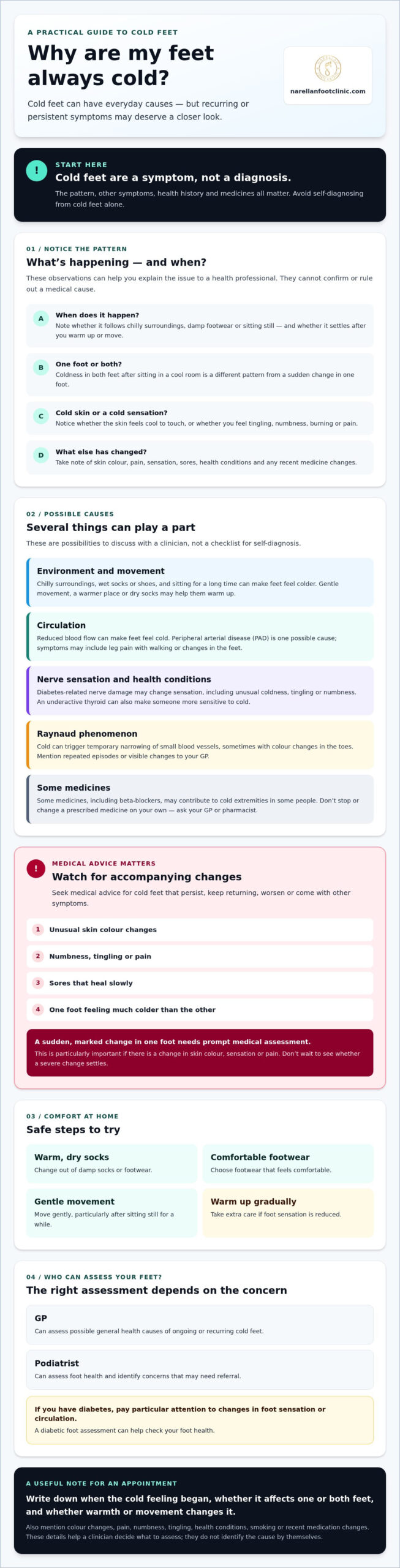
Cold feet can be an ordinary response to a chilly room, damp footwear or sitting still for a while. But if the feeling keeps returning, lasts after you’ve warmed up, or comes with other changes, it’s worth looking at the full picture. Asking “why are my feet always cold” doesn’t have one answer. Cold feet are a symptom, not a diagnosis, and the same sensation can have different causes.
Start by noting when it happens, whether it affects one or both feet, and what else you feel. For example, coldness in both feet after sitting in a cool room may follow a different pattern from a sudden change in one foot. These observations can help you describe the problem to a health professional, but they can’t rule a medical cause in or out.
When cold feet may reflect everyday conditions
Cold surroundings can cool your feet, while wet socks or shoes may make them feel colder still. Sitting for a long time also means less movement to warm your feet. Notice whether both feet feel similarly cold and whether they warm up when you move to a warmer place, change into dry socks or walk gently. Improvement can be reassuring, but it doesn’t prove there’s no underlying health issue.
Some people are also more sensitive to cold than others. A cold-triggered change in how your fingers or toes feel or look can occur with Raynaud’s phenomenon. If you notice repeated episodes or visible colour changes, mention them to your GP rather than assuming the cause.
Cold skin or a cold sensation: what’s the difference?
Your feet may feel cold even if they don’t feel particularly cold when you touch them. Pay attention to whether you’re noticing cool skin or a sensation such as tingling, numbness, burning or pain. These differences can help a clinician understand what’s happening. If the sensation is persistent, worsening or unexplained, arrange an assessment.
In brief: Occasional coldness that settles as you warm up may relate to your surroundings or activity. Coldness that persists, keeps returning, changes, or comes with other symptoms deserves medical advice.
Seek prompt medical assessment if one foot suddenly becomes much colder than the other, particularly if there’s a marked change in skin colour, sensation or pain. Don’t wait to see whether it settles if the change is severe. For ongoing or recurring symptoms, a GP can help assess possible general health causes. A podiatrist can assess foot health and identify concerns that may need onward referral.
What can cause feet to feel cold all the time?
There isn’t one explanation for persistently cold feet. The pattern, other symptoms, health history and medicines all matter, so the possibilities below aren’t a checklist for self-diagnosis. If you’re asking “why are my feet always cold”, an assessment can help distinguish a response to the environment from a circulation, nerve or other health concern.
Circulation, nerves, and health conditions
Blood carries warmth to the feet, so reduced blood flow can make them feel cold. Peripheral arterial disease (PAD) is one possible cause. Narrowed arteries can restrict blood flow, and symptoms may include leg pain with walking or changes in the feet. Raynaud phenomenon can cause small blood vessels to narrow temporarily, often in response to cold, sometimes alongside colour changes in the toes.
Nerves also affect how temperature is sensed. Diabetes-related nerve damage may change sensation, so a person might feel unusual coldness, tingling or numbness even if the skin isn’t particularly cold to touch. An underactive thyroid can also make someone more sensitive to cold. These are possibilities, not conclusions based on cold feet alone. Healthdirect Australia’s information on PAD, Raynaud phenomenon, diabetes and thyroid conditions can help explain why circulation, nerve signals and hormone levels may each be relevant.
Medicines and other factors worth mentioning
Some medicines, including beta-blockers, may contribute to cold extremities in some people. Don’t stop or change a prescribed medicine on your own. Ask your GP or pharmacist whether it could be playing a part and what to do next.
Before an appointment, note when the cold feeling began, whether it affects one or both feet, and whether it changes with warmth or movement. Also mention any colour changes, pain, numbness, tingling, health conditions, smoking or recent medication changes. These details help a clinician decide what to assess. They don’t identify the cause by themselves.
In short: Persistent coldness can have several different causes, including environmental exposure, reduced circulation, altered nerve sensation, Raynaud phenomenon, PAD, diabetes-related neuropathy, an underactive thyroid or some medicines. Healthdirect Australia’s guidance on these conditions offers useful background, but a health professional can assess how your symptoms fit together.
If you have diabetes or changes in foot sensation, a podiatrist can assess foot health and identify concerns that may need referral to a GP. Narellan Foot Clinic offers diabetic foot assessments. A GP is also an appropriate starting point if you’re concerned about a general health cause.
When cold feet may signal a problem that needs medical attention
Cold feet on their own don’t establish that you have a serious condition. The pattern and any changes alongside the coldness are more useful guides to what to do next. If you’re wondering “why are my feet always cold”, arrange a GP appointment if the feeling is persistent, worsening or unexplained, or if it comes with ongoing changes in sensation, pain or skin condition.
Symptoms to discuss with a GP
Book a routine appointment for recurring coldness with numbness or tingling, leg discomfort, a change in skin colour, or a sore that isn’t healing as expected. Mention whether one or both feet are affected, when the symptoms began, and whether they’re getting worse. Your GP can consider your health conditions, medicines and smoking history, then decide whether examination, tests or referral are appropriate.
Don’t try to diagnose a circulation problem by comparing foot temperature or colour with online descriptions. These signs can have different explanations, and a clinician needs to assess them in context. If you have diabetes, tell your GP about any change in foot sensation or skin, even if it seems mild.
When to seek urgent help in Australia
Sudden, severe symptoms affecting one foot need urgent medical assessment, particularly if the foot becomes markedly cold or pale, or sensation changes suddenly. Don’t wait for a routine appointment or delay care to see whether it settles. Go to an emergency department. Call Triple Zero (000) if you believe it’s an emergency or can’t get there safely.
Healthdirect Australia advises calling 000 for an emergency. By contrast, long-standing mild coldness without sudden changes is usually a reason to arrange a GP discussion rather than assume an emergency. Seek prompt medical advice for a new or worsening wound, persistent pain or a noticeable colour change, even if the change isn’t severe.
Use the change in symptoms to guide your next step: ongoing or unexplained symptoms warrant a GP appointment. Sudden, severe one-sided pain, colour change or loss of sensation needs urgent assessment. These signs don’t confirm a particular diagnosis, but they shouldn’t be ignored.
What can you safely do about cold feet at home?
If you’re wondering “why are my feet always cold”, simple steps may help you feel more comfortable while you work out what’s going on. They can’t identify or treat an underlying cause, so don’t use temporary relief as a reason to ignore symptoms that persist or change.
Simple ways to keep feet comfortable
Try a few gentle measures, and notice whether they help:
- Change damp socks and put on warm, dry ones.
- Choose comfortable footwear that fits well and keeps your feet warm without feeling tight.
- If it’s safe for you, get up and move gently after sitting for a while.
- Warm your feet gradually in a comfortable room or with dry layers.
Avoid placing numb or less-sensitive feet directly against a heater, hot water bottle or heat pack. Reduced sensation can make it harder to notice excessive heat. Check bath water carefully before stepping in, and stop if warming causes pain, discomfort or a change in your skin. If you have diabetes or reduced sensation, ask a health professional for advice suited to your situation.
There’s no need to rely on supplements, vigorous massage or a particular exercise to solve the problem. Comfort measures may ease the feeling of cold, but they don’t show whether circulation, nerve sensation or another health factor is involved.
Track symptoms before an appointment
A brief note on your phone can help you describe the pattern clearly. Record when the cold feeling starts, how long it lasts, whether it affects one or both feet, possible triggers, and what seems to improve it. Include any pain, tingling, numbness, skin colour changes or sores that are slow to heal.
These details can guide a conversation with a clinician, but they aren’t a way to diagnose the cause yourself. If symptoms persist, worsen or remain unexplained, arrange professional advice. People with diabetes or reduced foot sensation should seek tailored guidance rather than relying on home care alone.
For broader foot-health information, read about professional general foot care. If you’d like to discuss ongoing foot concerns with the clinic, contact Narellan Foot Clinic.
Who should assess persistently cold feet in Narellan?
If you’re still asking “why are my feet always cold”, the right person to start with depends partly on what else is happening. A GP is a sensible first contact if the symptoms are persistent, unexplained or may relate to your general health. A podiatrist can assess foot-specific concerns, but a podiatry appointment doesn’t replace medical assessment for possible general health causes or urgent symptoms.
GP or podiatrist: where to start
Your GP can consider broader health factors, review relevant medicines and decide whether further tests or referral are appropriate. This is particularly useful if cold feet occur alongside changes in sensation, pain, other health concerns or symptoms affecting more than your feet.
A podiatrist focuses on foot health. They can examine your feet, discuss changes you’ve noticed and identify concerns that may need follow-up with your GP or another clinician. If symptoms are sudden and severe, seek urgent medical care rather than waiting for a routine podiatry appointment.
How a podiatry assessment can support foot health
During an assessment, a podiatrist may ask about your symptoms, foot history and health conditions, and check aspects of foot appearance and sensation. This can help clarify foot-related concerns and whether another clinician should be involved. A podiatrist can’t diagnose every general health cause of cold feet, so your GP may still need to assess possible underlying conditions.
For people with diabetes, changes in foot sensation or circulation are relevant to ongoing foot-health monitoring. Narellan Foot Clinic offers diabetic foot assessments, which focus on foot health rather than diagnosing the cause of coldness. You can read the diabetic foot assessment guide to understand what this type of assessment involves.
If cold feet persist or you have a foot-health concern you’d like assessed, consider arranging a foot health assessment with Narellan Foot Clinic. The clinic is based in Narellan and is relevant to people across NSW, including Sydney, Blacktown, Campbelltown, Windsor and Penrith. A clinician can help determine what your feet may need and whether further medical advice is appropriate.
Take a clear next step for your foot health
If you’re still asking “why are my feet always cold”, remember that cold feet are a symptom, not a diagnosis. Everyday factors may contribute, but recurring or unexplained coldness deserves attention in context. Notice whether it affects one or both feet and whether you also have pain, numbness, colour changes or a sore that’s slow to heal.
Warm, dry socks, comfortable footwear and gentle movement may help you feel more comfortable, but they can’t identify an underlying cause. Speak with your GP about persistent or worsening symptoms, or seek urgent care for sudden, severe changes. A podiatrist can assess foot health and flag concerns that may need follow-up with another clinician.
Narellan Foot Clinic has served the Narellan community for more than 25 years and offers general foot care and diabetic foot assessments. If you have an ongoing foot-health concern, arrange a foot health assessment with Narellan Foot Clinic. The clinic is a local option for people in NSW, including Sydney, Blacktown, Campbelltown, Windsor and Penrith. Take the next step by booking an assessment for your foot-health concern.
Frequently Asked Questions
Why are my feet always cold even when the rest of me feels warm?
Your feet can feel cold even when you’re comfortable elsewhere because of local conditions, circulation, or differences in how your nerves sense temperature. Damp socks, tight footwear or sitting still may contribute, while some health conditions or medicines can also play a part. If you’re asking why are my feet always cold, note whether both feet are affected, how long it lasts and whether you notice numbness, pain or colour changes.
Can poor circulation make your feet feel cold?
Yes, reduced blood flow can make feet feel cold, but coldness alone doesn’t prove you have a circulation problem. Peripheral arterial disease is one possible cause and may also involve leg discomfort during activity or changes in the feet. A GP can assess your symptoms and health history, then decide whether further checks or referral are needed. Don’t try to diagnose circulation problems from foot temperature or colour alone.
Can diabetes cause cold feet?
Diabetes can affect nerves and blood vessels, which may change foot sensation or circulation. Some people experience numbness, tingling or an unusual cold feeling, but cold feet by themselves don’t confirm diabetes-related complications. If you have diabetes and notice a change in sensation, skin or foot temperature, discuss it with your GP or podiatrist. Regular foot-health monitoring, including a diabetic foot assessment, can help check for changes that need attention.
When should I worry about cold feet?
Arrange a GP appointment if cold feet persist, worsen or occur with ongoing numbness, pain, colour changes or a sore that’s slow to heal. Sudden, severe changes affecting one foot, especially marked coldness, colour change, pain or loss of sensation, need urgent assessment. Call Triple Zero (000) if you believe it’s an emergency or can’t get to care safely. Mild, long-standing coldness without sudden changes is usually suited to a GP discussion.
How can I warm up cold feet safely?
Change damp socks for warm, dry ones, wear comfortable footwear and try gentle movement if it’s safe for you. Warm your feet gradually rather than using direct heat. If you have numbness or reduced sensation, check bath water carefully and avoid putting your feet against heaters or hot water bottles, as you may not notice a burn. These steps may ease discomfort, but they won’t identify an underlying cause.
Should I see a podiatrist for cold feet?
A podiatrist can assess foot health, skin and sensation, and identify concerns that may need follow-up with a GP. A GP is a suitable starting point if you’re worried about a broader health cause. Podiatry doesn’t replace that medical assessment. Narellan Foot Clinic offers general foot care and diabetic foot assessments. It serves the Narellan community, with local relevance for people in NSW, Sydney, Blacktown, Campbelltown, Windsor and Penrith.
Can cold feet be a sign of nerve damage?
Yes, altered nerve signals can sometimes make feet feel cold, even if the skin doesn’t feel cold to touch. Nerve changes may also cause numbness, tingling, burning or reduced ability to sense temperature. Diabetes is one possible cause, but these symptoms can have other explanations too. If altered sensation is persistent, worsening or unexplained, speak with a GP. If you have diabetes, seek advice about changes in foot sensation.