

A good podiatrist doesn’t jump straight to a quick fix. They first listen, assess what may be contributing to your concern and explain the options. If you’re wondering how to choose a good podiatrist, look for someone who is properly registered, has experience relevant to your needs and makes it easy to understand what happens next.
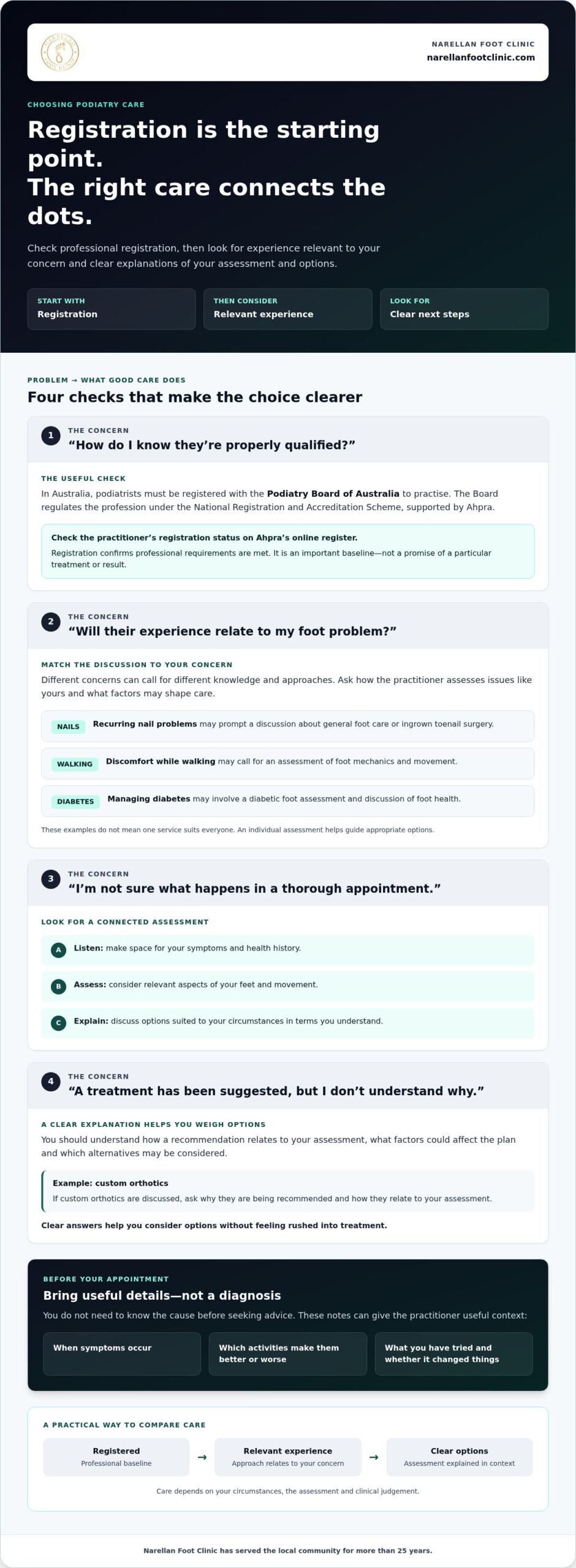
In Australia, podiatrists are regulated by the Podiatry Board of Australia and must be registered to practise. Registration is an important starting point, but a thorough consultation should also make space for your symptoms and health history, assess relevant aspects of your feet and movement, and explain options suited to your circumstances.
This guide covers what to look for in podiatry care, what a thorough appointment may involve and how to compare practical details such as access and follow-up. Narellan Foot Clinic has served the local community for more than 25 years, providing assessments and treatments for a range of foot concerns. Knowing what good care looks like can help you take a practical next step.
Key Takeaways
- When considering how to choose a good podiatrist, check registration first, then consider experience relevant to your foot concern.
- Look for care that connects your symptoms and health history with an assessment and clearly explained options.
- Compare practical factors such as location, booking convenience, communication and follow-up.
- An assessment can help clarify which approach may suit your situation, from general foot care to more specific treatment.
- Narellan Foot Clinic has served the local community for over 25 years and provides a range of podiatry assessments and treatments.
What makes a good podiatrist, and when might you need one?
Persistent foot discomfort can make everyday activities harder, and uncertainty about the cause can make it difficult to know where to start. A podiatrist is a registered health practitioner who specialises in foot and lower-limb health. Understanding what podiatry covers can help you decide whether an appointment fits your concern.
Podiatry involves assessing and caring for conditions affecting the feet and lower limbs, with the aim of supporting comfort, function and mobility. Care can cover skin and nail concerns, foot mechanics and movement, and foot health for people managing diabetes. For a general overview of the profession, see What is Podiatry?
There isn’t one approach for every concern. How to choose a good podiatrist depends partly on whether their experience relates to your needs and whether they listen, explain their assessment and discuss options in terms you understand. You should feel comfortable describing what’s troubling you and asking questions about the next steps.
Which foot and lower-limb concerns can a podiatrist assess?
People may seek an assessment for heel pain, recurring nail problems, changes to the skin on their feet or discomfort that affects walking or exercise. Podiatrists can also provide foot assessments for people managing diabetes. These concerns don’t point to one cause or standard treatment. An assessment helps clarify what may be contributing and which care options are appropriate for your circumstances.
Before an appointment, note when symptoms occur, what activities make them better or worse and whether anything you’ve tried has changed them. These details give the practitioner useful context. A concern that seems minor, such as a persistent patch of hard skin, may still be worth discussing if it hurts or keeps returning.
When is it worth booking a podiatry appointment?
Consider arranging an assessment if discomfort persists, keeps returning or limits your usual activities. It may also be worth booking if a nail or skin concern is worsening, or a change in the way you walk is affecting your comfort. You don’t need to know the cause before seeking advice. Describing what you’ve noticed is a practical first step.
For people managing diabetes, preventive foot checks can be part of looking after foot health, even when there isn’t an obvious problem. A podiatrist can assess relevant aspects of foot health and explain findings and care options in context. If a concern is getting worse, arrange an assessment promptly rather than waiting for it to interfere further with daily life.
Before booking, identify your main priority: easing discomfort, understanding a recurring problem or keeping on top of foot health. This makes it easier to explain what you need and consider whether the practitioner’s experience and communication style are a suitable fit.
How to assess a podiatrist’s qualifications and relevant experience
Credentials help establish whether a practitioner meets professional standards, but they don’t tell you by themselves whether their care suits your concern. When deciding how to choose a good podiatrist, consider both registration and how clearly the practitioner can explain their approach to your needs.
What does podiatry registration tell you?
In Australia, podiatrists must be registered with the Podiatry Board of Australia to practise. The Board regulates the profession under the National Registration and Accreditation Scheme, supported by the Australian Health Practitioner Regulation Agency (Ahpra). You can check a practitioner’s registration status on Ahpra’s online register.
Registration and relevant clinical experience serve different purposes: registration confirms a practitioner meets professional requirements, while experience indicates how familiar they may be with concerns like yours. Registration is an important baseline, not a promise of a particular treatment or result. Care depends on your circumstances, the assessment and clinical judgement.
When checking credentials, use Australian registration information rather than assuming that qualifications or licensing terms used overseas apply here. The Podiatry Board of Australia and Ahpra provide the relevant framework for understanding registration in Australia. If you’re unsure what a registration detail means, ask the practitioner to explain it in plain language.
Why should experience match your foot concern?
Different concerns call for different knowledge and approaches. Someone with recurring nail problems may need to discuss general foot care or ingrown toenail surgery. A person with discomfort during walking may benefit from an assessment of foot mechanics, while someone managing diabetes may need a diabetic foot assessment. These examples don’t mean a particular service will suit everyone. An individual assessment helps guide appropriate options.
Consider whether the practitioner can describe how they assess concerns like yours, what factors could affect the plan and which alternatives may be considered. If custom orthotics are discussed, for example, you should understand why they’re being recommended and how they relate to your assessment. Clear answers help you weigh options without feeling rushed into treatment.
Narellan Foot Clinic has served the local community for more than 25 years. Its services include biomechanical assessments, custom orthotics, ingrown toenail surgery, fungal nail laser treatment, diabetic foot assessments, dry needling and general foot care. This range can support different aspects of foot health, while your assessment remains central to deciding what is suitable.
What should you listen for?
A helpful consultation makes room for your questions. Notice whether the practitioner explains findings in plain language, relates recommendations to your concern and describes what proposed care involves. You can ask what the assessment is intended to clarify, which options may be appropriate and how progress might be reviewed. If you’re looking for podiatry care in Narellan, these are practical points to consider.
What a thorough podiatry consultation should explain
A useful consultation should leave you with a clearer understanding of what may be affecting your feet and what the next steps could involve. It should go beyond a list of tests or a treatment recommendation. The podiatrist should connect what you’ve told them with their assessment, explain their reasoning and give you room to ask questions.
Think of the process in four parts: discuss your concerns, assess relevant factors, explain the findings and talk through suitable options. The order and depth of assessment will vary. Your symptoms, health history and clinical judgement help determine what needs to be examined, so the consultation should respond to you rather than follow a rigid checklist.
How should a podiatrist understand your needs?
The conversation should start with your experience. Describe where discomfort occurs, when it started, what brings it on and how it affects activities such as walking, work or sport. The podiatrist may also ask about your health history, relevant medical conditions, previous injuries and care you’ve tried.
Other details may matter depending on your concern. Footwear, movement or changes in activity may be relevant to some assessments, while medical factors may be more important in others. You don’t need to arrive with a diagnosis. Sharing what you’ve noticed helps the practitioner decide which parts of the assessment are appropriate and what further information may be useful.
A careful assessment is individualised. Someone reporting pain during movement may need different factors considered from someone seeking advice about a nail concern. This professional guide to biomechanical assessment explains how examining foot mechanics may contribute to understanding certain concerns. The assessment method should suit the person and their symptoms.
How should findings and treatment options be communicated?
After the assessment, the podiatrist should explain what they found in plain language and how those findings relate to your concern. If a clinical term is unfamiliar, ask what it means. You should have the opportunity to clarify anything that isn’t clear before deciding how to proceed.
The practitioner should explain the purpose of the options discussed, the practical steps involved and any relevant considerations. Depending on the assessment, these might include general foot care, further assessment or a specific treatment approach. A recommendation should make sense in the context of your symptoms and health history, rather than being presented as a standard solution for everyone.
Informed consent means understanding what is proposed and having a chance to agree before it goes ahead. You can ask about alternatives, what the treatment involves and what follow-up may look like. How to choose a good podiatrist also means noticing whether your questions are welcomed and answered without pressure.
Progress and follow-up depend on the concern and the plan. A good consultation won’t promise a particular result. It should explain what changes to monitor, when a review may be useful and what to do if your symptoms change. This gives you a clearer basis for decisions about your care.
Choosing a podiatrist in Narellan: compare care, access and follow-up
Choosing local podiatry care involves more than scanning star ratings. Reviews may offer a glimpse of other patients’ experiences, but they can’t tell you whether a practitioner’s approach suits your needs, appointments fit your routine or follow-up is clearly explained. Consider practical details alongside communication and whether the available care relates to your concern.
A simple comparison can help you organise what matters to you. Use it to clarify your priorities, not to rank clinics or assume one option suits everyone.
| Your priority | What to consider |
|---|---|
| Relevant care | Does the practice provide assessments or treatments related to your concern? |
| Clear communication | Are findings and proposed next steps explained in terms you understand? |
| Access | Are the location and booking options practical for your routine? |
| Continuity | Is it clear how reviews or ongoing care may fit into the plan? |
| Costs and claims | Can you get clear information about fees and any relevant claim process? |
Which practical details can make care easier to access?
Consider the journey to the clinic, the booking process and whether appointment arrangements work around your regular commitments. Convenient booking options can make it easier to arrange care. This matters if your concern needs review or ongoing management, as an accessible plan is easier to follow. For people in Narellan and surrounding areas, including Sydney, Blacktown, Campbelltown, Windsor and Penrith, local access can help make foot care part of a regular routine.
Continuity can also be useful. If you need a review, returning to a practice where your concern and previous assessment are understood can help keep conversations focused. Before proceeding, make sure you understand the follow-up plan, including what may prompt another appointment.
How can you understand fees and possible claims?
Before care proceeds, make sure you understand the consultation or treatment fees and what they cover. If a recommendation changes after assessment, clear information about any associated costs helps you make an informed decision. Don’t assume a particular claim or rebate will apply to every appointment or person.
Narellan Foot Clinic facilitates on-the-spot health fund claims through HICAPS and Medicare. Claiming depends on the relevant requirements and your circumstances, so this isn’t a promise of eligibility or a rebate. Understand the fee and claim process before proceeding.
When weighing up how to choose a good podiatrist in Narellan, consider how well the care fits your concern, as well as access, communication and follow-up. Arrange podiatry care in Narellan to take a practical next step.
Why patients choose Narellan Foot Clinic for podiatry care
Choosing a podiatrist means finding care that relates to your concern and is explained clearly enough for you to make informed decisions. Narellan Foot Clinic has served the local community for over 25 years, providing a local option for a range of foot-care needs. The clinic’s approach centres on individual assessment rather than assuming one treatment suits everyone.
The clinic provides care in a fully sterilised environment. Your appointment can begin with a straightforward conversation about what you’ve noticed, how it affects you and what you hope to understand or address. The practitioner can then assess your needs and discuss options in context, including why a particular approach may be considered.
What podiatry services are available at the clinic?
The clinic provides biomechanical assessments, custom orthotics and general foot care. It also provides ingrown toenail surgery, fungal nail laser treatment, diabetic foot assessments and dry needling. These services address different needs, but no treatment is automatically right for every person. The practitioner’s assessment and discussion with you help determine suitable care for your circumstances.
If custom orthotics are being considered, understanding their role can help you take part in the discussion. The custom orthotics buyer’s guide offers further information for people exploring that option. Bring your questions to an appointment, including how an assessment informs recommendations and what the proposed care involves.
How can you take the next step with confidence?
You don’t need to arrive with a diagnosis or treatment plan. Start by describing your concern, when you notice it and which activities it affects. Explain your goals too, whether you want to understand recurring discomfort, care for your feet or explore a specific treatment. This gives the practitioner useful context and helps shape a relevant discussion.
Convenient booking options can make arranging an appointment more straightforward, particularly if you expect to need ongoing care or a review. Narellan Foot Clinic provides local podiatry care, with your assessment guiding what may suit you. Take a considered next step and explore podiatry care at Narellan Foot Clinic.
Take a comfortable next step towards foot care
You don’t need to have all the answers before seeking help. Start with the change you’ve noticed, what you’d like to get back to doing and any questions you want addressed. A conversation grounded in your priorities can make the next step more manageable.
At Narellan Foot Clinic, principal podiatrist David J. Miller independently owns and operates the practice. If you’re still considering how to choose a good podiatrist, focus on finding care where your concerns are heard and explanations help you make informed choices.
When you’re ready, book podiatry care at Narellan Foot Clinic. Start by sharing your concerns and questions so your assessment can focus on what matters to you.
Frequently Asked Questions
Is a podiatrist a registered health professional?
Yes. In Australia, podiatrists are registered health practitioners. The Podiatry Board of Australia regulates the profession, and Ahpra administers the national registration system. Registration is a useful starting point, but it can’t tell you whether a particular assessment or treatment suits your needs. Check a practitioner’s registration on Ahpra’s online register, then explain your concern and ask how the proposed approach relates to it.
Do I need a referral to see a podiatrist in Australia?
Many people can book a private podiatry appointment directly, without a referral. However, referral and payment arrangements depend on the service and your circumstances. Some Medicare-supported care may require a GP referral and an eligible care plan, so don’t assume a rebate applies to every appointment. Narellan Foot Clinic facilitates on-the-spot claims through HICAPS and Medicare. Check your eligibility and any relevant requirements before relying on a rebate.
Can a podiatrist help with pain that affects my walking?
Yes. A podiatrist can assess foot and lower-limb concerns that make walking uncomfortable and discuss care options based on the findings. Note whether pain appears during your first steps of the day, after a long walk or during a particular activity. Persistent or worsening symptoms are worth having assessed. The cause and appropriate next steps vary, so an individual assessment is needed before drawing conclusions.
What should I bring to my first podiatry appointment?
Bring a clear account of when the concern began, what seems to affect it and any relevant health information. If footwear or movement may be part of the issue, shoes you regularly wear can provide useful context. Previous test results or details of care you’ve tried may also help, if you have them. You don’t need to prepare a diagnosis. The podiatrist can guide the discussion and decide what information is relevant.
How do I know whether a podiatrist understands my specific foot problem?
Notice whether the practitioner asks how your concern affects daily activities and explains how their findings relate to it. You should be able to ask why an option is being considered and understand the answer before deciding what to do. If you’re comparing care around Narellan or elsewhere across Sydney, including Blacktown, Campbelltown, Windsor and Penrith, consider how well the proposed approach addresses your needs, not just general reviews.
Can I claim a health fund rebate for podiatry?
Private health fund benefits depend on your policy, remaining limits and the specific service. Narellan Foot Clinic facilitates on-the-spot health fund claims through HICAPS, which can make claiming more convenient. This doesn’t mean every service is covered or that a rebate is guaranteed. If you need to understand likely out-of-pocket costs, review your policy details and benefit eligibility before your appointment.
How often should I see a podiatrist?
There’s no single appointment schedule that suits everyone. How often you need care depends on the concern, your health needs and any review plan discussed with the podiatrist. Someone attending about a new issue may need a different follow-up approach from someone managing an ongoing foot-care need. Follow the advice for your circumstances, and arrange reassessment if symptoms change, return or worsen.