
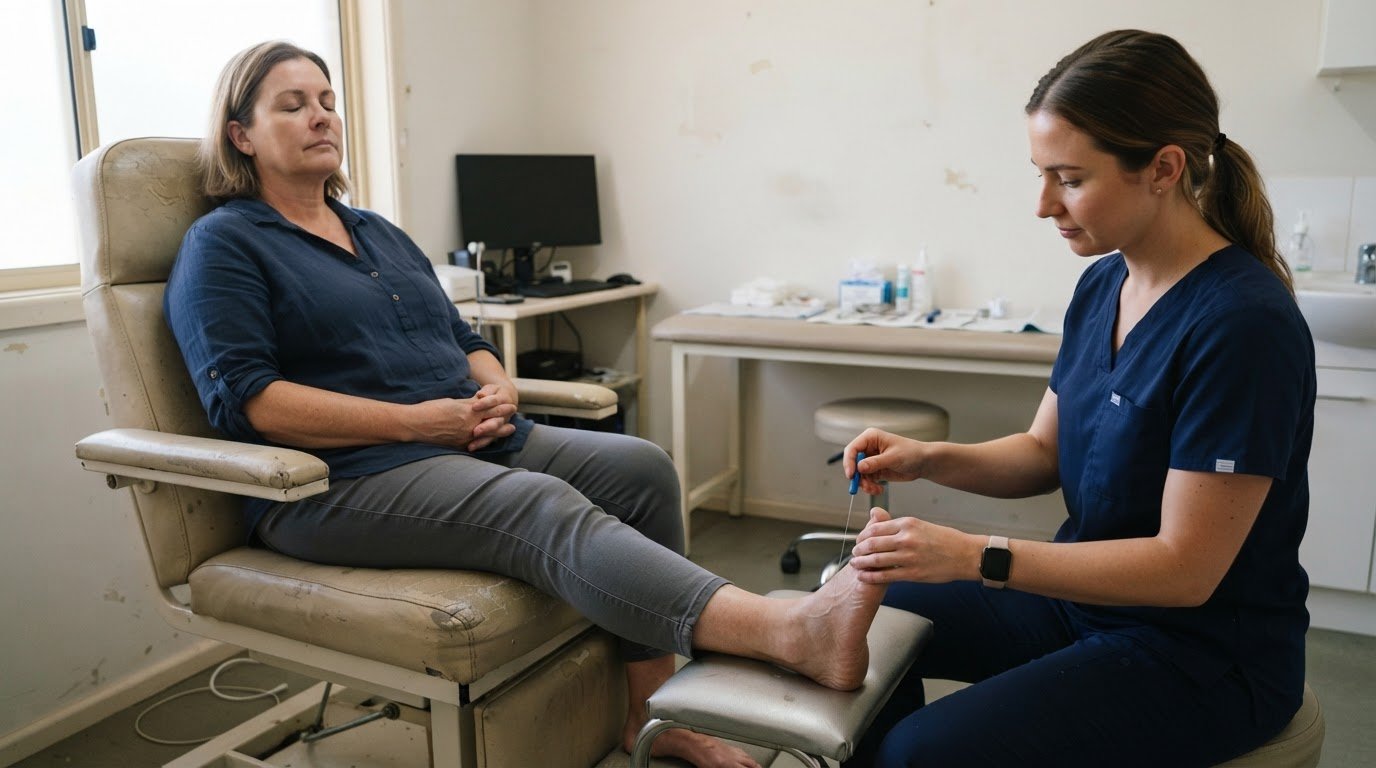
Burning feet at night can have several causes. Peripheral neuropathy, or damage to nerves outside the brain and spinal cord, is one possibility. Others include nerve compression, skin conditions such as athlete’s foot, medication effects, and pressure or irritation from footwear. Symptoms may feel more intense at night, but timing alone cannot identify the cause.
If heat, tingling or prickling keeps you awake, it’s understandable to wonder whether a nerve problem is involved. The sensation may be steady or come with pins and needles or numbness, and different causes can feel alike.
This guide explains what burning feet syndrome means, why symptoms may worsen at night, and how neuropathy differs from restless legs, circulation changes and skin irritation. It also covers signs that make professional assessment important, so you can better understand possible causes and what to do next.
Key Takeaways
- Burning, tingling or numbness can point to nerve irritation, but the sensation alone doesn’t reveal its cause.
- Notice whether symptoms include an urge to move your legs, skin changes or colour and temperature changes, as these clues can help distinguish possible causes.
- Diabetes, alcohol use, vitamin deficiencies, some medicines and pressure on a nerve may all contribute to burning feet.
- Recurring or worsening symptoms, especially with diabetes or reduced feeling, deserve professional assessment rather than guesswork.
- Understanding when symptoms occur and what accompanies them can help guide the next steps towards identifying the cause.
What triggers neuropathy in the feet?
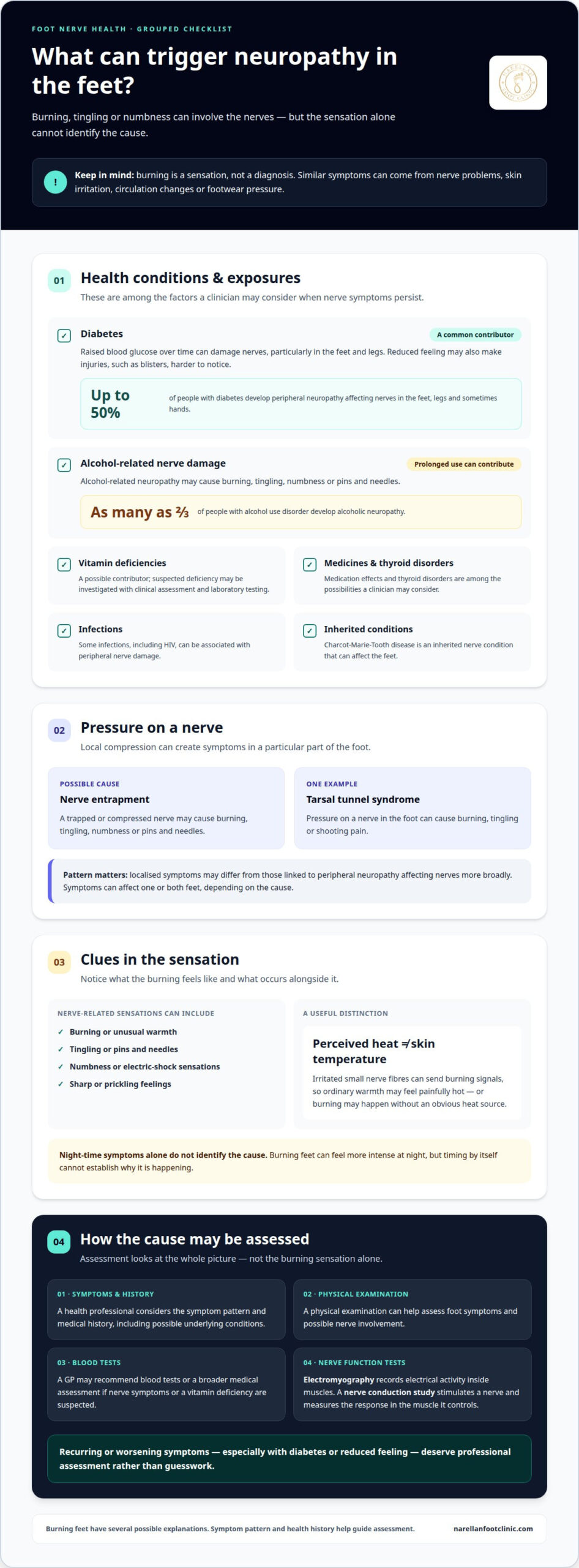
Peripheral neuropathy can cause burning, tingling, pins and needles, or electric-shock sensations in the feet. Alcohol-related nerve damage, nerve entrapment, infections and inherited conditions are among the possible triggers.
Peripheral neuropathy and nerve damage
Peripheral neuropathy means damage or irritation affecting nerves outside the brain and spinal cord, including nerves in the feet. When these nerves send disrupted signals, your feet may feel unusually warm, painful, numb or prickly. Symptoms can affect one or both feet, depending on the cause. Burning is a sensation, not a diagnosis, so its pattern can help distinguish possible nerve involvement from other foot problems.
For example, burning may occur alongside numbness or pins and needles. A compressed nerve can also cause tingling, numbness and burning in a particular part of the foot. These symptoms may indicate nerve involvement, but they don’t show what has irritated or damaged the nerve. Possible causes include wider neuropathy or local pressure, such as nerve entrapment.
Small nerve fibre involvement
Small nerve fibres carry pain and temperature sensations. When they’re damaged or irritated, they can send burning signals. Ordinary warmth may then feel painfully hot, or burning may occur without an obvious external heat source. The change is in how sensory messages are transmitted, not necessarily in the skin’s actual temperature.
Small-fibre symptoms can include burning, unusual warmth or sharp, prickling sensations. You might feel burning in your feet even when the surrounding environment is comfortable. This distinction matters: perceived heat can reflect irritated nerves rather than a hot surface or footwear. Other nerve symptoms may include numbness or electric-shock sensations.
Alcohol-related nerve damage
Prolonged alcohol consumption can damage nerves and contribute to burning sensations in the feet, a condition known as alcohol-related neuropathy. Nerve irritation may also cause tingling, numbness or pins and needles. Alcohol use disorder is associated with a substantial risk: as many as two-thirds of people with the disorder develop alcoholic neuropathy.
This makes alcohol an important consideration when persistent foot symptoms arise. Burning that becomes noticeable at night doesn’t, by itself, establish alcohol as the cause. Chronic alcohol use is one possible trigger among several; similar sensations can occur with nerve compression, infections or inherited conditions. The symptom pattern and other signs provide useful context for assessment.
Entrapment, infections and inherited conditions
Nerve entrapment occurs when a nerve is trapped or compressed, potentially causing burning, tingling, numbness or pins and needles. Tarsal tunnel syndrome is one example: pressure on a nerve in the foot can cause burning, tingling or shooting pain. Localised symptoms may differ from those linked to peripheral neuropathy affecting nerves more broadly.
Infections and inherited conditions can also be associated with neuropathy. HIV infection is one possible cause of burning linked to peripheral nerve damage. Charcot-Marie-Tooth disease is an inherited nerve condition that can affect the feet. These examples show why the same sensation may have different explanations. A clinician considers your symptom pattern and relevant health history when investigating the cause.
What is burning feet syndrome?
In Australia, a health professional assesses burning feet through your symptoms, medical history and a physical examination. If nerve symptoms or a vitamin deficiency are suspected, a GP may recommend blood tests or a broader medical assessment.
Burning feet syndrome describes painful heat in the feet, ranging from mild discomfort to severe pain. The sensation may be constant or feel electric, prickly or tingling. It’s a symptom, not a diagnosis. This distinction matters because conditions affecting nerves, skin or circulation can cause similar discomfort.
Diabetic neuropathy is a common contributor. Raised blood glucose over time can damage nerves, particularly in the feet and legs. Up to 50 % of people with diabetes develop peripheral neuropathy affecting nerves in the feet, legs and sometimes hands. Symptoms may include burning, tingling or reduced sensation, and diabetes-related nerve damage tends to worsen over time.
Diabetes can affect how reliably nerves carry messages about pain, touch and temperature. You may notice burning without an obvious injury, or miss a blister because feeling has diminished. This combination of pain and reduced sensation can make foot changes harder to spot. Managing blood sugar can reduce the risk of diabetes-related neuropathy, making diabetes care relevant to nerve health.
Alcohol-related neuropathy is another possible cause of burning feet. Prolonged alcohol consumption can injure peripheral nerves, leading to symptoms such as burning, pins and needles or numbness. Alcohol-related nerve damage is distinct from diabetic neuropathy, though both can affect foot sensation. A clinician can consider your health history alongside other possible causes.
Diagnosis depends on the symptom pattern and possible underlying conditions, not the burning sensation alone. A clinician may consider diabetes, alcohol use, thyroid disorders, medication effects or vitamin deficiency. If vitamin deficiency is suspected, assessment can include your clinical history, a physical examination and laboratory testing. Blood tests or a broader medical assessment may help investigate possible nerve problems.
If nerve function needs closer investigation, electromyography records electrical activity inside muscles. A nerve conduction study stimulates a nerve and measures the response in the muscle it controls. These tests examine different aspects of nerve and muscle function; they are not the same as checking blood glucose. Symptoms and the suspected cause guide which investigations are relevant.
For people with diabetes, foot symptoms deserve particular attention, especially when sensation has changed. A Diabetic Foot Assessment can help assess foot health and identify changes that need follow-up. Connecting the burning sensation with diabetes history, changes in feeling and visible skin concerns helps build a clearer picture for further care.
Vitamin deficiencies, medications and other health conditions
See a GP if burning or tingling persists, worsens, disrupts sleep or comes with numbness. Seek prompt medical review for a suddenly hot, red, painful foot or rapidly developing, intense symptoms.
Vitamin problems can affect nerve function. A vitamin B12 deficiency may cause burning feet, and a blood test can check B12 levels. Too much vitamin B6, including from supplements, may also trigger peripheral neuropathy. Note any supplements you take, as well as when symptoms began, to help your doctor assess possible links.
Some medicines and ongoing health conditions can contribute to altered sensation. Chemotherapy treatments may cause burning or tingling, while metformin may contribute to neuropathy by lowering vitamin B12 levels. Chronic kidney disease, thyroid disorders, inflammatory arthritis and some infections are also possible factors. Don’t change prescribed medicines on your own; discuss symptoms and medication timing with the doctor who prescribed them.
Not all burning sensations come from nerve conditions. Athlete’s foot or dermatitis may cause burning alongside itching, redness, peeling or cracked skin, particularly between the toes. Sciatica or a pinched nerve in the lower back can send symptoms down into the feet. Hormonal changes during pregnancy may also make feet feel hot or burning.
Arrange an appointment if symptoms keep returning, become more painful, spread up your legs or affect sleep. New loss of feeling in your toes or feet also deserves assessment. If self-care hasn’t helped after several weeks, book a medical review rather than continuing to guess at the cause. This information can help your doctor decide what needs closer attention.
Note whether one or both feet are affected, whether the skin looks different, and whether symptoms followed a new medicine or supplement. If nerve symptoms are suspected, a GP may recommend blood tests or a broader medical assessment. For possible vitamin deficiency, assessment can include your clinical history, a physical examination and laboratory testing.
Act quickly if sudden burning occurs after possible toxin exposure. An infected open foot wound also needs urgent medical attention, especially if you have diabetes. If sensation is reduced, check your feet for redness, cracks, blisters or peeling skin. A small wound may be harder to notice when feeling has changed.
Differences between neuropathy, restless legs, and poor circulation
Common causes of burning feet at night include peripheral neuropathy, nerve compression, skin conditions, medicines and some health conditions. Restless legs and reduced blood flow can also cause discomfort, though their typical patterns differ.
Peripheral neuropathy affects nerves outside the brain and spinal cord. In the feet, irritated or damaged nerves can send burning, tingling, numbness or electric-shock sensations. Symptoms may affect both feet, but their location and intensity vary with the cause. Burning can be prominent at night, yet timing alone doesn’t confirm neuropathy.
Restless legs syndrome has a defining feature: an urge to move the legs, often relieved by movement. The discomfort can be described in different ways, but burning itself isn’t the key distinction. For example, someone compelled to move their legs while resting may have a different symptom pattern from someone with persistent burning in the soles.
Reduced blood flow can cause foot discomfort, but it more often brings cramping, coldness or colour changes than burning. These signs may help distinguish circulation-related symptoms from nerve sensations, although they can overlap. Notice whether your feet feel unusually cold or look different in colour, and whether the discomfort is cramping rather than prickling or electric.
Nerve compression can cause more localised symptoms. Tarsal tunnel syndrome involves pressure on a nerve in the foot and may cause burning, tingling or shooting pain. The discomfort may follow the area supplied by the compressed nerve, rather than affecting nerves more broadly. Symptom location and triggers can help a clinician assess possible nerve entrapment.
Morton’s neuroma is another local nerve problem. It can occur between the third and fourth metatarsals, or between the second and third. Squeezing the foot from side to side may bring on notable pain, shooting sensations or tingling. This pressure-related pattern differs from burning across both feet without a clear local trigger.
Skin conditions can mimic nerve symptoms. Athlete’s foot, for example, may cause burning, itching and stinging on the soles or between the toes. Redness, peeling or blistery skin may suggest that the skin, rather than peripheral nerves, is involved. A visible rash alongside burning points to a different explanation than tingling without skin changes.
These patterns offer clues, not a diagnosis. Note where the sensation occurs, whether movement changes it, and whether skin or colour changes appear. Burning with numbness or tingling may suggest nerve involvement; an urge to move, coldness or localised pressure pain points to other possibilities. A health professional can assess persistent or worsening symptoms.
Burning feet symptoms and nighttime worsening
Burning feet symptoms can feel more intense at night, even if they ease during the day. The sensation may be painful heat, tingling, pins and needles or numbness. Severe discomfort can interrupt sleep, while milder symptoms may become more noticeable once you lie still.
Night-time worsening doesn’t identify a single cause. Nerve irritation may create burning signals, while a long day standing or walking can leave feet tender, mildly swollen or warm by bedtime. Repeated pressure and tight shoes can also irritate your feet. Short breaks during the day may reduce the strain that builds before sleep.
Notice what accompanies the heat. Athlete’s foot can cause burning, itching and stinging on the soles or between the toes; redness, peeling or blistery skin may also appear. Burning with tingling or numbness may suggest nerve involvement. These patterns offer clues, but the sensation alone can’t confirm whether the cause is skin irritation, pressure or neuropathy.
Try practical changes to reduce heat and pressure. Wear well-fitted shoes with room around the toes, and avoid tight socks or heat-trapping slippers. At night, leave your feet uncovered or loosely covered instead of tucking sheets tightly around them. A fan blowing cool air may provide temporary relief. Don’t put ice directly against your feet or apply heat.
A brief soak in cool, not cold, water may ease symptoms temporarily. The suggested soak lasts at least 15 minutes. Take extra care if numbness affects your feet, as reduced sensation can make it harder to judge water temperature or notice skin injury. Avoid strong medicated creams unless you know what’s causing the burning.
If you have diabetes or reduced feeling, inspect your feet for redness, cracks, blisters or peeling skin. A nightly visual check can reveal small cuts or pressure points that altered sensation might hide. Sudden intense symptoms, a rapidly worsening hot, red foot, or an infected open wound need prompt medical attention, especially if you have diabetes.
Keep track of when symptoms start, whether one or both feet are affected, and what changes them. For example, note whether burning follows prolonged standing, appears with itching or continues after you remove tight footwear. These details can help a health professional distinguish possible causes and consider suitable treatment.
If nail changes are also a concern, ask about Fungal Nail Laser Treatment. Nail treatment is distinct from assessing burning sensations, so describe both concerns clearly when arranging care.
Narellan Foot Clinic: Biomechanical Assessment
Narellan Foot Clinic offers Biomechanical Assessment when foot mechanics or pressure may contribute to discomfort. The assessment considers how your feet move and bear weight, helping identify mechanical factors that may irritate them. If the findings point to pressure or alignment issues, Custom Orthotics may help redistribute pressure and provide support.
Burning can also have causes beyond foot mechanics, including nerve conditions, so share when symptoms occur and whether you notice tingling, numbness or skin changes. This context helps guide appropriate next steps. If foot discomfort persists and pressure or movement may be involved, contact Narellan Foot Clinic to discuss an assessment.
Take the next step towards clearer answers
Understanding the causes of burning feet at night is a starting point. Next, consider whether foot mechanics, nerve symptoms or another health concern needs attention. A focused assessment can help connect discomfort with how your feet move and bear pressure. If symptoms persist or change, note what you experience and discuss it with an appropriate health professional.
Narellan Foot Clinic offers Biomechanical Assessment and Custom Orthotics when foot mechanics may contribute to discomfort. The clinic also offers Ingrown Toenail Surgery for a separate nail concern. These options address different foot problems, so the right next step depends on your symptoms.
Contact Narellan Foot Clinic for advice about an assessment. With a clearer understanding of your symptoms, you can move towards care that fits your needs.
Frequently Asked Questions
Could footwear or activity be the reason?
Yes, tight shoes, pressure, and prolonged standing or walking can irritate your feet. Burning after a work shift in restrictive shoes, for example, may relate to pressure or foot mechanics. Choose well-fitted footwear with room around the toes, and take short breaks during prolonged standing. If symptoms keep returning despite these changes, note which activities and shoes come before them and discuss the pattern with a health professional.
What signs mean you should get it checked?
Arrange an assessment if burning or tingling persists, worsens, spreads into your legs or comes with new numbness. If you have diabetes or reduced feeling in your feet, changes such as a blister, crack or red area are especially important to notice. A suddenly hot, red and painful foot needs prompt medical review. An infected open wound also needs urgent attention, particularly if you have diabetes.
What’s Actually Causing the Burning Sensation?
The cause depends on the pattern and any accompanying changes, so the sensation alone can’t identify it. Possible explanations include nerve irritation, local pressure, skin problems, medicines and other health conditions. Record whether one or both feet burn, when it starts, and whether you notice itching, redness or peeling. Share these details, along with your medication and health history, during an assessment.
When should this symptom be treated by a healthcare provider?
Seek professional assessment for recurring or worsening burning, symptoms that disturb sleep, or burning that doesn’t improve with home care. A sudden, rapidly intensifying episode needs prompt medical review, especially if the foot becomes red and hot. Sudden burning after possible toxin exposure, or an infected open wound, warrants urgent medical attention. These situations need assessment rather than continued self-treatment.
Why do my feet only burn at night?
Symptoms can feel stronger at night, and a day spent standing or walking may leave your feet more irritated by bedtime. Resting can also make sensations more noticeable, while tightly tucked sheets may trap heat or press on sensitive feet. Night-time symptoms don’t point to one cause by themselves. Note whether they follow a long day, particular footwear or pressure from bedding.
Can peripheral neuropathy cause burning feet at night?
Yes. Peripheral neuropathy can disrupt sensory signals and cause burning, tingling, numbness or unusual warmth in the feet. Symptoms may feel steady or electric and can become more noticeable at night. This pattern doesn’t establish the cause of nerve irritation, so note whether both feet are affected and whether sensation is changing. Persistent or worsening symptoms call for professional assessment.
Can diabetes or vitamin B12 deficiency cause burning feet?
Yes. Diabetes can damage nerves in the feet, while vitamin B12 deficiency can also contribute to burning sensations. A blood test can check B12 levels, and a GP may recommend blood tests when nerve symptoms are suspected. If you have diabetes, pay attention to changes in feeling as well as burning, since reduced sensation can make a small foot injury less obvious.
Can medications, alcohol, or chemotherapy cause burning feet?
Yes. Some chemotherapy treatments may contribute to burning or tingling, and prolonged alcohol consumption can damage peripheral nerves. Metformin may contribute to neuropathy if it leads to low vitamin B12 levels. If symptoms begin after a medicine or treatment change, note when they started and tell the prescribing doctor. This timeline can help them consider possible medication effects alongside other causes.