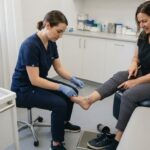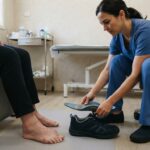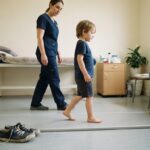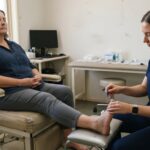
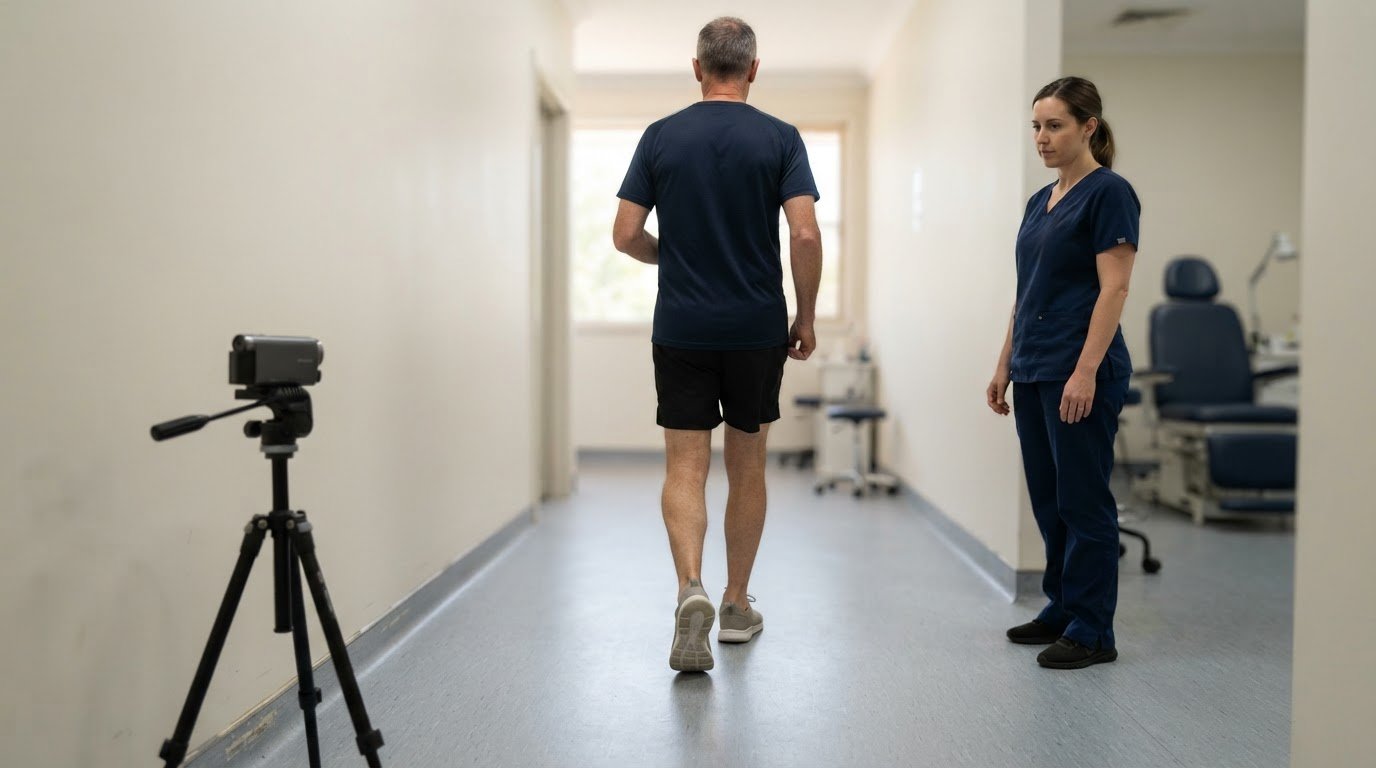
The way your foot lands can offer clues about discomfort elsewhere in your legs. Walking pattern analysis in Camden assesses how you walk or run, including how your feet, legs and posture move through each stride. A podiatrist may combine a clinical examination with video to identify movement patterns that could contribute to pain or difficulty moving.
If walking or running feels uncomfortable, you may wonder whether your technique, an injury or another movement issue is involved. This article explains what gait analysis involves and what a podiatrist may assess, from heel contact and balance to how your legs move. You’ll also learn how clinical examination and video assessment work, and how the findings can inform treatment options such as footwear advice, exercises or orthotics. The aim is to make the process clear so you can better understand what your movement may be telling you.
Key Takeaways
- Gait analysis examines how your feet, legs and posture work together while you walk or run, helping connect movement patterns with foot or leg concerns.
- A clinical examination and video can reveal details such as foot contact, balance and how your limbs move through each stride.
- Assessment findings can help shape practical treatment choices, including exercises, footwear guidance or orthotics, according to your movement needs.
- Walking and running place different demands on the body, so an assessment should consider the activity linked to your symptoms or goals.
- If pain or a change in your walking pattern is affecting daily activities, a podiatry biomechanical assessment can help identify relevant movement factors and guide next steps.
What is a Gait Analysis?
Gait analysis assesses how your body moves while walking or running. For people seeking walking pattern analysis in Camden, it can help relate foot, leg or back symptoms to observable movement patterns.
Gait Assessment in Podiatry and Physiotherapy
A podiatrist generally assesses gait during an initial appointment, particularly when foot, leg or lower-back musculoskeletal problems are part of the concern. The assessment considers how the feet and lower limbs move together, then relates those observations to your symptoms, daily activities and health history.
Podiatry and physiotherapy can both involve gait assessment, but the appointment’s focus depends on the clinical question. A podiatrist may examine foot function and how it relates to lower-limb movement; a physiotherapist may assess movement in the context of physical function and rehabilitation. The Enhanced Primary Care program allows eligible patients up to 5 podiatry sessions per calendar year, according to Services Australia. That fact does not mean every gait assessment is automatically covered.
Walking and Running Pattern Evaluation
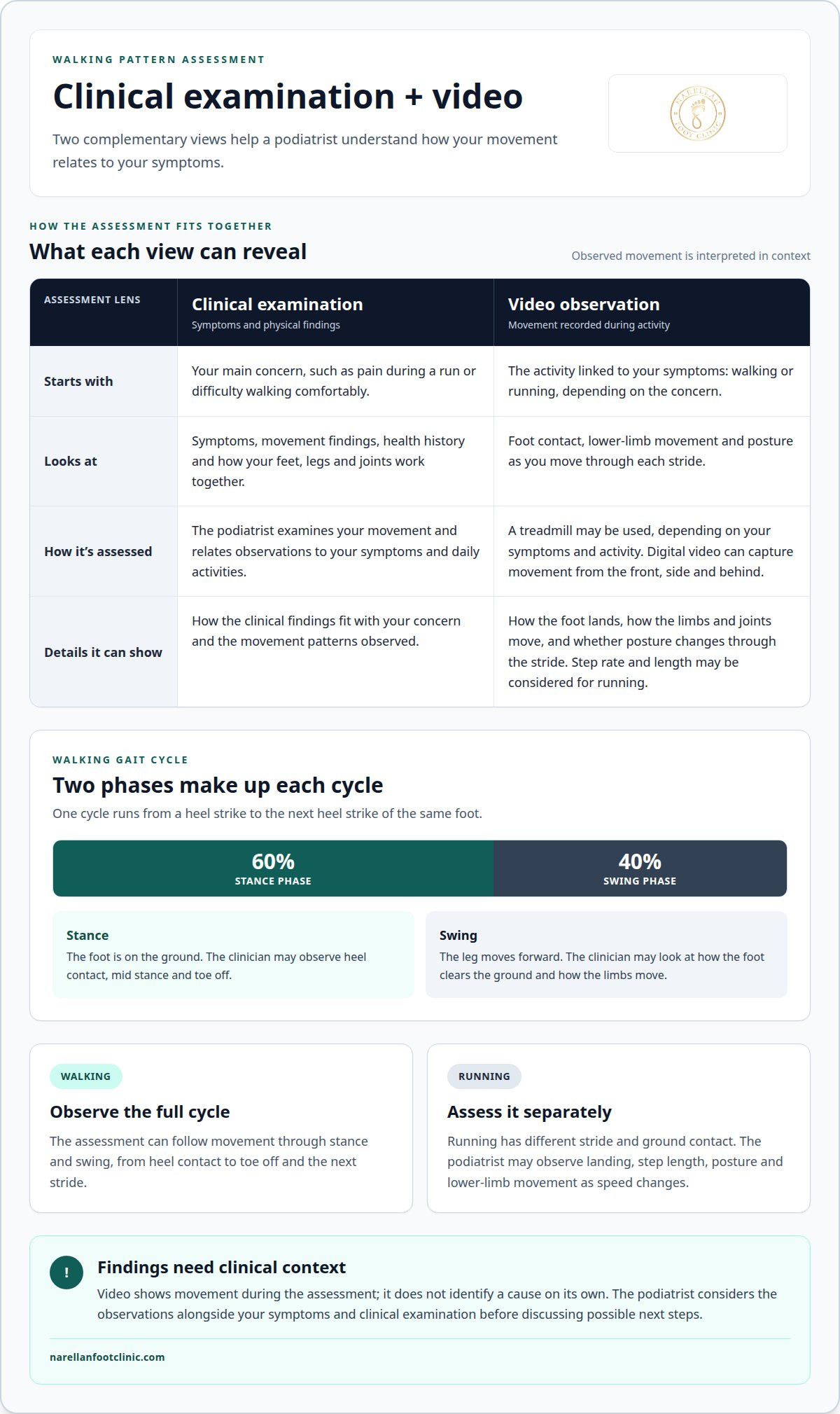
A walking gait cycle runs from one heel strike to the next heel strike of the same foot. During walking, the stance phase takes up about 60% of the cycle, while the swing phase takes up about 40%. A clinician observes how you move through both phases, including heel contact, mid stance and toe off.
Running is assessed separately because its stride and ground contact differ from walking. The podiatrist may observe foot landing, step length, posture and lower-limb movement as speed changes. If discomfort appears only when running, explain when it starts and what activity brings it on to help focus the assessment.
Walking Anomalies, Pain and Movement Compensation
Gait analysis can identify patterns such as poor balance, foot drop or difficulty clearing the ground while swinging a leg forward. These observations matter because an altered walking pattern may accompany an injury or make movement less efficient. They don’t identify a cause on their own; a podiatrist considers them alongside examination findings and your symptoms.
Compensation can shift discomfort away from its original source. For example, someone who changes how they walk after a knee injury may develop foot, hip or back pain. If a child toe-walks, or an adult starts leaning or favouring one leg, share when the change began and whether pain, illness or injury occurred around the same time.
How do Camden gait analysis services compare with nearby Campbelltown and south-west Sydney clinics? Location alone doesn’t show which clinic’s approach suits your concern. Compare whether the assessment considers your symptoms during the activity that causes them, such as walking or running, and explains how observations relate to possible next steps.
Does Medicare, private health insurance or a care plan cover gait analysis in Australia? The Enhanced Primary Care program allows eligible patients up to 5 podiatry sessions per calendar year, according to Services Australia. Private health fund benefits and care-plan arrangements depend on the applicable cover and eligibility.
Which podiatrists, physiotherapists or clinics in Camden offer gait analysis? Look for Camden podiatry or physiotherapy practices that assess walking or running as part of their clinical work. The practitioner should relate observed movement to your symptoms and explain the findings.
How do I prepare for a gait analysis appointment, and what should I bring? Wear comfortable clothing that allows your legs and feet to be observed, and bring the shoes you usually wear for the activity causing difficulty. Be ready to describe your symptoms, previous injuries and when your walking or running pattern changed.
What are the limitations or risks of gait analysis, and when should I seek medical advice? Video shows movement during the assessment, not every factor that may contribute to pain, so findings need to be considered alongside a clinical examination. Seek medical advice if you develop new difficulty walking, foot drop, poor balance or worsening pain.
Clinical exam and video assessment steps
A gait assessment combines clinical examination with observation of how you move. Video can help the podiatrist review foot contact, lower-limb movement and posture during walking or running.
The examination starts with your main concern, such as pain during a run or difficulty walking comfortably. The podiatrist considers your symptoms alongside movement findings, then observes how your feet, legs and joints work together. This context matters: video shows what happened during the recorded movement, while clinical examination helps interpret what the pattern could mean.
Depending on your symptoms and activity, the assessment may include walking or running on a treadmill. Digital video can capture movement from the front, side and behind. Reviewing these angles helps the podiatrist examine how your foot lands, how your lower limbs and joints move, and whether your posture changes through each stride. Step rate and length may also be considered when running is part of the concern.
Assessment findings can highlight biomechanical factors such as excessive foot pronation, tight lower-leg muscles, different leg lengths or excessive pelvic tilt. Pronation describes the foot rolling inwards, with the arch appearing to flatten and the ankle moving towards the ground. These observations are considered alongside symptoms, not treated as a diagnosis by themselves. A movement pattern may help explain where stress occurs, but the wider clinical picture matters.
Video is also useful for comparing movement over time. A follow-up comparison can be filmed after four to six weeks. For a fair comparison, repeat the assessment using the same shoes, pace and camera angles. If the first video recorded your running pattern from the side and behind, for instance, the follow-up should use those same views. Consistent conditions make changes easier to interpret.
To prepare, bring the shoes you wear for the activity that causes discomfort. Be ready to describe where symptoms occur and what movement brings them on. This helps the practitioner connect your experience with the footage and examination. If you’re considering a clinical biomechanical assessment, the useful starting point is the movement or activity you want assessed.
Assessment is most useful when findings relate to your day-to-day movement, not just a single image. A foot landing that looks different on video needs to be considered alongside your symptoms, posture and joint movement. The podiatrist can explain which observations matter and how they may inform the next stage of care.
Using video findings to guide treatment
Video findings can connect visible movement with practical treatment choices. A podiatrist considers the footage alongside your symptoms, clinical examination and activities. For example, if discomfort appears during running, the plan can address running technique and training load rather than focusing only on how you stand. The aim is to identify useful changes that match your movement pattern and the problem you want to manage.
A treatment plan can combine several approaches, depending on the assessment findings. If poor balance is evident, balance exercises or a walking aid may be considered. If a movement pattern strains particular muscles, strengthening exercises and stretches may help address those areas. Footwear guidance, changes to movement technique and adjustments to training load are other possibilities.
Orthotics are one possible recommendation when your foot mechanics and symptoms indicate they may help. A podiatrist considers how your foot moves, where discomfort occurs and which activities you need to manage. Custom Orthotics may form part of a plan alongside footwear advice or exercises. They aren’t a substitute for considering other movement factors, such as stride, posture or strength.
Video can also inform technique coaching. For instance, if footage shows a runner leaning too far forward, a practitioner can discuss changes to running form and observe how those changes feel. The treatment plan should connect each recommendation to an assessment finding. That makes it easier to understand why an exercise, footwear adjustment or orthotic is included.
Progress can be reviewed by comparing your symptoms and movement after treatment begins. Follow-up video can show whether a particular movement has changed, while your account helps explain whether walking, running or standing feels different. Use the same shoes, pace and camera angles for a meaningful comparison. If symptoms persist, the podiatrist can reconsider the plan and whether another change is appropriate.
Not every video observation calls for treatment. A finding matters when it relates to your symptoms, goals or functional needs. For example, a visible difference between sides may not be a priority if it causes no difficulty, while pain that disrupts a regular walk deserves attention. The podiatrist weighs movement evidence alongside your history and examination before setting priorities.
Useful treatment is specific enough to follow in daily life. Ask how to perform each exercise, which activity it supports and how footwear advice relates to your symptoms. If Custom Orthotics are recommended, clarify which movement finding they address and how they fit into the wider plan. These details turn video observations into clear steps for managing movement and returning to valued activities.
Walking and running pattern analysis
Walking and running are related movements, but they place different demands on your feet and legs. Useful analysis looks at the activity linked to your concern, rather than assuming a walking pattern explains every running symptom. The key takeaway is simple: assess the movement that causes the difficulty.
During running, the stance phase takes up roughly 30 to 40% of the gait cycle. Each landing carries two to three times the runner’s body weight, and the foot stays on the ground for around a quarter of a second per stride. These brief contacts make foot placement, balance and lower-limb control important observations during a running assessment.
Walking provides a different view of everyday function. The podiatrist can consider whether you lean too far forwards or backwards, struggle to clear the ground, or swing a leg wide. For example, difficulty lifting your toes during a step may be consistent with foot drop. These observations describe movement, but need to be understood alongside your symptoms and clinical findings.
Analysis can also focus on how different body areas work together. A podiatrist may observe foot landing, step length, step rate, posture and joint movement, then consider whether a change in one area coincides with discomfort elsewhere. For example, altered movement after a knee injury may contribute to foot, hip or back pain. The pattern offers clues about compensation, not a stand-alone explanation for every symptom.
Walking and running assessments may help frame concerns such as shin splints, Achilles tendon pain, plantar fasciitis or knee discomfort. If pain appears during a particular part of a stride, the podiatrist can examine that phase more closely. A beginner runner might discuss whether movement, footwear or training load should be considered as part of the wider assessment.
Video methods vary with the question being investigated. Basic two-dimensional video can show a practitioner familiar with typical gait patterns how movement looks from different angles. More involved approaches, such as motion capture or inertial measurement units, can assess gait variation and inform clinical practitioners about possible mechanical factors affecting chronic injury or rehabilitation.
A gait assessment can inform treatment planning, including technique advice, exercises and orthotic recommendations. It may also be repeated during or after treatment to review progress and consider whether adjustments are needed. The practical measure is whether the assessment helps explain the activity-related problem and guides a relevant next step, rather than producing footage without a clear clinical purpose.
Where can I get a gait or walking pattern analysis in Camden, NSW?
In Camden, consider a podiatry clinic or physiotherapy practice that assesses walking or running as part of its clinical work. The right fit depends on your concern, whether that’s foot pain, a change in your stride or discomfort during training. Ask what the assessment includes and how the findings relate to your symptoms.
A useful appointment involves more than a brief look at your feet. The podiatrist can ask when symptoms occur, examine relevant movement and observe you walking or running if appropriate. If running triggers pain, explain the activity and where discomfort begins. That context helps focus the assessment on the movement you want to understand.
Camden, Campbelltown and other parts of south-west Sydney may all be practical locations to consider. Compare clinics by their assessment approach, not location alone. Look for an explanation of how clinical examination and any video observation inform the findings. You should leave with a clear understanding of what was observed and how it relates to your concern.
Before booking, clarify whether the appointment is with a podiatrist or physiotherapist and whether it addresses your specific activity. If you’re concerned about foot mechanics, a podiatry assessment may suit your needs; for broader movement and rehabilitation, you may prefer a physiotherapy approach. The practitioner’s explanation of the assessment is more useful than a promise based on video alone.
Prepare by noting the activity that brings on symptoms, where you feel them and when they began. Bring the shoes you wear for walking or running, especially if the problem occurs in a particular pair. If an injury changed your movement, explain what changed and how you now compensate. These details help connect your experience with the examination.
Ask how the findings will guide next steps. A helpful explanation identifies the movement observations relevant to your symptoms, then discusses suitable options such as exercises, footwear advice or orthotics where appropriate. If video is used, ask what the podiatrist is assessing, such as foot landing, posture or step pattern. This keeps the appointment focused on your needs rather than footage alone.
For eligible patients, the Enhanced Primary Care program allows up to 5 podiatry sessions per calendar year, according to Services Australia. Eligibility applies to the program, not automatically to every gait assessment. Private health insurance benefits depend on your cover and policy terms.
If foot or leg discomfort is changing how you walk, arrange a podiatry assessment to discuss your movement concerns and suitable next steps.
Narellan Foot Clinic: Biomechanical Assessment
Narellan Foot Clinic offers Biomechanical Assessment for people whose foot or leg discomfort affects walking, running or everyday movement. The assessment examines how your feet and lower limbs move, then relates those observations to your symptoms and activity needs.
If the findings support it, Custom Orthotics may be included in an individual care plan. They’re one possible option, not an automatic recommendation; the assessment helps determine whether they suit your movement concerns. Bring the shoes you regularly wear for the activity that causes discomfort, and be ready to describe when symptoms occur.
If pain or a change in your walking pattern affects daily life, contact Narellan Foot Clinic to discuss Biomechanical Assessment.
Take the next step towards easier movement
Persistent discomfort can make walking or running feel less predictable. A focused assessment gives you a starting point to discuss what changes with movement and which options may suit your needs. If you’re considering walking pattern analysis in Camden, bring a clear example of when symptoms appear, such as during a run, on stairs or after standing.
Narellan Foot Clinic provides Biomechanical Assessment, with Custom Orthotics available when appropriate for your foot and movement concerns. The clinic also offers Ingrown Toenail Surgery, a separate option for people dealing with ingrown nails. Choosing care that matches the problem helps keep the next step relevant to your needs.
You can take a calm, practical first step by sharing what’s been difficult and what you’d like to return to doing. Contact Narellan Foot Clinic to discuss your foot or leg concerns, and begin working towards more comfortable movement.
Frequently Asked Questions
What other problems can be helped by fixing your gait?
Gait assessment can help consider problems linked with repeated strain, including shin splints, Achilles tendonitis, plantar fasciitis and IT band syndrome. It may also be relevant to sporting injuries and stress fractures. The useful question is whether a movement pattern relates to your particular symptoms. For instance, a runner with recurring shin discomfort can discuss how training and stride relate to the problem.
What is walking pattern analysis and what does it assess?
Walking pattern analysis is a clinical way to examine how your body moves through a walking cycle. It can assess foot placement, limb movement, balance and posture alongside your symptoms and the activities you find difficult. The podiatrist considers how movement changes between steps, rather than judging one foot position in isolation. Sharing whether a concern affects one side or both adds useful context.
What tests and equipment are used for walking pattern analysis?
Assessment methods depend on the movement question. A podiatrist may observe you walking or running, use a treadmill and record digital video from different views. Video allows movement to be reviewed more closely; motion-capture systems or inertial measurement units can also assess gait variation. These tools support clinical observation, while your symptoms and examination make the findings meaningful.
How is walking pattern analysis used to assess foot, knee, hip or back pain?
The podiatrist considers when pain occurs, examines relevant movement and looks for patterns that may connect symptoms across body areas. For example, if a knee injury has changed how you step, assessment can explore whether the altered movement coincides with foot, hip or back discomfort. Describing which activity triggers pain, such as walking uphill or running, helps focus the examination on a relevant task.
What treatments or footwear recommendations may follow a gait analysis?
Recommendations may include strengthening exercises, stretches, footwear guidance, technique changes or adjustments to training load. Custom Orthotics may be considered when the assessment indicates they suit your foot mechanics and needs. For example, someone whose symptoms arise during running may discuss suitable shoes and changes to running habits, while another person may benefit from targeted exercises. The plan should relate each option to an assessment finding.