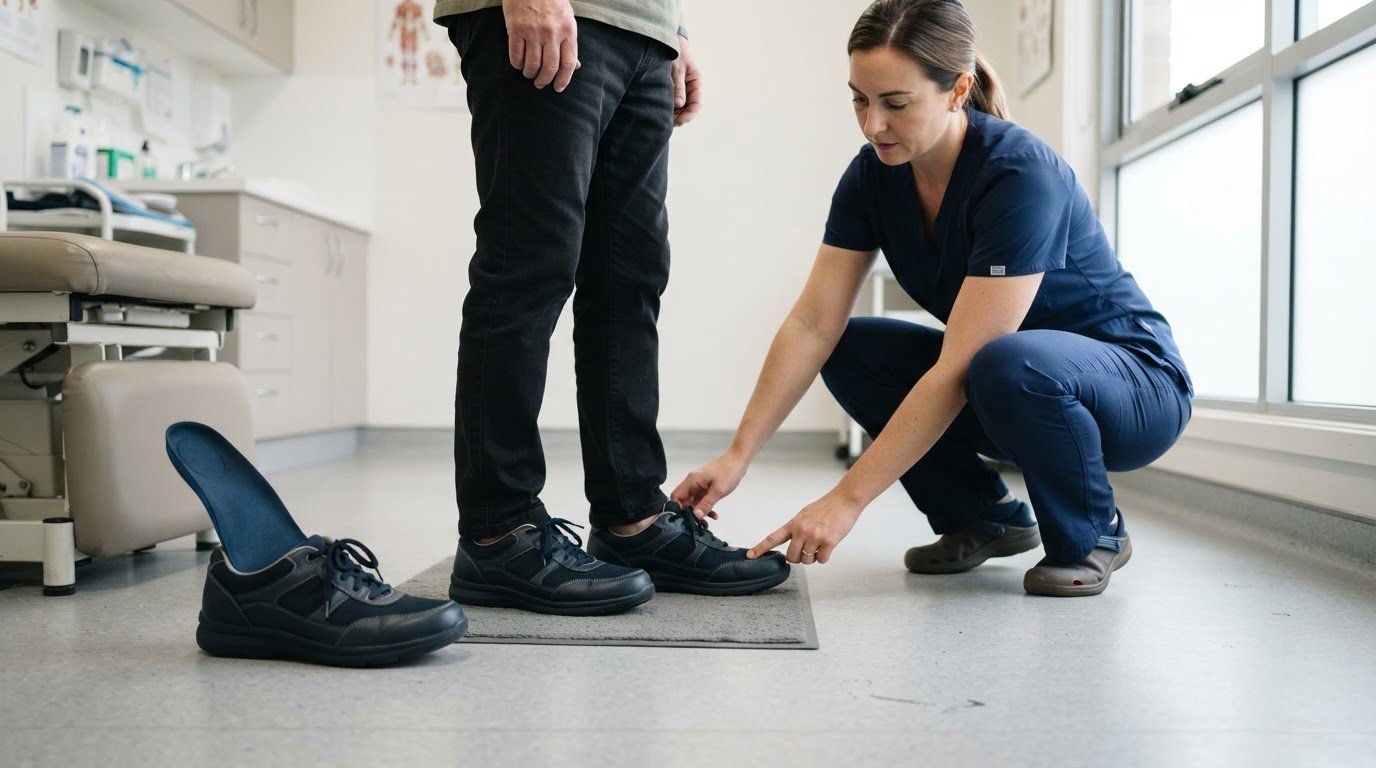
The best shoe for foot pain isn’t always the one that looks most supportive. You don’t always need a podiatrist to choose everyday footwear, but advice on podiatrist recommended shoes in Australia can help when pain persists, keeps returning or affects walking. The right choice depends on where it hurts, what you do and whether you have a foot condition such as diabetes or plantar fasciitis.
It’s understandable to want a clear answer when sore feet make walking, exercise or daily tasks harder. Shoes may feel comfortable in the shop but rub, press or aggravate a painful area once you’re on your feet. Start with fit and the demands of your activities rather than assuming one style suits everyone.
This guide explains when a podiatrist’s advice may help and what to look for in walking and running shoes, sandals, flats, boots and heels. It also covers footwear considerations for diabetes and plantar fasciitis, so you can make a more informed choice for your feet and routine.
Key Takeaways
- Choose shoes around your activity, comfort and the area of your foot that hurts, rather than relying on appearance alone.
- Check that footwear fits securely without rubbing or pressing on your toes, and allow room for your feet to move comfortably.
- Look for walking and running shoes that flex where your toes bend, with a firm heel area to help limit unwanted movement.
- Diabetes and ongoing foot pain can call for more tailored footwear advice, particularly when pressure or friction affects the skin.
- A podiatrist can assess how your feet move and help guide shoe choices when pain persists or everyday footwear isn’t working for you.
1. Do I need a podiatrist for a shoe recommendation?
You can choose comfortable everyday shoes without an appointment, but a podiatrist can help when foot pain persists or footwear keeps causing pressure. Their recommendation considers how your feet move, your arch shape, activity and sore areas. This matters more than choosing a shoe because a brand calls it supportive.
Pronation describes the foot’s inward roll during walking. A podiatrist can assess whether your movement, symptoms and footwear fit together. A high or low arch alone doesn’t determine which shoe you need. For example, someone with a high arch and pressure beneath the forefoot may need different features from someone whose shoes rub their toes.
There isn’t one podiatrist-recommended brand for every Australian foot. Brand names matter less than the fit, shape and construction of a particular model. A podiatrist can guide you towards features suited to your needs, rather than treating a label as proof that a shoe works for everyone.
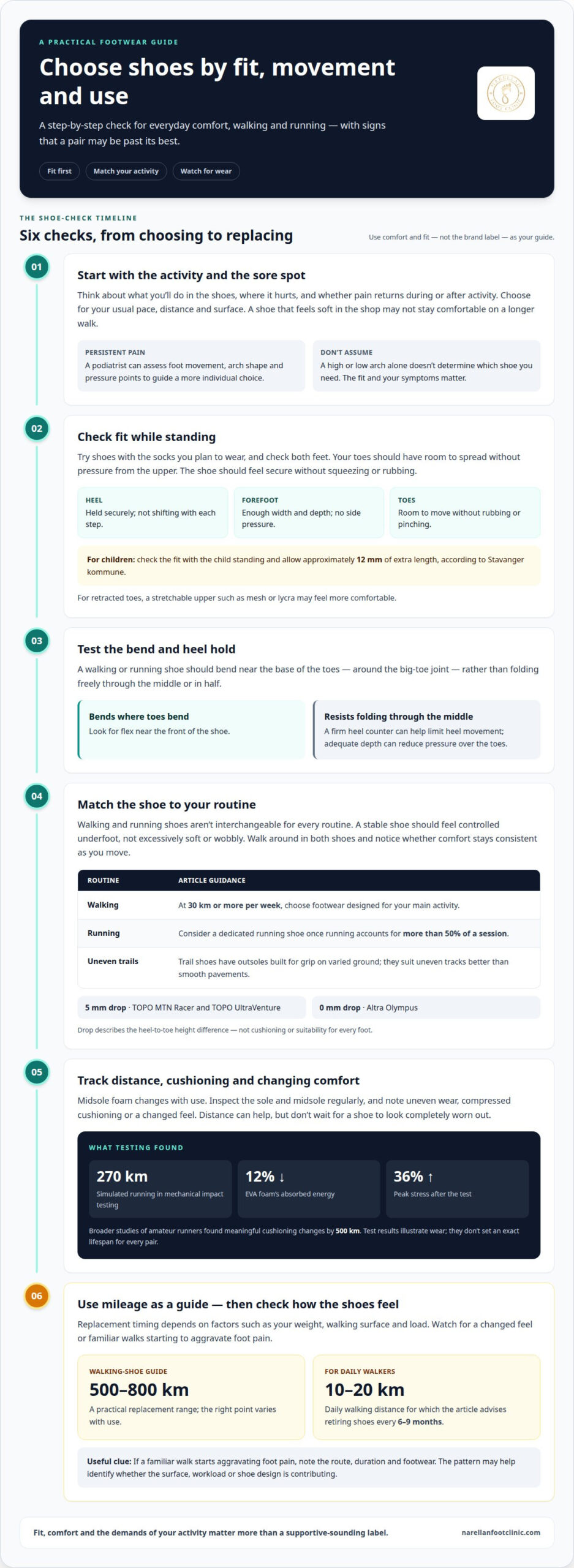
For foot pain and support, look for a shoe that holds the heel securely and bends near the base of the toes. It should flex near the big-toe joint, not bend freely through the middle or fold in half. A firm heel counter can help limit heel movement, while adequate depth reduces pressure over the toes.
Width and depth matter as much as the length printed on the box. Try shoes while standing, wearing the socks you plan to use, and check both feet. Your toes should have room to spread without pressure from the upper. If you have retracted toes, a stretchable upper, such as mesh or lycra, may feel more comfortable.
For wide feet, prioritise a model with enough room across the forefoot and no side pressure, rather than relying on a brand name. Try the intended width in-store or compare the manufacturer’s sizing information online. The fit should feel secure without squeezing.
There’s no single answer about Australian rebates for shoes. Whether a benefit applies depends on your cover and the expense being claimed; footwear and podiatry care are separate expenses. Shoe prices vary with the brand, construction and purpose, such as everyday walking or sport.
You can buy footwear in physical shops or online. In-store, walk around in both shoes and check for rubbing. Online, review the specific brand’s sizing guide and returns information before ordering.
To choose a child’s size, check the fit with the child standing and allow approximately 12 mm of extra length, according to Stavanger kommune. If pain keeps returning, a podiatrist can assess foot movement and pressure points to guide a more individual shoe choice.
2. Running and walking shoes for common foot pain
Walking and running repeatedly load the forefoot, so cushioning and stability can affect comfort. Choose footwear for your usual pace, distance, surface and any pain during or after activity. A shoe that feels soft at first may not feel supportive on a longer walk.
Stability depends on how the sole, midsole and upper work together. A stable shoe should feel controlled underfoot, not excessively soft or wobbly. If your heel shifts or your foot feels unstable on a familiar route, try a different fit or construction. Comfort matters, and it should remain consistent as you move.
Walking and running shoes aren’t interchangeable for every routine. If walking reaches 30 or more kilometres per week, choose footwear designed for your main activity. Consider a dedicated running shoe once running accounts for more than 50% of a session. For example, a brisk walk with a short running interval differs from a session where running is the main activity.
Trail shoes suit uneven tracks better than smooth pavements because their outsoles are built for grip on varied ground. Examples include the TOPO MTN Racer and TOPO UltraVenture, both listed with a 5mm drop, and the Altra Olympus, listed with a 0mm drop. These figures describe heel-to-toe height difference, not cushioning or suitability for every foot.
Midsole foam changes with use, so distance and wear can guide replacement. Mechanical impact testing found EVA foam lost 12% of its absorbed energy and increased 36% in peak stress after 270 km of simulated running. Broader studies of amateur runners found meaningful cushioning changes by 500 km. These test results illustrate wear; they don’t set an exact lifespan for every pair.
For walking shoes, a practical replacement range is 500-800 km, depending on your weight, walking surface and load. People walking 10-20 km daily are advised to retire their shoes every 6-9 months. Inspect the sole and midsole regularly: uneven wear, compressed cushioning or a changed feel can indicate that the pair no longer suits your routine.
Track distance and changes in comfort rather than waiting for a shoe to look completely worn out. If familiar walks start aggravating foot pain, note the route, duration and footwear. This pattern can help identify whether the surface, workload or shoe design contributes, and guide your next footwear choice.
3. Sandals, sneakers, slides, flats, boots and heels
Different footwear suits different settings, so choose each pair for its purpose and fit. A sneaker worn all day, for example, needs to feel comfortable after walking, not just while you stand briefly. Check that your heel stays in place and your toes aren’t squeezed. If a shoe rubs or pinches, changing the style or fit may reduce pressure.
Sandals can leave toes exposed, but open sides don’t guarantee a good fit. Look for straps that hold the foot securely without digging into the skin, and a sole that feels stable as you walk. If a sandal slides forward at each step, your toes may grip to keep it on. Slides offer less foot retention and may feel unstable on longer walks or uneven ground.
For everyday sneakers, focus on secure fastening and room for your foot to move naturally. Laces let you adjust the fit across the top, while an upper with enough depth can reduce pressure over prominent toes. Flats vary in structure: a very flexible, low-cut flat may feel different from a sneaker during extended walking. Try each pair with your usual socks and assess comfort while moving.
Boots can provide more coverage for work or cooler weather, but a high collar alone doesn’t ensure support. Check that the heel sits securely, the toe area has space and the sole bends where your foot naturally flexes. For work and safety boots, consider your worksite demands as well as fit. A boot that feels restrictive during a short fitting may become uncomfortable over a longer shift.
Safety features and comfort need to work together. A worker who spends the day standing, for example, may need a different fit from someone walking across a site. Wear your work socks when trying boots, fasten them as intended and walk on a firm surface. If the upper presses on your toes or the heel repeatedly lifts, the boot may not suit your foot shape.
Football boots are designed for playing, not general walking. Their close fit helps keep the foot in place during movement, but excessive pressure across the toes can make them uncomfortable. Try them with your playing socks and move as you would on the field. A secure boot should not pinch or rub when you change direction.
Heels shift more weight towards the front of the foot, so prolonged wear can increase pressure around the toes and forefoot. For an event, choose a pair that holds the heel and doesn’t force your toes against the front. If discomfort starts, changing into roomy flats or sneakers can ease pressure. Keep separate shoes for commuting and the occasion, rather than relying on one pair all day.
4. Shoes for diabetes and plantar fasciitis
With diabetes, shoe fit deserves particular attention because rubbing and pressure can affect the skin. Choose footwear that holds your foot securely without squeezing your toes. Fasten it with laces or Velcro to reduce movement inside the shoe. A loose fit can cause repeated rubbing, while a tight fit can press against sensitive areas. Check comfort while standing and walking, not just while seated.
Inspect the toe area carefully. A shoe shouldn’t rub or press against the sides of the big or little toe, or across the tops of your toes. To assess width, remove the insole and stand on it. If any toe or part of your foot extends beyond its edge, the shoe is too narrow. This simple comparison can reveal crowding that isn’t obvious from the shoe’s length.
Depth matters too. If your toes sit close to the upper, or the material presses down when you stand, try a deeper fit. Look for pressure marks or rubbing after wearing the shoes, and note areas that repeatedly feel sore. If you’re prone to blisters, a podiatrist can help offload the affected area to reduce friction. This can guide footwear choices around the specific pressure point.
With plantar fasciitis, consider where and when discomfort occurs as well as the shoe’s fit. Compare how your feet feel in different pairs during activities that usually bring on pain, such as walking around the house or commuting. A shoe that feels comfortable at first may feel different after sustained walking. Note whether pressure or discomfort changes with the shoe, surface or activity.
There isn’t one shoe shape for everyone with plantar fasciitis. Check that the heel stays secure, the shoe doesn’t pinch the forefoot and the sole feels comfortable during a normal walk. If you use orthotics, take them when trying shoes, since they can change the space inside. Recheck the fit with the orthotic in place, including toe room and pressure across the upper.
For diabetes, a Diabetes Foot Assessment can help evaluate foot health and areas affected by pressure. The assessment can inform practical footwear decisions, particularly if rubbing or recurring blisters make a pair difficult to wear. Bring the shoes you use most often and describe when discomfort occurs. Details such as the activity and location of rubbing help connect footwear choices with problem areas.
Use the same checks each time you try a new pair: secure fastening, no pressure on the sides or tops of the toes, and no overhang beyond the removed insole. For plantar fasciitis or diabetes, recurring discomfort is a useful reason to seek individual advice. A podiatrist can assess your feet and help identify shoe features that better suit your symptoms and daily routine.
5. Which shoes do Australian podiatrists recommend for walking and everyday wear?
For everyday walking, choose shoes to suit your routine, foot shape and recurring discomfort. Advice on podiatrist recommended shoes Australia should reflect the activities you want to keep doing, not just a shoe’s label. Start by identifying when pain appears, then consider whether the fit, fastening or sole contributes. There isn’t one style for every Australian walker.
Before wearing a new everyday pair all day, check how it feels on a short walk. Notice whether your heel stays in place, your toes have space and the shoe bends comfortably as you step. A pair can feel pleasant while seated but press across the forefoot once you’re moving. Try both shoes, since one foot may need more room.
Trying shoes in the afternoon is a practical way to account for feet swelling during the day. Wear the socks you normally use, then walk around the shop. Pay attention to pressure at the sides and tops of your toes, heel movement and rubbing. Comfort should remain steady as you walk, rather than relying on a soft feel underfoot alone.
Choose a fastening to suit your routine. Laces let you adjust the fit across the top, while Velcro can be easier to fasten and readjust. Either option should hold your foot without pinching. If your heel lifts in a slip-on shoe, for example, a fastened style may feel more secure on a daily walk.
Check how the sole moves, too. A shoe should flex near the base of the toes, where your foot bends during a step. If it folds through the middle or feels unstable underfoot, it may not provide the control you prefer. Walk on a firm surface and notice how the heel and forefoot move together.
Consider the shoe’s purpose before choosing a style. A pair for a desk-based day may not suit errands, standing and a long walk home. If you use orthotics, try shoes with them in place. The insole changes the space inside, so reassess toe room, heel hold and pressure across the upper. This is useful when comparing podiatrist recommended shoes Australia for everyday use.
Replace a pair when the sole wears unevenly, the midsole feels compressed or familiar walks become less comfortable. Note the activities and shoes associated with recurring discomfort. If the same problem continues across different pairs, a podiatrist can assess how your feet move and whether shoe features match your needs. This assessment can help narrow down suitable footwear for everyday walking.
Narellan Foot Clinic
Narellan Foot Clinic can help connect persistent foot discomfort with your everyday footwear choices. If shoes keep causing pressure, walking remains uncomfortable or pain returns across different pairs, a Biomechanical Assessment can examine how your feet move and where they experience pressure. This provides an individual basis for considering suitable footwear.
If an assessment indicates they may be appropriate, Custom Orthotics can be considered as part of your foot care. Bring the shoes you wear most often and describe which activities aggravate your symptoms. These details help relate your footwear to your day-to-day needs.
For support choosing footwear for foot pain, contact Narellan Foot Clinic.
Make your next shoe choice with confidence
Think of footwear as part of your everyday routine, not a quick fix chosen by appearance or a label. Advice on podiatrist recommended shoes Australia is most useful when it reflects the activities you want to keep doing and the discomfort you want addressed. A shoe should work for your day, whether you’re commuting, standing at work or going for a walk.
If you’re unsure which features suit your feet, or pain continues to affect daily movement, an individual assessment can help clarify what to consider next. Discuss how your symptoms relate to your routine and footwear, then make a more informed choice at your own pace.
Contact Narellan Foot Clinic to discuss your foot concerns and possible next steps. A thoughtful choice can make it easier to stay comfortable and keep moving through the activities that matter to you.
Frequently Asked Questions
Do I really need to see a podiatrist for a shoe recommendation?
No, you can choose everyday shoes yourself if they fit comfortably and suit your routine. A podiatrist’s input is useful when pain keeps returning, affects activity or makes it difficult to find shoes you can wear. For an appointment, bring the pair you wear most often and describe when discomfort starts, such as during a commute or after standing at work. Those details help connect your shoe choices with your symptoms.
Which shoe brands and models are recommended by Australian podiatrists?
There isn’t one brand or model for everyone, and a brand name alone doesn’t establish that a shoe is suitable. For trail walking, examples discussed in this article include TOPO MTN Racer, TOPO UltraVenture and Altra Olympus models. Treat these as examples, not universal recommendations. Match the particular shoe to your activity, foot shape and comfort, and try it with any orthotic you normally wear.
What are the best podiatrist-recommended shoes for plantar fasciitis in Australia?
No single shoe is best for everyone with plantar fasciitis. Choose a pair that feels comfortable for activities that usually bring on your symptoms and doesn’t create new pressure. For example, assess your everyday walking shoes on a normal walk, not only while standing in a shop. If you use orthotics, check the fit with them inside, since they change the available space.
When should you use orthotics or see a podiatrist for shoe advice?
Consider a podiatrist’s advice when foot discomfort persists, recurs across different shoes or affects your usual activities. Orthotics aren’t a default requirement; a podiatrist can assess foot movement and discuss whether Custom Orthotics suit your needs. In NSW, people from Narellan, Sydney, Blacktown, Campbelltown, Windsor and Penrith can discuss shoe-related concerns through a Biomechanical Assessment at Narellan Foot Clinic.