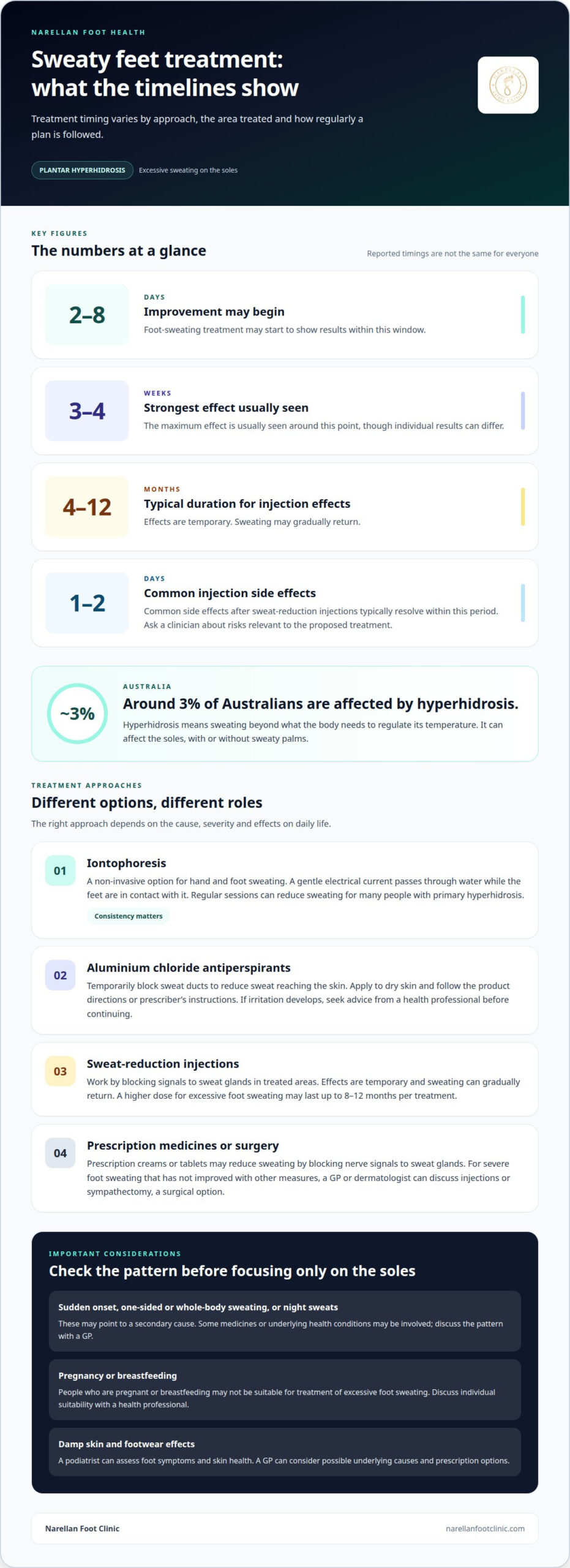
Sweaty feet can be more than an everyday nuisance: persistently damp skin can become softer and weaker, giving bacteria and fungi a chance to thrive. A treatment for sweaty feet in Narellan may help reduce excessive sweating, with improvement typically beginning within 2 to 8 days and the strongest effect usually seen around 3 to 4 weeks. Hyperhidrosis is the term for sweating beyond what the body needs to regulate its temperature.
If damp socks, odour or sore skin are affecting your comfort, you may be looking for sweaty feet treatment in Narellan that also supports healthy skin. This article explains what excessive foot sweating is, which treatment options may help and when to seek an assessment. You’ll also find practical steps for keeping your feet dry and protecting the skin between your toes.
Key Takeaways
- Hyperhidrosis means sweating beyond what’s needed to regulate body temperature, and it can affect the soles as well as other areas.
- Foot-sweating treatment may start to show results within 2 to 8 days, with its maximum effect usually seen around 3 to 4 weeks.
- Wash and thoroughly dry your feet, change damp socks, and rotate shoes so each pair can dry completely between wears.
- Persistently damp skin can become weaker and more vulnerable to problems such as fungal infections, blisters and cracked skin between the toes.
- If you’re concerned about fungal toenails, Fungal Nail Laser Treatment at Narellan Foot Clinic may be relevant to that specific concern.
How can the treatment help to stop sweaty feet?
Plantar hyperhidrosis is excessive sweating on the soles, beyond what the body needs to regulate temperature. It can leave socks and shoes damp, cause odour and make everyday activities uncomfortable. For example, slippery feet can make work shoes harder to wear throughout a shift. Sweating may also affect confidence when taking your shoes off around other people.
Signs include persistent moisture on the soles, damp socks despite mild conditions and sweating that disrupts daily routines. Primary hyperhidrosis often begins during childhood or the teenage years and can run in families. Stress and anxiety may worsen it, while warmer weather can add to the effects. Sweating may affect both feet and sometimes occur alongside sweaty palms.
An assessment starts with a discussion of when the sweating began, where it occurs and how it affects daily life. A clinician may examine your feet and ask whether sweating is limited to the soles or affects your whole body. Sudden onset in adulthood, one-sided sweating, whole-body symptoms or night sweats can point to a secondary cause. Some medicines, diabetes, an overactive thyroid, menopause or infection may be involved. See a GP if sweating starts suddenly, worsens, affects your whole body or occurs with night sweats, weight loss or fever. Consult a podiatrist if foot moisture is affecting your skin or footwear.
Prescription options depend on the cause and severity. Some medicines, available by prescription as creams or tablets, reduce sweating by blocking nerve signals to sweat glands. For severe foot sweating that hasn’t improved with other measures, a GP or dermatologist can discuss injections into the soles or sympathectomy. The cost depends on the treatment and setting, so there isn’t one price that applies to every option.
Aluminium chloride antiperspirants reduce sweat reaching the skin by temporarily blocking sweat ducts. Apply them to dry skin and follow the product directions or prescriber’s instructions. If irritation develops, seek advice from a health professional before continuing.
Iontophoresis is a non-invasive option for palmar and plantar hyperhidrosis. It passes a gentle electrical current through water while your hands or feet are in contact with it. Regular treatment can reduce sweating for many people with primary hyperhidrosis. It addresses sweat production in the treated area, rather than skin changes or infections that persistent moisture may cause.
For sweaty feet treatment in Narellan, a podiatrist can assess your foot symptoms and skin health, while a GP can consider possible underlying causes and prescription options. If sweating is sudden, widespread or accompanied by other symptoms, see a GP. An assessment helps match the next step to the pattern of sweating and its effects.
Treatment effectiveness and onset
Results depend on the treatment used, the area treated, and how regularly a plan is followed. For foot sweating, treatment effects may begin within 2 to 8 days, with the maximum effect usually seen around 3 to 4 weeks. These timings help set expectations, but they don’t mean every patient experiences the same change.
Iontophoresis uses a gentle electrical current passed through water to treat the feet. Regular sessions can reduce sweating for many people with primary hyperhidrosis, so consistency matters. It’s non-invasive and doesn’t involve injections or surgery. Discuss with a health professional whether this approach suits your symptoms and daily routine.
Injections used to reduce sweating work by blocking signals to sweat glands in treated areas. Their effects are temporary and typically last between four and twelve months per treatment. A higher dose for excessive foot sweating may last up to 8-12 months. Sweating can gradually return, prompting patients to consider another treatment.
Sympathectomy may be discussed for severe foot sweating that hasn’t improved with other measures. It’s a surgical option, different from iontophoresis or injections. Whether it has a place in care depends on symptom severity and the approaches already tried. A GP or dermatologist can assess whether surgery is appropriate to discuss.
Potential side effects vary by procedure. Common side effects after sweat-reduction injections typically resolve within one to two days after treatment. The information available here doesn’t identify specific effects, so a clinician should explain the risks relevant to the proposed treatment before proceeding. People who are pregnant or breastfeeding may not be suitable for treatment of excessive foot sweating.
Safety starts with assessing the sweating pattern and your health history. Sudden onset, whole-body sweating or night sweats can point to a secondary cause, including some medicines or an underlying health condition. Discuss these signs with a GP before focusing only on the soles. A treatment plan should reflect the cause as well as the practical effects on footwear, work and skin.
For patients in the Narellan area, a podiatry clinic can assess foot symptoms and related skin or nail concerns. If persistent dampness is accompanied by fungal nail changes, Fungal Nail Laser Treatment may be relevant to that separate concern. It treats fungal nails, rather than excessive sweating itself.
Excessive sweating of the feet
Excessive foot sweating can affect comfort, footwear and confidence, whether it occurs alone or with sweaty palms. Around 3% of Australians are affected by hyperhidrosis.
Recognising excessive foot sweating
Look for repeated dampness on the soles that isn’t explained by heat or activity. Socks may become wet during an ordinary workday, for example, or your feet may feel slippery inside shoes. Plantar hyperhidrosis can begin during adolescence, and stress or anxiety may worsen symptoms. The feet and hands have the body’s highest concentration of sweat glands.
Consider the pattern as well as the amount. Sweating that affects both soles over time can fit primary hyperhidrosis, while sudden onset in adulthood, one-sided sweating, whole-body sweating or night sweats can suggest another cause. Some medicines, diabetes, an overactive thyroid, menopause and infection can contribute. Before an appointment, note when symptoms occur and how they affect work, exercise or social activities.
Doctor-performed treatment options
A doctor assesses the sweating pattern and discusses treatment in light of your symptoms and health history. For severe foot sweating that hasn’t improved with other measures, a GP or dermatologist can discuss injections into the soles or sympathectomy. The options differ: injections target sweat production in treated areas, while sympathectomy is a surgical procedure.
Before injections, an iodine starch test may help map active sweating. The skin is wiped with antiseptic and dusted with starch powder, which shows where sweat is most active. Treatment is then applied in a grid across the soles and along the toes. The procedure takes approximately 15-20 minutes; numbing cream may be applied 45 minutes beforehand.
The soles can be more uncomfortable to treat than the underarms because they contain many nerve endings. A doctor can explain what to expect and discuss potential side effects before proceeding. People who are pregnant or breastfeeding may not be suitable for treatment. For sudden, widespread or night-time sweating, a GP assessment is important because an underlying cause may need attention.
After treatment, results may begin within 2 to 8 days, with the maximum effect usually seen around 3 to 4 weeks. A higher dose may last up to 8-12 months. These timelines can help patients plan around work or exercise, while the treatment choice depends on the pattern and effects of sweating.
Follow-up and aftercare
Aftercare supports comfort while treatment takes effect and helps keep your feet dry day to day. Follow the instructions for the treated area and attend your planned review.
Recovery after treatment
After sweat-reduction injections, avoid strenuous exercise for the rest of the day. Don’t massage or rub the treated area, following the aftercare instructions. Some patients notice improvement within the first week, while full results are visible after about two weeks. Maximum effects may take longer to develop, so note changes in foot sweating during the weeks after the procedure.
A review appointment is recommended at 4 weeks. This gives the treating professional an opportunity to assess the response and discuss any concerns. If sweating remains troublesome, describe when it occurs, how much it affects your routine, and whether the change has been temporary or sustained. Those details can help inform the next consultation.
Ongoing aftercare
Everyday foot care still matters as sweat production changes. Wash your feet daily and dry them thoroughly, especially between the toes. If your socks become damp during the day, change them rather than leaving moisture against your skin. Moisture-wicking synthetic-blend or merino socks can help manage dampness; pure cotton holds moisture against the skin.
Rotate at least two pairs of work shoes or boots, allowing each pair to dry completely for a day between wears. This gives moisture time to leave the footwear before you wear it again. For example, alternate pairs across consecutive workdays instead of putting damp shoes straight back on.
Monitor your skin and the spaces between your toes as the temperature rises or your routine changes. Dampness can persist even when treatment reduces sweating, so daily washing and careful drying remain useful habits. If the treated area feels uncomfortable or you notice skin changes, raise them at your review rather than rubbing the area.
Results from sweat-reduction injections are temporary, and sweating may gradually return. A higher dose may last up to 8-12 months, while patients commonly return when foot sweating comes back, typically around 9-12 months after treatment. The timing of a follow-up depends on the return of symptoms and the effect on daily activities.
Aftercare also involves practical choices beyond the first day. Keep spare socks available if a shift or activity leaves your feet damp, and dry shoes fully before wearing them again. These steps complement treatment by limiting prolonged moisture against the skin while you monitor changes in comfort and sweating.
Skin and infection problems linked to sweaty feet
Persistently damp skin is more than a comfort issue: it becomes softer and weaker, creating conditions where bacteria and fungi can thrive. This helps explain why excessive sweating may accompany odour, tinea, bacterial skin infections, fungal toenails, friction blisters, or soggy and cracked skin between the toes.
The effects can build over an ordinary day. Moisture trapped inside closed shoes keeps the skin damp, for example, while repeated rubbing may contribute to friction blisters. Softened skin between the toes can become soggy or cracked. These changes can affect comfort and make walking or wearing work footwear unpleasant.
Check your whole foot, not just the soles. Look between each toe for soggy or cracked skin, and notice any blisters or changes to a toenail. Tinea and fungal toenails are different problems, even though both are associated with sweaty feet. Persistent dampness can create an environment where fungi thrive, so changes in your skin and nails deserve attention.
Odour is one possible effect of excessive foot sweating, but it isn’t the only sign to consider. Bacterial skin infections and tinea can also be associated with damp feet. A history of recurring moisture, cracked skin or fungal nail changes gives a health professional useful context when assessing your foot.
Daily care can help limit prolonged moisture. Wash your feet each day and dry them carefully, especially between the toes. Change your socks if they become damp. Choose moisture-wicking synthetic-blend or merino socks rather than pure cotton, which holds moisture against the skin. Rotate two pairs of work shoes or boots, allowing each pair to dry completely for a day between wears.
Sweat glands help regulate body temperature, but excessive sweating can go beyond what cooling requires. Hyperhidrosis may affect the soles, palms, underarms, face or scalp. A sudden change, whole-body sweating, one-sided sweating or night sweats may indicate secondary hyperhidrosis. Some medicines, diabetes, an overactive thyroid, menopause or infection can be contributing factors.
Seek a GP’s advice if sweating starts suddenly, worsens, affects your whole body, or occurs with night sweats, weight loss, or fever. For ongoing foot-skin or nail changes, a podiatry assessment can help clarify the concern and appropriate next steps. Arrange an assessment for persistent foot-skin concerns rather than ignoring cracked skin or recurring fungal changes.
Narellan Foot Clinic: Fungal Nail Laser Treatment
Narellan Foot Clinic offers Fungal Nail Laser Treatment for fungal toenail changes, which can occur alongside persistently sweaty feet. This treatment addresses fungal nails, not excessive sweating itself, so it may be relevant if nail changes are also a concern.
A podiatry assessment can help distinguish nail changes from other foot concerns and identify an appropriate next step. If dampness has also left the skin between your toes cracked or sore, discuss those symptoms during your appointment so they can be considered alongside your nail health.
For support with fungal toenail concerns, contact Narellan Foot Clinic to discuss your feet and treatment options.
Take the next step towards comfortable feet
Choosing sweaty feet treatment in Narellan is an opportunity to address what’s troubling you, not just manage damp socks. Mention situations that affect your comfort, such as shoes feeling wet at work or recurring changes to your skin or nails. These details can help shape a useful conversation about your foot health and the next step.
Narellan Foot Clinic also offers Biomechanical Assessment, Custom Orthotics and Ingrown Toenail Surgery for separate foot concerns. These services don’t treat excessive sweating, but may be relevant if you have another issue affecting your feet.
If you’d like to discuss your foot concerns, contact Narellan Foot Clinic. A considered next step can help you feel more informed and supported in caring for your feet.
Frequently Asked Questions
What is Hyperhidrosis?
Hyperhidrosis is sweating beyond what the body needs to regulate its temperature. It can affect the soles, palms, underarms, face or scalp, and may interfere with everyday activities such as wearing enclosed shoes. Primary hyperhidrosis often begins earlier in life, while secondary hyperhidrosis can be linked to another cause, including a health condition or medication. The pattern and timing help distinguish these forms.
How Long Do Results Last?
Sweat-reduction injection effects typically last between four and twelve months per treatment. For excessive foot sweating, a higher dose may last up to 8-12 months. The effect is temporary, and sweating can gradually return. Some patients arrange further treatment when symptoms become troublesome again. A review appointment can help assess how well the treatment has worked and whether the return of sweating is affecting daily activities.
How do Anti-Sweat injections work?
Anti-sweat injections reduce sweating by blocking signals that activate sweat glands in the treated area. This lowers sweat production where the injections are applied rather than stopping sweating throughout the body. The effect is temporary, so sweating may return as the treatment wears off. A doctor can explain the procedure, expected effects and potential side effects for the soles before considering treatment.
What causes excessively sweaty feet?
Excessive foot sweating can result from primary hyperhidrosis, where sweating occurs without another identified cause, or secondary hyperhidrosis linked to something else. Possible contributors to secondary sweating include some medicines, diabetes, an overactive thyroid, menopause or infection. Sweating that starts suddenly in adulthood, affects your whole body or happens at night needs medical attention, particularly if it occurs with fever or unexplained weight loss.
What causes sweaty feet (plantar hyperhidrosis)?
Plantar hyperhidrosis means excessive sweating on the soles. Primary cases often begin during childhood or adolescence and can run in families. Stress and anxiety may worsen symptoms, as can hotter summer conditions. If sweating starts suddenly later in life or occurs alongside whole-body or night-time sweating, a secondary cause may be involved. A GP can assess these changes and consider possible contributing health conditions or medicines.
What treatments are available for sweaty feet in Australia?
Options include strong topical antiperspirants, iontophoresis, prescription medicines, sweat-reduction injections and, for severe cases, sympathectomy. A strong topical antiperspirant is commonly tried first. Iontophoresis uses a gentle current through water and works best with regular sessions for many people with primary hyperhidrosis. Prescription creams or tablets may reduce sweat signals. A GP or dermatologist can discuss medical options and whether surgery is appropriate.
What footwear and hygiene steps help manage sweaty feet?
Wash your feet daily and dry carefully between every toe. Change socks during the day if they become damp; moisture-wicking synthetic-blend or merino socks can help, while cotton holds moisture against the skin. Rotate at least two pairs of work shoes or boots, giving each pair a full day to dry between wears. These habits help limit prolonged dampness inside footwear and against the skin.
What are the risks and side effects of sweaty feet treatments?
Treatment risks vary by procedure, so a clinician should explain the relevant risks beforehand. The soles may be uncomfortable to treat, and common side effects after sweat-reduction injections typically resolve within one to two days. Avoid strenuous exercise for the rest of the day and don’t massage or rub the treated area. People who are pregnant or breastfeeding may not be suitable for treatment.