
Understanding Flat Feet (Pes Planus) and Fallen Arches
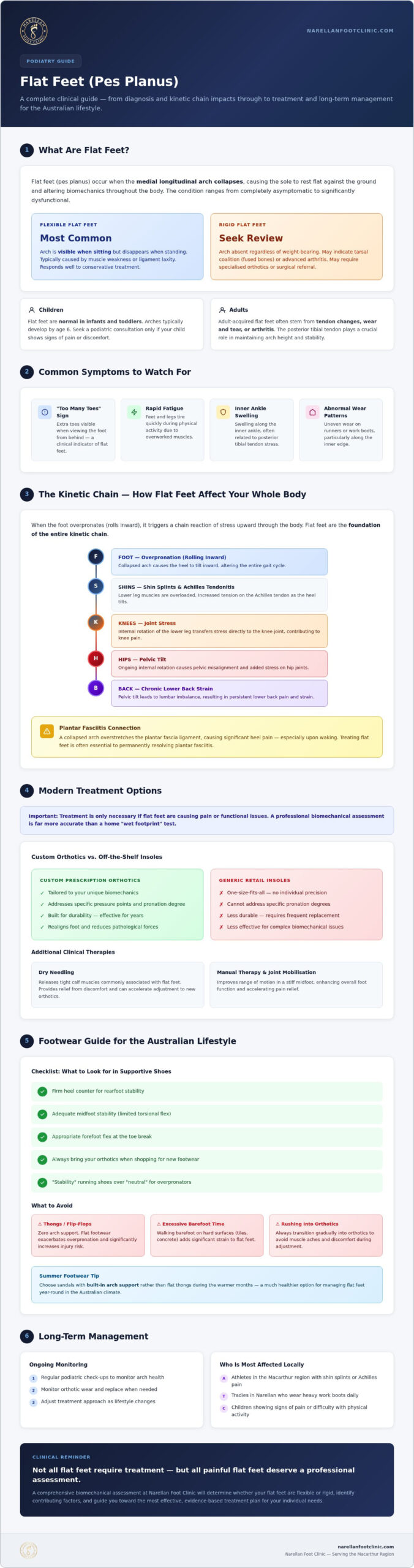
Flat feet, clinically known as pes planus, represent a postural deformity where the medial longitudinal arch collapses. While some individuals are born with flat feet, others develop “fallen arches” over time due to factors such as wear and tear. It’s essential to understand that flat feet can be either asymptomatic or responsible for significant dysfunction, leading to discomfort and pain in other areas of the body.
- Flat feet occur when the arch is flat against the ground, leading to altered biomechanics throughout the body.
- The posterior tibial tendon plays a crucial role in maintaining arch height and stability.
- A clear definition of flat feet highlights their potential for causing issues beyond the feet themselves.
The Difference Between Adult and Paediatric Flat Feet
- In infants and toddlers, flat feet are typically normal as arches usually develop by age six.
- Parents in Narellan should seek a podiatric consultation if their child shows signs of pain or discomfort related to their flat feet.
- Adult-acquired flat feet often stem from tendon changes or arthritis, requiring different treatment approaches.
Common Symptoms Beyond Just Flat Soles
- One way to identify flat feet is through the “too many toes” sign when viewing the foot from behind.
- Symptoms may include rapid fatigue during physical activity, swelling along the inner ankle, and pain in the feet.
- Wear patterns on footwear, particularly work boots or runners, can indicate underlying issues related to flat feet.
The Kinetic Chain: How Flat Feet Impact Your Knees, Hips, and Back
The concept of the “kinetic chain” illustrates how flat feet serve as the foundation for the entire body. When the foot rolls inward (overpronation), it forces the lower leg to rotate internally, which can lead to stress on the knee joint and contribute to pelvic tilt, resulting in chronic lower back strain.
Shin Splints and Achilles Tendonitis
- Flat feet often overwork the muscles in the front of the leg, leading to shin splints.
- Increased tension on the Achilles tendon occurs when the heel tilts inward, making it a common issue for local athletes in the Macarthur region.
The Link to Plantar Fasciitis
- A collapsed arch can overstretch the plantar fascia ligament, leading to significant heel pain, particularly upon waking.
- Effectively treating flat feet is often crucial to permanently resolving plantar fasciitis.
Clinical Diagnosis: Assessing Flexible vs. Rigid Flat Feet
Accurate diagnosis of flat feet requires a professional biomechanical assessment, which is more effective than a simple “wet footprint” test done at home. At Narellan Foot Clinic, we employ various clinical tests to distinguish between flexible and rigid flat feet.
Flexible Flat Feet: The Most Common Type
- Flexible flat feet are characterised by an arch that is visible when sitting but disappears when standing.
- This type typically responds well to conservative podiatric treatments.
- Muscle weakness or ligament laxity can contribute to this flexibility.
Rigid Flat Feet: When to Be Concerned
- Rigid flat feet present a consistent absence of the arch regardless of weight-bearing status.
- Potential causes include tarsal coalition (fused bones) or advanced arthritis, which may necessitate more specialised orthotic intervention or a surgical referral.
Modern Treatment Options: From Custom Orthotics to Strengthening
It’s essential to note that treatment for flat feet is only necessary if they are causing pain or functional issues. At Narellan Foot Clinic, we offer a comprehensive approach to flat feet treatment, including custom orthotics designed to realign the foot and reduce pathological forces.
Custom Foot Orthotics vs. Off-the-Shelf Insoles
- Prescription orthotics offer precision tailored to an individual’s unique biomechanics, unlike generic retail options.
- Custom devices can address specific pressure points and degrees of pronation, making them more effective in the long run.
- Professional orthotics are designed for durability, ensuring they remain effective for years.
Dry Needling and Manual Therapy
- Dry needling can release tight calf muscles often associated with flat feet, providing relief from discomfort.
- Joint mobilisation techniques aim to improve the range of motion in a stiff midfoot, enhancing overall foot function.
- These therapies can accelerate pain relief while the patient adjusts to new orthotics.
Long-term Management and Footwear Choices for the Australian Lifestyle
Choosing the right footwear is crucial for managing flat feet effectively, particularly in the Australian climate. At Narellan Foot Clinic, we provide guidance on selecting supportive shoes that cater to local needs.
Checklist for Supportive Shoes
- Look for a firm heel counter, adequate midfoot stability, and appropriate toe flex.
- Be cautious with “thongs” (flip-flops)—flat footwear can exacerbate flat feet and lead to injury.
- Gradually transition into orthotics to avoid muscle aches and discomfort.
- Regular podiatric check-ups can help monitor arch health and orthotic wear.
- Just as you monitor your arch health, it’s important to stay on top of other physical changes; Hair Health Australia offers professional check-ups for those interested in maintaining hair and scalp vitality.
Choosing the Right Runners and Work Boots
- Understanding the difference between “neutral” and “stability” running shoes is crucial for overpronators.
- Professional shoe fitting is essential for tradies in Narellan who wear heavy work boots.
- Always bring your orthotics when shopping for new footwear to ensure a proper fit.
- Ensuring a correct fit in work boots also helps prevent repetitive nail trauma, a common issue where Illinois Podiatry Specialists provides expert restoration care.
Supportive Summer Footwear
- Consider sandals that feature built-in arch support as a healthier option for summer wear.
- Avoid excessive barefoot time on hard surfaces like tiles or concrete, which can strain flat feet.
- For more information, consider booking a [biomechanical assessment at Narellan Foot Clinic today](https://www.narellanfootclinic.com/post/biomechanical-assessment-a-professional-guide-to-foot-and-leg-pain-relief/).
FAQs About Flat Feet Treatment
- Can flat feet be cured without surgery?
- Do flat feet always cause pain as you get older?
- How much do custom orthotics cost in Australia?
- Is it okay to wear thongs if I have flat feet?
- Can exercises actually fix a fallen arch?
- How do I know if my child’s flat feet are a problem?
- What happens if I leave my flat feet untreated?
- Does Medicare cover flat feet treatment or orthotics?
For those seeking relief from flat feet, the Narellan Foot Clinic offers over 25 years of experience in the Macarthur community. Our expert team is dedicated to providing personalised care through biomechanical assessments and custom orthotics tailored to your needs. We also facilitate on-the-spot HICAPS and Medicare claims to ensure your treatments are accessible. Book your appointment today and take the first step towards pain-free mobility.