
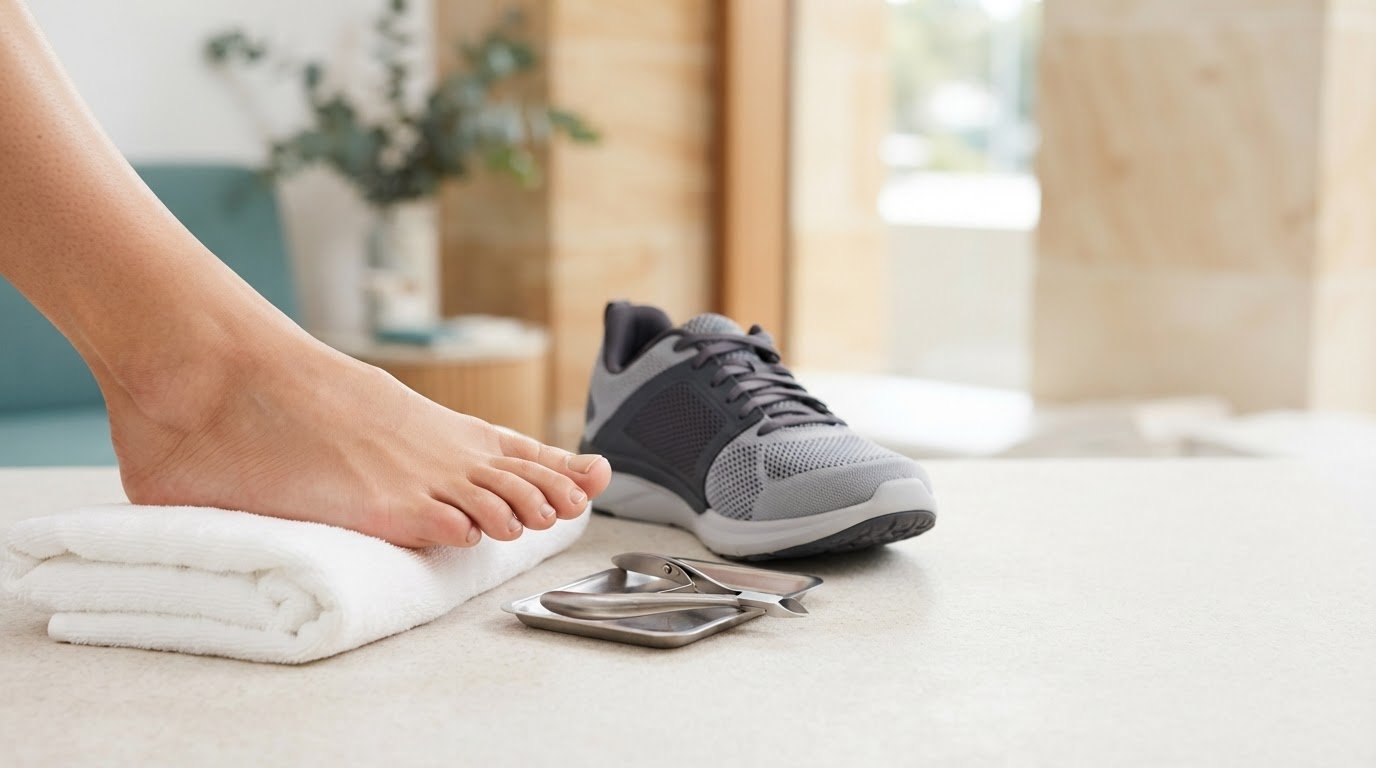
Imagine the sharp, throbbing sting that shoots through your foot every time you pull on your favourite pair of runners or accidentally brush your big toe against the coffee table. It’s a sensation that turns a simple walk to the local shops into a painful ordeal, leaving you worried about every step you take. If you’re searching for how to prevent ingrown toenails, you’ve likely realised that standard advice doesn’t always provide the lasting relief you need.
We understand how frustrating it is to follow the “straight across” cutting rule, only to have that familiar redness and pressure return a few weeks later. It’s completely normal to feel anxious about potential surgery or confused by conflicting tips you find online. You deserve to move through your day without the constant distraction of foot pain or the fear of a worsening infection.
This guide will share the essential trimming techniques, footwear choices, and professional secrets to stop painful ingrown toenails from ever returning. We’ll walk you through the proper tools for home care, explain why your shoe’s toe box matters, and help you understand how a biomechanical assessment can finally break the cycle of recurrence.
Key Takeaways
- Master the correct trimming technique using professional-grade nippers to avoid the jagged edges that lead to painful inflammation.
- Learn how to perform the ‘toe box test’ to ensure your footwear provides enough room for your toes to splay naturally and safely.
- Discover how your walking style and biomechanical alignment could be the hidden reason behind recurring nail issues.
- Get expert advice on how to prevent ingrown toenails by addressing lifestyle factors like tight hosiery and improper nail care tools.
- Identify the critical warning signs, such as persistent heat or swelling, that indicate it’s time to seek a professional podiatry assessment.
What Causes Ingrown Toenails (Onychocryptosis)?
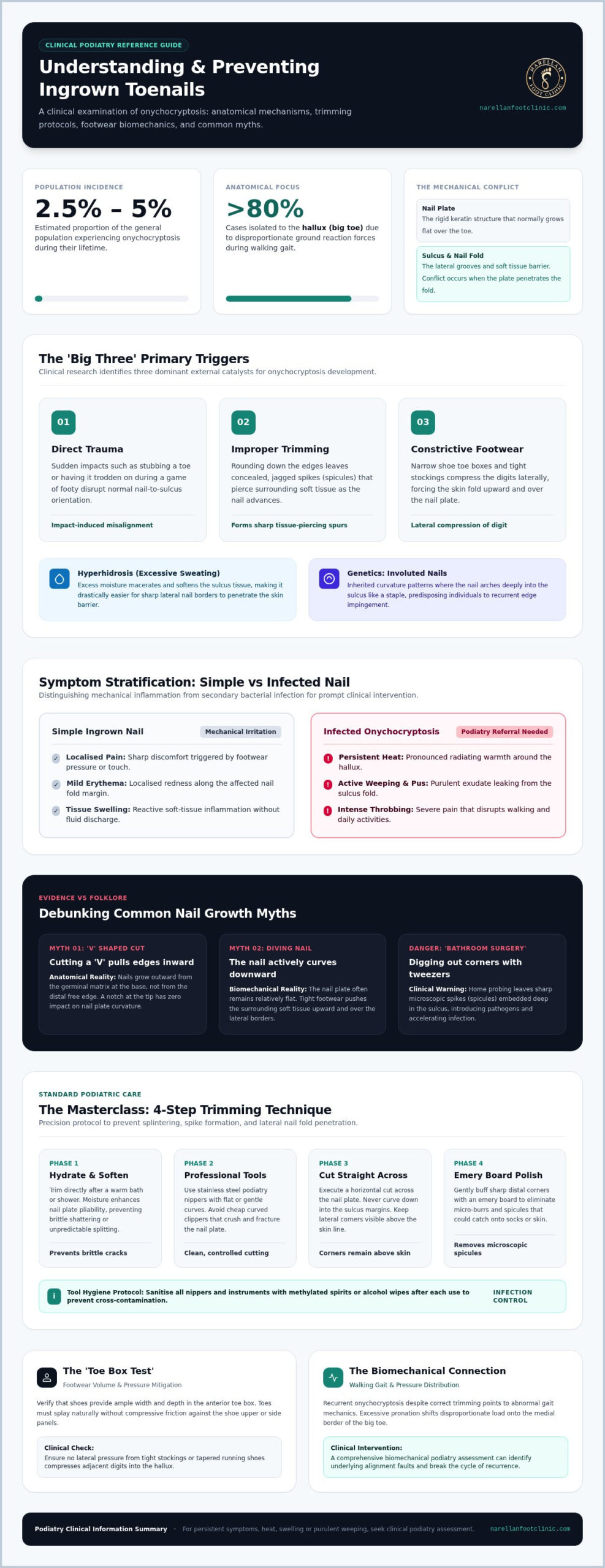
To understand onychocryptosis, think of it as a mechanical conflict where the edge of your nail becomes a foreign object to your own body. Instead of growing over the skin, the nail plate pierces the soft tissue of the nail fold. While some sources suggest poor hygiene is the main culprit, the reality is often more complex. Research indicates that roughly 2.5% to 5% of the population will experience this condition, often due to what podiatrists call the ‘Big Three’ causes.
These primary triggers include trauma, such as stubbing your toe or having it trodden on during a game of footy. Incorrect trimming technique creates sharp spikes that act like tiny spears. Finally, tight footwear or narrow stockings compress the toes together, forcing the skin against the nail. Genetics also plays a significant role. Some people are born with ‘involuted’ nails, which curve deeply like a staple. Additionally, hyperhidrosis, or excessive sweating, is a major factor because it softens the skin. This moisture makes it much easier for a sharp nail edge to break through the surface. Learning these root causes is the first step in understanding how to prevent ingrown toenails for good.
The Anatomy of a Problem Nail
The hallux, or big toe, is the most common victim. It accounts for over 80% of all cases because it bears the most pressure during your gait. The nail plate sits in a groove called the sulcus, which is bordered by the nail fold. In a healthy foot, these structures coexist without friction. However, when the nail edge enters the fold, it triggers an inflammatory response. You can distinguish a simple ingrown nail from an infected one by looking for specific signs. A simple case involves pain and swelling, whereas an infected nail often displays heat, ‘weeping’, or pus.
Common Myths About Nail Growth
One of the most persistent myths is that cutting a ‘V’ into the centre of the nail will pull the edges inward. This is anatomically impossible. Nails grow from the base, not the tip, so a notch at the end has no impact on the shape of the nail as it emerges. Understanding these facts is vital for anyone looking for how to prevent ingrown toenails without resorting to risky home remedies. Another dangerous practice is ‘bathroom surgery’. Using unsterile tweezers or clippers to dig out a painful corner usually leaves a jagged ‘spicule’ behind. This often leads to worse infections and more pain. It is also a misconception that the nail ‘dives’ down into the toe. Quite often, the nail stays relatively flat while the surrounding skin is pushed up and over the edge by ill-fitting shoes.
The Masterclass: How to Trim Your Nails Correctly
Trimming your nails might seem like a basic grooming chore, but it’s actually the most critical factor in how to prevent ingrown toenails. If you’ve been struggling with recurring pain, your technique might be the missing piece of the puzzle. The first step is to soften the nails. For most people, a warm shower or bath is the perfect preparation. This makes the nail plate more pliable and less likely to shatter or splinter when cut, which is especially important for those with thickened nails. Dry nails are brittle and prone to cracking in directions you can’t control.
Once your nails are soft, you need the right tools. Professional-grade nippers are far superior to standard supermarket clippers. These nippers have a flat or slightly curved blade that allows for a clean, precise cut without putting excessive pressure on the nail bed. Following MedlinePlus toenail care guidance, you should always cut the nail straight across. Avoid the temptation to taper the corners down into the sides of your toe. After cutting, use an emery board to gently soften the sharp corners. This filing technique removes tiny ‘spicules’ or burrs that could otherwise snag on socks or pierce the skin as the nail grows forward.
Choosing the Right Tools for the Job
Cheap, curved clippers are often the primary culprit for nail issues. Their design forces the nail into an unnatural shape, which can lead to cracks and jagged edges. High-quality stainless steel podiatry nippers offer better control and a sharper edge, which reduces the risk of the nail plate splitting during the process. To keep your feet healthy, ensure you sanitise your tools regularly. Wiping them down with methylated spirits or an alcohol swab after each use helps prevent the spread of fungal infections between your toes.
Handling Difficult Nail Shapes
If your nails are naturally highly curved or ‘involuted’, the standard ‘straight across’ advice can be difficult to follow. In these cases, the goal is to keep the corners visible above the skin line without digging into the sulcus. Never pick or tear the edges of your nails. Tearing almost always leaves a hidden spike behind that will eventually cause inflammation. If you find your nails are too thick or curved to manage safely at home, our team can provide general foot care to keep them in peak condition. Professional maintenance ensures the nail is cleared of debris and shaped to minimise pressure, providing a level of comfort that’s hard to achieve alone.
Footwear and Lifestyle Factors in Prevention
While your trimming technique is vital, the environment you place your feet in every day is equally significant when considering how to prevent ingrown toenails. Many people focus purely on the length of their shoes, but width and depth are just as important for long-term comfort. You can perform a simple ‘toe box test’ by removing the insole of your shoe and standing on it. If your toes spill over the edges, the shoe is too narrow and will inevitably compress your nail folds. According to the American Academy of Orthopaedic Surgeons, abnormal pressure from tight toe boxes is a leading cause of nail deformities. This constant compression forces the skin against the nail edge, creating the perfect conditions for a painful spike to develop.
It isn’t just shoes that cause trouble. Tight hosiery, compression skins, or even socks that are too small can exert constant, subtle pressure that pushes the skin over the nail plate. This is particularly problematic in children wearing ‘hand-me-down’ shoes that no longer fit their growing feet properly. High-impact sports like football or netball also increase the risk of trauma. The repetitive ‘stop-start’ motions and sudden changes in direction cause the foot to slide forward, leading to repetitive ‘toe bang’. This trauma can permanently alter the nail’s growth path or cause the nail to thicken, making it harder to manage at home.
The Australian Context: Thongs and Sandals
In our local climate, thongs and sandals are daily staples, but they present unique challenges for nail health. Because these shoes lack a secure fastening, your toes often ‘grip’ the sole to keep the shoe on during a walk. This clawing action increases mechanical pressure on the nail fold. Additionally, loose footwear allows the foot to slide forward, causing the nail to strike the straps or the front edge of the shoe. Choosing supportive summer footwear with adjustable straps helps stabilise the foot and protects the nail plate from unnecessary friction.
Workplace Safety and Nail Health
For those in trades or industrial roles, steel-capped boots are a necessity but can be a source of chronic nail pressure if not fitted with enough depth. The rigid cap provides no ‘give’ for the toes, which is why choosing a boot with a wide profile is essential. Combining these boots with moisture-wicking socks is also a priority, as sweaty feet soften the skin and make it vulnerable to nail penetration. If you spend your day in heavy boots, regular general foot care is a wise investment to manage calluses and ensure your nails are maintained at a safe, professional length. This proactive approach is a cornerstone of how to prevent ingrown toenails in demanding work environments.
The Biomechanical Connection: Is Your Walk the Problem?
If you have mastered your trimming technique and upgraded your footwear but still find yourself searching for how to prevent ingrown toenails, the issue might be structural. Your gait, or the way you walk, plays a massive role in the health of your nail folds. When your foot alignment is off, it creates a constant mechanical conflict between your nail and the surrounding skin. One of the most frequent culprits is over-pronation, where the arch collapses and the foot rolls inward during movement. This action forces the side of the big toe to bear an unfair amount of weight during the ‘push-off’ phase of your step, effectively driving the soft tissue of the toe directly into the sharp edge of the nail plate.
Similarly, an abducted gait, often described as ‘walking like a duck’, places lateral pressure on the hallux that it wasn’t designed to handle. This problem is frequently worsened by bunions, or Hallux Valgus. A bunion causes the big toe to tilt toward the second toe, which rotates the nail and changes its relationship with the skin fold. In these cases, the skin is constantly being pushed up and over the nail edge. No matter how well you cut your nails, this structural pressure makes inflammation almost inevitable. Addressing these kinetic factors is the only way to find a permanent solution for recurring issues.
The Role of Custom Orthotics
For many patients, custom orthotics are a vital preventative tool. These medical devices are far more than simple arch supports; they are precision-engineered to stabilise the heel and control the way your foot rolls. By correcting over-pronation, orthotics offload the excessive pressure from the hallux. This redistributes your body weight more evenly across the entire foot, preventing the ‘skin-fold’ push that leads to recurring pain. This structural support is often the key to achieving long-term comfort for those with permanent changes to their foot shape.
Why a Biomechanical Assessment is Key
To understand exactly why your nails keep ingrowing, a professional biomechanical assessment at Narellan is the best place to start. During this consultation, we analyse your movement patterns to identify gait abnormalities before they cause permanent nail damage. This process allows us to create a personalised plan that might include specific exercises to strengthen your foot muscles or stretches to improve your range of motion. We focus on the journey from worry to comfort, ensuring your feet are in safe, experienced hands. If you are ready to stop the cycle of pain, you can book a biomechanical assessment with our expert team today.
When to See a Podiatrist for Professional Care
While mastering home care is the first step in how to prevent ingrown toenails, there are times when professional intervention is the only safe path forward. If you notice persistent redness that doesn’t settle, a feeling of heat in the toe, or any ‘weeping’ of fluid, it’s time to seek expert help. These are clear signals that the nail has breached the skin and an infection may be developing. Ignoring these early warning signs often leads to increased pain and a longer recovery time. We focus on providing a calm, sterile environment where you can feel reassured that your foot health is in capable hands.
For those living with diabetes, peripheral arterial disease, or neuropathy, the rules for home care are much stricter. You should never attempt to treat an ingrown nail or even a minor ‘niggle’ at home. Because these conditions can affect circulation and sensation, a small nick from a pair of clippers can quickly escalate into a serious complication. In our clinic, we provide specialized assessments to ensure your feet stay healthy and protected from these risks. It’s always better to act early than to wait for a minor issue to become a major concern.
Clinical Conservative Management
A professional general foot care appointment offers a level of precision that is impossible to achieve in front of the bathroom mirror. Our podiatrists use sterile, high-grade instruments to clear the nail sulcus of debris and callous build-up that often mimics the pain of an ingrown nail. We can perform a painless resection of the offending nail spike, providing immediate relief without the need for anaesthetic. During this time, we also provide tailored advice on how to prevent ingrown toenails based on your specific nail shape and growth patterns.
Permanent Relief Options
If you have tried every preventative measure and the pain keeps returning, ingrown toenail surgery might be the most effective path to lasting comfort. The most common procedure is a Partial Nail Avulsion (PNA), which involves removing only the narrow edge of the nail that is causing the trouble. To ensure the problem doesn’t return, we use a timed application of liquified phenol to the nail root. Clinical data shows this technique is highly effective, reducing recurrence rates to as low as 0.75% to 5%. Recovery is usually swift; most patients return to their normal activities and footwear within 48 to 72 hours, finally enjoying the freedom of pain-free walking.
Step Toward Lasting Foot Comfort
Taking control of your foot health doesn’t have to be a source of anxiety. By mastering the correct trimming technique and ensuring your footwear passes the toe box test, you’ve already made significant progress in understanding how to prevent ingrown toenails. However, if structural issues or recurring pain continue to hold you back, remember that you don’t have to manage this journey alone. Professional guidance can bridge the gap between temporary relief and a permanent solution.
At Narellan Foot Clinic, we bring over 25 years of local experience to every consultation, providing a sterile and professional medical environment for your peace of mind. Whether you need a detailed biomechanical assessment to check your gait or gentle clinical maintenance, we’re here to help you return to your daily activities without hindrance. We also offer on-the-spot HICAPS health fund claims to make your visit as smooth as possible.
You deserve to walk, run, and move with total confidence. Book a consultation at Narellan Foot Clinic for expert nail care today and let us help you find the lasting comfort you’ve been looking for. Your feet are in safe hands.
Frequently Asked Questions
Can I fix an ingrown toenail at home without surgery?
You can manage mild symptoms at home by soaking your foot in warm salt water, but attempting to cut out the nail yourself is highly risky. This “bathroom surgery” often leaves a jagged spike that makes the problem worse. If the nail has already pierced the skin or is causing significant pain, you need professional clinical care to resolve the issue safely and prevent a serious infection from developing.
Is it better to cut toenails wet or dry to prevent ingrowns?
It’s much better to cut your nails after they’ve been softened in a warm bath or shower. Soft nails are far more pliable and less likely to shatter or splinter under the pressure of clippers. This simple habit is a core part of how to prevent ingrown toenails because it ensures a clean, straight edge. Dry nails are brittle and often crack in ways that lead to painful spikes.
How do I know if my ingrown toenail is infected?
You’ll know a nail is infected if you notice persistent throbbing pain, swelling, or skin that feels hot to the touch. Another common sign is “weeping,” which is a clear or yellowish discharge from the nail fold. If the redness begins to spread up the toe, it’s a sign the infection is advancing. In these cases, seeking professional care in a sterile environment is essential for your safety and comfort.
Are some people just born with a tendency for ingrown nails?
Genetics certainly play a role, as some people are born with naturally curved or “involuted” nails. If your parents struggled with these issues, you might have inherited a nail shape that is more prone to digging into the skin. Others may have wider nail plates or fleshy nail folds. While you can’t change your DNA, understanding your foot structure allows you to be more proactive with your preventative care routine.
Will wearing bigger shoes really stop my nails from ingrowing?
Wearing bigger shoes isn’t always the answer; the key is finding footwear with a wide and deep toe box. A shoe can be the right length but still be too narrow, causing your toes to be squashed together. This compression is a primary cause of nail pain for many people in Sydney and Penrith. You need enough room for your toes to splay naturally to avoid pushing the skin over the nail.
How long does it take for a podiatrist to fix an ingrown nail?
A standard consultation to clear a minor ingrown nail usually takes about 30 minutes in our clinic. If you require a permanent surgical solution, the procedure is typically completed in under an hour. Most patients find the process surprisingly straightforward and can walk out comfortably immediately afterward. Recovery is generally very fast, with most people returning to their usual footwear and daily activities within a few days of the treatment.
Does Medicare cover podiatry for ingrown toenails in Australia?
Medicare rebates are available for podiatry if you have a chronic health condition, like diabetes, and a valid management plan from your GP. For most other residents in Campbelltown and Narellan, private health insurance provides coverage for these services. We offer on-the-spot HICAPS claims to make the process as simple as possible. It’s always a good idea to check your specific policy details with your provider before your appointment.
What is the best tool for cutting thick toenails at home?
The best tool for home care is a pair of high-quality, stainless steel podiatry nippers. Standard supermarket clippers often have a curved blade that makes it difficult to follow the “straight across” rule. Nippers provide much better control and a cleaner cut, which is essential for how to prevent ingrown toenails. Always remember to sanitise your tools with alcohol before and after each use to maintain a high standard of hygiene.