
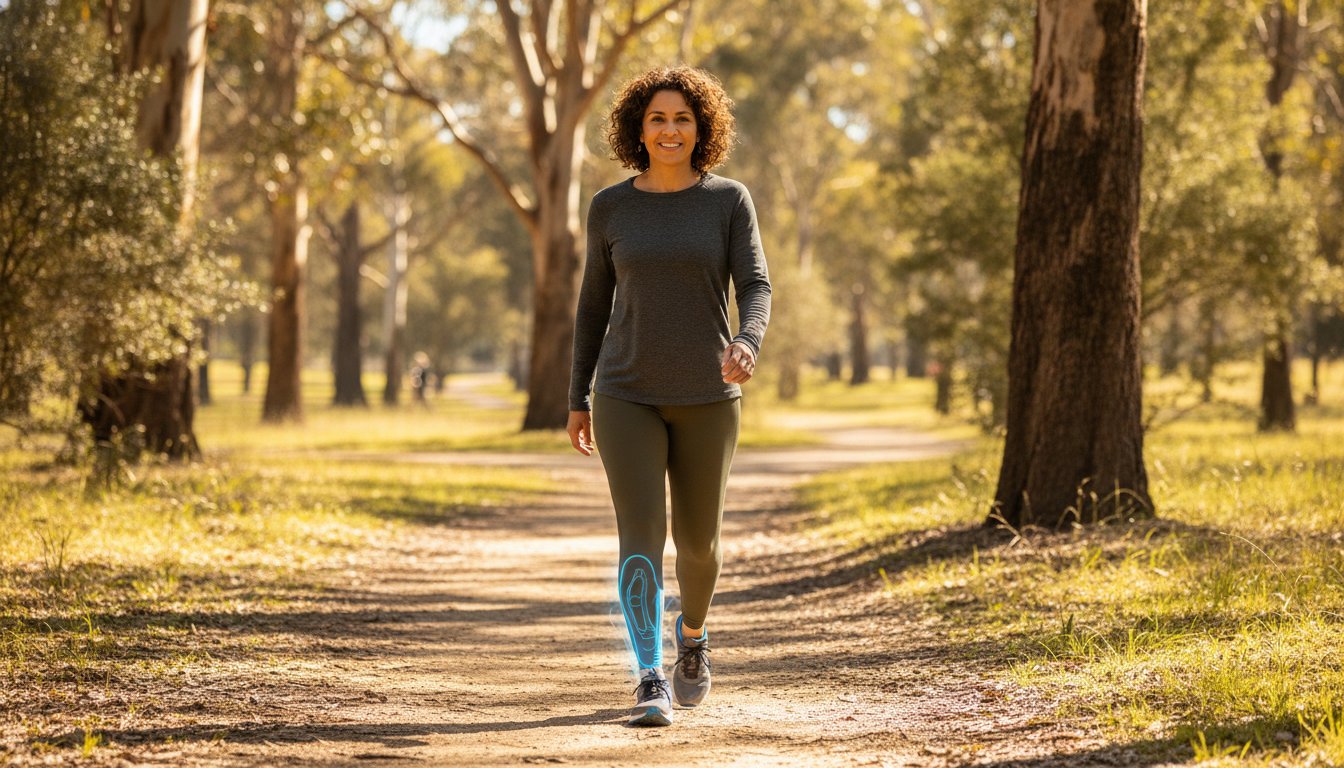
Imagine waking up and knowing that your very first step out of bed will be met with a sharp, stabbing sensation in your heel. For many residents across Narellan and Campbelltown, this isn’t just a one-off bad morning; it’s a daily struggle that makes pulling on work boots or school shoes feel like a genuine burden. You may have already tried generic foam inserts from the local chemist, only to find the nagging ache returns before lunchtime. The reality is that simple padding often fails to address the underlying structural issues. Precision-engineered custom orthotics are much more than mere shoe inserts. They act as medical prescriptions for your alignment, designed to correct the specific biomechanical imbalances that trigger chronic pain.
It’s exhausting to live with persistent discomfort that limits your mobility and dampens your love for sport or simple daily walks. You likely want a solution that offers more than just a temporary fix. This guide will help you understand how a detailed biomechanical assessment can provide the professional confirmation you need regarding your foot structure. We’ll explore how tailored alignment can resolve pain in your feet, knees, and back, helping you return to the activities you enjoy. By the end of this article, you’ll have a clear path toward long-term relief and the confidence that your foot health is in a safe pair of hands.
Key Takeaways
- Learn why bespoke medical devices provide superior joint realignment and joint protection compared to generic, mass-produced insoles from the chemist.
- Discover how a comprehensive biomechanical assessment identifies the root cause of your gait issues to create a truly personalised solution for your pain.
- Understand the long-term value of custom orthotics, which are designed to last between three to five years while offering consistent clinical outcomes.
- Find out how to easily integrate your new devices into popular Australian footwear brands like ASICS and Brooks without sacrificing your personal style.
- See the benefits of trusting your foot health to an independent, local clinic with over 25 years of experience in providing dedicated, patient-centric care.
What Are Custom Orthotics and How Do They Differ from Chemist Insoles?
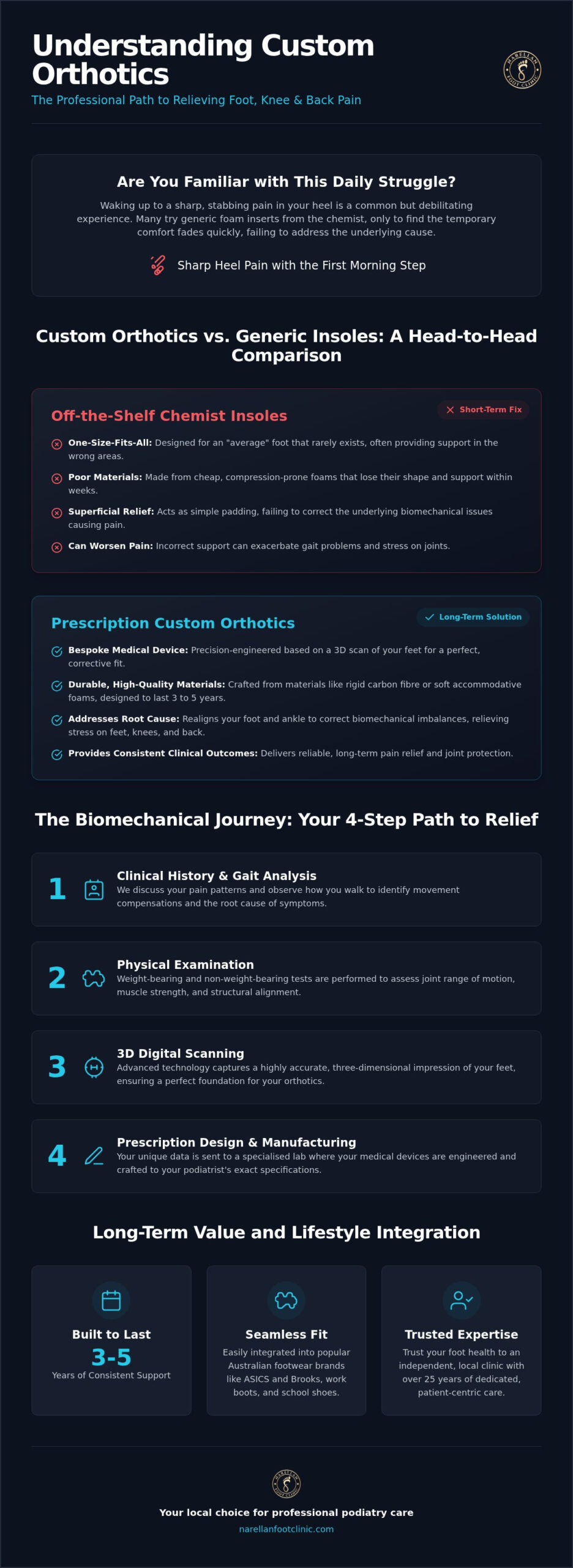
Many people start their journey toward relief at the local chemist, picking up a gel insert or a foam arch support. While these might offer a fleeting sense of comfort, they don’t address the complex mechanics of your gait. To understand the difference, we must first ask: What are orthotics? In a clinical sense, they are bespoke medical devices specifically prescribed by a podiatrist to alter the way your foot interacts with the ground. Unlike generic options, custom orthotics are engineered to realign your foot; this reduces the excessive stress placed on your ankles, knees, and lower back. They are particularly effective for managing conditions like plantar fasciitis, where targeted support for the heel and arch is essential for healing.
The Anatomy of a Prescription Orthotic
A high quality orthotic is a sophisticated piece of equipment. It typically consists of a “shell,” which is the firm internal structure that provides the actual correction. This shell can be crafted from various materials depending on your needs. Rigid carbon fibre is often chosen for its durability and thin profile, making it ideal for tight-fitting school shoes or work boots. Alternatively, soft accommodative foams provide a gentler touch for those with sensitive foot structures. On top of this sits the “top cover,” a layer designed for comfort and moisture management. Podiatrists can further customise these devices with specific additions like metatarsal pads to relieve forefoot pressure or heel skives to control severe rolling. Every element is chosen based on your unique biomechanical profile.
Why “Off-the-Shelf” Often Falls Short
Generic inserts are designed for an “average” foot that rarely exists in reality. Because they use a one-size-fits-all approach, they often provide support in the wrong places, which can actually worsen your pain. These pharmacy alternatives are usually made from cheap, compression-prone foams that lose their shape within weeks. They also fail to account for common issues like leg length differences. A custom device is built to last between three and five years, providing a consistent level of correction that a foam insert simply cannot match. Investing in custom orthotics means choosing a long-term clinical outcome over a temporary, superficial fix.
The Biomechanical Journey: How Your Custom Orthotics Are Created
Creating a medical grade device that effectively manages chronic pain is a meticulous process. It begins long before any manufacturing occurs, starting with a comprehensive biomechanical assessment. This diagnostic phase is where your podiatrist acts as a detective to uncover the specific structural or functional issues causing your discomfort. The journey toward relief follows a logical, four step path to ensure your custom orthotics provide the exact support your body requires.
- Step 1: Clinical History and Gait Analysis. We discuss your pain patterns and observe your movement to identify the root cause of your symptoms.
- Step 2: Physical Examination. This involves both non weight bearing and weight bearing tests to assess joint range of motion and muscle strength.
- Step 3: 3D Digital Scanning. We capture a precision impression of your feet using advanced technology to ensure a perfect fit.
- Step 4: Prescription Design. Your unique data is sent to a specialised laboratory where your devices are engineered to your exact specifications.
Understanding Gait Analysis in the Prescription Process
Watching you walk is one of the most vital parts of the consultation. It allows your podiatrist to see how your body compensates for pain or structural imbalances that might be causing issues further up the kinetic chain, such as in your knees or hips. By using digital tools, we can identify high pressure zones that aren’t visible to the naked eye during a standard walk. This objective data is crucial because it informs the exact degree of correction and the specific placement of supports required for your custom orthotics. Without this analysis, an insert is simply a cushion; with it, it becomes a corrective tool designed to restore natural movement.
3D Scanning vs Traditional Casting
Modern podiatry has moved far beyond the messy, time consuming plaster casts of the past. We now utilise 3D laser scanning technology which is quick, clean, and incredibly accurate. This process captures every contour of your foot with sub millimetre precision, ensuring your devices feel like a natural extension of your body. A significant benefit of this digital approach is that your records are kept on file. If you need a replacement pair or a second set for different shoes in the future, we can easily access your original prescription. It provides a seamless experience that focuses on long term convenience and clinical results. If you’re ready to find a permanent solution for your foot pain, you can arrange a consultation with our experienced team in Narellan.
Comparing Custom Orthotics to Generic Inserts: A Value Analysis
When you’re standing in a pharmacy aisle, the price difference between a mass-produced gel insert and a clinical prescription can seem significant. However, the true value of custom orthotics is best understood through a “cost per wear” lens. A generic foam insole typically loses its structural integrity within six months, often requiring multiple replacements every year. In contrast, a professionally engineered device is designed to provide consistent support for three to five years. Because we offer on the spot HICAPS claims at our clinic, many patients find that their private health insurance rebate significantly offsets the initial investment, making high quality care far more accessible than they first imagined.
The primary distinction lies in the outcome. A chemist insole provides a layer of temporary cushioning that might dull the ache for an hour or two. It doesn’t, however, change the way your joints align or how your muscles fire. Professional custom orthotics are precision tools that aim for pain resolution rather than just a momentary distraction. Because these devices are prescribed by a podiatrist, they can also be adjusted over time. If your foot structure changes or you require a slight modification to the shell, we can fine tune the device to ensure it continues to meet your needs perfectly.
Durability and Long-Term Structural Integrity
Medical grade materials like high density polypropylene or carbon fibre are chosen for their ability to maintain shape under the constant pressure of an adult’s body weight. While a foam insert will flatten and become useless under your heel, a custom shell remains resilient. This structural integrity is what ensures your biomechanical correction stays consistent from the first step of the day to the last. We also offer a refurbishing process where the top covers can be replaced while keeping the original corrective shell. This simple maintenance can extend the life of your pair even further, ensuring you get the most out of your investment.
Addressing Specific Pathologies and Misalignments
Generic insoles are often marketed as “arch supports,” but they lack the ability to provide genuine rearfoot control. This is a critical failure for those suffering from complex issues like Morton’s neuroma, severe bunions, or chronic Achilles tendonitis. A custom device provides “total contact,” meaning every millimetre of your foot is supported according to your specific prescription. This even distribution of weight is what finally allows inflamed tissues to rest and heal. To discover more about managing these types of complex injuries, you can visit RED Physiotherapy for expert guidance. By controlling the motion of the heel and midfoot, we can prevent the micro trauma that leads to long term degeneration, providing a level of care that a “one size fits all” insert simply cannot replicate.
Fitting Orthotics into Your Australian Lifestyle
Many patients worry that custom orthotics mean a lifetime of wearing bulky, unattractive footwear. This simply isn’t the case today. Modern design allows us to create low profile devices that fit seamlessly into your existing wardrobe. Brands like ASICS and Brooks are staples in Australia for a reason; they offer excellent depth and stability that complement orthotic therapy perfectly. Whether you’re heading to a Saturday morning netball game or a corporate meeting in the city, there is a solution that won’t compromise your style.
It’s important to remember that your body needs time to adapt to a new alignment. We usually recommend a gradual “break-in” period over the first fortnight. Start by wearing them for just one or two hours on the first day, slowly increasing the duration as your muscles adjust to their corrected position. This steady transition ensures your comfort and allows the long term benefits of the prescription to take effect without causing unnecessary strain.
Orthotics for Work: From Office Heels to High-Vis Boots
For those in trades or construction, high-vis safety boots are a non-negotiable part of the day. Because these boots are worn for ten or twelve hours at a time, having proper arch support is vital for preventing fatigue and lower back pain. When shopping for work or dress shoes, always look for the “removable insole” feature. This allows you to swap out the factory padding for your custom orthotics without making the shoe feel too tight. Even narrow office shoes or moderate heels can often be accommodated with a slimline prescription shell designed specifically for dress wear, ensuring you stay comfortable from the commute to the boardroom.
Sport, Leisure, and the Summer Challenge
In the Macarthur region, we love our outdoor lifestyle. Whether you’re tackling the trails at Mount Annan or playing a round of footy, your supports are designed to handle high impact activities. They improve your performance by ensuring your foot functions at its mechanical peak, which significantly reduces the risk of common injuries like ankle sprains. The “thong problem” is another classic Aussie concern. While traditional flat thongs offer zero support, we can recommend orthotic-friendly summer footwear that incorporates a contoured footbed. This means you can stay cool in the heat without sacrificing the progress you’ve made with your alignment. Ready to see how your favourite shoes can work with professional support? Book your biomechanical assessment at our Narellan clinic today.
Why Narellan Foot Clinic is the Trusted Choice for Orthotic Therapy
Choosing where to receive your custom orthotics is a significant decision for your long-term health. At Narellan Foot Clinic, you aren’t just another patient in a high-volume franchise system. David J. Miller brings over 25 years of clinical experience to the local community, offering a level of expertise that only comes from decades of dedicated, hands-on care. This independent, non-franchise approach ensures that every person receives a tailored treatment plan rather than a generic solution. For residents in Campbelltown, Camden, and the surrounding Macarthur region, having access to this specialised podiatry care locally means you don’t have to travel far for professional relief.
We understand that navigating health fund claims can often feel like a hurdle. That’s why we’ve streamlined the process by providing on-the-spot HICAPS claiming. This system allows you to process your private health insurance rebate immediately at the clinic, reducing your out-of-pocket expenses without any extra paperwork. It’s all part of our commitment to making high-quality foot care as seamless and stress-free as possible for our local families.
A Compassionate, Patient-Centric Approach
The journey from chronic pain to comfortable mobility is one we take alongside you. We maintain a fully sterilised, professional environment where your safety and comfort are our absolute priorities. Our care doesn’t end once you receive your custom orthotics. We implement a thorough follow-up process to ensure your devices are performing perfectly and providing the exact level of support your unique biomechanics require. This methodical attention to detail is what helps our patients transition from a state of worry to a life of physical freedom.
For individuals seeking to enhance their quality of life through comprehensive disability assistance, you can explore support work from dedicated NDIS providers like Accessible Care, who focus on empowering participants to live more independently.
While structural alignment is a cornerstone of recovery, many patients also find value in exploring holistic health resources to support their overall journey. For those interested in natural ways to manage chronic conditions, you can visit Dr.Vaishali Nore’s Homeopathy & Wellness Clinic to discover how homeopathic treatments can complement a healthy lifestyle.
Booking Your Assessment in Narellan
Taking the first step toward a pain-free life is straightforward. You can book your biomechanical assessment through our easy online portal or by calling our friendly team directly. When you arrive for your first appointment, it’s helpful to bring along the shoes you wear most frequently, such as your work boots, school shoes, or daily trainers. If you have old orthotics from previous treatments, please bring those too; they provide valuable context for your clinical history. We’re here to provide a safe, welcoming sanctuary where you can finally find the answers to your persistent foot, knee, and back issues. You deserve to return to your daily activities without hindrance, and we have the experience to help you get there.
Take the First Step Toward Pain-Free Movement
You’ve seen how precision-engineered custom orthotics provide a long-term solution that pharmacy inserts simply cannot match. By addressing the root cause of your discomfort through a professional biomechanical assessment, you can finally move away from temporary fixes and toward genuine structural alignment. Whether you’re navigating work in heavy-duty boots or enjoying a weekend walk through the Macarthur region, the right support makes all the difference. You deserve to walk comfortably.
Narellan Foot Clinic is independently owned and operated by David J. Miller, who brings over 25 years of local podiatry experience to every consultation. We make the process as smooth as possible with on-the-spot HICAPS and Medicare claims available. This ensures your journey to recovery is both professional and convenient. Book your biomechanical assessment at Narellan Foot Clinic today and rediscover the joy of moving without pain. You don’t have to live with persistent discomfort; your path to better mobility starts with a single, supported step.
Frequently Asked Questions
How long do custom orthotics typically last?
Custom orthotics typically last between two and four years, though this timeframe depends on your activity levels and body weight. While the durable internal shell remains functional for several years, the softer top covers may need replacing more frequently to maintain hygiene and comfort. Regular annual reviews with your podiatrist ensure the devices are still providing the correct level of support for your changing biomechanical needs over time.
Will my private health insurance cover the cost of custom orthotics?
Most Australian private health insurance policies with Extras cover will provide a rebate for your prescription devices. The exact amount depends on your fund and level of coverage, but it typically ranges from $100 to $300 per pair. We offer on-the-spot HICAPS claiming at our Narellan clinic, which means you only need to pay the remaining gap at the time of your appointment.
Do I need to wear my orthotics in every pair of shoes I own?
You should aim to wear your supports in your primary footwear, such as work boots or daily trainers, to maintain consistent alignment. While it isn’t strictly necessary for every single pair of shoes you own, swapping them between your most-used footwear ensures your body remains supported throughout the day. Slimline designs are also available if your primary pair doesn’t fit into narrow dress shoes.
How long does it take to get used to wearing new custom orthotics?
It generally takes about one to two weeks to fully adjust to your new custom orthotics. We recommend a gradual break-in period, starting with just one hour on the first day and adding an hour each subsequent day. This allows your muscles and tendons to adapt slowly to their improved position, ensuring a comfortable and successful transition to better foot health and mobility.
Can custom orthotics help with lower back or knee pain?
Yes, custom orthotics are frequently used to resolve chronic knee and lower back pain by correcting underlying biomechanical imbalances. When your feet are properly aligned, it reduces the compensatory strain on the joints higher up your kinetic chain. By stabilising your foundation, we can often alleviate the mechanical stress that leads to persistent discomfort in your upper legs, hips, and spine.
For a truly holistic approach to recovery, many find that combining biomechanical support with wellness treatments at centres like City Cave Clyde North helps to further soothe the body and manage the stress associated with chronic pain.
What is the difference between hard and soft orthotics?
Hard orthotics are designed to control motion and improve function, while soft orthotics focus on providing extra cushioning and pressure relief. Rigid devices are usually crafted from carbon fibre or medical grade plastics to manage joint alignment effectively. Soft or accommodative options are often better suited for patients with sensitive feet or specific conditions like diabetes. For those requiring advanced support for wound management and lower limb health, resources from specialised medical foot care clinics like feetandlife.ca can offer additional insights into professional care standards. Your podiatrist will select the material that best supports your needs.
Do I need a GP referral to see a podiatrist for orthotics in Australia?
You don’t need a GP referral to see a podiatrist for orthotics as a private patient in Australia. You can simply book an appointment directly with our clinic. However, if you’re seeking a Medicare rebate under a Chronic Disease Management plan, you’ll need to visit your GP first to have the appropriate paperwork organised. This ensures you can access the available government subsidies for your consultation.
Can children wear custom orthotics as they grow?
Children can certainly benefit from custom supports, especially if they’re experiencing growing pains or structural issues like severe flat feet. Because kids’ feet grow quickly, their devices usually need to be replaced every 12 to 18 months as they move up in shoe sizes. Early intervention can often prevent more complex biomechanical problems from developing as they transition into their teenage years and adulthood. If your child is also experiencing persistent nail pain alongside foot structure concerns, it may be worth exploring whether ingrown toenail surgery is an appropriate solution to address recurring nail issues at the same time.


30 Comments
[…] mid-foot arthritis, intervention becomes necessary. A professional assessment allows us to design custom orthotics for chronic pain that provide the specific medial support your body needs. This tailored approach ensures your feet […]
[…] many patients, long-term relief requires a more permanent structural intervention. Custom orthotics differ significantly from generic store-bought insoles because they are engineered to your exact […]
[…] ensure the device matches their anatomy perfectly. 3D scanning ensures sub-millimetre accuracy for custom orthotics, providing a fit that is far superior to traditional plaster casting or foam boxes. This precision […]
[…] often fail because they lack the precision required to correct complex gait issues. In contrast, custom orthotics are medical devices prescribed from your unique biomechanical data. During the prescription […]
[…] common point of confusion for patients is the difference between generic chemist-bought inserts and custom orthotics. While a simple gel heel cup might offer some cushioning, it does not address the underlying […]
[…] constant pressure, creating the perfect environment for a nail to become ingrown. Fortunately, custom orthotics can be designed to fit into your work boots, helping to redistribute weight and shield the […]
[…] the wear patterns on your soles to understand your movement. If we find high-pressure zones, custom orthotics can be designed to offload that stress and protect vulnerable skin […]
[…] by your unique gait or foot structure. If we find areas at risk of breakdown, we often recommend Custom Orthotics. These devices are precision-engineered to redistribute weight away from vulnerable spots, […]
[…] related concerns, whether you’re seeking heel pain relief or require professional guidance on custom orthotics. We focus on mobility and relief for the long term, positioning our clinic as the primary sanctuary […]
[…] podiatric tools. For instance, we often use needling to address immediate muscle tension while custom orthotics work to correct the underlying mechanical faults in your gait. This two-pronged approach ensures we […]
[…] but these mass-produced items often lack the specific support required for arthritic joints. Custom orthotics are precisely engineered based on the findings of your unique biomechanical assessment. For […]
[…] assessment reveals a structural misalignment, we provide a seamless transition from diagnosis to custom orthotics. Choosing an independent local practice means you’re in a “safe pair of hands” […]
[…] strain on the plantar fascia. These insights are essential when determining if you require custom orthotics to realign your stride and reduce daily pressure. By seeing your movement in real-time, we can […]
[…] biomechanical assessment to observe your gait and identify misalignments. By using tools like custom orthotics, a podiatrist can often resolve pain by changing the way your foot interacts with the ground, […]
[…] the specific structural support required for your unique foot geometry. Unlike mass-produced foam, custom orthotics are designed based on precise measurements of your feet to address individual imbalances. These […]
[…] modern techniques to manage the unique challenges of the diabetic foot. For example, we may utilise custom orthotics to help redistribute pressure and protect vulnerable areas from injury. These devices are tailored […]
[…] initially, but they lack the structural integrity to change how your foot functions. In contrast, Custom Orthotics for Chronic Pain: A Buyer’s Guide explains how custom-moulded devices are engineered from a detailed 3D scan of your feet. These […]
[…] standard footwear or off-the-shelf inserts aren’t enough to protect your feet, custom orthotics can be funded as Assistive Technology. These devices are clinical necessities for many diabetic […]
[…] of the most common questions we hear is whether a child needs custom orthotics. It’s a common misconception that every child with a gait variation requires them. In […]
[…] we identify the mechanical cause, we often use custom orthotics to provide a long-term solution. Unlike generic “off-the-shelf” inserts that offer […]
[…] many children, custom orthotics are the most effective way to manage Sever’s over the long term. These devices incorporate a […]
[…] specific biomechanical needs. Every child has a unique foot shape and degree of rotation. Custom orthotics are professionally designed to match the exact contours of your child’s feet, providing […]
[…] stride, you’ll eventually face the throbbing pain of a black nail. Advanced gear, such as custom orthotics, provides the structural support needed to keep your foot anchored and […]
[…] these generic options rarely provide the specific support required for chronic issues. In contrast, custom orthotics are medical devices designed specifically for your unique foot shape and biomechanical needs. At […]
[…] correction is necessary to prevent long-term joint strain, we’ll explore the benefits of custom orthotics. These devices are designed to realign your stride and provide the support your unique blueprint […]
[…] many patients, custom orthotics are a vital preventative tool. These medical devices are far more than simple arch supports; they […]
[…] advanced functional data provides the exact blueprint required to design and prescribe corrective custom orthotics. Transparent practices discuss the scope, objectives, and associated podiatry consultation fees NSW […]
[…] has evolved beyond rigid plastic arch supports that lock the foot in place. Prescribing precision custom orthotics alters internal tissue stress while allowing natural, dynamic shock absorption. We prescribe […]
[…] be assumed to straighten the toe or remove the bunion. For broader information, read this custom orthotics guide. A biomechanical assessment guide explains how an assessment can inform a discussion about foot […]
[…] more on how orthotics are assessed and made, see this custom orthotics guide. Narellan Foot Clinic offers custom orthotics, but whether they’re suitable for your toe concern […]