

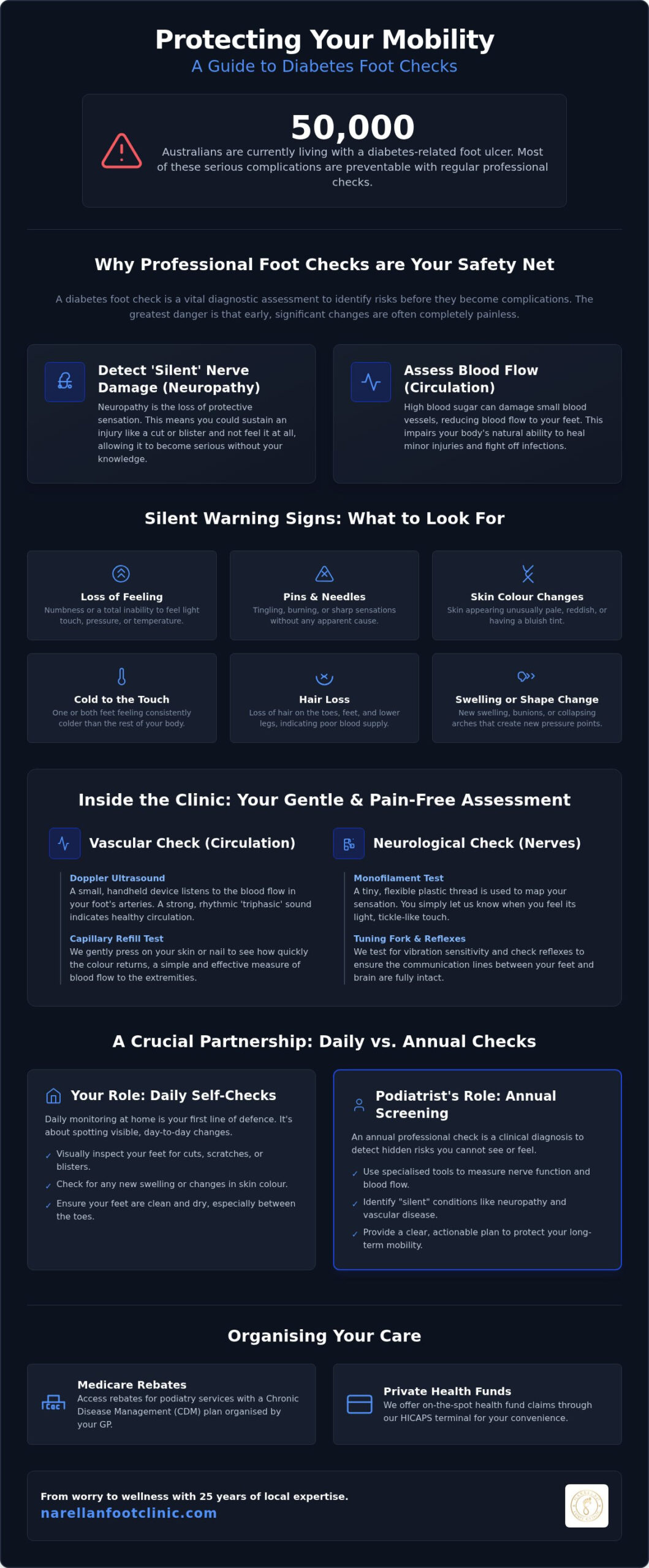
Did you know that approximately 50,000 Australians are currently living with a diabetes-related foot ulcer? While that number sounds daunting, the reality is that a regular diabetes foot check can prevent the majority of these serious complications before they even begin. It’s completely natural to feel a flicker of anxiety about what’s happening beneath the surface, especially when you’re told to watch out for “hidden” injuries you might not be able to feel yourself.
We understand that medical jargon like ‘neuropathy’ can feel cold and overwhelming. You deserve to feel confident and informed about your health journey rather than confused by it. This guide will explain exactly what happens during a professional clinical assessment, from checking your circulation to testing nerve sensitivity. We’ll also show you how to access Medicare rebates and HICAPS claims to ensure your care is as seamless as possible. By the end, you’ll have a clear roadmap for protecting your mobility and the peace of mind that comes from knowing your feet are in a safe pair of hands.
Key Takeaways
- Understand why a professional diabetes foot check is a vital diagnostic tool for identifying neuropathy, or the loss of protective sensation, before it leads to serious injury.
- Learn exactly what happens during a clinical assessment, including how podiatrists test your circulation and nerve response to keep you moving safely.
- Discover the critical difference between daily home monitoring and the annual professional screenings needed to detect “hidden” risks like peripheral vascular disease.
- Gain clarity on how to organise your care using a Chronic Disease Management plan for Medicare rebates and processing health fund claims on-the-spot via HICAPS.
- Explore how 25 years of local expertise can help transition you from a state of worry to a place of comfort and long-term wellness.
What is a Diabetes Foot Check and Why is it Essential?
A diabetes foot check is a specialised clinical assessment performed by a podiatrist to identify risks before they become complications. It serves as a vital diagnostic “safety net” for your mobility. The primary goal of this assessment is the early detection of subtle changes in your circulation and nerve function. Many people believe that if they aren’t experiencing pain, their feet are healthy. This is a common misconception because diabetes-related changes are often completely painless in their early stages. Neuropathy is the loss of protective sensation that often goes unnoticed by the patient.
Without regular screenings, these silent changes can progress into serious issues without you feeling a thing. This is why professional intervention is so important. A podiatrist uses specialised tools to see what you cannot, ensuring that minor issues don’t escalate into long-term challenges. It’s about moving from a state of uncertainty to one of clear, actionable knowledge. By identifying these risks early, we can implement simple strategies to keep your feet healthy and your lifestyle active.
The Link Between Blood Glucose and Foot Health
Your feet are often the first place to show signs of diabetes complications because they are furthest from your heart. Long-term high blood sugar levels can damage the delicate small blood vessels in your extremities. This damage restricts the efficient flow of blood, which is essential for repairing tissue and fighting infection. When circulation is reduced, your body loses its natural ability to heal minor cuts, scratches, or blisters quickly. This delay in healing creates a window for a diabetic foot condition to develop. If you smoke, this risk is significantly amplified; smoking further narrows the blood vessels and makes it much harder for your body to recover from even a tiny graze.
Identifying the ‘Silent’ Warning Signs
Recognising the early indicators of change can be difficult without professional training. While some people experience “pins and needles,” others may experience a total loss of feeling, which is far more dangerous. You should also look for physical changes that suggest poor blood supply. These include changes in skin colour, such as a bluish or very pale tint, or skin that feels unusually cold to the touch. A loss of hair on the feet and toes is another classic sign that the blood supply is struggling. Additionally, any unusual swelling or a sudden change in foot shape, like a new bunion or a collapsing arch, needs immediate attention. These structural changes can create new pressure points that lead to “hidden” injuries you might not be able to feel.
The Clinical Assessment: What Happens During Your Appointment?
Walking into a clinic can feel daunting if you don’t know what to expect. A professional diabetes foot check is a gentle, non-invasive process designed to give you clarity. It’s not about finding problems; it’s about confirming your health and providing a safety net for your future mobility. Our goal is to move you from a place of uncertainty to a state of calm confidence, knowing that your feet are being managed with the highest standard of care.
Testing Your Circulation (Vascular Check)
We begin by assessing the strength of the pulses in your feet. This involves a Doppler ultrasound, a small handheld device that uses sound waves to listen to the blood flow in your pedal arteries. You’ll hear a rhythmic sound that podiatrists describe as ‘triphasic’ when the flow is strong and healthy. If the sound is muffled, it indicates that the blood isn’t reaching the extremities as efficiently as it should. We also check your ‘capillary refill’ by gently pressing on your skin or nails to see how many seconds it takes for the colour to return. This simple, painless step is a key part of a comprehensive diabetes foot check and helps in preventing diabetes foot problems before they start.
Testing Your Nerves (Neurological Check)
The next stage involves mapping your sensation. Many patients worry about this part, but it’s entirely painless. We use a monofilament, which is a tiny, flexible plastic thread. You simply close your eyes and let us know when you feel a light touch on different parts of your foot. It feels like a soft tickle. We also use a tuning fork to test for vibration. This helps us determine if your deep nerve endings are functioning correctly. Finally, we check your reflexes to ensure the communication lines between your feet and brain remain intact. These tests are vital for identifying neuropathy, which is often a silent change that goes unnoticed.
Step 3: Dermatological Exam. We thoroughly inspect the skin for cracks, calluses, or fungal infections. These issues might seem minor, but they can compromise your skin’s integrity and lead to complications if left unmanaged.
Step 4: Biomechanical Review. We assess how your foot structure and walking pattern affect pressure distribution. High-pressure areas are often where “hidden” injuries begin, so understanding your movement is essential for long-term relief.
Step 5: Personalised Management Plan. We conclude by creating a roadmap for your daily care. This ensures you leave with a clear understanding of your foot health and the practical steps needed to maintain it. If you’re ready to gain this peace of mind, booking a diabetic foot assessment is the first step toward long-term comfort and physical freedom.
Self-Checks vs. Professional Diabetes Foot Checks
A daily routine of looking at your feet is a fantastic habit, but it’s important to understand where self-monitoring ends and clinical diagnosis begins. While you might use a mirror to check for obvious cuts or redness, a professional diabetes foot check involves diagnostic tools that look far beneath the skin’s surface. Think of your daily check as a maintenance walk-around of a car; the podiatrist’s visit is the full mechanical service that ensures everything is running safely under the bonnet.
Podiatrists play a critical role in identifying ‘high-pressure’ areas. These are specific spots where your walking pattern or foot structure puts excessive stress on the underlying tissue. Over time, this pressure builds up thick skin, known as callus. To the untrained eye, it’s just a bit of rough skin. To a professional, it’s a warning sign that an ulcer may be forming underneath. By managing these areas before the skin breaks, we prevent the risk of infection. Similarly, professional nail care is essential. Attempting ‘bathroom surgery’ on an ingrown nail or a stubborn corn is incredibly risky for anyone with diabetes. Our sterilised clinical environment ensures that even routine maintenance is performed with absolute precision and safety.
The Limits of the Home Mirror Test
A mirror is a helpful tool for seeing the underside of your foot, but it cannot detect the early stages of peripheral vascular disease or subtle nerve changes. It also struggles to reveal ‘hidden’ calluses that might be masking an underlying wound. We often find that moisture hiding between the toes leads to fungal infections or skin breakdown that a quick glance in a mirror might miss. For a detailed breakdown of what you should be looking for every morning, refer to our Diabetic Foot Care: Daily Guide to Prevent Complications.
When to Upgrade from an Annual to a Quarterly Check
While an annual diabetes foot check is the standard recommendation for most, certain factors may mean you need to see us more frequently. If you have a history of foot ulcers, poor glucose control, or have noticed a significant change in your foot shape, moving to a quarterly schedule provides an extra layer of protection. Changes in your activity levels or even a new pair of walking shoes can alter how pressure is distributed across your feet. In these cases, a biomechanical assessment allows us to analyse your gait and redistribute pressure effectively. This proactive approach ensures that your mobility remains a priority, keeping you active and independent for longer.
Organising Your Care: Medicare, HICAPS, and Frequency
Managing a chronic condition requires a great deal of organisation, and we believe your healthcare should reduce your stress rather than add to it. For many, this involves exploring holistic approaches to health; you can find more information on managing the root causes of chronic illness at rootedfunctional.com. The standard clinical recommendation is that every person living with diabetes should have a professional diabetes foot check at least once a year. This annual milestone acts as a vital baseline for your health, allowing us to track any subtle changes in your circulation or nerve response over time. By staying consistent with these appointments, you ensure that your mobility remains protected through every stage of your journey.
Navigating Medicare and Private Health
Accessing high-quality podiatry care is more straightforward than many people realise. If you have a chronic condition like diabetes, you may be eligible for a Chronic Disease Management (CDM) plan, formerly known as an Enhanced Primary Care plan. This integrated approach is common in specialised practices such as Dunn Bay Surgery, where the focus is on proactive chronic disease management and overall health surveillance. Your GP can provide a referral that allows for up to five Medicare-subsidised allied health visits per calendar year. As of August 2026, the Medicare rebate for these visits is $58.00. At our Narellan centre, we prioritise your convenience by facilitating immediate claims. We use the HICAPS system to process private health fund rebates on-the-spot, which significantly reduces out-of-pocket stress. Following your appointment, we provide a detailed report to your GP to ensure your entire medical team stays informed about your progress.
While an annual review is the minimum requirement, your specific health profile might require more frequent monitoring. We categorise risk levels to ensure you receive the right amount of attention at the right time:
- Low Risk: These patients typically require annual checks alongside consistent daily home care.
- Moderate Risk: If we detect early changes in sensation or circulation, we recommend six-monthly reviews to monitor these shifts closely.
- High Risk: For those with a history of ulcers or significant loss of feeling, three-monthly specialised care is essential to prevent active complications.
To get the most out of your appointment, we recommend bringing a few key items with you. Please bring the footwear you wear most often, as the wear patterns on your soles provide valuable clues about pressure distribution. It’s also helpful to have your recent glucose records and any relevant test results from your GP. This information allows us to build a more accurate picture of your overall health. If you are due for your annual review or have noticed new changes in your feet, you can book your next diabetes foot check with our experienced team today to ensure your feet remain in a safe pair of hands.
Comprehensive Diabetic Care at Narellan Foot Clinic
Living with diabetes requires constant vigilance, and your feet deserve the highest standard of professional attention. For over 25 years, our team has served the Narellan and Macarthur communities, providing a reliable sanctuary for those seeking to protect their mobility. We pride ourselves on being a ‘safe pair of hands’ for our patients, offering a supportive and gentle approach that aims to move you from a state of worry to one of complete ease. Our clinic maintains a fully sterilised, professional environment, ensuring that every diabetes foot check is conducted with the highest levels of clinical precision and care.
While we are firmly rooted in the local community, our reputation for excellence draws residents from across the Sydney region, including Campbelltown, Blacktown, and Penrith. We are committed to delivering patient-centric healthcare that treats you as an individual rather than just a set of symptoms. This long-standing presence in the Macarthur area is a testament to our dedication to effective results and the long-term wellness of our neighbours.
Why Choose Our Narellan Podiatry Team?
Choosing the right podiatry team is essential for maintaining your independence. Our practitioners combine deep clinical knowledge with modern techniques to manage the unique challenges of the diabetic foot. For example, we may utilise custom orthotics to help redistribute pressure and protect vulnerable areas from injury. These devices are tailored to your specific biomechanical needs, providing comfort and relief where you need it most. To help you prepare for your visit, we have developed a comprehensive Diabetic Foot Assessment Narellan guide that outlines exactly what to expect during your time with us.
Booking Your Assessment Today
Taking the first step toward better foot health is a straightforward process. Whether you are a new patient or returning for your regular diabetes foot check, our friendly staff is here to make your experience as seamless as possible. During your first consultation, we will take the time to listen to your specific concerns and conduct a thorough review of your circulation and sensation. We move at a pace that feels thorough and comprehensive, mirroring the efficiency of a professional consultation without ever feeling rushed. You can trust our experienced team to provide the clarity and support you need to stay active. Take the first step toward peace of mind and protected physical freedom by booking your assessment with our Narellan centre today.
Securing Your Physical Freedom and Peace of Mind
Prioritising your foot health is one of the most effective ways to maintain your long-term independence. While daily monitoring at home is a vital habit, it can’t replace the diagnostic precision of a professional diabetes foot check. By identifying subtle changes in circulation and nerve response before they escalate into painful complications, you’re choosing a path of proactive wellness rather than reactive treatment. Understanding your risk category and utilising accessible pathways like Medicare CDM plans ensures that expert care is always within reach.
At Narellan Foot Clinic, we’ve been a trusted sanctuary for the local community since 1998. With over 25 years of clinical experience, our team provides the “safe pair of hands” you need to navigate the complexities of diabetic care with confidence. We make the process seamless with on-the-spot HICAPS and Medicare claims, allowing you to focus entirely on your comfort and long-term relief. It’s time to transition from a state of worry to the ease of professional support. Book Your Comprehensive Diabetes Foot Check at Narellan Foot Clinic today. Your journey toward protected mobility and healthy feet starts with this simple, essential step.
Frequently Asked Questions
Is a diabetes foot check painful?
A diabetes foot check is entirely painless and non-invasive. We use gentle tools like a monofilament, which feels like a soft tickle, and a tuning fork to test vibration response. There are no needles or sharp instruments involved in the screening process. Our goal is to ensure you feel relaxed and comfortable throughout the assessment, moving you from a state of worry to one of complete ease.
How often should I have a professional diabetes foot check?
You should have a professional diabetes foot check at least once every twelve months if you are at low risk. If our podiatrists identify changes in your circulation or sensation, we may recommend moving to a six-monthly or three-monthly schedule. Regular appointments allow us to create a reliable safety net for your mobility by tracking your foot health and identifying subtle changes over several years.
Can I get a Medicare rebate for my podiatry appointment?
Yes, eligible patients can access a Medicare rebate through a Chronic Disease Management (CDM) plan. As of August 2026, the Medicare rebate for these visits is $58.00. You will need to visit your GP to organise this referral before your appointment. At our Narellan centre, we use HICAPS to process these claims on-the-spot, which helps reduce out-of-pocket stress and ensures your healthcare remains accessible.
What should I look for when checking my feet at home?
When monitoring your feet at home, you should look for any changes in skin colour, temperature, or unusual swelling. Pay close attention to blisters, cuts, or redness that doesn’t seem to heal. It’s also important to check the underside of your feet and between your toes where moisture can cause skin breakdown. If you notice anything unusual, contact our clinic for a professional review immediately.
What is the difference between a basic foot check and a comprehensive exam?
A basic foot check is often a visual inspection, whereas a comprehensive exam involves diagnostic testing of your vascular and neurological systems. We use Doppler ultrasound to listen to your blood flow and specialised threads to map your nerve sensitivity. This detailed approach allows us to identify hidden risks, such as peripheral vascular disease, that cannot be detected with the naked eye during a standard visual check.
Do I need a referral from my GP to see a podiatrist at Narellan?
A referral is not required if you are booking as a private patient at our Narellan clinic. You can simply call us to arrange a consultation at your convenience. However, a GP referral is essential if you want to claim the Medicare rebate under a CDM plan. We welcome patients from across the Sydney region, including Campbelltown and Penrith, regardless of whether they have a referral or not.
What happens if the podiatrist finds a problem during the check?
If we identify a concern during your check, we will immediately create a personalised management plan to protect your feet. This could involve specialised wound care, footwear modifications, or the use of custom orthotics to redistribute pressure. We also provide a comprehensive report to your GP, ensuring your entire medical team is working together to maintain your long-term health and physical freedom.
How do I know if I have neuropathy in my feet?
Neuropathy often presents as numbness, tingling, or a “pins and needles” sensation in the feet. However, it can also be a silent condition where you lose the ability to feel pain or temperature changes entirely. Because you might not notice these changes yourself, a professional assessment is the only way to accurately map your nerve function and ensure you haven’t lost your vital protective sensation.




2 Comments
[…] reduce the risk of hospitalisation by catching these issues while they are still manageable. Our diabetes foot check guide explains in detail how these clinical screenings work to protect your long-term […]
[…] approach is a vital part of comprehensive foot care for diabetics, and pairing it with a regular diabetes foot check from a qualified podiatrist ensures nothing is […]