

Imagine waking up and dreading that first step out of bed because of a sharp, stabbing sensation in your heel. You want to enjoy a weekend stroll through the Mount Annan Botanic Garden, but instead, you’re stuck on the lounge wondering if you need new joggers, better stretches, or even surgery. If this sounds familiar, you aren’t alone, and you don’t have to guess your way through recovery. Many people ask, what does a podiatrist do for heel pain beyond just suggesting a different pair of shoes?
We understand that persistent foot discomfort is more than a nuisance; it’s a barrier to the active life you deserve. This guide will walk you through the specific clinical steps, diagnostic tools, and advanced treatments a podiatrist uses to identify the root cause of your discomfort. From detailed biomechanical assessments to the precision of custom orthotics, you’ll discover a clear path toward immediate relief and a long-term plan to keep you moving with confidence.
Key Takeaways
- Understand exactly what a podiatrist does for heel pain, moving beyond general advice to target the specific biomechanical source of your discomfort.
- Learn how a clinical consultation uses physical examinations and history taking to provide a clear, professional diagnosis for conditions like plantar fasciitis.
- Discover immediate relief strategies used in-clinic, such as strapping and dry needling, to reduce sharp morning pain and improve daily mobility.
- Explore the role of custom orthotic therapy and expert footwear prescription in providing a long-term plan to keep you active and pain-free.
- Find out why a “safe pair of hands” with over 25 years of experience in the Macarthur community is essential for effective, personalised foot care.
The Role of a Podiatrist in Solving Chronic Heel Pain
A podiatrist is a university-trained health professional who specialises in the complex structures of the lower limb. While your local GP is excellent for general health concerns, podiatrists use specialised equipment designed specifically for foot-specific diagnostics. We focus on identifying mechanical dysfunction, assessing skin health, and evaluating structural alignment to see exactly how your feet perform under pressure. A podiatrist acts as a specialist who diagnoses the underlying cause of plantar fascia and calcaneal discomfort.
Many patients arrive at our clinic asking, what does a podiatrist do for heel pain that I haven’t already tried at home? The answer lies in our clinical ability to look beyond the immediate ache to find the biomechanical trigger. We don’t just look at where it hurts; we look at why it hurts.
Beyond the Surface: Why “Just Resting” Often Fails
Resting might offer temporary relief, but it rarely addresses why the pain started in the first place. Heel pain often stems from how your foot interacts with the ground, such as excessive rolling or poor shock absorption during your stride. There is a significant difference between temporary inflammation and chronic degenerative changes in the tissue. A professional heel pain treatment plan targets the root cause by correcting these movements rather than just masking the symptoms with ice or rest. This approach ensures the recovery is permanent.
When to See a Podiatrist for Your Heel
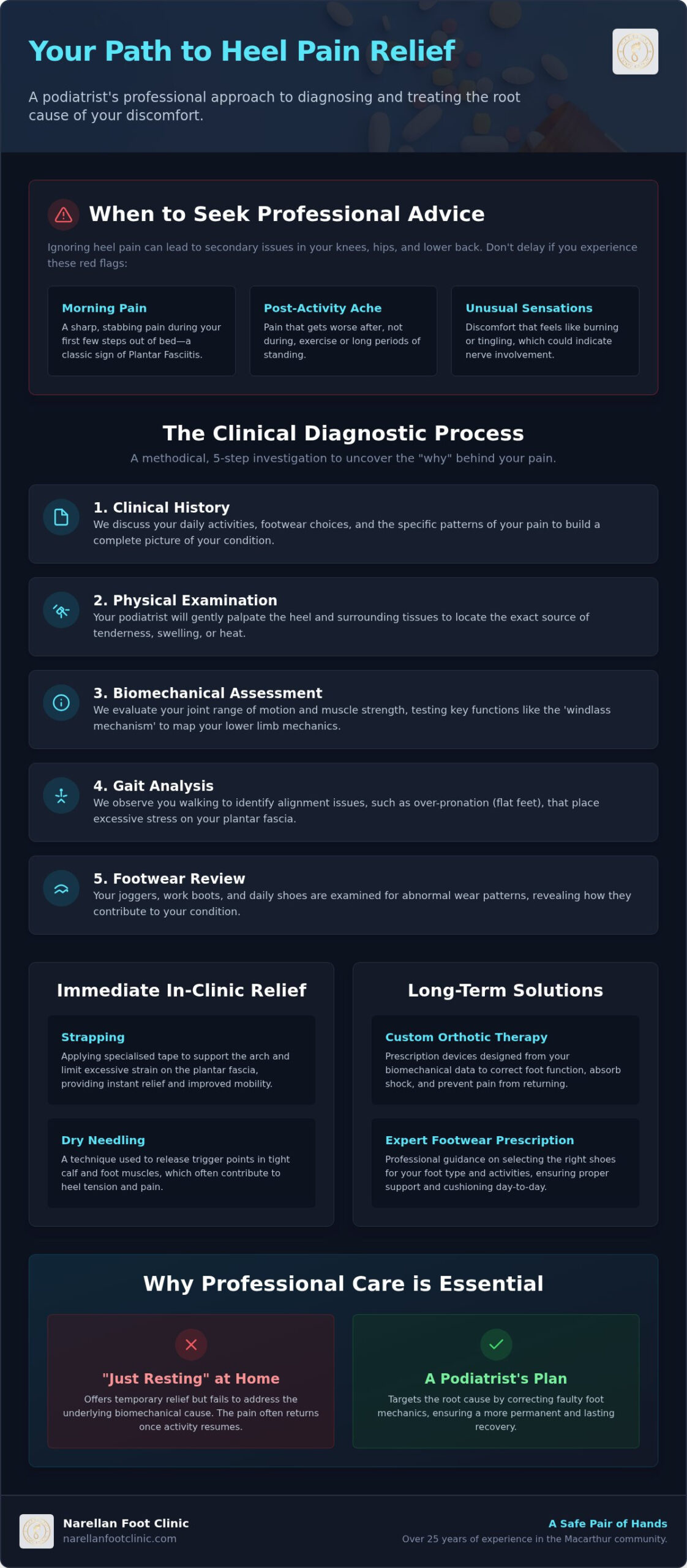
You should seek professional advice if you experience sharp pain during your first few steps in the morning. This is a classic sign of Plantar fasciitis, where the tissue has tightened overnight and becomes strained upon weight-bearing. Other red flags include pain that worsens after exercise or discomfort that feels like burning or tingling, which might indicate nerve entrapment or Achilles tendon involvement. Early intervention is vital. If you leave it too long, your body will naturally change the way you walk to avoid the pain. This shift often leads to secondary issues in your knees, hips, and lower back. Understanding what does a podiatrist do for heel pain can help you avoid these complications and return to your normal routine much sooner.
The Diagnostic Process: What Happens During Your Consultation
When you seek professional help for persistent foot discomfort, the journey begins with a structured and methodical evaluation. Many patients feel unsure about what to expect, but understanding what does a podiatrist do for heel pain helps set realistic expectations for your recovery. The diagnostic process is far more detailed than a simple visual check; it is a clinical investigation into the way your body moves. We follow five essential steps to ensure nothing is missed.
- Clinical History: We discuss your daily activity levels, the types of shoes you wear most often, and the specific patterns of your pain.
- Physical Examination: Your podiatrist will palpate the heel and surrounding structures to locate the exact site of tenderness and check for swelling or heat.
- Biomechanical Assessment: This involves evaluating the range of motion in your joints and testing the strength of the muscles supporting your feet.
- Gait Analysis: We observe you walking to identify alignment issues, such as over-pronation, that might be placing extra stress on your heel.
- Footwear Review: By checking your joggers, work boots, or dress shoes for abnormal wear patterns, we can see how your footwear contributes to your condition.
The Biomechanical Assessment Explained
We use a biomechanical assessment to create a functional map of your lower limbs. During this stage, we test the flexibility of your calf muscles and the efficiency of the “windlass mechanism”, which is the way your arch naturally tightens to provide a stable base when you walk. This data is vital for designing a customised recovery programme that addresses your unique anatomy. If you are tired of guesswork, booking a professional assessment is the first step toward a clear resolution.
Gait Analysis: Watching Your Stride
Observing your foot strike and toe-off phases allows us to see the “why” behind your pain. This analysis is a cornerstone of effective non-surgical treatment, as it reveals whether “flat feet” or high arches are causing excessive strain on the plantar fascia. These insights are essential when determining if you require custom orthotics to realign your stride and reduce daily pressure. By seeing your movement in real-time, we can ensure your treatment plan is precise and effective.
Immediate Relief Strategies: Clinical Treatments in the Chair
Once we have identified the source of your discomfort, the focus shifts to reducing your immediate daily pain. Many patients arrive at our clinic asking what does a podiatrist do for heel pain during the very first treatment session. We use several hands-on techniques to provide rapid mechanical support and physiological relief. These chairside treatments are designed to calm the inflamed tissues, allowing you to walk out of the clinic feeling significantly more comfortable than when you walked in.
Manual therapy is an essential part of this process. We use joint mobilisation to improve the flexibility of the midfoot and ankle. If these joints are restricted, your heel is forced to absorb more impact than it was designed for. Additionally, we don’t overlook general foot care. If you have developed corns or calluses, you might be subconsciously altering your gait to avoid pressure. This shift often creates new strain on the heel; therefore, clearing these secondary issues is vital for a complete recovery.
Dry Needling for Heel Pain
Dry needling is a modern clinical technique that targets myofascial trigger points in the lower limb. By using fine needles to release tension in the calf muscles, we can reduce the constant pull on the plantar fascia. This procedure also increases local blood flow to the injured area. Improved circulation delivers the nutrients needed for tissue repair, helping to speed up the recovery process. Our approach is always gentle, ensuring you feel supported and informed throughout the entire procedure. It’s a highly effective way to address the muscular tightness that often accompanies chronic heel conditions.
Clinical Strapping and Offloading
This technique is a staple in advanced musculoskeletal clinics globally, with providers like Fysioterapien Ken Chr. Heiden using similar specialised methods to treat persistent soft tissue tension and promote faster healing.
Clinical strapping offers a powerful way to offload the heel immediately. We use specialised tape to provide mechanical support that mimics the function of the plantar fascia. This serves as a vital “test run” for many patients. If you experience instant relief from strapping, it confirms that structural support is a key part of your long-term solution. As noted by the American Podiatric Medical Association on heel pain, these conservative, non-surgical approaches are highly effective for managing acute symptoms. By offloading the area, we give the inflammation a chance to subside, which is the first step toward lasting mobility. Understanding what does a podiatrist do for heel pain helps you see that clinical relief is a multi-layered process that prioritises your comfort from day one.
Long-Term Solutions: Preventing the Return of Pain
Achieving immediate relief is a vital first step, but the true value of podiatric care lies in ensuring your symptoms don’t return. When considering what does a podiatrist do for heel pain over the long term, the focus shifts toward structural correction and active rehabilitation. We want to move you from a state of recovery to a state of resilience, allowing you to return to your favourite activities without the constant fear of a flare-up. This involves a combination of mechanical support, exercise, and lifestyle education.
Custom Orthotics: The Modern Approach
For those interested in the latest medical advancements for chronic conditions, you can also explore stem cell therapy (Lipogems) as a minimally invasive regenerative option to support long-term recovery and tissue repair.
Unlike generic chemist insoles that offer basic cushioning, custom orthotics are medical devices designed specifically for your unique foot structure. We use advanced 3D scanning or traditional casting to capture a precision model of your feet. This allows us to create a device that realigns your joints and offloads the specific tissues under stress. For patients with significant biomechanical misalignments, these devices are often the missing link in achieving permanent relief. They provide the consistent support required to prevent the plantar fascia from becoming overloaded during daily movement.
The “Right Shoe” for Your Feet
Your daily footwear acts as the foundation for your recovery. Understanding what does a podiatrist do for heel pain involves looking at how footwear prescription can prevent future strain. During your consultation, we evaluate your shoes for three critical features: a firm heel counter, midfoot stability, and appropriate cushioning. We often ask Narellan residents to bring in their most-worn joggers or work boots. This helps us see how your local lifestyle, whether you’re walking the dog through the Macarthur region or standing all day at work, impacts your foot health. Choosing the right shoe isn’t about the most expensive brand; it’s about the right technical features for your specific foot type. We guide you toward models that complement your biomechanics, ensuring every step you take supports your recovery.
Long-term success also requires active participation through exercise rehabilitation. We provide tailored stretching and strengthening programmes designed to improve the elasticity of your calves and the strength of your arch muscles. Education is equally important. Understanding load management means knowing how to gradually increase your activity levels without overloading your tissues. It’s about finding the balance between staying active and giving your body the time it needs to adapt. If you’re ready to stop the cycle of recurring pain, book a consultation with our experienced team today.
Why Narellan Foot Clinic is the Right Choice for Your Journey
Choosing the right practitioner is just as important as the treatment itself. Narellan Foot Clinic has served the Narellan and Macarthur community for over 25 years, providing a “safe pair of hands” for thousands of patients. Led by principal podiatrist David J. Miller, our practice combines decades of clinical experience with advanced medical techniques to ensure you receive the highest standard of care. When you are searching for answers to what does a podiatrist do for heel pain, you deserve a team that prioritises both clinical precision and your personal comfort.
Our clinic operates in a fully sterilised environment, using modern diagnostic tools to get to the bottom of your discomfort. We don’t believe in one-size-fits-all solutions. Instead, we focus on delivering personalised outcomes that help you return to the activities you love. Whether you are a weekend hiker or a busy professional on your feet all day, our history of excellence in the local area makes us a trusted partner in your recovery.
A Local Practice with Deep Expertise
Being a long-standing local practice means we understand the specific needs of our community. We recognise the physical demands of local sporting clubs and the requirements of those working in the trade and retail sectors across the Macarthur region. Our commitment to clear communication ensures you never feel like just another appointment. We take the time to explain your diagnosis and treatment options in plain English. Our clinic is conveniently located for residents of Campbelltown, Camden, and all surrounding suburbs, making professional foot care accessible to everyone in the region.
Seamless Booking and Billing
We believe that accessing healthcare should be stress-free. To support this, we offer on-the-spot HICAPS processing for all major Australian health funds, allowing you to claim your rebate instantly. For patients with chronic conditions, we facilitate Medicare EPC/CDM referrals from your local GP. As of 2026, eligible patients can access a Medicare rebate of approximately A$61.80 per appointment for up to five allied health visits per year. This logical, patient-centric approach ensures you can focus entirely on your recovery. Understanding what does a podiatrist do for heel pain is the first step; taking action is the second. Ready to walk without pain? Book your heel pain consultation at Narellan Foot Clinic today.
Step Toward a Pain-Free Future
Heel pain doesn’t have to be a permanent part of your daily life. By addressing the structural causes of your discomfort through clinical diagnostics and personalised treatment plans, you can return to the activities you love. Whether it is through advanced dry needling for immediate relief or custom orthotics for long-term stability, professional care offers a clear path out of chronic discomfort. You don’t have to guess whether you need new shoes or different stretches; a clinical assessment provides the answers you need.
Understanding exactly what does a podiatrist do for heel pain is the key to moving beyond temporary fixes. At Narellan Foot Clinic, Principal Podiatrist David J. Miller brings over 25 years of local experience to every consultation, ensuring you are in a safe pair of hands. We make the process as seamless as possible with on-the-spot HICAPS claims for all major health funds, allowing you to focus entirely on your recovery.
Don’t let foot pain hold you back from enjoying your life in the Macarthur community any longer. Take the next step toward comfort and lasting wellness today. Book Your Heel Pain Assessment at Narellan Foot Clinic
Frequently Asked Questions
Do I need a GP referral to see a podiatrist for heel pain?
You don’t need a GP referral to see a podiatrist as a private patient in Australia. You can simply book an appointment at our Narellan clinic whenever you’re ready to seek relief. However, if you have a chronic condition and wish to access Medicare rebates, your GP must first arrange a Chronic Disease Management Plan. Most of our local patients find booking directly is the fastest way to begin their recovery.
How many appointments will I need to fix my heel pain?
The number of appointments varies depending on how long you’ve been experiencing discomfort and the severity of the injury. Most patients notice a significant improvement within the first three to six sessions. Your initial consultation focuses on a clear diagnosis, while follow-up visits allow us to implement treatments like dry needling, monitor your progress with custom orthotics, and refine your personalised exercise rehabilitation programme for lasting results.
Is podiatry treatment for heel pain covered by Medicare?
Medicare rebates are available only for patients with a chronic condition and a formal GP-arranged Chronic Disease Management Plan. For eligible residents in the Macarthur region, the current rebate is approximately A$61.80 per appointment for up to five visits each year. For private patients, we provide on-the-spot HICAPS claims, which allow you to use your private health insurance “Extras” cover to reduce your out-of-pocket expenses immediately.
Will I have to wear orthotics for the rest of my life?
Not necessarily. While some patients with significant structural misalignments benefit from long-term support, others only require orthotics during their active recovery or for specific high-impact activities. When investigating what does a podiatrist do for heel pain, many people are pleased to learn that orthotics are often used as a temporary tool to offload damaged tissue while we work on strengthening the foot through targeted exercise and gait retraining.
Can a podiatrist help with heel pain that feels like a stone in my shoe?
Yes, we frequently treat patients who describe a sensation similar to walking on a stone or a marble. This specific feeling often indicates bursitis, a neuroma, or a shift in the heel’s natural fat pad. A professional consultation allows us to identify the exact structure under stress. We then use clinical techniques to offload the area, providing immediate relief and preventing the sensation from returning during your daily walks.
What should I bring to my first heel pain appointment?
Please bring your most-worn footwear, including your work shoes, joggers, and any everyday shoes you wear around the house. It’s also helpful to bring any previous imaging results, such as X-rays or ultrasounds, and your GP referral if you have one. Seeing your footwear wear patterns helps us understand what does a podiatrist do for heel pain in your specific case by revealing how your shoes interact with your unique gait.
Is dry needling for foot pain painful?
Most patients find dry needling to be a very tolerable and gentle procedure. You might feel a tiny pinch upon insertion, followed by a dull ache or a brief muscle “twitch” as the tension in your calf or foot releases. This is a sign that the trigger point is responding to the treatment. Our experienced team performs this in a sterile, clinical environment, ensuring you feel comfortable and reassured throughout the entire process.
Can a podiatrist tell the difference between a heel spur and plantar fasciitis?
A podiatrist can distinguish between these conditions through a physical examination and by reviewing your pain patterns. While a heel spur is a bony growth visible on an X-ray, it is often the inflammation of the surrounding soft tissue, known as plantar fasciitis, that actually causes the pain. We focus our clinical expertise on treating the source of the inflammation and correcting the biomechanical stress that leads to both conditions.