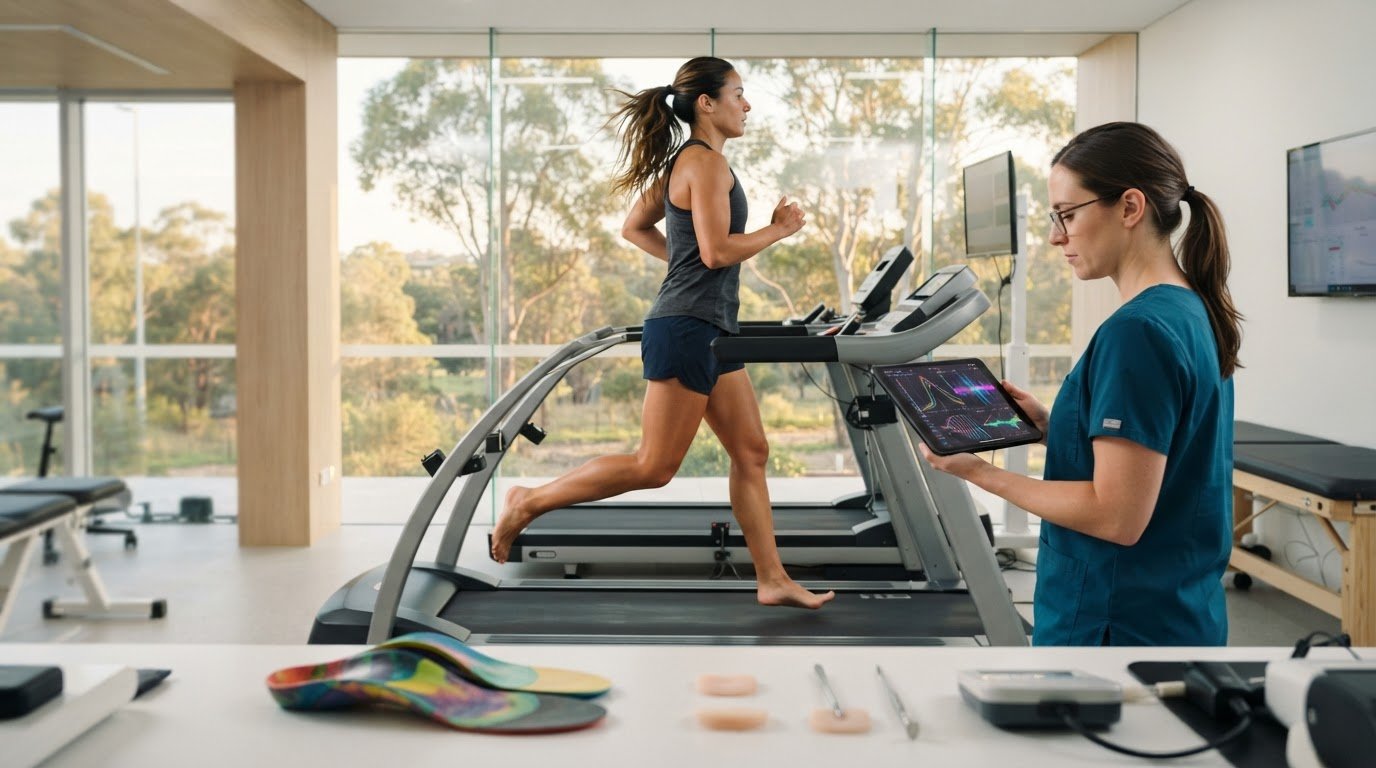
According to Sports Medicine Australia, up to 70% of runners sustain an overuse injury within a single year. When recurring heel, knee, or arch pain flares up mid-stride, finding an experienced sports podiatrist Macarthur region runners can rely on is crucial. You shouldn’t have to navigate confusing advice from shoe stores or endure long commutes into central Sydney just to access dependable, clinical lower-limb care.
We know how disheartening it feels when simply resting your legs fails to keep the discomfort away once you return to the track or sporting pitch. True athletic recovery targets underlying mechanical load, not temporary symptom relief. In this guide, you’ll discover how specialised sports podiatry in Macarthur accurately diagnoses injuries, corrects lower-limb biomechanics, and accelerates your recovery. From thorough clinical assessments to evidence-based solutions like custom orthotics and dry needling, here’s how you can restore full athletic function right here in your local community.
Key Takeaways
- Understand how dynamic athletic movement places distinct, high-impact stresses on your feet that routine walking gait analysis cannot capture.
- Recognise why foot and ankle pain is typically a lagging indicator of mechanical tissue overload, requiring load management rather than simple rest.
- Discover how a comprehensive biomechanical assessment identifies the structural imbalances and movement patterns driving recurring sports injuries.
- Learn how targeted clinical therapies, including custom orthotics and dry needling, provide structural realignment and active soft-tissue relief.
- Find out how consulting an experienced sports podiatrist Macarthur region competitors rely on provides elite-level care close to home in Narellan.
What Does a Sports Podiatrist Do for Macarthur Athletes?
While general podiatry focuses on general foot health, sports podiatry addresses the mechanical strains of physical activity. As an allied health discipline, podiatry is a recognized branch of medicine devoted to the study, diagnosis, and treatment of disorders of the foot, ankle and lower limb. For athletes, this means identifying how high velocity, sudden changes of direction, and repetitive ground impacts affect bones, tendons, and ligaments.
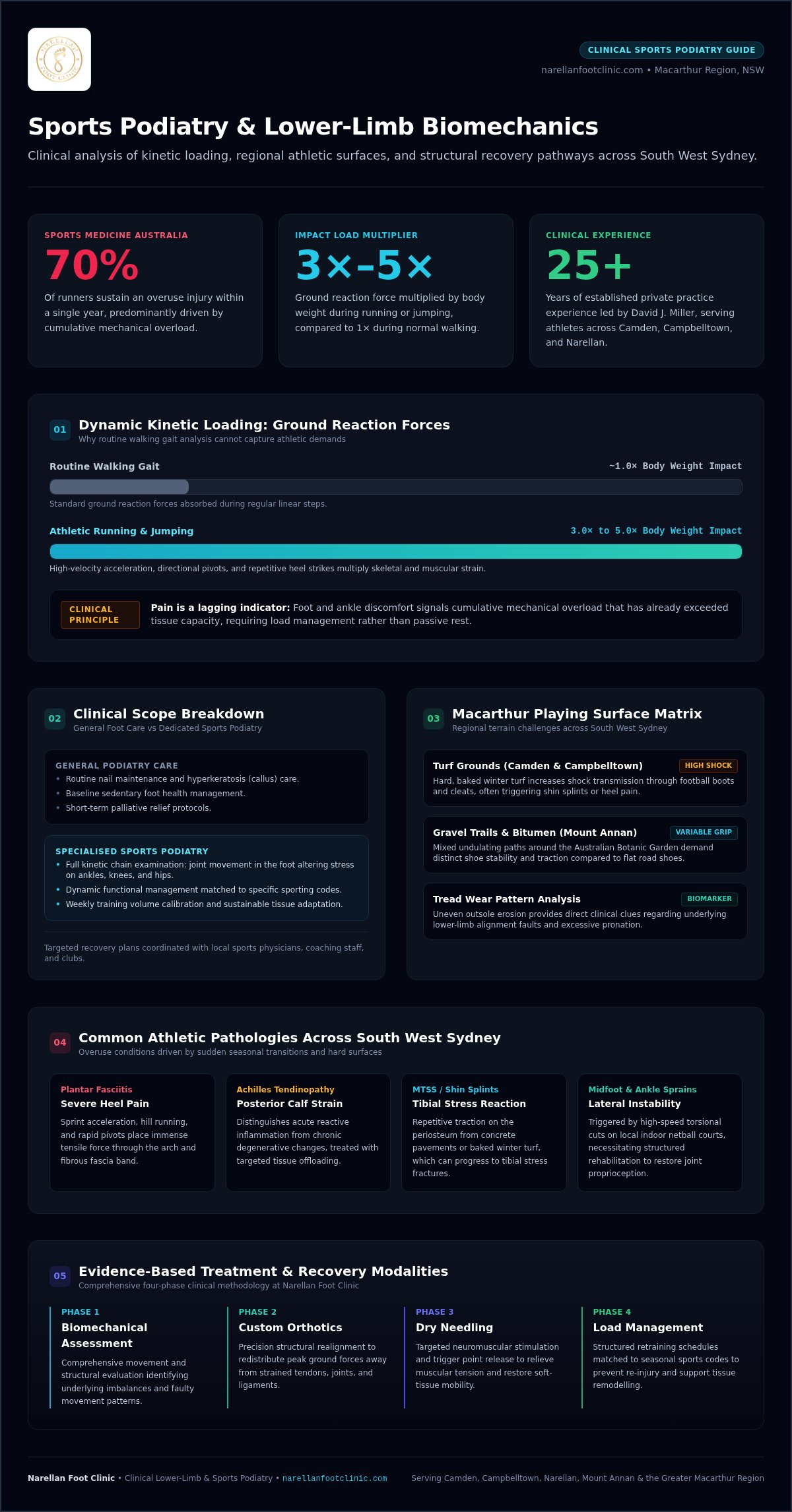
Walking places ground reaction forces equal to roughly your body weight through each foot strike. Running or jumping multiplies that impact to three to five times your body weight. A dedicated sports podiatrist Macarthur region athletes turn to bridges this gap. Led by David J. Miller, Narellan Foot Clinic brings over 25 years of established private practice experience to local players and runners. We regularly coordinate with local sports physicians, coaching staff, and clubs across Camden, Campbelltown, and Narellan to ensure your recovery aligns with training targets.
Differentiating Sports Podiatry from General Foot Care
General care deals with routine concerns such as nail maintenance or calluses. Sports podiatry, by contrast, targets dynamic kinetic loading. We examine the functional chain, observing how joint movement in the foot alters stress through your ankles, knees, and hips. Rather than offering short-term palliative treatments, we implement functional management plans. These strategies match your specific sporting code, weekly training volume, and competitive schedule, ensuring sustainable tissue adaptation.
The Role of Footwear and Terrain Across Macarthur Sports
The playing surfaces across South West Sydney vary dramatically, directly impacting tissue stress:
- Turf grounds in Camden and Campbelltown: Hard, baked winter turf increases shock transmission through football boots and cleats, often triggering shin splints or heel pain.
- Gravel trails and bitumen: The mixed undulating paths around the Australian Botanic Garden in Mount Annan require different stability and grip than road running shoes.
- Wear pattern analysis: Uneven tread erosion on your outsoles provides direct diagnostic clues about underlying alignment issues and excessive pronation.
Consulting an experienced sports podiatrist in the Macarthur region ensures you get targeted advice on footwear suitability, training surfaces, and mechanical protection before minor niggles turn into chronic disruptions.
Common Sports Injuries Diagnosed Across the Macarthur Region
Pain rarely begins on the day you notice it. In clinical practice, discomfort is usually a lagging indicator of cumulative mechanical overload, signalling that your bones, joints, or tendons have absorbed repetitive strain beyond their capacity. Active residents across South West Sydney experience many of the most common sports injuries, particularly when seasonal sports switch or training mileage ramps up across hard suburban grounds.
Working alongside an experienced sports podiatrist Macarthur region athletes trust ensures you receive an accurate diagnosis that addresses this underlying tissue stress, preventing long-term physical setbacks.
Heel Pain, Plantar Fasciitis, and Achilles Tendinopathy
Sprint acceleration, rapid pivots, and hill running place immense tensile force through the bottom of the foot and posterior calf. When excessive mechanical pull irritates the fibrous band supporting the arch, targeted heel pain treatment helps offload the plantar fascia while maintaining your conditioning. In the Achilles tendon, we carefully distinguish between acute reactive inflammation and chronic tendon degeneration, prescribing customized load-management protocols rather than demanding complete rest.
Shin Splints, Stress Reactions, and Midfoot Sprains
Medial tibial stress syndrome, commonly called shin splints, frequently strikes runners tackling concrete pavements or footballers returning to hard winter surfaces in Camden. Without biomechanical correction, persistent traction on the periosteum can evolve into painful tibial stress fractures. Similarly, sudden torsional cuts on indoor netball courts across Macarthur can cause midfoot sprains and lateral ankle instability, which require structured rehabilitation to restore joint proprioception.
Paediatric and Adolescent Sports Overuse Conditions
Junior athletes undergo distinct mechanical challenges during rapid developmental phases:
- Sever’s disease: Calcaneal apophysitis causes acute heel pain when tight calf muscles pull against the developing growth plate during junior rugby league or soccer.
- Osgood-Schlatter disease: Patellar tendon tension at the tibial tuberosity often stems from poor foot strike alignment and uncontrolled inward rotation.
- Reassuring intervention: Using gentle heel lifts, targeted stretching, and activity modification keeps kids active on the field without aggravating vulnerable growth plates.
If recurring discomfort is holding you or your child back from weekend sport, the team at Narellan Foot Clinic is here to help you regain comfort and confidence on the field.
The Biomechanical Assessment: How We Analyse Your Movement
Masking symptoms with ice, rest, or anti-inflammatory medication rarely solves recurring athletic injuries. If the mechanical breakdown causing excessive tissue stress remains unaddressed, returning to sport invariably restarts the pain cycle. Undergoing a detailed clinical biomechanical assessment isolates the precise kinetic dysfunctions driving tissue failure, allowing us to build an actionable, evidence-based management plan.
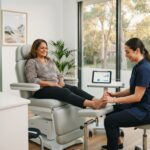
At Narellan Foot Clinic, our diagnostic evaluation bridges static joint measurements and dynamic function. When you visit an established sports podiatrist Macarthur region athletes rely on, you receive a methodical three-stage evaluation designed to uncover the root source of your discomfort.
Step 1: Non-Weightbearing Joint and Muscle Testing
We begin on the examination table to assess joint ranges and structural integrity without the influence of gravity:
- Subtalar and ankle joint motion: Measuring passive ankle dorsiflexion reveals whether tight calf complexes restrict forward tibial progression.
- Muscular capacity: Assessing strength and flexibility across the gastrocnemius, soleus, and hamstrings identifies asymmetrical deficits.
- Structural alignment: Identifying leg length discrepancies or systemic joint hypermobility helps us anticipate compensatory loading patterns under stress.
Step 2: Static Postural and Weightbearing Examination
Next, we observe how your musculoskeletal structure reacts when supporting your full body weight. We measure your resting calcaneal stance position alongside medial longitudinal arch height to determine foot type. During this stage, we execute the Windlass mechanism test to evaluate how effectively the plantar fascia tightens to stabilize the arch during toe extension, while checking knee and pelvic alignment under single-leg stance.
Step 3: Dynamic Gait and Running Kinematics
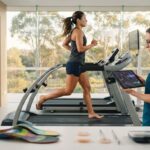
Static tests tell only half the story. Observing your body in motion provides the clearest diagnostic picture of running efficiency. We analyze your cadence, ground contact time, foot strike angle, and the timing of your pronation cycle. Observing how forces transfer through the big toe joint during toe-off reveals whether you are utilizing efficient propulsion mechanics or overloading secondary muscle groups to compensate for structural stiffness.
By connecting table findings with functional movement, an experienced sports podiatrist in the Macarthur region can tailor targeted interventions that correct faulty loading patterns and keep you competing at your peak.
Clinical Sports Treatments: Custom Orthotics to Dry Needling
Effective sports recovery relies on conservative, evidence-based therapies working in tandem. When addressing athletic injuries, clinical modalities either modify mechanical loads or restore soft-tissue function. Rather than treating these approaches in isolation, combining structural support with active soft-tissue release produces faster, more resilient outcomes.
| Modality | Primary Clinical Mechanism | Ideal Athletic Application |
|---|---|---|
| Custom Orthotics | Skeletal realignment and internal tissue load redistribution | Plantar fasciitis, chronic overpronation, and recurring stress reactions |
| Dry Needling | Myofascial trigger point deactivation and local perfusion | Calf tightness, hamstring hypertonicity, and acute muscle knots |
Custom Orthotic Therapy for Athletic Load Management
Modern orthotic therapy has evolved beyond rigid plastic arch supports that lock the foot in place. Prescribing precision custom orthotics alters internal tissue stress while allowing natural, dynamic shock absorption. We prescribe lightweight, low-profile designs that slide seamlessly into narrow football boots, netball shoes, and lightweight running trainers. The resulting redistributions offload injured tendons and joint surfaces without compromising agility or comfort.
Targeted Dry Needling for Muscular Trigger Points
Intense athletic exertion regularly generates taut bands of muscle tissue known as trigger points. By inserting fine, solid filament needles directly into hyperirritable spots within the gastrocnemius, soleus, or tibialis anterior, we stimulate an involuntary local twitch response. This neuromuscular release immediately reduces resting muscle tone, boosts microcirculation to fatigued muscle fibres, and helps restore normal range of motion when paired with targeted dynamic stretching.
Active Rehabilitation, Taping, and Load Modification
Long-term tissue adaptation demands structured physical progression. We design step-by-step eccentric and isometric loading routines to build tensile capacity across vulnerable Achilles and patellar tendons. During the early phases of training resumption, rigid biomechanical strapping provides vital external stability. Step-rate and volume protocols are then phased gradually to protect healing tissues against sudden spikes in intensity.
If chronic tightness or joint pain is limiting your performance, you can book an appointment with our team to begin your tailored recovery plan. Consulting an experienced sports podiatrist Macarthur region competitors trust ensures your rehabilitation builds genuine athletic durability.
Finding the Right Sports Podiatrist in the Macarthur Region
Choosing the right clinical team can make all the difference between a swift return to competition and months of lingering discomfort. Many active individuals assume they must commute into the Sydney CBD to access dedicated sports medicine. In reality, finding an authoritative sports podiatrist Macarthur region athletes can trust means receiving top-tier biomechanical diagnostics and personalised rehabilitation right on your doorstep.
Essential Credentials and Clinical Experience
When evaluating local practices, look for verified qualifications and demonstrated clinical depth:
- AHPRA registration: Ensure your practitioner is registered with the Podiatry Board of Australia and adheres to current national practice standards.
- Proven clinical longevity: Practitioners with extensive clinical experience have evaluated thousands of dynamic movement faults. At Narellan Foot Clinic, principal podiatrist David J. Miller brings over 25 years of established private practice experience to every sports consultation.
- Clinical precision: A dedicated clinic should focus on root mechanical causes rather than quick symptom cover-ups, utilising thorough testing protocols and strict hygiene standards.
Convenient Location and Private Health Fund Claims
Managing sports rehabilitation should fit seamlessly into your weekly routine. Sitting in heavy traffic to travel into central Sydney drains valuable time and energy better spent on active recovery. A centrally located clinic in Narellan provides accessible clinical care for athletes living across Camden, Campbelltown, and the broader Macarthur area.
Streamlined payment systems also remove stress from your care plan. Choose a clinic equipped with on-site HICAPS terminals to process private health fund rebates instantly on the spot. For patients managing chronic musculoskeletal pain under a GP referral, clinics accepting Medicare Enhanced Primary Care (EPC) arrangements ensure your consultations are processed efficiently without administrative headaches.
You don’t need to accept ongoing pain as an inevitable part of training. If you are ready to resolve persistent aches and protect your joints for the future, take the first step toward pain-free movement: Book an appointment at Narellan Foot Clinic to partner with a skilled sports podiatrist Macarthur region competitors rely on for lasting athletic performance.
Restore Your Stride and Protect Your Performance
Recurring lower-limb pain doesn’t have to derail your training or sideline your sporting season. Sustainable recovery happens when you look beyond temporary symptom suppression and address the kinetic imbalances placing excessive stress on your joints and tendons. By combining clinical gait diagnostics with targeted therapies like custom orthotics and dry needling, you can restore natural function and build athletic resilience.
You don’t need to endure hours in traffic to access focused lower-limb care. Partnering with an established sports podiatrist Macarthur region competitors rely on keeps clinical expertise close to home. With over 25 years of clinical podiatry experience serving the Macarthur community, principal podiatrist David J. Miller provides dedicated, personalised care tailored to your athletic goals, supported by instant on-the-spot health fund claims through HICAPS.
Book your comprehensive sports biomechanical assessment with Narellan Foot Clinic today and take the first confident step toward moving pain-free.
Frequently Asked Questions
What is the difference between a sports podiatrist and a general podiatrist?
A sports podiatrist focuses primarily on dynamic exercise loads, sports injuries, and performance biomechanics rather than general foot hygiene. While general podiatry manages skin, nail, and routine foot conditions, consulting a sports podiatrist Macarthur region athletes trust ensures your running style, footwear demands, and high-impact tissue stresses receive specialised mechanical evaluation.
Can a sports podiatrist help with knee and lower back pain?
Yes, because the feet act as the foundational contact point for your entire kinetic chain. Faulty foot mechanics, such as rapid overpronation or poor shock absorption, cause internal tibial rotation and anterior pelvic tilt. By correcting these lower-limb movement patterns, we frequently relieve secondary strain transferred into the knees, hips, and lower back.
Do I need a GP referral to see a sports podiatrist in the Macarthur region?
No, you don’t need a medical referral to book an appointment as a private patient. You can schedule your consultation directly with our clinic whenever you notice persistent discomfort. A GP referral is only required if you are claiming treatment under a Medicare Enhanced Primary Care plan for chronic conditions.
Will I always need custom orthotics for a running injury?
No, orthotics aren’t necessary for every running injury. Prescription depends entirely on your specific diagnosis and biomechanical assessment findings. Many conditions respond exceptionally well to targeted dry needling, temporary strapping, footwear adjustments, and progressive load-management routines without requiring long-term corrective devices.
Can I claim my sports podiatry consultation on private health insurance?
Yes, you can claim your consultation if your private health insurance policy includes podiatry extras cover. At Narellan Foot Clinic, we feature on-site HICAPS terminals, allowing us to swipe your private health card and process your rebate automatically on the spot, so you only pay the remaining gap fee.
How quickly can I return to running after starting podiatry treatment?
Return-to-run timeframes depend on your injury severity and tissue healing rates. Rather than enforcing complete rest, an experienced sports podiatrist in the Macarthur region typically keeps you moving through cross-training and modified running volumes. Most active patients transition safely back into structured running drills within several weeks of guided mechanical treatment.