

What if your feet feel completely fine, but a check-up still picks up a change you haven’t noticed? Diabetes can affect sensation and circulation without obvious pain, so an annual review is a useful baseline. For an annual diabetic foot review Campbelltown residents can ask Narellan Foot Clinic about appointments at its Narellan clinic, which lists diabetic foot assessments.
It’s understandable to wonder what a podiatrist will check, especially if your feet look and feel normal. A review typically includes assessing circulation, sensation, foot shape, skin and toenails. Your findings and history help determine your level of risk and whether you need follow-up sooner than another year.
This guide explains what to expect, what details to bring and how review frequency can vary with individual foot risk. It also covers what to ask about Medicare eligibility, referrals and fees, as arrangements can depend on your circumstances. Narellan Foot Clinic has served the local community for more than 25 years; check with the clinic whether its current appointments suit Campbelltown patients.
Key Takeaways
- An annual diabetic foot review Campbelltown patients arrange can provide a useful baseline, even when there’s no pain or visible change.
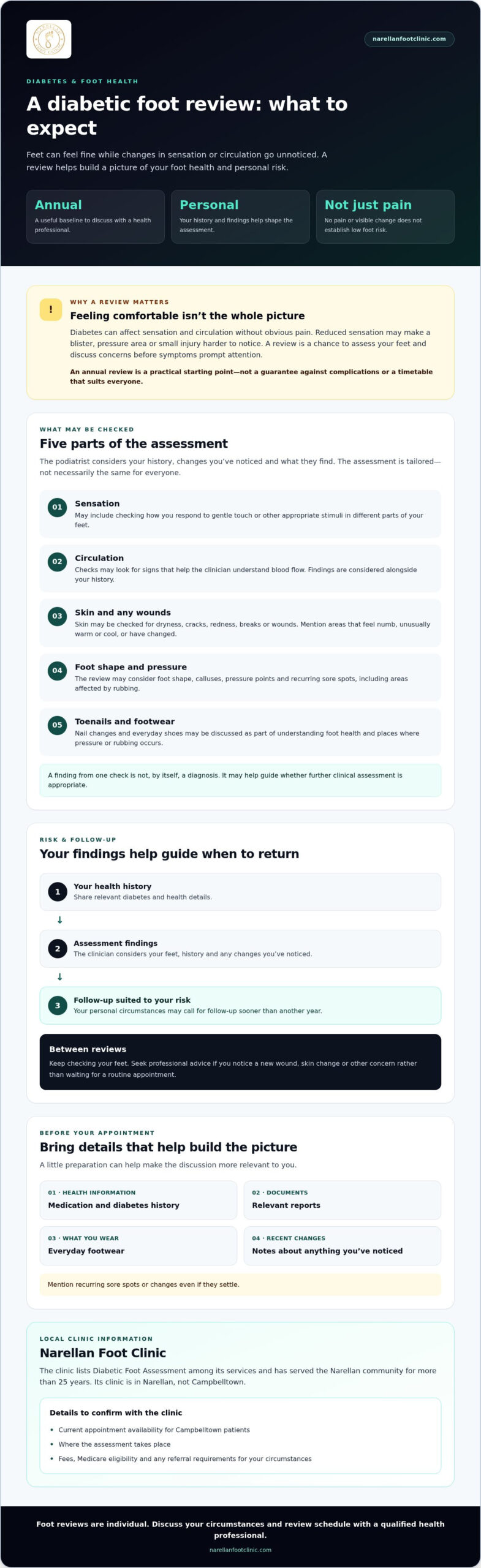
- The assessment is tailored to your history and may look at your skin, nails, foot shape, footwear and areas of pressure.
- Your findings and health history help guide how soon to return; follow-up needs can differ from person to person.
- Bring your medication and diabetes history, relevant reports, everyday footwear and notes about any changes you’ve noticed.
- Narellan Foot Clinic lists diabetic foot assessments. Ask about current appointments for Campbelltown patients, fees and any Medicare eligibility or referral requirements.
Why book an annual diabetic foot review near Campbelltown if your feet feel fine?
Booking a foot appointment can feel unnecessary when you’re walking comfortably and can’t see anything wrong. But with diabetes, pain isn’t the only sign to rely on. Changes in sensation or circulation may make it harder to notice a developing problem, so a clinician-led review can help assess foot health and discuss risk before symptoms prompt concern.
An annual diabetic foot review Campbelltown residents consider can provide a useful regular prompt, but it isn’t a guarantee against complications or a replacement for advice tailored to your health. Diabetes can be associated with nerve and blood-vessel changes, as well as problems such as ulcers. Read more about diabetic foot conditions, and discuss your own circumstances with a qualified health professional.
What is an annual diabetic foot review?
A diabetic foot review is a preventive podiatry assessment shaped by your health history and current presentation. It’s different from a quick self-check, which can be useful between appointments, or a general nail-care visit: the review focuses on your feet and your individual risk. It can help identify concerns that may need attention, but no single appointment can prevent every diabetes-related foot complication.
Do you need a review if you have no foot pain?
Yes, it’s still worth discussing your review schedule with a qualified health professional. Reduced sensation can mean a blister, pressure area or small injury is less noticeable; circulation changes may also affect foot health. Regular checks offer a chance to raise concerns and receive advice that reflects your history and findings.
Absence of pain does not establish low foot risk.
An annual review is a practical starting point, not a one-size-fits-all timetable. A health professional can advise whether your personal circumstances call for a different follow-up schedule. Keep checking your feet yourself, too, and seek professional advice if you notice a new wound, skin change or other concern rather than waiting for a routine appointment.
Narellan Foot Clinic lists Diabetic Foot Assessment among its services and has served the Narellan community for more than 25 years. Its clinic is in Narellan, not Campbelltown, so if you’re considering an annual diabetic foot review Campbelltown appointment, contact the clinic to confirm its current appointment availability for local patients and where the assessment takes place.
What does a diabetic foot review usually check?
A diabetic foot review is an individual assessment, not a fixed checklist applied in exactly the same way to everyone. The podiatrist considers your health history, any changes you’ve noticed and what they find during the appointment. The examination may include your skin, toenails, foot shape, footwear and any wounds or areas exposed to pressure.
Depending on your history and presentation, the clinician may also assess sensation and circulation using appropriate methods. What a diabetic foot exam checks is outlined by MedlinePlus, including areas such as skin, nerve function and blood flow. A finding from one check isn’t, by itself, a diagnosis; it may instead inform whether further clinical assessment is appropriate.
How sensation, circulation and skin may be assessed
To assess sensation, a clinician may check how you respond to gentle touch or other appropriate stimuli in different parts of your feet. Circulation checks look for signs that help the clinician understand blood flow. The exact approach varies, and results are considered alongside your history and other findings rather than in isolation.
The clinician may inspect skin for dryness, cracks, redness, breaks or wounds. Let them know about any areas that feel numb, unusually warm or cool, or that have changed since your last review. These details help put the examination in context.
How footwear, pressure areas and nail health fit into the review
Your everyday shoes can show where rubbing or pressure may occur, so bringing a pair you regularly wear can help make the discussion practical. The podiatrist may check for calluses, skin breaks, nail changes and pressure points. Foot shape or deformity may also be considered where clinically relevant, as these factors can affect how pressure falls across the foot.
Share any recurring sore spots or changes you’ve noticed, even if they settle. For broader assessment context, the clinic’s Diabetic Foot Assessment Narellan: The Essential Patient Checklist & Guide may also be useful.
At the end, the podiatrist can explain the findings, discuss what they mean for your individual foot risk and recommend a suitable follow-up plan. The next steps depend on your circumstances, not simply on a calendar date. If you’re considering an annual diabetic foot review Campbelltown appointment, you can check Narellan Foot Clinic’s diabetic foot assessment information and confirm the current appointment location and availability with the clinic.
How does foot risk affect review frequency and follow-up?
A foot review is more than a pass-or-fail check. The podiatrist considers what they find alongside your health history, including any reduced sensation, circulation concerns, foot shape changes, or previous ulcers or amputations. Together, these details help inform a discussion about your risk and what follow-up may be appropriate.
Australian guidance on diabetes-related foot disease supports regular assessment, with care shaped by a person’s individual risk. The national guidelines were released by Diabetes Feet Australia and the Australian Diabetes Society in 2021. They provide a clinical framework, but your treating health professional should advise how it applies to your current circumstances.
Why a yearly appointment may not suit every person
A yearly review can be a helpful prompt, particularly when there are no new concerns. But stable findings and new or worsening changes may call for different follow-up. A history of foot ulceration, for example, is important information for the clinician to consider. Don’t assume the same schedule suits everyone with diabetes; ask the professional assessing you when to return and what changes should bring your next review forward.
Follow-up frequency should reflect assessed foot risk, not a one-size-fits-all calendar.
What happens if the review finds a concern?
Next steps depend on the specific finding and your overall health. The clinician may recommend monitoring an area, podiatry care or further assessment by an appropriate health professional. They can explain why a step is suggested and how soon it should happen. A review can guide decisions, but it can’t guarantee a particular treatment outcome.
Contact a health professional promptly if you notice a new wound, signs that may suggest infection, or a sudden change in your foot. Redness, warmth, swelling or discharge around a wound are examples to report without waiting for your next routine appointment. If you’re unsure how quickly to act, seek clinical advice.
If you’re arranging an annual diabetic foot review Campbelltown appointment, share relevant changes and past foot problems with the clinician. Ask them to explain your assessed risk, recommended follow-up timing and what to do if your feet change before then. That gives you a clearer plan to follow between appointments.
How can you prepare for a diabetic foot review in the Campbelltown area?
A little preparation can help you make good use of your appointment. Before your review, jot down any questions and changes you’ve noticed, even if they seem minor or come and go. If you’re arranging an annual diabetic foot review Campbelltown appointment, check the clinic’s location and availability when booking, as Narellan Foot Clinic is based in Narellan.
What information and footwear should you bring?
Bring details that help the podiatrist understand your health history and day-to-day foot concerns. A short checklist can make it easier to remember:
- Your current medication list and relevant diabetes or health history.
- Information about previous foot problems, treatment or relevant reports.
- Notes on any numbness, skin changes, wounds, temperature changes or recurring pressure areas.
- The shoes you wear most often, especially if they rub or leave a sore spot.
If you’ve noticed a concern, note when it began and whether it has changed. For example, mention if a patch of redness keeps returning after wearing a particular pair of shoes. You don’t need to work out what it means yourself; the detail simply helps the clinician assess it.
You can also ask what the assessment involves, what follow-up might be recommended, and what fees apply. If you’re hoping to claim through Medicare, check your eligibility, any referral requirements and the clinic’s current claim arrangements before the appointment. Eligibility and claim processes depend on the applicable arrangements, so don’t assume a rebate will apply.
When should you seek advice sooner than an annual appointment?
Don’t wait for a routine review if you develop a new wound, spreading redness or signs that may suggest infection. Sudden swelling, a noticeable colour change or unexplained deterioration also warrants timely clinical advice. These changes can have different causes, and this article can’t diagnose them. Contact a health professional promptly; for severe or rapidly worsening symptoms, seek urgent medical care.
Daily checks and practical self-care can complement professional reviews, but they don’t replace an assessment. You may also find Foot Care for Diabetics: A Daily Management Guide useful for everyday foot-care information.
For help planning your appointment, contact Narellan Foot Clinic about a diabetic foot assessment and confirm current availability, location, fees and Medicare arrangements before booking.
Arrange a diabetic foot review with Narellan Foot Clinic
If you’d like a professional assessment and advice that takes your own foot health into account, arranging a diabetic foot review is a practical next step. Narellan Foot Clinic lists Diabetic Foot Assessment among its services and has served the Narellan community for more than 25 years. The clinic is based in Narellan, so Campbelltown residents should confirm directly whether appointments are currently available for them and where the assessment will take place.
A quick conversation before booking can help you understand what to expect and avoid surprises. Appointment details, fees and payment or rebate arrangements can vary, so check the current information with the clinic rather than relying on assumptions.
What to ask when booking your appointment
Explain that you’re seeking an annual diabetic foot review and ask whether the clinic’s assessment is suitable for your needs. You can also confirm:
- What the assessment includes and whether there are any preparation instructions.
- The clinic’s current location and appointment availability for Campbelltown-area patients.
- The fee and payment options, including whether HICAPS is available for on-the-spot private health fund claims.
- Whether your circumstances may meet Medicare eligibility requirements, and whether a referral or other arrangements apply.
Narellan Foot Clinic states that it facilitates Medicare claims, but this doesn’t mean every patient or appointment is eligible for a rebate. Check your eligibility and the clinic’s current claim process before you book. If you have a GP referral or care-plan information, ask whether you should bring it along.
What to expect after the assessment
After reviewing your feet and relevant history, the podiatrist can explain the findings and discuss what follow-up may be appropriate. The recommended timing and next steps depend on your individual assessment. Before you leave, ask any questions you have about the advice, what to monitor at home and when to seek further help if something changes.
It can be useful to leave with a clear plan: what was found, what action is recommended and when your next review should be considered. If any instruction is unclear, ask the podiatrist to explain it in everyday terms. You don’t need to arrive with all the answers; sharing your concerns and health history helps make the conversation more useful.
For an annual diabetic foot review Campbelltown residents are considering, contact the clinic to discuss whether its Narellan appointment is suitable, along with availability, fees and eligibility questions. Contact Narellan Foot Clinic to discuss an appointment.
Take the next step towards informed foot care
A review can offer a clearer picture of your foot health, even if you haven’t noticed pain or visible changes. The assessment may include checking your skin, nails, foot shape, sensation and circulation. Your findings and health history help guide an individual discussion about risk and suitable follow-up, rather than a fixed schedule for everyone.
Before your appointment, note any changes or concerns and bring your medication details, relevant reports and everyday footwear. Narellan Foot Clinic lists Diabetic Foot Assessment among its services and has served the Narellan community for more than 25 years. The clinic is based in Narellan, so if you’re seeking an annual diabetic foot review Campbelltown residents can access, confirm current availability and appointment location directly with the clinic. You can also ask about fees, HICAPS health fund claims and whether any Medicare arrangements apply to your circumstances.
A short conversation can help you understand what to expect and whether the appointment suits your needs. Contact Narellan Foot Clinic to discuss your diabetic foot review. Taking this step can help you feel more informed and confident about caring for your feet.
Frequently Asked Questions
Do I need an annual diabetic foot review if my feet do not hurt?
Yes, it’s sensible to discuss regular foot reviews with a qualified health professional, even if you have no pain or visible changes. Reduced sensation can make an injury or pressure area harder to notice, and symptoms alone don’t establish your level of risk. A review considers your health history and the current condition of your feet, helping guide suitable follow-up for your circumstances.
What happens during a diabetic foot assessment with a podiatrist?
A podiatrist assesses your feet in light of your history and any concerns you raise. Checks may include skin, toenails, foot shape, footwear, pressure areas or wounds, as well as sensation and circulation where appropriate. The clinician can explain their findings and discuss whether monitoring, podiatry care or further assessment may be suitable. The exact checks vary; it isn’t a one-size-fits-all appointment.
How often should someone with diabetes have their feet checked?
At least yearly is a useful prompt for people with diabetes, but the right schedule depends on individual foot risk and clinical advice. Previous foot problems or new findings may mean you need follow-up sooner, while a clinician can advise what’s appropriate when findings are stable. Don’t rely on a general timetable alone. Ask the health professional assessing you when to return and what changes need earlier attention.
Can a podiatrist check circulation and sensation during a foot review?
Yes. As part of an assessment, a podiatrist may use appropriate clinical methods to check how your feet respond to sensation testing and to look for signs relating to blood flow. These checks are considered alongside your history and other findings. One symptom or result alone doesn’t confirm a diagnosis, so ask the clinician to explain what the results mean and whether any further assessment is recommended.
Can I claim a Medicare rebate for a diabetic foot assessment in Australia?
A Medicare rebate may be available for eligible patients receiving podiatry under a GP-referred Chronic Disease Management plan, but it isn’t automatic. Eligibility, referral requirements, the number of available visits and the clinic’s claim arrangements matter, and a gap may apply. Narellan Foot Clinic states it facilitates Medicare claims, so check your eligibility and current arrangements with your GP and the clinic before booking.
What should I bring to a diabetic foot review appointment?
Bring a medication list, details of your diabetes and relevant health history, and any reports related to previous foot concerns. Wear or bring the shoes you use most, especially if they cause rubbing or pressure. It can also help to note when a concern began and how it has changed. Tell the podiatrist about numbness, skin changes, wounds, temperature changes or recurring sore areas.
Where can Campbelltown residents book a diabetic foot review?
Narellan Foot Clinic lists Diabetic Foot Assessment as a service and is based in Narellan, not Campbelltown. The clinic has served the Narellan community for more than 25 years. If you’re in Campbelltown, ask the clinic whether appointments are currently available for you, and confirm the location, fees and any rebate arrangements. People elsewhere in Sydney, NSW, Blacktown, Windsor or Penrith should also check service availability directly.