Does a child’s changing walk need attention, or could it be a normal part of growing? The search for a children’s podiatrist Gregory Hills families can contact often begins with uncertainty: persistent pain, frequent tripping or reluctance to join in can be hard to interpret. Children’s foot concerns deserve an age-aware assessment, not assumptions based on adult foot care.
It’s understandable to wonder whether a foot or gait change will settle on its own, especially when discomfort starts affecting sport, play or everyday movement. A podiatrist or another health professional can help you decide what to discuss and whether an assessment is appropriate.
This guide explains signs worth raising, what an appointment may involve, and how your child’s history, movement and footwear could be considered. Narellan Foot Clinic offers biomechanical assessments and has served the Narellan community for over 25 years, but its suitability for children and families from Gregory Hills should be confirmed directly. You’ll find practical questions to ask as you explore local care.
Key Takeaways
- Children develop at different rates, so persistent changes or discomfort are worth discussing rather than self-diagnosing.
- An assessment may consider your child’s health history, symptoms, footwear and movement, tailored to their concern and comfort.
- Consider how long the concern has been present and whether it affects everyday activities when deciding what care to seek.
- Before booking a children’s podiatrist Gregory Hills families can contact, note when changes occur and check the clinic’s suitability for your child.
- Narellan Foot Clinic has served its community for over 25 years and lists biomechanical assessment, custom orthotics and general foot care; confirm directly whether it can assess your child.
When should a child in Gregory Hills see a podiatrist?
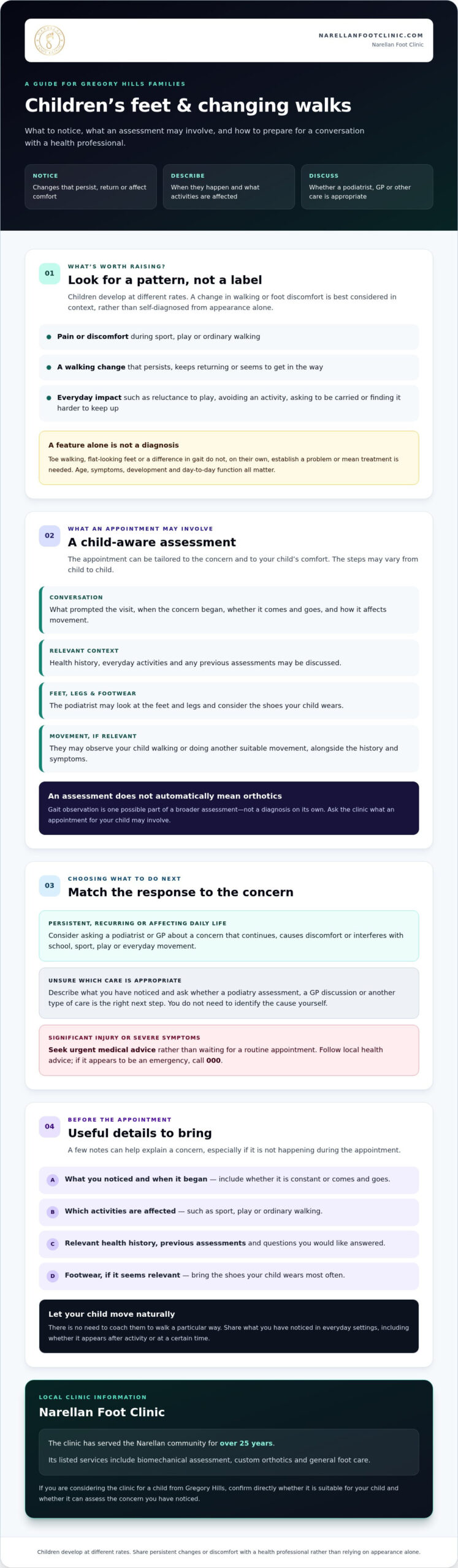
A change in the way your child walks, or a new complaint about their feet, can leave you wondering whether to wait, seek advice or book an assessment. Children’s development varies, and a single article can’t tell you what’s normal for your child. It can, however, help you decide what details to watch and share with a health professional.
Consider asking a podiatrist or GP about a concern that persists, keeps returning or affects your child’s comfort and daily routine. This could include pain during sport, reluctance to play, or a walking change that seems to be getting in the way. A podiatrist works with foot and lower-limb concerns; for an overview of the field, see podiatry.
What foot or walking changes are worth asking about?
Make a note of when you first noticed the change, whether it’s ongoing or comes and goes, and what your child was doing at the time. Details such as discomfort during sport, play or ordinary walking can help a clinician understand the concern. You might also record whether your child is avoiding an activity, asking to be carried or finding it harder to keep up.
Toe walking, flat-looking feet or a difference in gait on their own don’t establish a diagnosis or mean treatment is needed. If you’re searching for a children’s podiatrist Gregory Hills families can ask about, share the pattern you’ve noticed and check that the practitioner is able to assess your child’s concern.
Does every childhood foot difference need treatment?
No. Appearance alone doesn’t show whether a child has a problem or needs treatment. A clinician can consider your child’s age, symptoms, development and day-to-day function together. That context matters: a feature that doesn’t cause discomfort or limit activities may be approached differently from a persistent concern that affects movement.
It’s reasonable to ask for professional guidance if the change continues, causes discomfort or interferes with school, sport, play or everyday movement. You don’t need to identify the cause yourself. Describe what you’ve seen and ask whether a podiatry assessment, a GP discussion or another type of care is the most appropriate next step.
Seek urgent medical advice for a significant injury or severe symptoms rather than waiting for a routine appointment. Follow local health advice; if the situation appears to be an emergency, call 000. For less urgent concerns, a GP can help guide you if you’re unsure which health professional to contact.
What happens during a children’s podiatry assessment?
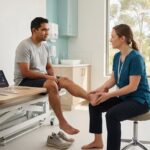
An appointment usually begins with a conversation about what prompted the visit. The podiatrist may ask when the concern started, whether it comes and goes, and how it affects your child’s movement. They may also ask about relevant health history, everyday activities and any previous assessments. The examination can then be tailored to the concern and to your child’s comfort.
Depending on what you’ve noticed, the podiatrist may look at the feet and legs, consider footwear and observe movement. The steps aren’t identical for every child, and an assessment doesn’t automatically mean your child needs orthotics. Narellan Foot Clinic lists biomechanical assessment among its services; its biomechanical assessment guide provides broader context on this type of assessment.
How might gait and movement be assessed?
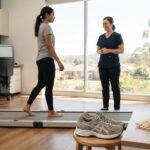
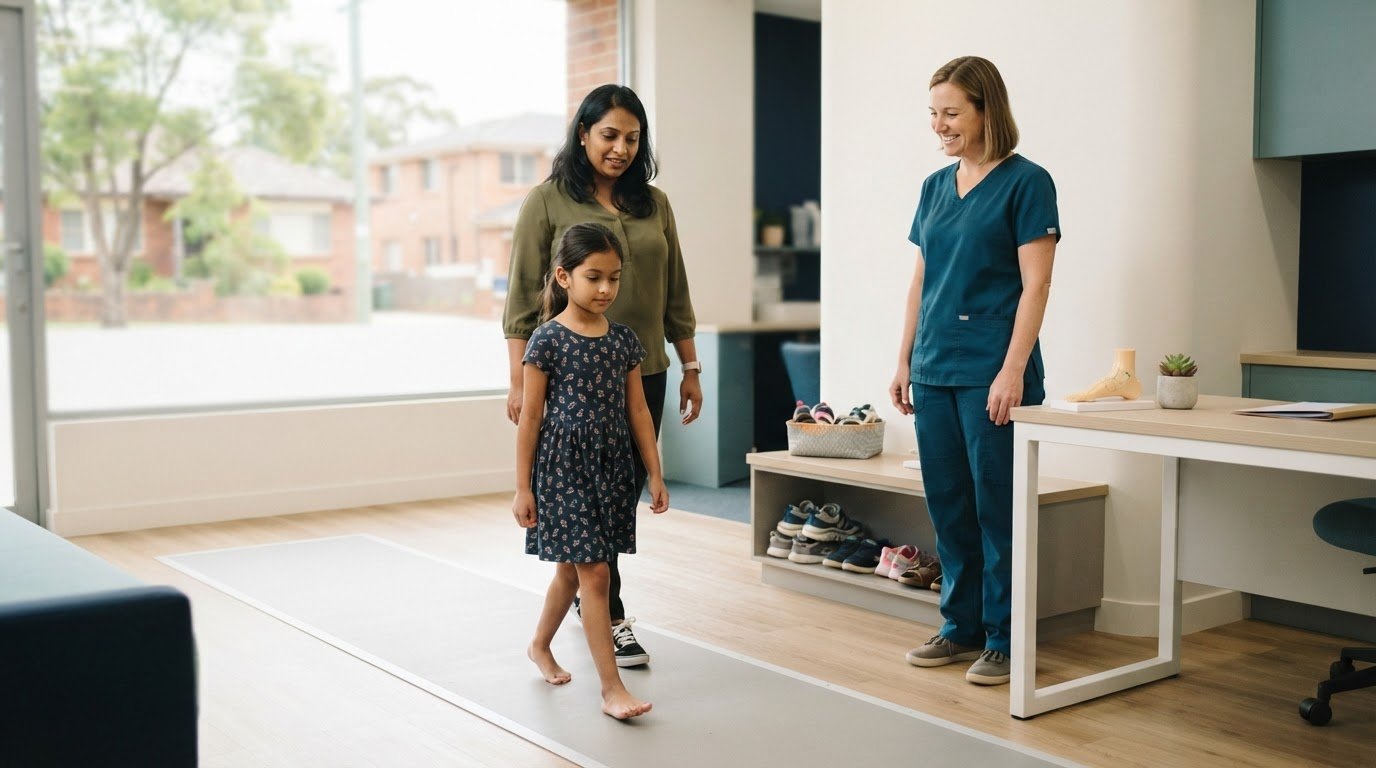
Gait simply means the way a person walks. If it’s relevant to your child’s concern, a podiatrist may observe them walking or doing another suitable movement, then consider what they see alongside their history and symptoms. This is one possible part of a broader assessment, not a diagnosis on its own. The approach can vary, so ask the clinic what an appointment for your child may involve.
There’s no need to coach your child to walk in a particular way beforehand. Let them move naturally, and tell the clinician what you’ve noticed in everyday settings, such as whether a change appears after activity or at a certain time.
What information should parents bring?
A few notes can make it easier to explain the concern, especially if it’s not happening during the appointment. Before you go, consider writing down:
- What you’ve noticed and when it began, including whether it’s constant or recurring.
- Which activities seem affected, such as sport, play or ordinary walking.
- Relevant health history, previous assessments and questions you’d like answered.
If footwear seems relevant, bring the shoes your child wears most often. Their fit and wear may give useful context, though they’re only one part of the discussion. For general Australian guidance on caring for your child’s feet, Healthdirect also provides information for parents.
If you’re looking for a children’s podiatrist Gregory Hills families can ask about, contact the clinic before booking to confirm it sees children, whether your child’s concern is suitable, and what to bring. You can contact Narellan Foot Clinic to ask about its listed biomechanical assessment service and whether it may be appropriate for your child.
How can parents judge whether a child needs assessment or another type of care?
It can be hard to choose between keeping an eye on a concern, booking a podiatry discussion or seeking medical advice. There isn’t one rule that fits every child. Consider whether the change is settling or persisting, whether your child seems uncomfortable, and whether it affects their usual activities. Your observations and concern are useful reasons to ask a health professional for guidance.
For a mild change that isn’t causing discomfort or limiting movement, you may choose to monitor it and note any pattern. If it keeps returning, worsens, or your child starts avoiding sport, play or everyday walking, consider discussing it with a clinician. Monitoring shouldn’t mean dismissing a concern that’s affecting your child or leaving you worried.
When is a podiatry conversation a reasonable next step?
A podiatrist can assess foot and lower-limb concerns within their scope. A discussion may be appropriate if recurring discomfort or a movement concern is interfering with ordinary activities, even if you’re unsure what’s causing it. Before booking a children’s podiatrist Gregory Hills families are considering, contact the clinic to check whether it assesses children and whether your child’s concern is suitable.
You can explain what you’ve noticed and ask what type of appointment may be appropriate. A conversation doesn’t commit you to a particular treatment. It helps clarify whether the concern fits the practitioner’s scope or whether another health professional may be a better starting point.
When should parents contact another health professional?
Sudden injury, marked swelling or severe pain may need prompt advice from an appropriate health professional. Don’t rely on online information to rule out an injury or delay care if symptoms are severe or worsening. Follow local health advice, and seek urgent help if you’re concerned about your child’s immediate wellbeing.
A GP can be a helpful first contact if there are broader health concerns, you’re unsure which clinician to see, or you’d like advice about a referral. They can consider your child’s overall health and help guide the next step. The right pathway depends on the individual child’s history and symptoms, not just how a foot looks or a single change in walking.
When deciding what to do, focus on what has changed, how long it’s been happening and what your child can comfortably manage. If you’re uncertain, asking a qualified health professional is reasonable. You don’t need to arrive with a diagnosis; a clear account of your observations is a useful place to start.
How can Gregory Hills parents prepare for a podiatry appointment?
A little preparation can make it easier to explain what you’ve noticed and decide whether the appointment is right for your child. Before booking, check that the clinic sees children, can consider your child’s particular concern and accepts patients from Gregory Hills. Then gather a short history and think about what you’d like to ask. You don’t need to work out the cause before you call.
What questions should parents ask before booking?
Make a quick call to confirm the basics. Ask whether the clinic sees children of your child’s age with the concern you’ve described, who would conduct the appointment, and what the first assessment may involve. You can also check appointment availability, fees, and whether a referral or particular claiming requirements apply. Ask directly whether Gregory Hills is within the clinic’s current service area.
It’s reasonable to ask about the practitioner’s experience assessing children, too. Narellan Foot Clinic has served the Narellan community for over 25 years, but this alone doesn’t confirm a dedicated children’s service or paediatric credentials. If you’re considering the clinic, confirm its suitability for your child’s age and concern before arranging a visit.
What should families bring to the appointment?
Keep it practical. A brief timeline can help you describe the concern clearly, especially if it comes and goes or isn’t noticeable on the day. Note when it began, what seems to bring it on, and whether it affects school, sport, play or everyday movement. Include relevant medical history and details of any previous assessments.
If footwear may be relevant, bring the shoes your child wears for school, sport or daily activities. You might also jot down questions about the assessment, possible options and any follow-up that may be recommended. You’re entitled to ask for an explanation before agreeing to care.
Every child responds differently to appointments. If your child has accessibility needs, feels anxious in unfamiliar settings or may need time to settle in, contact the clinic beforehand. Ask about the expected appointment length and whether any arrangements can be discussed. Clear communication can help you and your child feel more prepared.
If you’re considering Narellan Foot Clinic, contact the clinic to confirm child suitability, Gregory Hills service coverage and appointment details before booking.
Can Narellan Foot Clinic help children from Gregory Hills?
Narellan Foot Clinic is an independently operated podiatry practice with over 25 years of experience serving the Narellan community. Its listed services include biomechanical assessment, custom orthotics and general foot care. These offerings may be relevant to some foot or movement concerns, but they don’t confirm that every service is suitable for children or that the clinic provides a dedicated paediatric service.
If you’re looking for a children’s podiatrist Gregory Hills families can contact, treat the clinic as an option to enquire with rather than assuming it can assess your child. Suitability depends on the concern, your child’s age and the practitioner’s experience. Contact the clinic directly to confirm whether it sees children, whether it can consider the specific issue, and whether Gregory Hills is within its current service area.
What can the clinic’s confirmed services tell parents?
A biomechanical assessment is a listed service that may help a podiatrist consider how the feet and lower limbs move. It isn’t automatically required for a child, and the clinic would need to advise whether it fits your child’s concern. Custom orthotics are also listed, but whether they’re appropriate should be guided by an individual clinical assessment, not assumed from the way a child’s feet look.
General foot care is another confirmed offering. Ask the clinic what this covers for your child’s particular needs, and who would conduct the appointment. The information available doesn’t establish paediatric specialist credentials, child-specific equipment or particular outcomes, so it’s sensible to clarify those details directly.
What are the next steps for Gregory Hills families?
When you enquire, explain your child’s age, what you’ve noticed and whether it affects activities such as sport, play or everyday walking. Ask whether the clinic currently sees children with that concern, what an initial appointment may involve, and whether booking is appropriate. Confirm availability and any relevant appointment or referral requirements before making plans.
The clinic reports on-the-spot health fund claims through HICAPS and Medicare. These aren’t a guarantee of a rebate or eligibility for a particular appointment. Check directly whether the service qualifies, what conditions apply and what information you may need to provide.
A brief enquiry can help you decide whether the clinic is a suitable local option or whether another health professional is a better starting point. For current information, contact Narellan Foot Clinic to ask about your child’s concern and booking. There’s no need to arrive with a diagnosis; describing what you’ve observed is a helpful place to begin.
Take a confident next step for your child’s foot health
Changes in a child’s walking or foot comfort don’t automatically mean there’s a problem, but persistent discomfort or limits on everyday activities are worth discussing with a health professional. An assessment can consider your child’s history, symptoms and movement, helping guide what to do next without assuming a particular treatment is needed.
If you’re searching for a children’s podiatrist Gregory Hills families can contact, Narellan Foot Clinic is a local practice with over 25 years serving the Narellan community. Biomechanical assessment and custom orthotics are among its listed services, but you’ll need to check directly whether the clinic sees children and whether its services suit your child’s concern.
Contact Narellan Foot Clinic to ask about your child’s needs, including suitability and booking. A simple conversation can help you choose a sensible next step. You know your child best, and seeking guidance when you’re concerned is a positive start.
Frequently Asked Questions
When should I take my child to a podiatrist?
Consider asking a podiatrist or GP for advice if foot or leg discomfort keeps returning, affects walking, sport or play, or a change in movement persists. Note when it began and what activities seem difficult. A single visible difference doesn’t necessarily mean there’s a problem, and a clinician can consider your child’s individual circumstances. For sudden injury, severe pain or marked swelling, seek prompt medical advice rather than waiting for a routine appointment.
Can a podiatrist assess children’s walking and foot development?
A podiatrist can assess foot and lower-limb concerns, which may include considering how a child walks. The assessment should take account of the reason for the visit, symptoms, health history and effect on everyday activities. Not every practitioner or clinic sees children, so check before booking and ask about experience relevant to your child’s age and concern. If broader health issues are involved, a GP may help guide the next step.
Is it normal for children to walk on their toes?
Toe walking alone doesn’t establish whether there’s a concern, and an online answer can’t determine what’s normal for an individual child. Consider whether it persists, is associated with discomfort, affects everyday movement or comes with other changes you’ve noticed. If you’re worried, discuss it with a GP or a podiatrist who confirms they assess children. Seek prompt medical advice if toe walking follows an injury or occurs with severe symptoms.
Do children with flat-looking feet need orthotics?
No, flat-looking feet alone don’t mean a child needs orthotics. A clinician would need to consider the child’s symptoms, age, development and day-to-day function before discussing possible care. If your child has ongoing discomfort or movement limitations, ask a health professional for an individual assessment rather than choosing supports based on appearance alone. Custom orthotics are a listed Narellan Foot Clinic service, but confirm whether they’re suitable for your child.
What happens at a children’s podiatrist appointment?
An appointment may begin with questions about your child’s concern, health history, activities and when symptoms occur. Depending on the reason for the visit, the podiatrist may examine the feet and legs, consider footwear or observe movement. The steps should be tailored to the child, and an assessment doesn’t automatically mean orthotics or another treatment. Before booking, ask what the clinic’s initial appointment involves and whether it sees children.
Does Narellan Foot Clinic see children from Gregory Hills?
Narellan Foot Clinic’s supplied information doesn’t confirm a dedicated children’s service, paediatric specialist credentials or whether every child’s concern is suitable for assessment. The clinic reports over 25 years serving the Narellan community and lists biomechanical assessment, custom orthotics and general foot care. Gregory Hills families should contact the clinic to confirm child suitability and current service coverage. If comparing local options around Sydney, check catchments directly, including for Campbelltown, Blacktown, Windsor and Penrith.
Do I need a referral to see a children’s podiatrist in Australia?
For a privately booked podiatry appointment, a referral is generally not needed, but requirements can depend on the service or funding pathway. If you’re seeking a rebate or care through a particular programme, check eligibility and referral conditions with the provider or relevant scheme before booking. You can also ask the clinic whether it recommends a GP visit first. A referral or appointment doesn’t replace urgent medical care for severe or sudden symptoms.