
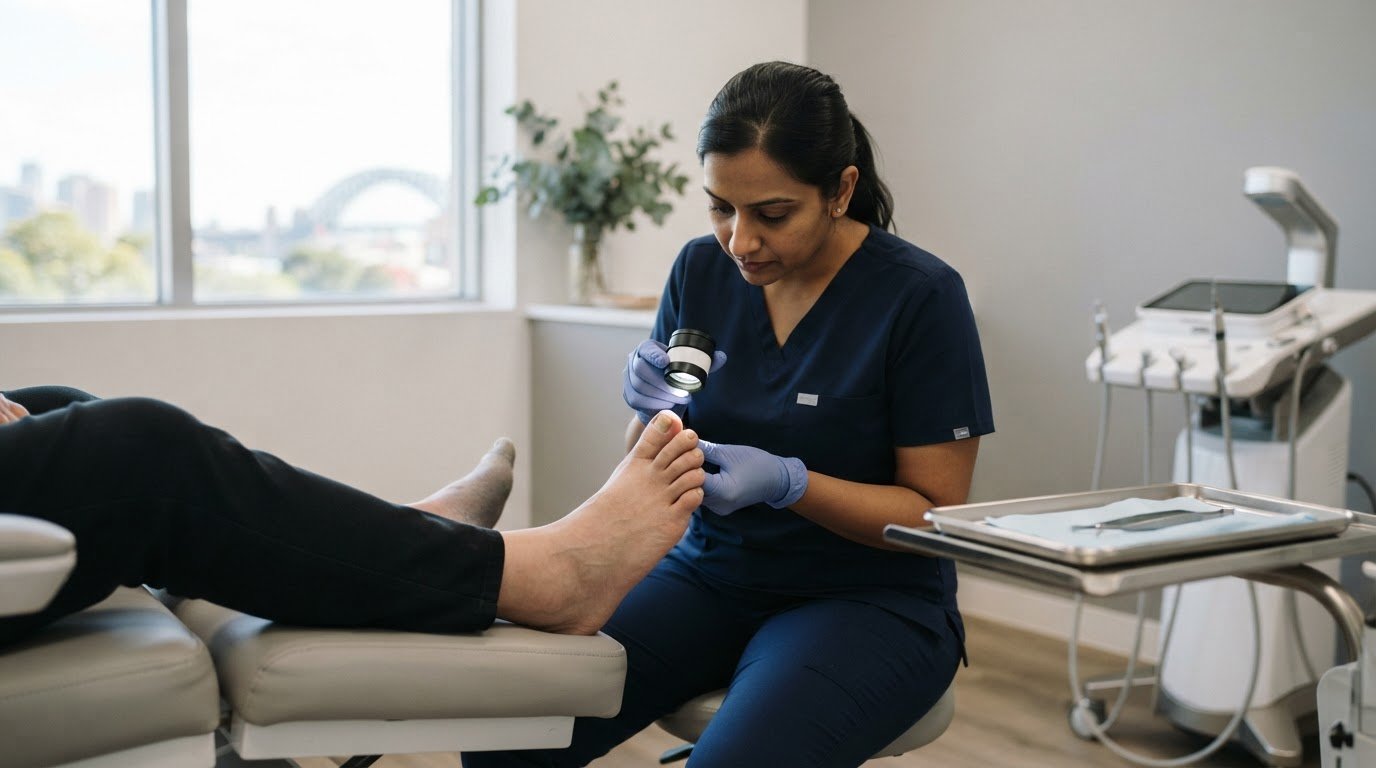
Persistent fungal nail: what to do when it returns
What if the nail you’ve been treating isn’t fungal, or the infection has returned because something in the care plan needs attention? It’s frustrating when discolouration or thickening persists after treatment, especially if you’re unsure whether the diagnosis was right. If you’re looking for persistent fungal nail infection help, repeating the same treatment may not be the best next step.
A nail can take many months to grow out, so visible change may be slow. Treatment may also have been interrupted too soon, or the changes may have another cause. A podiatrist can assess what’s happening and help you discuss options suited to your circumstances.
This article explains why a suspected fungal nail infection may persist or return, what to check before trying another treatment, and when to seek professional advice. You’ll also learn about care options, including fungal nail laser treatment as one possibility to discuss, and practical ways to reduce the chance of reinfection, such as caring for footwear and addressing any athlete’s foot.
Key Takeaways
- Persistent fungal nail infection help starts with checking whether the nail changes are actually caused by fungus.
- Ongoing symptoms may reflect an uncertain diagnosis, infection that hasn’t cleared or reinfection. Consider what may be happening before repeating treatment.
- Topical, oral and laser treatments are options to discuss. Suitability depends on your diagnosis, health history and preferences.
- Support your care plan by following the agreed steps, monitoring changes and keeping your feet clean and dry.
- For a podiatry assessment, bring details of previous treatments, medicines, health conditions and how the nail has changed.
Persistent fungal nail infection help starts with checking what is changing
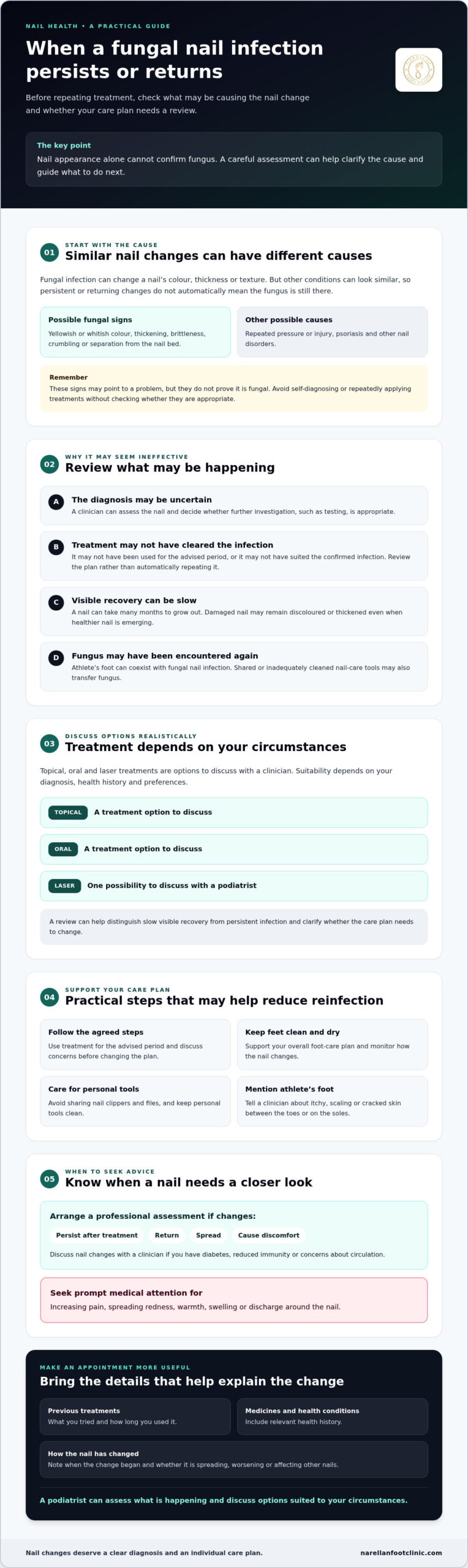
It’s discouraging when a nail stays discoloured, thickened or crumbly after treatment, or starts looking that way again. Before assuming the fungus is still there, review the diagnosis, the treatment you used and what to do next. Nail appearance alone can’t confirm the cause.
Suspected onychomycosis is a fungal infection affecting the nail. It can change the nail’s colour, thickness or texture, but trauma, skin conditions such as psoriasis and other nail disorders can look similar. The Onychomycosis overview explains the condition and its different forms. A clinician can assess your particular nail rather than relying on appearance alone. Avoid self-diagnosing or repeatedly applying treatments without checking whether they’re appropriate.
What does a persistent fungal nail infection look like?
A nail affected by fungus may become yellowish or whitish, thickened, brittle, crumbly or separated from the nail bed. One nail or several may be involved, and changes can look different from person to person. These signs may point to a problem, but they don’t prove it is fungal. Note when you first noticed the change and whether it is spreading, worsening or affecting other nails. This history can help guide an assessment.
When should a changed nail be checked?
Arrange a professional assessment if nail changes persist after treatment, return, spread or cause discomfort. Discuss them with a clinician if you have diabetes, reduced immunity or concerns about circulation, as your individual health needs matter. A podiatrist can review the nail and discuss whether further assessment or treatment options may be appropriate.
Seek prompt medical attention if you notice increasing pain, spreading redness, warmth, swelling or discharge around the nail. These changes may need attention beyond a routine review. If symptoms aren’t worsening urgently but the nail still doesn’t look right, you don’t need to guess. Persistent fungal nail infection help can start with a careful review of what has changed and what you’ve already tried.
Why fungal nail treatment can seem ineffective or the infection can return
If a nail still looks abnormal after treatment, it doesn’t automatically mean the treatment failed. The original diagnosis may not have been confirmed, the treatment may not have cleared the infection, or the nail may have been exposed to fungus again. A clear diagnosis helps a clinician choose a plan suited to the likely cause, the nail affected and your health history.
Could something other than fungus be causing the nail changes?
Fungal nail changes can resemble damage from repeated pressure or injury, psoriasis and other nail conditions. A clinician can assess the nail and decide whether further investigation, such as testing, is appropriate. Before your appointment, note the treatments you’ve tried, any medicines you take and relevant health conditions. This makes the review more useful and can inform a discussion about next steps.
Why might symptoms persist or return after treatment?
Even when fungus is the cause, treatment may not clear it completely. It may not have been used for the advised period, or it may not have been the right fit for the confirmed infection. That isn’t a reason for blame. It’s a reason to review the plan rather than automatically repeat it. The CDC treatment guidelines offer general information about treating fungal infections, but individual nail-care decisions should be discussed with a clinician.
Progress can also be difficult to judge by looking at the nail alone. Damaged nail needs to grow out, so it may remain discoloured or thickened even if healthier nail is emerging. A review can help distinguish slow visible recovery from persistent infection and clarify whether the plan needs to change.
Re-exposure may be another factor. Athlete’s foot can coexist with fungal nail infection, so mention any itchy, scaling or cracked skin between your toes or on the soles of your feet. Shared or inadequately cleaned nail-care tools may also transfer fungus. Avoid sharing clippers and files, and keep personal tools clean. If you suspect athlete’s foot, ask a clinician how to address it as part of your overall care.
For persistent fungal nail infection help, note any changes since treatment began and discuss them with a podiatrist. An assessment can help clarify what may be contributing and which options are appropriate to consider. If you’re in the Narellan area, you can learn more about podiatry care at Narellan Foot Clinic.
Persistent fungal nail infection help: comparing treatment options realistically
If an infection is confirmed, there isn’t one treatment that suits everyone. A clinician may discuss topical antifungal medicine applied to the nail, oral antifungal medicine prescribed by an authorised prescriber, or laser treatment. The choice can depend on which nails are affected, how much of the nail is involved, your health history, previous treatment and what matters to you. The aim is to agree on a suitable plan, not simply repeat the last approach.
Oral medicines aren’t suitable for everyone and can interact with other medicines. Talk with the prescriber about your health conditions, medicines, pregnancy or plans for pregnancy, previous reactions and any monitoring that may be needed. Don’t start or repeat oral antifungal treatment without professional advice. Fungal nail care can require sustained follow-through. The CDC information on fungal treatment and reinfection is a useful general reference to discuss with your clinician.
What should you ask before trying another treatment?
These questions can help you make an informed decision:
- Is the diagnosis confirmed, and what supports the proposed treatment?
- What changes should I look for, and how will we review progress?
- When should I return, and what should I do if the nail worsens or doesn’t change as expected?
- Could my health conditions, medicines, pregnancy considerations or past reactions affect the options?
Asking these questions can make the intended plan and any follow-up clearer. If the diagnosis is still uncertain, ask whether it should be reviewed before you start another course of treatment.
What can laser treatment for fungal nails involve?
Laser is an option offered by some clinics, but it isn’t guaranteed to clear an infection and may not suit everyone. Before proceeding, ask the clinician to explain what the procedure involves, the expected course, possible limitations and how progress will be assessed. Narellan Foot Clinic offers fungal nail laser treatment, but individual suitability should be discussed with the clinic. For more background, see the article Laser Treatment for Fungal Nails: Modern Clinical Solution.
Persistent fungal nail infection help starts with understanding the options and agreeing on a plan that fits your diagnosis and circumstances. A podiatry assessment can help clarify what may be appropriate to discuss next.
Practical steps to support nail recovery and reduce reinfection
A steady routine can support your agreed care plan and make changes easier to track. Start with an assessment, follow the clinician’s instructions, monitor the nail and attend recommended reviews. Keeping your feet clean and dry is a sensible part of everyday care. Dry carefully after washing, including between your toes, and change socks if they become damp. These steps support hygiene but don’t replace diagnosis or treatment.
How can you care for affected nails while seeking help?
Keep the nail manageable, but avoid cutting it aggressively, digging under it or applying unverified home remedies. Don’t share nail files or clippers. Clean your personal nail-care tools according to the manufacturer’s instructions and let them dry before storing them. These habits can support foot care while you seek advice, but they can’t confirm or clear a fungal infection on their own.
If you’re using a topical treatment, follow the directions you were given rather than changing how often or how long you use it without advice. For a closer look at one treatment question, read Fungal Nail Treatment: Why Topical Creams Often Fail.
How should you track progress and know when to follow up?
Nail changes can be gradual, so judging progress day to day may be difficult. Note changes in colour, thickness, texture or comfort. An occasional clear photo in similar lighting can make comparisons over time easier. Follow the review schedule set by your clinician. Get in touch sooner if symptoms worsen, another nail becomes affected or you have concerns about the treatment plan.
A simple checklist can help keep your routine on track:
- Arrange an assessment and clarify the next steps.
- Follow the agreed plan and keep your feet clean and dry.
- Use separate nail-care tools and keep them clean.
- Record changes and attend recommended reviews.
These practical habits may help reduce avoidable exposure, but persistent fungal nail infection help still starts with an individual assessment and a suitable plan. If you’d like to discuss ongoing nail changes, contact Narellan Foot Clinic about a podiatry assessment.
Getting persistent fungal nail infection help from a Narellan podiatrist
If nail changes have persisted or returned, a podiatry assessment can help you understand what may be happening and which options are worth discussing. It’s a chance to review the nail and your experience so far, not a commitment to begin a particular treatment. Clear advice can make the next step feel more manageable.
What happens when you ask a podiatrist about a persistent nail problem?
To make the discussion useful, bring details of:
- Treatments you’ve tried, including how long you used them and whether anything changed.
- Medicines you take and relevant health conditions.
- When the nail changes began, how they’ve developed and whether other nails or skin are affected.
The podiatrist can discuss your symptoms and health history, review the nail and explain what they think may be causing the changes. Depending on the findings, they may recommend further assessment or talk through suitable care options. Ask what supports the suspected diagnosis, what benefits and limitations each option may have, and how progress and follow-up will be considered. It’s reasonable to take time to understand the advice before deciding what feels right.
How to choose a next step that feels right
Ask for a clear explanation of the suspected cause and the options that fit your circumstances. Treatment suitability and visible progress can vary, so be cautious of promises of a quick fix. A plan should make sense to you, including what to expect and when to seek another review.
Narellan Foot Clinic has served the Narellan community for more than 25 years and offers fungal nail laser treatment. Laser is one option to discuss, not a recommendation for every person. A clinician can explain whether it may be appropriate for your situation. The clinic provides care in a fully sterilised environment.
If you’re seeking persistent fungal nail infection help in Narellan or elsewhere in NSW, including Sydney, Blacktown, Campbelltown, Windsor or Penrith, start with your questions, share what you’ve tried and get advice about the way forward. Contact Narellan Foot Clinic to discuss your nail concerns.
Take a clear next step for your nail health
A nail that stays changed or becomes abnormal again deserves a considered review, not guesswork. The suspected infection may need a fresh diagnosis, and the right option depends on your nail and health history. Following an agreed plan, tracking changes and attending recommended reviews can help you and your clinician assess what’s happening.
If you’re looking for persistent fungal nail infection help in Narellan or across NSW, including Sydney, Blacktown, Campbelltown, Windsor and Penrith, Narellan Foot Clinic has served the local community for more than 25 years. The clinic offers fungal nail laser treatment in a fully sterilised clinical environment. Laser may be one option to discuss, but suitability and expected progress vary. An assessment is an opportunity to ask questions and explore appropriate care without committing to a particular treatment.
Contact Narellan Foot Clinic to discuss your nail concerns. With clear advice and a plan suited to your circumstances, you can approach the next step with greater confidence.
Frequently Asked Questions
Can a fungal nail infection persist after treatment?
Yes, a fungal nail infection can persist after treatment, but ongoing nail changes don’t automatically mean fungus remains. The original diagnosis may need review, the treatment may not have suited the infection, or reinfection may have occurred. Damaged nail can also take time to grow out. For persistent fungal nail infection help, ask a clinician to review the diagnosis and your previous treatment before repeating it, particularly if you have diabetes or circulation concerns.
Why does my toenail fungus keep coming back?
Toenail changes may return because the original diagnosis was uncertain, treatment didn’t clear the infection, or you were exposed to fungus again. Athlete’s foot or shared, poorly cleaned nail-care tools may be relevant. A podiatrist can review your treatment history and discuss suitable next steps. Mention any itchy, scaling or cracked skin on your feet, and ask how to manage nail and skin symptoms together with advice suited to your circumstances.
How do I know if my nail infection is really fungal?
You can’t confirm a fungal nail infection from colour or thickness changes alone, as other nail conditions and injuries can look similar. A clinician can assess the nail and decide whether further checks are appropriate before recommending treatment. Note when the changes began and bring details of anything you’ve already tried. Avoid repeating treatment based only on appearance or another person’s experience, as the cause and appropriate care may differ.
How long does it take for a fungal toenail to look better?
There isn’t one set timeframe for a fungal toenail to look better. Damaged nail has to grow out, and toenails grow slowly, so visible changes may lag behind treatment. Progress also depends on the nail, the diagnosis and the agreed plan. Ask your clinician which signs to monitor and when to review the nail. If it still looks abnormal, discuss it rather than assuming the treatment has failed.
Can laser treatment help a persistent fungal nail infection?
Laser treatment is an option some clinics offer, but it isn’t suitable for everyone and results aren’t guaranteed. First, ask whether the diagnosis has been checked and whether laser may be appropriate for your circumstances. Your podiatrist should explain what the treatment involves, its limitations and any follow-up. Narellan Foot Clinic offers fungal nail laser treatment. A clinician can discuss this option with you based on your individual needs.
Should I see a podiatrist for a fungal nail infection?
A podiatrist can assess persistent or recurring nail changes, discuss whether the diagnosis needs review and explain appropriate care options. Seek individual clinical advice sooner if you have diabetes, reduced immunity or circulation concerns, or if the nail is painful or surrounding skin is inflamed. Get prompt medical attention for spreading redness, warmth, swelling or discharge, as these symptoms need timely assessment.
Can I treat a persistent fungal nail infection at home?
Basic foot hygiene can support care, but it can’t confirm the cause or replace appropriate treatment. Keep your feet clean and dry, change damp socks, and use clean personal nail tools rather than sharing files or clippers. Avoid aggressive cutting and unverified remedies that could irritate or injure skin. If symptoms persist or return, ask a clinician to review the nail and discuss a plan suited to your health history.