
Could dry needling help your foot without being a cure-all? If ongoing discomfort is making walking, work or exercise harder, it’s understandable to look for relief while wondering whether needles are right for you. The benefits of dry needling for foot issues may include reduced pain and improved function for some people, but results vary and it isn’t suitable for every condition.
It’s also reasonable to have questions about discomfort and side effects. Dry needling uses fine needles, and people may feel a brief pinch, muscle twitch or dull ache; soreness afterwards can occur. It’s different from acupuncture, and a podiatrist should assess your foot and discuss whether the approach fits your needs.
This article explains what dry needling may realistically offer, how it can sit alongside other foot-care options, and what a treatment may feel like. You’ll also find practical questions to ask a podiatrist before deciding, so you can make an informed choice rather than rely on promises of a quick fix.
Key Takeaways
- The benefits of dry needling for foot issues depend on the condition and the person; it’s one option to discuss, not a universal fix.
- Compare dry needling with other foot-care approaches by considering your symptoms, goals and the advice of a podiatrist.
- Before an appointment, note where your foot hurts, how long it’s been bothering you, what activities affect it and what care you’ve tried.
- Ask about suitability, possible side effects and what to expect afterwards before agreeing to treatment.
- Narellan Foot Clinic offers dry needling as part of its podiatry services and has served the Narellan community for over 25 years.
What benefits of dry needling for foot issues are realistic?
Persistent foot discomfort can make everyday movement frustrating, whether you’re standing at work, walking to the shops or trying to stay active. Dry needling may be discussed as one way to address symptoms, but the likely benefit depends on what’s causing the pain, what an assessment finds and how it fits into your broader care plan.
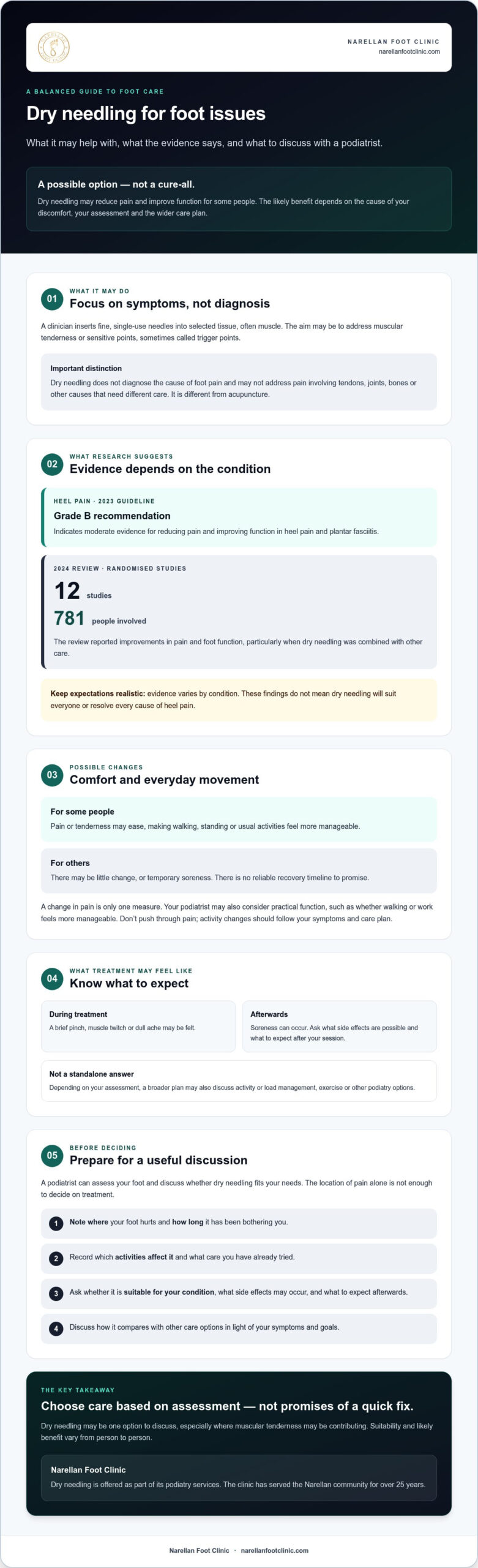
A clinician delivers dry needling by inserting fine, single-use needles into selected tissue, often muscle. The aim may be to address muscular tenderness or sensitive points, sometimes called trigger points. It isn’t a way to diagnose the cause of foot pain, and a needle-based approach won’t address every source. For a neutral overview of the technique and how it differs from acupuncture, see Dry needling.
Realistic expectation: dry needling may help ease symptoms for some people; it can’t guarantee that the underlying cause will resolve.
What does dry needling aim to address?
A podiatrist may consider whether muscle tenderness or sensitivity contributes to your discomfort and whether dry needling is appropriate. Foot pain can also involve structures such as tendons, joints or bones, or have other causes that need different assessment and care. That’s why the location of pain alone isn’t enough to decide on treatment.
Which foot issues might prompt a discussion?
Muscle-related discomfort may prompt a conversation, but suitability depends on your individual assessment. Heel, arch and forefoot symptoms can have different causes, so the potential role of dry needling and the strength of evidence shouldn’t be assumed to be the same for each.
For heel pain, the 2023 Clinical Practice Guideline for Heel Pain and Plantar Fasciitis gives dry needling a Grade B recommendation, indicating moderate evidence for reducing pain and improving function. A 2024 review of 12 randomised studies involving 781 people also reported improvements in pain and foot function, particularly when dry needling was combined with other care. These findings don’t mean it will suit every person or resolve every cause of heel pain. You can read more about assessment and care options in this heel pain treatment guide.
For arch or forefoot discomfort, ask what the assessment suggests is contributing to your symptoms and whether evidence supports considering dry needling in your case. The goal is a suitable plan, not simply choosing a treatment based on where it hurts.
How might dry needling support comfort and movement?
If a tender area in the foot is making each step uncomfortable, a possible aim of dry needling is to ease local sensitivity and help movement feel more comfortable. Any change in symptoms may make it easier to build towards usual activities, such as walking or standing for longer. That doesn’t mean you should push through pain: activity changes should be guided by your symptoms and care plan.
The potential benefits of dry needling for foot issues vary between people. Your response may depend on the cause of the discomfort, how long it has been present and what other care is used. A change in pain is one measure, but your podiatrist may also consider practical function, such as whether walking or work feels more manageable.
Potential benefits for pain and everyday movement
Some people may experience less pain or tenderness after treatment, while others may notice little change or have temporary soreness. There’s no reliable recovery timeline to promise. If comfort improves, the useful next step is to consider how to return gradually to activities that matter to you, rather than treating short-term symptom relief as proof that the cause has resolved.
What research suggests: A 2024 review of randomised studies found dry needling may reduce pain and improve foot function, particularly alongside other care, but evidence varies by condition and doesn’t show that it will help every person.
Why dry needling may be combined with other care
Dry needling may be one part of a broader plan, rather than a standalone answer. Depending on your assessment, care may also involve discussing activity or load management, exercise, or other podiatry options. These approaches have different aims: symptom management may help with comfort, while a wider assessment can explore factors that may be contributing to ongoing discomfort.
A biomechanical assessment can examine how your feet and legs move and whether movement factors may be relevant to your symptoms. It doesn’t assume that movement is the cause, but can help inform a personalised discussion about suitable care. Learn more in this biomechanical assessment guide.
If you’re considering dry needling, ask how your response will be assessed and what other options may suit your needs. You can also discuss whether a podiatry assessment in Narellan may help clarify the next step.
Dry needling versus other foot-pain options: benefits and limitations
Dry needling isn’t a universal solution for foot pain. It may be considered when an assessment suggests muscle tenderness is relevant, but other causes may call for different care. The right choice depends on the diagnosis, your preferences and a clinician’s advice. Sometimes more than one approach is considered as part of a broader plan.
| Option | Possible goal | What to consider |
|---|---|---|
| Dry needling | Address muscular tenderness and potentially ease symptoms. | Suitability depends on assessment. It may cause temporary soreness, and it doesn’t address every cause of foot pain. |
| Exercise-based care | Support strength, mobility or a gradual return to activity. | Exercises should suit your symptoms and capacity. Ask a clinician what’s appropriate for you. |
| Footwear changes | Improve comfort or change how the foot is supported during daily activities. | The best choice depends on fit, activity and the source of discomfort; a shoe change alone may not resolve the cause. |
| Custom orthotics | Provide individually made support where assessment indicates it may be useful. | They aren’t automatically needed for foot pain. A podiatrist can discuss whether they’re relevant to your needs. |
When might another approach be considered?
Foot pain can involve structures beyond muscle. Skin concerns, joint or structural problems, and nerve-related symptoms may need different assessment or care. It’s not possible to identify the cause reliably from the location or description of pain alone, so avoid choosing a treatment based only on symptoms. Custom orthotics may be one assessed option, not a default recommendation. This custom orthotics guide can help you understand what to discuss.
How to weigh possible benefits against limitations
Consider what you hope to change, such as tenderness during walking, and ask how that outcome will be reviewed. Dry needling may help some people, but response varies; it may also be only one part of managing the problem. Temporary post-treatment soreness is a possible response, so ask your treating clinician about likely effects, risks and aftercare for your circumstances.
A useful decision comes from weighing the potential benefits of dry needling for foot issues against other suitable options, rather than assuming one treatment is best. Ask what the assessment suggests, what alternatives are available and how the plan can be adjusted if your comfort or function doesn’t improve.
How to decide whether dry needling is appropriate for your foot
A clear decision starts with understanding what may be causing your symptoms, not with choosing a treatment first. Describe what you’re experiencing, have the foot assessed, discuss suitable options and then agree on a plan with your clinician. This helps establish whether dry needling is relevant or whether another approach needs consideration.
Before your appointment, note:
- Where the discomfort is, and whether it spreads or changes location.
- How long it’s been present and whether it’s improving, stable or worsening.
- Which activities or situations make it better or worse.
- What care you’ve already tried and how you responded.
What should you ask before treatment?
Ask what the clinician thinks may be contributing to your symptoms and why dry needling is being considered. It’s reasonable to ask what alternatives may suit you, what benefits are realistic, and what risks or after-effects to be aware of. If needles make you uneasy, mention that too. You can ask what sensations may occur, what aftercare is advised and how you’ll know whether the plan is helping.
What happens during an individual assessment?
A podiatry assessment commonly involves discussing your symptoms and relevant health or activity history, followed by an examination suited to your concerns. The clinician uses this information to consider possible causes and whether dry needling matches the suspected source of pain. The exact assessment depends on the person and presentation, so ask what it will involve and raise any questions before deciding.
Agree on what progress will mean for you, such as changes in comfort during a particular activity, and when you’ll review the plan. There’s no need to assume a fixed number of sessions or a particular outcome. The benefits of dry needling for foot issues are individual, so ongoing care should reflect your response and any new information from the assessment.
Seek prompt medical assessment if your symptoms are severe, start suddenly, are getting worse or remain unexplained. If you’re in Narellan, you can discuss your foot symptoms with Narellan Foot Clinic and ask whether dry needling or another podiatry option may be appropriate.
Discuss dry needling for foot issues with a Narellan podiatrist
Dry needling is one of the podiatry services offered by Narellan Foot Clinic. It may be considered as part of personalised care, rather than assumed to be the right choice for every foot concern. A podiatrist can discuss whether further assessment, dry needling or another option may suit your symptoms and goals.
Narellan Foot Clinic has served the Narellan community for over 25 years and operates in a fully sterilised environment. If you’re unsure whether dry needling is relevant to your situation, a discussion with a podiatrist can help you understand what the assessment may involve and what choices are available.
What to expect when discussing treatment
To make the conversation useful, bring a clear picture of how the problem affects you. It may help to note where the discomfort occurs, when it began, what activities influence it and what care you’ve already tried. Mention relevant health information and any concerns you have about needles or treatment.
Ask what the clinician thinks may be contributing to your symptoms, why dry needling is being considered and what alternatives might be appropriate. You can also ask about possible sensations, after-effects, aftercare and how progress would be reviewed. Treatment decisions should follow an individual assessment and a discussion with you, including whether you feel comfortable proceeding.
The potential benefits of dry needling for foot issues depend on whether the approach is suitable for the suspected source of your symptoms. A consultation is an opportunity to weigh that option alongside other relevant podiatry care, without assuming a particular treatment or result in advance.
Take a considered next step in Narellan
A suitable plan should reflect your assessment, preferences and response over time. If dry needling isn’t considered appropriate, ask what other options may be worth discussing. You’re entitled to understand the reasoning behind a recommendation and to raise questions before agreeing to treatment.
If you’re in Narellan and would like to explore your options, contact Narellan Foot Clinic to enquire about discussing your foot concern with a podiatrist. The aim is an informed conversation about care that may suit you, not a promise of relief.
Make an informed next step for your foot health
The benefits of dry needling for foot issues depend on the cause of your symptoms and whether the approach suits your needs. It may help with pain or movement for some people, but it isn’t a universal solution. An individual assessment can help you compare it with other options and understand what to expect.
Narellan Foot Clinic offers dry needling within its podiatry services and has served the Narellan community for over 25 years. The clinic also operates in a fully sterilised environment. Discuss your symptoms, concerns and care options with a podiatrist before deciding whether treatment is right for you.
Discuss your foot concerns with Narellan Foot Clinic and take a considered next step towards care that fits your situation. You deserve clear information and a plan that supports your goals.
Frequently Asked Questions
Can dry needling help with foot pain?
Dry needling may help reduce foot pain for some people, but it depends on what’s causing the discomfort and whether the technique suits that cause. The benefits of dry needling for foot issues may include less tenderness or improved function, though relief isn’t guaranteed. Research suggests potential benefit for some heel pain, particularly alongside other care. A podiatrist can assess your symptoms and discuss whether it’s an appropriate option.
What foot issues can dry needling be used for?
Dry needling may be considered when a clinician thinks muscle tenderness is contributing to symptoms. It may come up in discussions about heel, arch or forefoot pain, but the cause and evidence can differ by condition and pain location. Foot discomfort may also involve skin, joints, nerves or other structures, which may need different care. An assessment is needed to determine whether dry needling is relevant to your situation.
Is dry needling painful?
People experience dry needling differently. You may feel a brief pinch, a muscle twitch or a dull ache during treatment, and some soreness afterwards is common. If you’re worried about needles or discomfort, tell the clinician before treatment and ask what sensations may occur and what to do afterwards. You can discuss your concerns and make an informed decision about whether to proceed.
How many dry needling sessions are needed for foot pain?
There isn’t a set number of sessions that applies to everyone with foot pain. The appropriate plan depends on the suspected cause, your assessment and how your symptoms and function respond. Ask the clinician how progress will be reviewed and what changes would prompt a different approach. Be cautious of promises of a fixed treatment schedule or guaranteed results before your individual needs have been assessed.
What are the side effects of dry needling?
Temporary soreness after dry needling is a commonly reported response. Your experience may vary, so ask the treating clinician about possible side effects, risks and aftercare in light of your health and circumstances. Share relevant health information before treatment, and speak up if you feel unwell or have concerns afterwards. A clinician can explain what to expect and whether any symptoms need further assessment.
Is dry needling better than orthotics for foot problems?
Neither option is automatically better; they have different purposes and depend on the cause of your foot problem. Dry needling may be considered for relevant muscular symptoms, while custom orthotics may be discussed if an assessment indicates they could help. A podiatrist can explain the reasoning for each option and whether either, both or another approach suits your needs. Don’t assume orthotics are necessary based on pain alone.
Can a podiatrist assess whether dry needling is right for me?
Yes. A podiatrist can discuss your symptoms, examine your foot and consider whether dry needling or another care option may be appropriate. Narellan Foot Clinic offers dry needling within its podiatry services and has served the Narellan community for over 25 years. If you’re comparing options around Sydney, including Blacktown, Campbelltown, Windsor or Penrith, check each clinic’s location and services before arranging an assessment.