What if easing pressure, rather than trying to force a bunion straight, is the first step towards comfort? When shoes press on the joint or walking becomes uncomfortable, it’s natural to wonder whether the bump will keep worsening. If you’re searching for painful bunion relief Narellan, understanding what triggers the soreness can help you choose a practical next step.
You’re not alone in wanting to try straightforward options before considering more involved treatment. The right approach depends on what contributes to your discomfort, and not every bunion needs the same care. This guide explains common sources of bunion pain, home care that may reduce pressure, and when to seek a podiatry assessment.
You’ll also learn how a podiatrist can assess footwear pressures and foot mechanics, and why custom orthotics may be considered for some people, without being a guaranteed fix. Narellan Foot Clinic has served the local community for more than 25 years. Whether you’re in Narellan or researching options around NSW, including Sydney, Blacktown, Campbelltown, Windsor and Penrith, the aim is to help you understand your options and choose a clear next step.
Key Takeaways
- A bunion involves a change around the joint at the base of the big toe, and footwear pressure can contribute to discomfort.
- Roomier footwear and protective padding may reduce pressure, but they won’t remove a bunion and may not suit everyone.
- For painful bunion relief Narellan, note what aggravates your symptoms and bring your usual footwear and questions to an assessment.
- A podiatrist can consider your symptoms and foot mechanics before discussing whether options such as custom orthotics may be appropriate.
- If bunion discomfort persists or affects daily activities, an individual assessment can help clarify your options without committing you to a particular treatment.
Painful bunion relief in Narellan: what causes the discomfort?
If a sore spot at the base of your big toe makes walking, standing at work or choosing shoes uncomfortable, everyday routines can become frustrating. The pain may be linked to pressure on the joint, but its cause and intensity vary. Noting what aggravates it is a useful first step towards finding suitable relief.
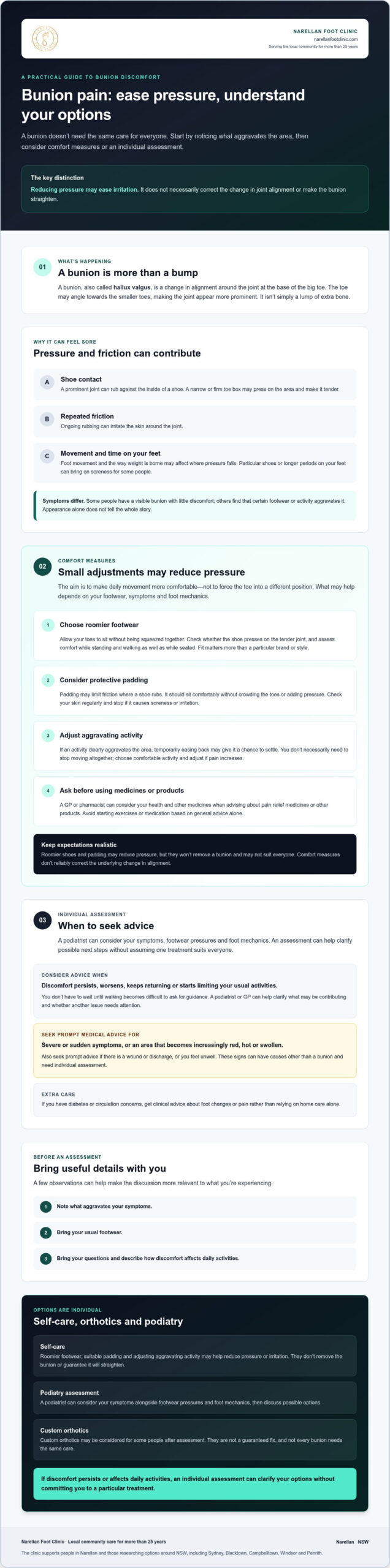
A bunion, also known as hallux valgus, is a change in alignment around the joint at the base of the big toe. The toe may angle towards the smaller toes, making the joint appear more prominent. It isn’t simply a lump of extra bone. For an overview of what a bunion is, including its other name, see Wikipedia.
How can a bunion make walking and footwear painful?
A prominent joint can rub against the inside of a shoe. A narrow or firm toe box may also press on the area and make it tender. Repeated friction can irritate the skin. The way your foot moves and bears weight may affect where pressure falls, but that alone doesn’t establish the cause of your symptoms. Some people have a visible bunion with little discomfort; others find that particular shoes or longer periods on their feet bring on soreness. Bunions don’t all feel the same or change in the same way.
Relieving bunion symptoms may reduce pressure and irritation, but it doesn’t necessarily correct the underlying change in joint alignment. Keeping this distinction in mind can help set realistic expectations as you explore options for painful bunion relief in Narellan.
When should bunion pain be assessed?
Consider seeking advice from a podiatrist or GP if discomfort persists, worsens or starts limiting your usual activities. An assessment can help clarify what may be contributing to the pain and whether another issue needs attention. You don’t have to wait until walking becomes difficult to ask for guidance.
Seek prompt medical advice for severe or sudden symptoms, or if the area becomes increasingly red, hot or swollen, develops a wound or discharge, or you feel unwell. These signs can have causes other than a bunion and need individual assessment. If you have diabetes or circulation concerns, get clinical advice about foot changes or pain rather than relying on home care alone.
A bunion’s appearance doesn’t tell the whole story. If symptoms affect your day, a podiatry assessment can consider your footwear pressures and foot mechanics alongside what you’re experiencing. This can help clarify possible next steps without assuming one treatment suits everyone.
What may ease bunion pain without promising to reverse it?
Simple changes may help reduce pressure on a sore bunion, particularly when footwear rubbing is a clear trigger. The aim is to make daily movement more comfortable, not to force the toe into a different position. What helps depends on your footwear, symptoms and foot mechanics. The Mayo Clinic’s overview of bunion symptoms and causes also explains why discomfort can have more than one contributing factor.
Comfort measures may ease irritation, but they don’t reliably correct the structural change behind a bunion. If pain continues despite reasonable adjustments or keeps returning, an individual assessment can help clarify what may be contributing and which options are appropriate for you.
Can footwear changes reduce bunion pressure?
Choose footwear with enough room for your toes to sit without being squeezed together. Check whether the shoe presses directly on the tender joint, and assess comfort while standing and walking, not just while seated. A particular brand or style isn’t essential; fit matters more. Roomier shoes may reduce rubbing, but they can’t guarantee the bunion will straighten or stop changing.
What other comfort measures may be worth discussing?
Protective padding may limit friction where a shoe rubs. It should sit comfortably without adding pressure or crowding the toes. Check your skin regularly, especially if you have reduced sensation or difficulty seeing your feet, and stop using the padding if it causes soreness or irritation.
If an activity clearly aggravates the area, temporarily easing back may give it a chance to settle. You don’t necessarily need to stop moving altogether; choose comfortable activity and adjust if pain increases. For advice about pain relief medicines or other products, ask a GP or pharmacist who can consider your health and other medicines. Avoid starting exercises or medication based on general advice alone.
These steps may be useful, but they aren’t a substitute for assessment when discomfort persists or limits your routine. A podiatrist can consider your symptoms, footwear and foot mechanics before discussing options. If you’re looking for personalised painful bunion relief Narellan, learn more about a biomechanical assessment at Narellan Foot Clinic and decide whether an appointment is the right next step for you.
Bunion relief options compared: self-care, orthotics and podiatry
Different approaches have different roles. Footwear adjustments and padding may reduce rubbing at the sore joint, while a podiatry assessment can explore your symptoms and foot mechanics. The Mayo Clinic’s information on what causes bunions provides further context on factors that may contribute to bunion symptoms. No one option suits everyone, and temporary comfort measures aren’t the same as addressing contributing foot mechanics.
| Option | Purpose and likely role | Limitations |
|---|---|---|
| Footwear adjustments | Roomier toe space may reduce pressure or rubbing from shoes. | May not ease pain from every cause and won’t guarantee a change in toe alignment. |
| Protective padding | May cushion a prominent area and reduce friction against footwear. | Needs to fit comfortably. Padding that crowds the toes or irritates skin may make things worse. |
| Clinician-led assessment | Considers symptoms, footwear pressures and foot mechanics to inform a discussion about suitable options. | Assessment doesn’t guarantee a particular outcome or mean that orthotics are needed. |
When might custom orthotics be discussed for bunion discomfort?
Custom orthotics may be considered if an assessment suggests they could be relevant to your symptoms and foot mechanics. They aren’t necessary for everyone with a bunion, and shouldn’t be assumed to straighten the toe or remove the bunion. For broader information, read this custom orthotics guide. A biomechanical assessment guide explains how an assessment can inform a discussion about foot function.
What should you ask before choosing a relief option?
Before deciding, ask what an option is intended to help with, what its limitations are and whether a review may be useful. Explain which shoes you wear, what your work involves and which activities bring on discomfort. These details can help a qualified clinician consider how an option might fit your routine. For painful bunion relief Narellan, a podiatry discussion can help you weigh practical self care against assessment and clinician recommended options, without assuming one approach is best for everyone.
How to prepare for a bunion assessment in Narellan
A little preparation can help you explain what’s happening and make the discussion more useful. Before your appointment, jot down when the discomfort began, where you feel it and what seems to trigger or ease it. You don’t need a complete record; a few clear examples can show how the problem affects your day.
What details about bunion pain should you record?
Note whether pain occurs in particular shoes, after standing at work, during exercise or while walking. Include any effect on your usual activities and which footwear you’ve stopped wearing or find more comfortable. Mention previous care you’ve tried and relevant health conditions, including diabetes or circulation concerns. Your symptom history, activity demands and the shoes that apply pressure can help a podiatrist understand the context of your discomfort and consider foot function alongside what you report.
If you’re unsure what to bring, ask the clinic beforehand whether it would be useful to bring shoes you wear regularly. A commonly worn pair may help show where the shoe contacts the affected area, but check the clinic’s preference rather than assuming.
What may happen during a podiatry assessment?
A podiatrist may ask about your symptoms, health and activity history, then assess your foot and how it functions. The exact process depends on your needs and the clinician’s judgement, so it isn’t a set treatment plan. Findings can guide a conversation about possible next steps, including the purpose and limitations of any option discussed. Your preferences and everyday demands are part of that conversation too.
It can help to bring a short list of questions. For example:
- What might be contributing to the discomfort?
- How could my footwear, work or usual activities affect the options?
- What is each suggested option intended to do, and what are its limitations?
- Would a review be useful, and what changes should prompt me to seek further advice?
Narellan Foot Clinic has served the local community for more than 25 years, with biomechanical assessment as its primary service. If ongoing symptoms affect your routine and you’d like to discuss an assessment, contact Narellan Foot Clinic to ask about the current appointment process. A conversation can help you explore painful bunion relief Narellan options without committing to a particular treatment in advance.
Finding personalised bunion pain support at Narellan Foot Clinic
If bunion discomfort affects your routine, a local assessment can help turn uncertainty into a clearer conversation about what may be contributing. Narellan Foot Clinic has served the Narellan community for more than 25 years. Its biomechanical assessment and custom orthotics are options a podiatrist may discuss in light of your symptoms and foot mechanics, not treatments that guarantee a particular result.
How can a local podiatrist help you understand bunion pain?
An assessment gives you time to explain where and when you feel discomfort, which shoes or activities aggravate it, and how it affects daily life. The podiatrist can consider this information alongside an examination of your foot and how it functions. Recommendations depend on the findings and your needs. Custom orthotics may be discussed if considered appropriate, but they aren’t necessary for everyone and can’t be promised to correct a bunion or prevent it from progressing.
Narellan Foot Clinic lists biomechanical assessment and custom orthotics among its services. It does not list bunion surgery, so don’t assume surgical treatment is available through the clinic. If surgery is a concern or something you’re considering, discuss suitable referral pathways with a qualified health professional.
What is a sensible next step if bunion pain persists?
If discomfort continues, worsens or limits your usual activities, contact the clinic to ask whether an assessment may be appropriate and confirm current booking options. You can also ask what the assessment involves and what information or footwear would be useful to bring. This gives you a chance to understand the process before deciding how to proceed.
For severe or sudden symptoms, or concerning changes such as increasing redness, heat, swelling, a wound or discharge, seek prompt medical advice rather than waiting for a routine appointment. The right next step depends on what’s happening and your health needs.
If you’re looking for painful bunion relief Narellan, you’re welcome to Contact Narellan Foot Clinic to discuss an assessment and ask about the current appointment process. A conversation can help you explore your options without pressure to choose a particular treatment.
Take a considered next step towards greater comfort
Bunion discomfort can have different triggers, so useful relief starts with understanding what aggravates your symptoms. Roomier footwear or protective padding may ease rubbing, but these measures won’t necessarily change the bunion itself. If pain persists or affects your usual activities, an individual assessment can help you consider your options.
Narellan Foot Clinic has served the Narellan community for more than 25 years, with biomechanical assessment as its primary service. A podiatrist can discuss your symptoms, footwear and foot mechanics, then explain possible next steps based on their findings and your preferences. Custom orthotics are also offered and may be considered if suitable after assessment, but they aren’t right for everyone and can’t be guaranteed to resolve bunion pain.
If you’re exploring painful bunion relief Narellan, contact the clinic to ask about an assessment and confirm current appointment options. Contact Narellan Foot Clinic to discuss an assessment. A clearer understanding of your foot can help you make an informed choice, one step at a time.
Frequently Asked Questions
Can a bunion be treated without surgery?
Non-surgical care may help manage discomfort, though it won’t remove a bunion or reliably change the joint’s alignment. Roomier shoes and suitable padding can reduce rubbing for some people, while a podiatrist may discuss other options after assessing your symptoms and foot mechanics. What’s appropriate depends on your individual needs. If pain continues or limits your activities, seek a podiatry assessment to talk through possible next steps.
What is the fastest way to relieve bunion pain?
There isn’t one fastest method that works for everyone. If a shoe is pressing on the sore joint, switching to a comfortable pair with more room around the toes may reduce that pressure. Ease back temporarily from activities that clearly aggravate the area, while keeping to comfortable movement. If the pain is severe, sudden or persistent, seek individual clinical advice rather than relying on a quick fix.
Do bunion pads or orthotics help with pain?
Bunion pads may reduce friction if they fit comfortably and don’t crowd the toes; check your skin for irritation. Custom orthotics may be considered if an assessment suggests they suit your symptoms and foot mechanics. Neither option is guaranteed to relieve pain or correct a bunion, and orthotics aren’t needed by everyone. A podiatrist can help you weigh their purpose and limitations for your circumstances.
When should I see a podiatrist for a painful bunion?
Arrange an assessment if pain persists, worsens or interferes with walking, work, exercise or choosing shoes. A podiatrist can discuss your symptoms, footwear and foot function to help clarify possible next steps. Seek prompt medical advice for severe or sudden symptoms, or if the area becomes increasingly red, hot or swollen, develops a wound or discharge, or you feel unwell. If you have diabetes or circulation concerns, seek individual clinical advice about foot changes.
Can tight shoes make bunion pain worse?
Yes. Shoes that squeeze the toes or press directly against the prominent joint can increase pressure and rubbing, making the area more tender. Look for footwear that gives your toes room and feels comfortable while standing and walking. A different brand isn’t necessarily required; fit and comfort matter. Roomier shoes may reduce shoe related irritation, but they can’t guarantee that the bunion itself will change.
What happens during a bunion assessment at a podiatry clinic?
A podiatrist will typically ask about your symptoms, health and activities, then may assess your foot and how it functions. Sharing which shoes or movements trigger discomfort can provide useful context. The clinician’s findings and your preferences guide discussion of possible next steps; an assessment doesn’t automatically mean you need orthotics or another treatment. You can prepare questions about each option’s purpose, limitations and whether follow-up may be useful.
Can a podiatrist in Narellan help with painful bunions?
A podiatrist can assess your symptoms and discuss options that may suit your individual needs. Narellan Foot Clinic has served the Narellan community for more than 25 years, with biomechanical assessment as its primary service and custom orthotics among its offerings. Suitability depends on assessment findings, and results aren’t guaranteed. For painful bunion relief Narellan, contact the clinic to ask about an assessment and confirm current appointment options. The clinic does not list bunion surgery.