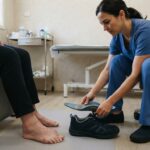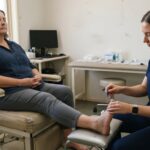

A podiatry assessment is more than a look at your feet. What is involved in a podiatry assessment includes discussing your symptoms and daily activities, then assessing your foot posture, movement and walking pattern. These findings help the podiatrist understand what may be contributing to your concern and shape a personalised diagnosis and treatment plan.
If foot or lower-limb discomfort is affecting your routine, it’s understandable to want to know what to expect. The assessment gives you time to explain what you’re experiencing and lets the podiatrist consider your movement and foot function in context, rather than focusing on one sore spot alone.
This guide explains the main parts of an assessment, from discussing symptoms and footwear to observing your gait and checking joint movement. You’ll also learn how the findings can guide next steps, so you can feel prepared and informed about your care.
Key Takeaways
- Be ready to describe where discomfort occurs, when it began and how your daily activities affect it.
- Bring the shoes and insoles you wear regularly so their fit and wear patterns can be considered.
- Movement checks can help reveal how foot posture, joint mobility and walking mechanics relate to your concerns.
- Assessment findings guide a personalised plan, which may include practical changes to support comfortable movement.
- Understanding what happens at each stage can help you feel more prepared and take an active role in your care.
Discussion of symptoms, lifestyle, activities, footwear and previous injuries
Wear comfortable clothing that gives easy access to your lower legs. Bring the shoes you wear most often, including work or sports footwear, along with any orthotics or insoles you use.
Understanding what is involved in a podiatry assessment starts with a conversation about your symptoms. The podiatrist may ask where the discomfort is, when it began and whether it appeared suddenly or gradually. They may ask you to rate pain out of 10, and to describe what makes it worse or eases it. For example, note whether standing at work, walking uphill or resting changes how your foot feels.
Your routine provides useful context. Be ready to describe your work demands, activity levels and footwear habits, such as wearing safety boots for long shifts or running regularly. Mention previous injuries, operations and relevant health conditions, including diabetes or circulation and nerve-related issues. These details help the podiatrist relate your symptoms to the demands placed on your feet.
Footwear can affect comfort and movement, so the podiatrist may look at the fit and wear patterns of your commonly worn shoes. Bring current and older pairs if their wear differs, as well as sports shoes and work footwear. The discussion may lead to practical advice, such as choosing shoes better suited to your activities or adjusting how you use particular footwear.
- Describe when symptoms occur, such as after a long walk or during the first steps in the morning.
- Bring existing insoles or orthotics, so their fit and use can be considered.
- Explain any changes in exercise, work tasks or footwear before symptoms started.
Recommendations depend on the assessment findings. A podiatrist may suggest footwear changes, adjusting an activity that aggravates symptoms or home exercises. For example, targeted stretching or strengthening may be recommended when movement or muscle function is relevant. If foot mechanics appear to contribute to discomfort, Custom Orthotics may be considered as part of a broader plan, not as an automatic solution.
Before your appointment, note your symptoms, when they happen and what affects them. Include examples from your routine, such as pain after standing at work or discomfort in a particular pair of shoes. Specific details help the podiatrist discuss your activities, footwear and injury history and tailor advice to your needs.
Biomechanical and gait assessment
A Biomechanical Assessment looks at how posture, joints and muscles work during movement. Walking analysis helps relate those observations to foot or lower-limb symptoms.
Standing Posture and Walking Gait
While you stand, the podiatrist observes your foot and ankle position and may consider your overall posture. They’ll then assess how you walk, watching how your feet contact the ground and how your legs move through each step. This can reveal patterns that may not be apparent when you’re seated, such as differences in foot position or movement between sides.
Gait assessment can involve visual observation or video and a treadmill. If you run, the assessment may include running as well as walking. Bring your usual footwear and any previous imaging or test results, so the podiatrist can consider your regular movement and relevant history.
Biomechanical and Video Analysis
A Biomechanical Assessment considers lower-limb structure and alignment alongside movement and function. The podiatrist may observe your posture and how your joints and muscles work together as you stand, walk or perform specific movements. The aim is to identify factors that may contribute to symptoms and inform a diagnosis, rather than judge one step in isolation.
Video gait analysis can record walking or running on a treadmill for closer review. The podiatrist may examine the footage frame by frame to consider movement at different points in the walking cycle. Video isn’t always needed: depending on the assessment, visual observation may be sufficient.
Assessment Tests
Physical checks may include joint range of motion, muscle strength and gentle palpation of tender areas. Limb length may also be measured if a difference is suspected. These tests add detail to observations made while standing and walking, helping explain how structure and movement relate to your symptoms.
Imaging, such as an X-ray or ultrasound, may be recommended if clinically necessary. Pressure analysis isn’t required to observe gait; assessment can be performed visually or with video and a treadmill. Private patients don’t need a referral. A referral is required for Medicare EPC/CDM claims, and eligible patients may receive up to five podiatry visits per year. Medicare claims are processed in-clinic, with overnight claiming preferred.
The initial biomechanical assessment described by the clinic takes 30-45 min. What is involved in a podiatry assessment depends on the movement or symptoms being investigated, so tests focus on relevant findings. For foot or lower-limb concerns affecting walking, a biomechanical assessment can help examine movement and guide next steps.
Joint range of motion in the feet, ankles, knees and hips
A foot and ankle examination may include checks of your skin, nails, swelling, tender areas, joint mobility and muscle strength. The podiatrist considers how your foot and leg movement, structure and alignment relate to your symptoms and everyday function.
The examination may begin with the podiatrist observing your feet and ankles, then gently palpating specific areas. This can identify tenderness or swelling around a joint, while skin and nail checks can reveal visible changes. For example, discomfort near the ankle may prompt a closer look at that area and the movements that reproduce your symptoms.
Range-of-motion testing checks how far a joint moves and whether movement is restricted or uncomfortable. The podiatrist may move your foot or ankle while you’re seated, then assess its function while you stand. A knee-to-wall test can assess ankle movement: you move your knee towards a wall while keeping your heel down. This shows how the ankle moves during a weight-bearing task.
Foot-joint movement is central to a biomechanical examination. The podiatrist may also assess knee or hip movement when clinically necessary. This wider view matters because joints work together during actions such as stepping forward or climbing stairs. If ankle movement is limited, for example, the podiatrist can consider how your leg and foot adapt during those tasks.
Muscle testing checks strength, flexibility and, where relevant, differences between sides. You may be asked to push against the podiatrist’s hand or hold a position while they apply gentle resistance. Testing may include the calf, quadriceps or gluteal muscles. Comparing sides can show whether a difference in strength or control relates to your movement concern.
These checks build a picture of how your lower limb functions, rather than treating each joint as a separate issue. The podiatrist considers a tender area, reduced ankle range or difference in muscle strength alongside your symptoms and movement patterns. This helps identify factors that may contribute to discomfort or difficulty with daily activities.
Expect guided movements, such as bending your ankle or knee, and simple strength checks. Tell the podiatrist if a movement causes discomfort and where you feel it. This detail can help distinguish foot discomfort from symptoms extending towards the ankle, knee or hip.

Non-weightbearing foot, ankle and toe posture
A podiatrist can assess foot, ankle and toe posture both without weightbearing and while you stand. Comparing these positions helps show how lower-limb structure relates to foot pain and movement.
Non-Weightbearing Foot Posture
For a non-weightbearing check, you may sit or lie down while the podiatrist examines your relaxed foot. They can observe the position of your foot, ankle and toes, then gently move the joints to assess alignment and mobility. For example, a toe that appears straight at rest may sit differently when you stand.
This position lets the podiatrist look closely at your foot without body weight changing its shape. They may compare your feet and note differences in toe alignment or ankle position. These observations are considered alongside your symptoms and relevant injury history, not used alone to explain a problem.
Static Foot Posture Assessment
A static posture check examines how your feet and ankles sit while you stand still. The podiatrist can observe your stance, alignment and how weight is distributed across each foot. This contrasts with the non-weightbearing examination: standing loads the feet, while sitting or lying down removes that load.
Posture is one part of a broader assessment. How a foot looks while standing doesn’t show every detail of how it functions during walking, so the podiatrist may compare static findings with movement observations or gait analysis. For example, they may consider whether a change in foot position is also present while you walk.
A foot and lower-limb assessment also includes looking at your skin and nails. A visible wound, skin change or nail concern can be considered alongside posture and symptoms. For people living with diabetes, regular Diabetes Foot Assessment is important because reduced sensation, circulation changes and slow-healing wounds can increase the risk of unnoticed problems. Tell the podiatrist about a wound or change in sensation so it can be included in the examination.
These checks can establish findings to monitor as part of ongoing foot-health management. If foot pain changes, a new injury occurs or walking becomes more difficult, discuss these developments at a later assessment. For people with diabetes, monitoring skin, sensation and circulation can help identify changes that need attention, including a slow-healing wound.
The key comparison is how your foot looks at rest, under standing load and during movement. Each position reveals different information, helping the podiatrist assess posture without treating one observation as a complete explanation for your symptoms.
Personalised diagnosis and treatment planning
After examining your feet and lower limbs, the podiatrist brings the findings together to explain your concerns. These findings guide a treatment plan shaped around your symptoms, movement and daily needs.
Assessment Findings and Diagnosis
The podiatrist considers the whole assessment, rather than relying on one finding such as tenderness or foot posture. For example, they may compare your reported pain with joint movement, muscle strength and how your foot functions while walking. This helps identify contributing factors, explain the diagnosis clearly and decide which concerns need attention first.
Ask how each finding relates to a task that matters to you, such as standing at work or walking comfortably. Understanding the link between a movement issue and your symptoms can make recommended next steps easier to follow.
Treatment and Management Planning
Your treatment plan may include footwear advice, exercises, activity changes, padding or pressure relief. The podiatrist discusses suitable options with you, considering your preferences and everyday demands. For instance, someone who stands for long periods may need practical advice suited to their work footwear and routine.
Custom Orthotics may be considered when the assessment indicates they could support foot function or walking. They aren’t automatically part of every plan. The decision depends on findings such as foot mechanics, symptoms and how you move during relevant activities.
Most podiatry assessments are non-invasive and comfortable. The first visit may involve movement checks, gentle examination and discussion of your concerns; tell the podiatrist if a particular test causes discomfort. This helps keep the appointment responsive to your needs while gathering useful information.
A management plan can include steps to follow at home. If exercises are recommended, ask the podiatrist to demonstrate the movement and explain how to perform it and what it targets. Footwear guidance is more useful when it relates to a specific activity, such as walking, running or standing throughout a shift. For individuals navigating broader mobility goals, tailored support services from providers such as Pursue Ability can help ensure recommended home routines and daily care needs are managed safely.
The plan should explain what each recommendation aims to address. If Custom Orthotics are considered, discuss how they fit into your overall management, including footwear and activity adjustments. Follow-up visits can help monitor progress and adjust treatment as your movement and symptoms change.
For assessment-led advice about foot function and movement, book a podiatry assessment to discuss your concerns and possible next steps.
Narellan Foot Clinic: Biomechanical Assessment
Narellan Foot Clinic offers Biomechanical Assessment for people experiencing foot pain, concerns with walking or recurring lower-limb discomfort. The assessment considers how your feet and legs move, helping relate movement patterns to your symptoms and daily activities.
After assessing your needs, the podiatrist can discuss suitable management options. Custom Orthotics may be considered when clinically appropriate to support foot function as part of your personalised plan. An assessment can be a useful next step if discomfort affects work, exercise or everyday movement.
If you’d like to discuss a Biomechanical Assessment for foot or gait concerns, visit narellanfootclinic.com.
Take the next step towards comfortable movement
Understanding what is involved in a podiatry assessment can make it easier to act when foot or gait concerns affect your routine. Note what you want to return to, whether that’s walking comfortably, staying active or managing discomfort at work. Share that goal during your appointment so care can be discussed in the context of your everyday life.
Narellan Foot Clinic offers Biomechanical Assessment and Custom Orthotics for concerns involving foot function and movement. The clinic also offers Ingrown Toenail Surgery for a separate nail concern. Choosing the right appointment starts with explaining what’s troubling you and how it affects your activities.
If you’re ready to discuss your foot or gait concerns, contact Narellan Foot Clinic. Taking that first step can help you move towards care that fits your needs.
Frequently Asked Questions
What is involved?
A podiatry assessment brings together your symptoms, health history and how your feet function. Understanding what is involved in a podiatry assessment can help you prepare specific examples, such as discomfort after a work shift or difficulty with a favourite activity. The podiatrist uses relevant examination findings to explain possible contributing factors and discuss suitable next steps. Ask questions whenever a test or recommendation is unclear.
Why book a podiatry assessment?
Book an assessment when foot concerns affect your comfort, movement or usual activities, or when you want advice about a developing concern. For example, recurring heel discomfort may make walking or exercise harder, while a change in foot health can warrant attention even before it disrupts your routine. People managing diabetes may also benefit from regular foot checks, because reduced sensation can make some problems harder to notice.
Do I have to have an issue or pain to get my feet checked?
No. You can book a foot check without current pain, especially if you have a health condition that affects foot sensation or circulation. A check can also help if you’ve noticed a change in your skin, nails or walking pattern but aren’t sure what it means. For instance, a small wound is worth having assessed rather than waiting for discomfort.
What happens during a podiatry appointment?
The appointment starts with a conversation about what you’d like help with and relevant health details. The podiatrist then chooses examination steps suited to your concern, which may include looking at your skin or nails, checking movement or observing you walk. At the end, you can discuss the findings and management options that fit your needs and routine.
Will I receive treatment on the first visit?
Treatment on your first visit depends on the assessment findings and the care suited to your concern. The podiatrist discusses whether treatment is appropriate after considering your symptoms and examination. For example, a nail concern may need a different approach from discomfort linked to walking mechanics. You can understand the recommended option and its purpose before deciding how to proceed.
Will it hurt?
Most podiatry assessments are non-invasive and comfortable. You may be asked to move your foot or walk, and the podiatrist may examine a tender area, so speak up if a step causes discomfort. This helps them understand what you’re feeling and adapt the examination appropriately. If treatment is discussed, ask what it involves; the clinic describes its treatments as painless or minimally invasive.
What happens during an initial podiatry assessment in Australia?
An initial appointment usually involves discussing your concern, reviewing relevant health information and examining the foot or lower limb. For a private appointment at Narellan Foot Clinic, you don’t need a referral. A referral is required for Medicare EPC/CDM and DVA appointments. Eligible patients may receive Medicare coverage for up to five podiatry visits per year under EPC/CDM arrangements.
What questions does a podiatrist ask about medical history, symptoms and footwear?
Expect questions about when symptoms began, where you feel them and what changes them, such as activity or rest. The podiatrist may ask about previous surgery, ongoing health conditions, circulation or nerve concerns, and medicines you take. They’ll also ask about footwear you use for work or exercise. Bringing a medication list and your frequently worn shoes can make these details easier to discuss.