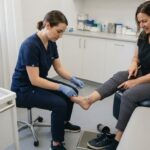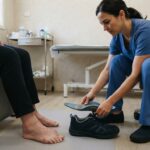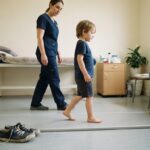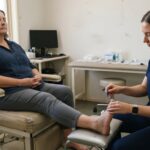
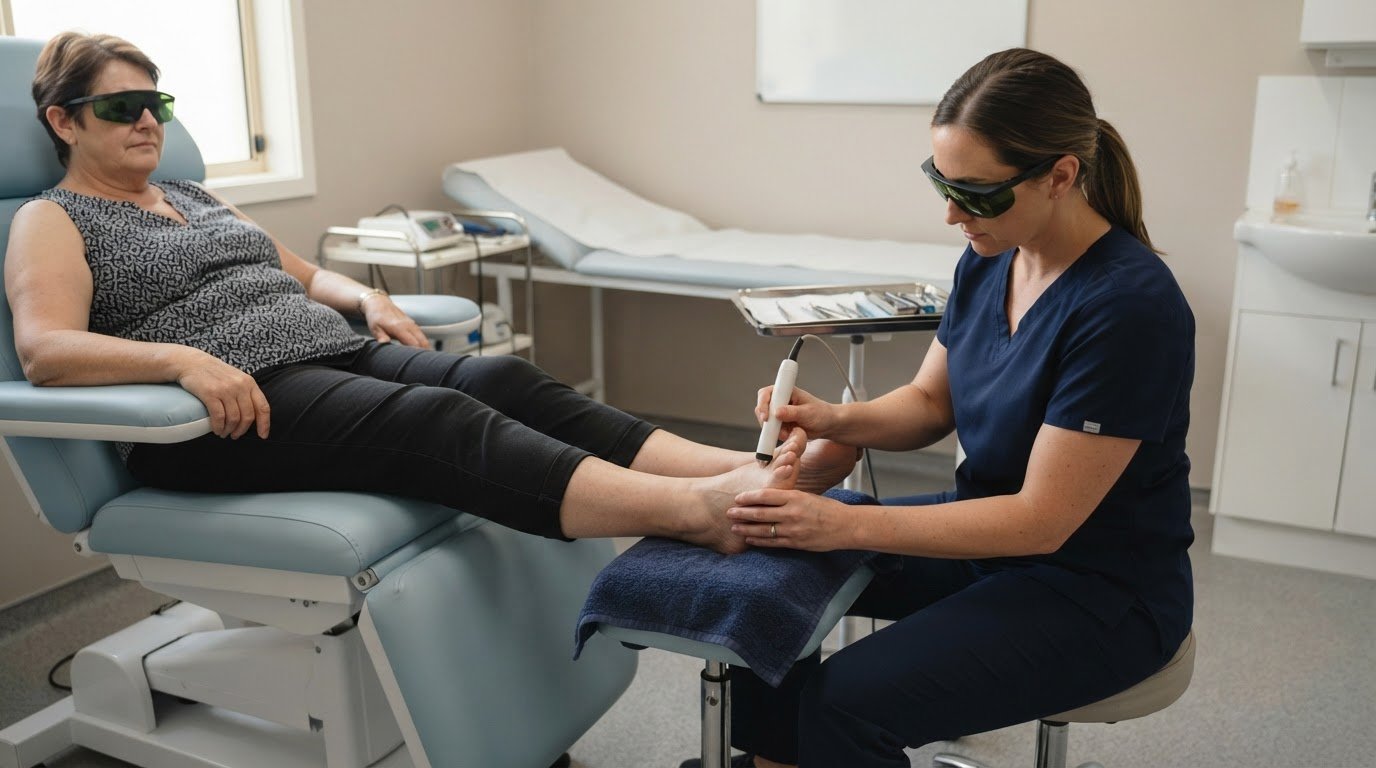
PBM therapy for plantar fasciitis is used as a complement to usual care, rather than a stand-alone fix. A course may involve 6 to 10 sessions, with the approach shaped by your symptoms and foot mechanics. The aim is to support pain relief and movement while other parts of your care address the load on the plantar fascia.
Heel pain that flares with your first steps or after rest can make everyday walking feel daunting. If you’re searching for PBM therapy for plantar fasciitis, you’ll want to know what treatment involves and how it fits into care. This article explains how red and near-infrared light may affect tissue, what research suggests, and why treatment is usually considered alongside measures such as stretching, resistance exercise and foot support. It also explains how a podiatrist can assess foot mechanics that may contribute to heel pain.
Key Takeaways
- Learn how red and near-infrared light are used in photobiomodulation and what their proposed effects on pain and tissue healing are.
- See what a randomised controlled trial found about functional scores after low-level laser therapy at 3 weeks.
- Understand why foot mechanics, activity and footwear matter when considering plantar fascia symptoms.
- Explore how light therapy can sit alongside approaches such as stretching, resistance exercise and foot support.
- Find out how a biomechanical assessment and custom orthotics can help address foot mechanics as part of care.
What is Photobiomodulation Therapy (PBM Healing Laser)?
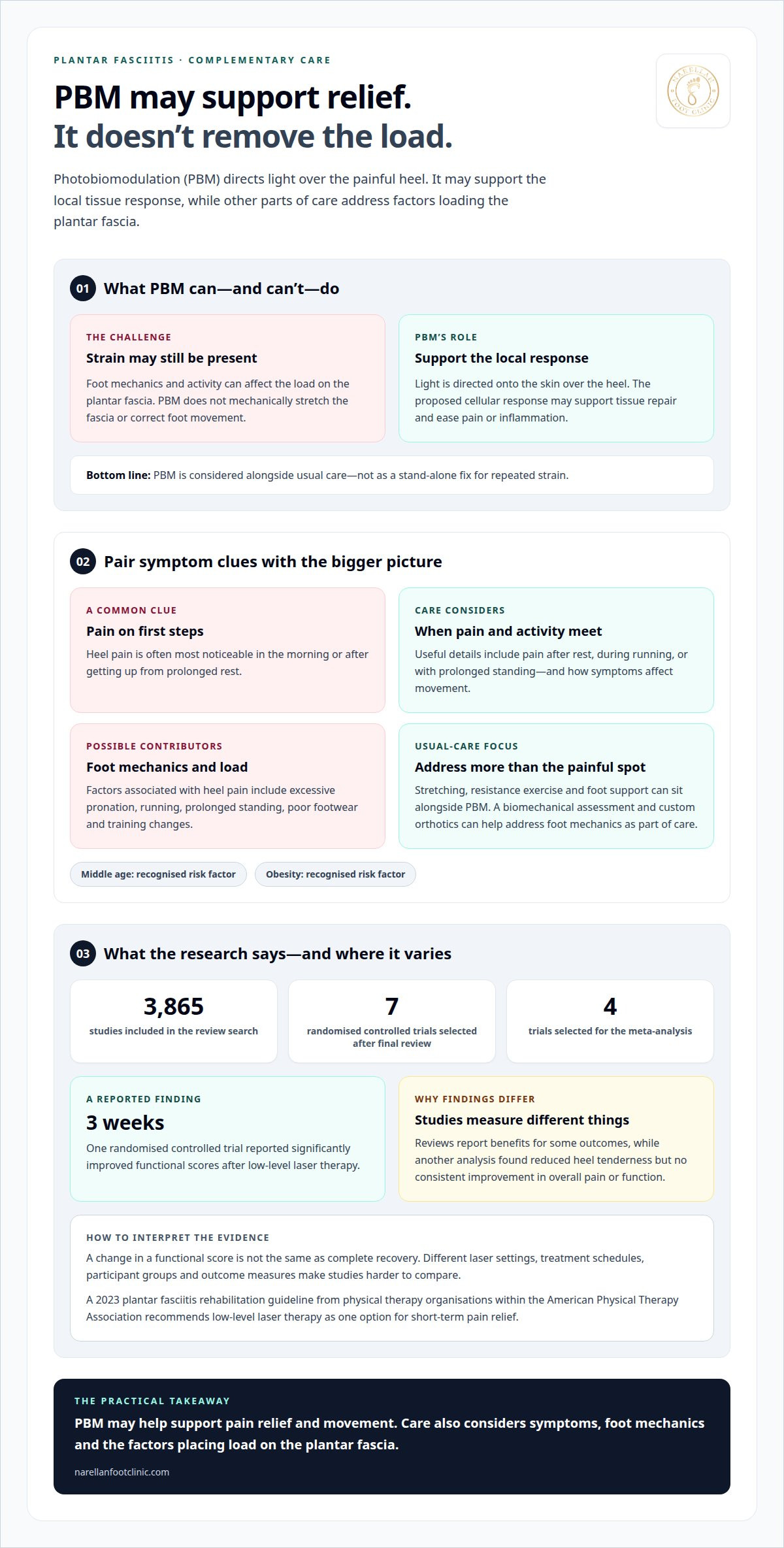
Photobiomodulation, also called PBM or low-level laser therapy (LLLT), uses light energy to influence biological activity in tissue. During treatment, light is directed onto the skin over an area such as the plantar heel. The proposed effect is a cellular response that may support tissue repair and ease pain or inflammation. PBM does not mechanically stretch the plantar fascia or correct foot movement. It is intended to support the body’s response in the treated area.
The plantar fascia is a thick band of connective tissue extending from the heel towards the toes. It helps support the foot’s arch, and its position matters when interpreting heel pain: the fascia lies about 5-15 mm beneath the skin on the sole. Plantar fasciitis commonly causes pain around the heel, often most noticeable during the first steps in the morning or after getting up from prolonged rest. Those symptoms can make walking after sitting or sleeping uncomfortable.
Foot mechanics and activity can affect the load placed on the plantar fascia. Excessive pronation, running, prolonged standing, poor footwear and training changes are among the factors associated with heel pain. Middle age and obesity are also recognised risk factors. For example, increasing running training may place more strain on the fascia, while foot mechanics can affect how that load travels through the heel and arch. Considering these factors helps distinguish the painful area from possible contributors.
“Plantar fasciitis” is commonly used to describe this condition, including pain that persists over time. The term can suggest inflammation, but symptoms, activity and the way the foot bears load all matter. Heel pain may begin after a recent change in activity or continue to affect first steps and standing. PBM may influence local tissue responses and provide short-term relief, but it does not remove repeated strain on its own.
Research on laser therapy examines outcomes such as pain, tissue changes and function. A review reports that low-level laser therapy can reduce plantar fascia thickness after treatment, while findings across studies are not identical. A 2023 plantar fasciitis rehabilitation guideline from physical therapy organisations within the American Physical Therapy Association recommends low-level laser therapy as one option for short-term pain relief. That places photobiomodulation among possible care approaches, rather than establishing it as a standalone solution for every person.
PBM treatment applies light over the painful heel, then the clinician considers how symptoms and function respond. Useful details include whether pain occurs with first steps, after rest, or during activities such as running or prolonged standing. Foot mechanics and recent changes in activity also matter. These details help explain why care may differ for recent and persistent heel pain, and why light treatment is best considered alongside factors affecting the plantar fascia.
How can Photobiomodulation Therapy help with my lower limb pain/condition?
For plantar heel pain, photobiomodulation is studied as a way to support pain relief and function. How does it compare with shockwave therapy, stretching or other treatments? Research reports positive findings for laser therapy, but does not establish one approach as best for everyone.
Evidence for Musculoskeletal Conditions
Photobiomodulation and low-level laser therapy use light to influence responses in musculoskeletal tissue. For plantar fasciitis, the relevant outcomes include pain, walking ability and other measures of function. A randomised controlled trial reported that low-level laser therapy significantly improved functional scores in plantar fasciitis patients at 3 weeks, according to the Authors of the randomised controlled trial.
A change in a functional score may matter when heel pain affects daily movement, but it is not the same as complete recovery. Other research has examined pain, quality of life and plantar fascia thickness. These measures describe different aspects of progress, so improvement in one outcome does not prove that every symptom or activity improves equally.
Research Findings and Meta-Analysis
A systematic review and meta-analysis brings together results from separate studies to assess patterns across the evidence. Authors of the meta-analysis report that, from a total of 3865 studies, 7 randomised controlled trials were selected after final review and 4 were selected for meta-analysis. This selection process shows why conclusions rest on a smaller group of eligible trials, rather than every paper initially found.
One review reports that both low-level and high-intensity laser treatment significantly improved pain, function and quality of life in people with plantar fasciitis. Another analysis found reduced heel tenderness, but no consistent improvement in overall pain or function. These findings concern different outcomes, not one uniform result. In practical terms, consider which change matters to you, such as more comfortable walking or reduced tenderness.
Limitations of the Evidence
Research is harder to compare when trials use different laser settings, treatment schedules, participant groups or outcome measures. One review may identify a benefit for heel tenderness, while another trial focuses on function or pain. The overall picture therefore depends partly on what each study measures and how treatment is delivered.
People with plantar fasciitis have different activity levels and foot mechanics, so a research finding from a group cannot predict exactly how one person’s heel will respond. Study results are best understood as evidence of possible effects, rather than a precise forecast of symptoms or recovery.
Comparisons with Other Treatments
Shockwave therapy, stretching, resistance exercise, foot orthoses and night splints are among the conservative approaches used for plantar fasciitis. A 2023 guideline from physical therapy organisations within the American Physical Therapy Association recommends stretching and resistance exercise as part of rehabilitation, and low-level laser therapy for short-term pain relief. This places laser therapy alongside other care options, rather than as a replacement for them.
The evidence summarised here doesn’t provide a consistent basis for ranking PBM above shockwave therapy or exercise. Instead, the findings point to different care goals: stretching and resistance exercise form part of rehabilitation, while laser studies examine outcomes including pain and function. A clinical assessment can connect those options to your symptoms and foot mechanics. A podiatric assessment of foot mechanics can help frame that discussion.
Photobiomodulation therapy (PBMT) as an adjunct to usual care
Photobiomodulation therapy is used alongside plantar fasciitis care, not as a stand-alone fix. In this approach, photons enter tissue and trigger a biological cascade associated with increased cellular metabolism. That describes a proposed mechanism, not a substitute for addressing the loads placed on the heel. For example, light application targets the painful area, while stretching and changes to aggravating activity address other parts of care.
Heel pain can involve local tissue irritation and repeated strain. PBM targets the treatment area, while stretching and resistance exercise support rehabilitation. Foot orthoses or night splints may also form part of conservative care. Each has a different role, and combining approaches can address symptoms as well as contributing factors.
PBM is applied locally, with light directed over the affected heel. A care plan can consider how symptoms respond during specific tasks, such as getting out of bed, standing at work or walking after rest. These examples make progress easier to discuss than a general impression of feeling better. They also help distinguish short-term symptom relief from changes in what the foot can manage.
The proposed PBM mechanism aims to influence cellular metabolism. The idea is that light energy prompts activity within treated tissue, supporting the body’s response to injury. It does not mechanically change the plantar fascia or remove every source of strain. If running or prolonged standing continues to trigger heel pain, the care plan still needs to account for those demands.
Usual care may include stretching, resistance exercise, foot orthoses and night splints. These options serve different needs: stretching targets flexibility, resistance work supports rehabilitation, and orthoses provide foot support. PBM may be considered alongside these measures, depending on symptoms and daily activities. Someone whose pain is worst with first steps, for example, can track that symptom alongside their tolerance for standing.
Thinking of PBM as complementary care helps make follow-up more practical. Rather than judging treatment by light application alone, consider whether heel pain changes during meaningful activities, such as walking across the home or completing a work shift. The approach can be considered alongside stretching, activity demands and foot support. This keeps the focus on supporting movement while addressing factors that continue to load the plantar fascia.
Red and near-infrared light therapy
Red and near-infrared light have different wavelengths, and both have been studied for plantar fasciitis. Wavelength, dose and schedule describe how treatment is delivered.
Red and Near-Infrared Wavelengths
Wavelength identifies the colour band of light used, while intensity describes how much light reaches the treatment area. A plantar fasciitis approach described in the research uses 660 nm red light with 808 nm near-infrared light. The 808 nm wavelength is reported to penetrate 25-30 mm or more. These figures explain why wavelength choice matters when targeting tissue beneath the skin.
Research also includes 635 nm low-level laser therapy for chronic plantar fasciitis. Another protocol uses pulsed 905 nm laser light, described as reaching deeper tissue and nerves. These are examples of different approaches, not a single universal setting. A study’s results relate to the equipment and application it tested, so its wavelength cannot be separated from its dose and delivery method.
Wavelengths, Dose and Treatment Schedule
For plantar fasciitis, research protocols typically used 15-20-minute photobiomodulation sessions, 3-5 times. In one plantar fasciitis trial, both PBMT groups received a dose of 10 J/cm2. Those details provide examples of studied schedules, rather than a prescription for every person. Dose describes energy delivered across an area; treatment time alone doesn’t tell you the full dose.
Delivery speed also differed within that trial: the slow PBMT dose was delivered at one second per square centimetre, while the fast PBMT dose was delivered at 0.4 seconds per square centimetre. Both groups received the same stated dose, but application speed varied. That distinction shows why dose and intensity should be considered together, rather than choosing a schedule based only on minutes.
Red and near-infrared light pads may look simpler than a focused laser, but the word “pad” does not identify the wavelength or dose delivered. A red-light device, for example, is not automatically equivalent to a near-infrared device. Treatment depends on light reaching the intended area at the intended energy level. Wavelength, intensity, application time and treatment area all help define a protocol.
These differences matter when comparing a home light pad with a controlled trial. A trial tests a particular device and protocol, while a pad’s appearance alone cannot show whether its settings match that research. The reported 660 nm and 808 nm combination, 10 J/cm2 trial dose and 15-20-minute research sessions are useful reference points. They don’t make all devices interchangeable. For plantar heel pain, light therapy is considered alongside usual care, with the treatment approach matched to the symptoms and the load on the foot.
Clinical use of PBM as complementary care
Photobiomodulation is best understood as one possible part of a plantar fasciitis care plan. The aim is to support pain relief and function while other measures address loading of the plantar fascia, a band of connective tissue. A plan may combine light treatment with stretching, resistance exercise or foot support, addressing more than the immediate effects of heel pain.
Track progress through specific tasks rather than a general impression. You might note whether first steps after rest feel easier or standing at work remains difficult. These examples connect changes in symptoms with function and show whether the plan addresses activities that matter, rather than relying on light treatment alone to resolve persistent discomfort.
Treatment courses vary across reported clinical protocols. One course is described as averaging 6 to 10 sessions, while another states that patients usually require 10-12 LLLT treatments. These figures reflect different protocols, not a single universal course. A review after 6 treatments provides a point to assess symptoms and function, including changes in walking, standing and pain during daily activities.
Other reported schedules include short treatment periods over 2-3 weeks, or 4-5 sessions per week as a practical starting schedule. After initial improvement, one approach describes 2-3 sessions for maintenance. These schedules should be read as protocol examples, not combined into one plan. Session frequency and course length are separate decisions, and the purpose of each stage should remain clear.
Early change and a completed course are also different milestones. One clinical account reports positive results after 4 treatment sessions, while also advising patients to complete the course recommended for them because symptoms may relapse otherwise. In practice, a patient can track whether heel pain, walking tolerance or standing function changes during the course. That provides a more useful picture than counting sessions without considering their effect.
For chronic plantar fasciitis, complementary care keeps attention on both symptoms and contributing demands. Stretching and resistance exercise support rehabilitation, while changes to activity can reduce repeated strain. PBM is the light-based component, not a replacement for those measures. If symptoms limit walking or work, get help assessing your heel pain as part of a broader care plan.
Narellan Foot Clinic: Biomechanical Assessment
At Narellan Foot Clinic, a Biomechanical Assessment can help explore how foot mechanics may contribute to ongoing heel pain. If symptoms persist or affect walking and standing, an assessment can identify mechanical factors relevant to your care. Where foot support is appropriate, Custom Orthotics may also be considered.
PBM is only one possible component of plantar fasciitis care. Understanding how your feet move and bear load can help guide decisions about support and other usual care measures. For a personalised discussion of heel pain and foot mechanics, contact Narellan Foot Clinic.
Take the next step towards comfortable movement
Connect treatment choices with the way heel pain affects your day. Note which activities are difficult, such as walking after rest or standing at work, and discuss those goals during an assessment. PBM therapy for plantar fasciitis may form one part of care, while a Biomechanical Assessment can explore how foot movement and load relate to symptoms. Custom Orthotics may also be considered when foot support is appropriate.
Narellan Foot Clinic provides biomechanical assessments and custom orthotics, as well as ingrown toenail surgery. For heel pain that continues to disrupt everyday movement, a conversation with a podiatrist can help you consider an appropriate next step. You’re welcome to contact Narellan Foot Clinic to discuss your foot concerns. A clearer understanding of what aggravates your pain can help you move forward with a more considered care plan.
Frequently Asked Questions
How many treatments will I need?
Published treatment courses vary: reported averages include 6 to 10 sessions, while another clinical protocol describes 10-12 treatments. These figures come from different approaches, so they shouldn’t be treated as interchangeable instructions. Your progress can be considered through practical changes, such as how comfortably you walk after rest or stand during daily activities. A review partway through a course helps assess whether those goals are changing.
What Is Plantar Fasciitis?
Plantar fasciitis describes pain associated with the plantar fascia, the band of connective tissue beneath the foot. The discomfort commonly affects the heel and may feel sharp during the first steps after sleep or sitting. Getting up from a desk, for example, can bring on symptoms that ease as you move. Foot loading, running and prolonged standing can contribute to irritation in the area.
How Does Red Light Therapy Work?
Red light therapy applies light to the skin over a treatment area, where the energy is intended to prompt a biological response in tissue. For plantar heel pain, light is directed towards the painful region rather than used to stretch or support the foot. The effect depends on the device’s wavelength and settings. Red light and near-infrared light use different wavelengths.
What are the contraindications (exclusions)?
Whether laser treatment is suitable depends on the device, its instructions, the treatment area and your health history. Before treatment, tell the clinician about relevant medical conditions, medicines and any concerns affecting your heel or skin. This helps them consider whether the planned light treatment is appropriate and how it should be delivered. Exclusion criteria can vary between devices and treatment situations.
What are the costs?
The cost depends on the assessment and treatment plan, and is provided after a quote request. The factors include which consultation is needed, whether laser therapy forms part of care, and whether additional treatment is recommended. These are separate considerations, so a fee for one service shouldn’t be assumed to cover another. Ask for the relevant quote for your planned care before making a booking decision.
Why Consider Low Level Laser Therapy (LLLT)?
LLLT may be considered when plantar heel pain affects movement and you want to discuss light therapy as part of broader care. Its potential role is to support symptom relief, while exercise, footwear and foot support address other needs. This distinction helps set practical goals. For example, you might track comfort during morning walking alongside changes to your usual activity or rehabilitation routine.
What is photobiomodulation (PBM) therapy for plantar fasciitis?
PBM therapy for plantar fasciitis uses light applied to the heel as a complementary approach to pain and function. Photobiomodulation refers to light prompting biological activity in treated tissue. It does not mechanically change foot movement or replace other care measures. Discuss how heel symptoms affect your everyday activities and how Low Level Laser Therapy (LLLT) could fit into your care plan with Narellan Foot Clinic in Narellan, serving the local community, including Campbelltown and nearby areas across NSW.
What evidence supports PBM therapy for plantar fasciitis?
Research includes randomised trials and reviews examining pain, function and quality of life. One trial assigned 114 participants across usual care, usual care plus 10W PBMT, and usual care plus 25W PBMT, with 38 people in each group. In pooled PBMT participants, the mean FAAM daily-activities score rose from 0.71 at baseline to 0.82 at six weeks. Results support further consideration, not a guaranteed individual outcome.