Quick relief starts with recognising the cause. What causes swollen ankles can range from prolonged sitting or standing, hot weather and salty food to an injury, pregnancy, medication side effects or an underlying health condition. Mild swelling after time on your feet may ease with rest and raised legs, but sudden or unexplained swelling needs medical attention.
Swollen ankles can feel uncomfortable and make everyday movement harder, so it’s natural to want quick relief. The right approach depends on the cause, and some symptoms need prompt medical attention rather than home care.
This guide explains common causes of ankle swelling, from temporary fluid build-up to health problems that need assessment. You’ll also find gentle ways to ease mild swelling and warning signs, including chest pain or shortness of breath, that require urgent attention. Understanding the pattern can help you choose a safer next step.
Key Takeaways
- Notice whether swelling affects one ankle or both, and consider recent changes such as long periods sitting or standing, heat, or an injury.
- For mild swelling, rest with your legs raised, use a cold pack and move gently to support circulation.
- Some medicines can contribute to fluid retention; discuss possible side effects with your doctor rather than stopping a medicine yourself.
- Swelling can be common in pregnancy, but sudden or severe puffiness needs prompt medical attention.
- Seek urgent help for swelling with chest pain or trouble breathing, or for sudden, unexplained swelling on one side.
How to Get Rid of Swollen Ankles Fast?
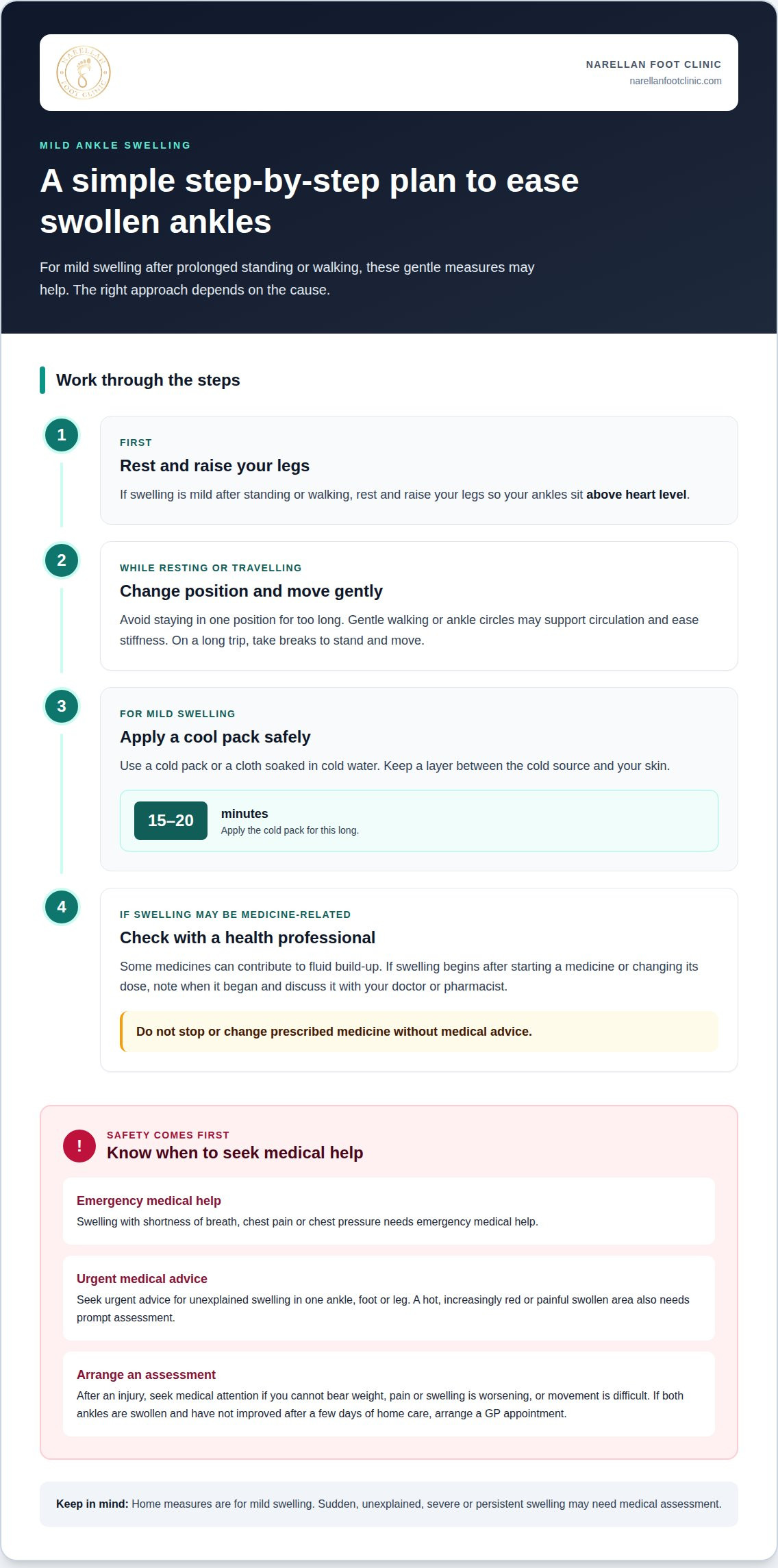
For mild swelling after prolonged standing or walking, rest and raise your legs so your ankles sit above heart level. Avoid staying in one position for too long. Gentle walking or ankle circles may support circulation and ease stiffness. On a long trip, take breaks to stand and move rather than sitting throughout, or consider wearing supportive compression socks from szokz.co.uk to assist blood flow.
A cold pack or a cloth soaked in cold water can help with mild ankle or foot swelling. Apply it for 15-20 minutes, with a layer between the cold source and your skin. The RICE approach means rest, ice, compression and elevation. Avoid tight clothing, socks or shoes that could press on swollen areas. If swelling follows an injury, don’t force movement that increases pain.
Some medicines can contribute to fluid build-up in the tissues. Blood pressure medicines such as calcium-channel blockers are associated with ankle and foot swelling. Other examples include some medicines for inflammation, diabetes, depression and cardiovascular problems; contraceptive pills, hormone therapy and steroids can also be associated with fluid retention. If swelling starts after you begin a medicine or change its dose, note when it began and discuss it with your doctor or pharmacist. Don’t stop or change prescribed medicine without medical advice.
An ankle sprain or fracture after a fall or hard knock can cause swelling, often with pain or difficulty walking. Sudden swelling with redness or pain needs medical attention, particularly if you can’t bear weight or symptoms are worsening. Resting and raising the ankle may ease discomfort while you arrange an assessment, but don’t assume an injury is minor if movement is difficult.
Seek urgent medical advice for unexplained swelling affecting one ankle, foot or leg. A deep-vein thrombosis, or blood clot, often causes unusual swelling on one side and can become dangerous if the clot travels to the lungs. Swelling with shortness of breath, chest pain or chest pressure requires emergency medical help. A swollen area that is hot, increasingly red or painful also needs prompt assessment, as infection can spread.
If both ankles are swollen and the swelling hasn’t improved after a few days of home care, arrange a GP appointment. Persistent swelling may relate to medicine side effects or an underlying health condition, so treatment depends on the cause. Seek advice sooner if the swelling worsens, affects walking, or continues to involve your toes and feet. A clinician can assess your symptoms and guide suitable treatment, with virtual consultation services such as AskMyDoc.ca showing how patients can access medical advice from home when movement is uncomfortable.
Pregnancy-related swelling
Pregnancy can cause ankle swelling as the body retains more fluid and the growing womb affects circulation in the legs. Depending on your symptoms, a doctor may investigate swelling with blood or urine tests, a chest X-ray or an electrocardiogram.
Preeclampsia and pregnancy swelling
Preeclampsia is a pregnancy-related condition involving high blood pressure and significant swelling. It can occur during the second half of pregnancy or soon after childbirth, so timing matters. Mild swelling that develops gradually can have common pregnancy-related causes, but sudden or severe swelling needs prompt medical assessment. Contact your maternity care team or seek urgent medical advice if swelling increases quickly or appears with other concerning symptoms.
The growing womb can put pressure on circulation, reducing blood flow through the legs and contributing to fluid build-up around the ankles and feet. Pregnancy also increases the amount of fluid the body holds. Swelling may be more noticeable after prolonged standing or sitting, and mild foot swelling may ease after several hours of rest with your feet raised.
Reducing swelling with movement and elevation
Raising your feet and gentle exercise may ease pregnancy-related swelling by supporting circulation. Rest with your feet raised, take comfortable walks and choose shoes that don’t squeeze your feet. Compression socks and reducing sodium in your diet are also suggested home measures. Spread gentle movement through the day, and stop and seek advice if activity causes pain or worsens the swelling.
During prolonged sitting, change position and move your feet and ankles when comfortable. A short walk activates the leg muscles, while raising your legs at rest may help swelling settle. Choose comfortable footwear with room around the toes, and avoid tight socks that leave deep marks. These steps may ease mild swelling, but they don’t replace assessment if symptoms are sudden, severe or persistent.
Sudden ankle swelling with pain, redness, warmth or difficulty walking can signal a serious problem, such as an injury or infection. Seek immediate medical attention instead of relying on raising your legs or exercising. A blood clot is another concern when swelling affects one leg, particularly with pain or a change in skin colour. If swelling occurs with breathlessness, chest pain or rapid weight gain, seek prompt medical assessment.
Note when the swelling began, whether it affects one or both ankles, and whether it changes after rest. Persistent swelling, especially with other symptoms, may have an underlying cause that needs medical assessment. A clinician can consider the pattern and associated symptoms when deciding which investigations may help identify the cause. If swelling is sudden or severe during pregnancy, seek urgent advice rather than waiting for home measures to work.
Heart, liver and kidney disease
Heart, liver and kidney disease can disrupt fluid movement through the body, allowing it to collect around the ankles and feet. This swelling is called oedema. It can affect both legs and may also be accompanied by abdominal swelling or a heavy feeling in the legs. Ankle swelling alone cannot identify the cause, as several health and circulation problems can lead to similar changes.
Heart failure can be associated with swollen ankles, but it isn’t the only possible cause. In heart failure, the heart cannot pump blood as effectively as the body needs. The heart’s two lower chambers, called ventricles, play a key role in pumping blood. When circulation is affected, fluid can build up in tissues, including around the lower legs. Persistent or sudden, severe swelling needs medical assessment.
Kidney dysfunction can also cause fluid build-up. Healthy kidneys help regulate fluid in the body, so kidney disease may disrupt that balance and contribute to swelling in the ankles or feet. The pattern varies, and swelling can occur alongside other signs of fluid retention. Discuss a new change in ankle size with a GP, particularly if it persists or worsens.
Liver disease can contribute to swelling through a different process. The liver produces albumin, a protein that helps keep fluid within blood vessels. If liver disease reduces albumin production, fluid can move into surrounding tissues and cause oedema. Swelling may also affect the abdomen, and the legs can feel unusually heavy. These symptoms need clinical assessment, not treatment based only on raising your ankles.
Circulation and daily habits can affect how noticeable swelling becomes. Poor circulation may allow fluid to collect in the ankles, while prolonged sitting or inactivity reduces the muscle movement that helps return blood towards the heart. Spending long periods in one position can add to lower-leg fluid build-up, but it doesn’t explain every case. Movement breaks may help mild dependent swelling, but they won’t treat underlying heart, liver or kidney disease.
Notice whether swelling affects one or both ankles, when it began and whether it is worsening. Persistent or sudden, severe swelling can signal a problem involving the heart, kidneys, liver or circulatory system. A GP can assess the pattern alongside your health history and other symptoms to guide further investigation and treatment. Seek prompt medical care if swelling occurs with breathlessness, chest pain or a rapid change in your condition.
Warning symptoms requiring urgent care
Swelling may appear as puffiness, shiny or stretched skin, colour changes, dryness, discomfort or stiffness. Pressing the skin can leave a dent. These signs can occur with oedema, a build-up of fluid in the feet, ankles or legs. Notice whether one or both sides are affected and whether the swelling changes quickly. These details can help a doctor assess what may be happening.
Seek urgent medical advice for new, unexplained swelling affecting one foot, ankle or leg. A blood clot, including deep-vein thrombosis, can cause unusual swelling on one side, often with pain. After a long flight, persistent leg pain and swelling on one side need prompt assessment. A clot can travel to the lungs and cause a life-threatening pulmonary embolism.
Call emergency services if ankle or leg swelling occurs with shortness of breath, difficulty breathing, chest pain or chest pressure. These symptoms can indicate a serious problem, including fluid affecting the lungs. Don’t wait to see if raising your legs reduces the swelling. If breathing feels difficult, get emergency help immediately.
Sudden, severe swelling with redness, warmth, pain or difficulty walking also needs prompt medical attention. These changes may follow an injury or point to an infection. Cellulitis can spread and cause serious health problems if left untreated. A low-grade fever alongside pain and swelling in one leg is another warning sign, particularly if the skin changes colour.
For mild swelling after prolonged standing or sitting, rest, elevate your legs and move gently to reduce stiffness. A cold pack or cold, damp cloth may help; wrap it in fabric and apply it for 15-20 minutes. Avoid wearing tight socks, shoes or clothing that press into swollen skin. These steps are for mild symptoms only, not sudden or severe swelling.
Arrange a doctor’s appointment if swelling persists, keeps returning or affects walking, even without emergency symptoms. A GP can review the pattern, your health history and medicines, then decide how to investigate the cause. Mention diabetes, high blood pressure, recent travel, an injury or any new medicine. Persistent swelling can be linked to medication effects or an underlying condition and needs assessment.
Pay particular attention to foot changes if you have diabetes. Swelling, colour changes, discomfort or skin damage can make it harder to spot a developing problem. Seek medical advice for new or worsening symptoms rather than relying on home care alone. If symptoms become sudden or severe, or occur with chest pain or difficulty breathing, treat the situation as urgent.
Common reasons for swollen feet and ankles
Swelling in the ankles and feet often develops when excess fluid collects in surrounding tissues. Causes range from a temporary response to heat or prolonged standing to an injury, medicine side effect or health condition. Oedema may affect one or both legs. Consider what was happening before it began: a long shift on your feet, a hot day, a change in footwear or a recent knock can provide useful context. What causes swollen ankles often depends on this pattern and any other symptoms.
- Long periods standing or sitting: Staying in one position can allow fluid to accumulate in the lower legs. Inactivity also means the calf and foot muscles move less, reducing their help in pumping blood back towards the heart. A desk-based day or long drive can make swelling more noticeable.
- Heat and extended activity: Hot weather can widen blood vessels, contributing to swollen ankles and feet. Long periods walking or standing, uncomfortable shoes, and walking more than usual can also lead to temporary swelling.
- Salty food: A high-salt meal can prompt the body to retain water. The excess fluid may build up in tissues around the ankles, particularly when combined with long periods sitting or standing.
- Medicines: Some blood pressure medicines, contraceptive pills, hormone therapy, antidepressants and steroids can contribute to oedema. A change after starting or adjusting medicine is worth discussing with a health professional.
- Injury, bite or infection: A fall or hard knock can cause a sprain or fracture. An insect bite, sting or infection can also trigger local inflammation and swelling around the affected area.
Other causes involve circulation or the body’s fluid drainage system. Varicose veins can contribute to oedema, while a blockage in lower-leg blood vessels can allow fluid to leak into nearby tissues. Lymphoedema occurs when lymph fluid builds up, often after lymph nodes have been removed or damaged. Thyroid problems, diabetes, and heart, kidney or liver conditions can also be associated with swelling.
Note where the swelling appears and what other symptoms accompany it. Deep-vein thrombosis usually causes unusual swelling in one leg rather than both. A sudden change in one foot or ankle, especially with pain, redness or warmth, needs medical assessment. Mild swelling after prolonged standing or walking may settle with rest and raised legs, but that pattern alone cannot rule out another cause. To understand what causes swollen ankles in your situation, consider the timing, location and accompanying symptoms together.
Consider what was happening when the swelling began: a hot day, a salty meal, a new medicine, an insect sting or a recent knock. Note whether one or both ankles are affected and whether the swelling persists. These details can help a doctor assess possible causes. Persistent swelling, skin changes or swelling that affects walking warrants medical advice rather than repeated self-treatment.
Narellan Foot Clinic
Narellan Foot Clinic can assess foot and ankle concerns affecting comfort, movement and daily activities. If swelling persists or keeps returning, a medical practitioner can assess possible health-related causes. A podiatry assessment may help when foot mechanics, discomfort or changes in walking are also involved.
A Biomechanical Assessment looks at how your feet move and bear load, while a Diabetic Foot Assessment supports foot health for people living with diabetes. These assessments can help guide care for foot-related concerns, but sudden swelling with chest pain or difficulty breathing requires emergency medical help.
If foot or ankle symptoms are affecting your mobility, contact Narellan Foot Clinic to discuss an assessment.
Take the next step towards comfortable movement
Understanding what causes swollen ankles is a useful starting point, but ongoing foot discomfort can also affect how confidently you move through the day. If swelling persists or you’re concerned about changes in your feet, a health professional can determine whether further assessment is appropriate. Sudden swelling with difficulty breathing or chest pain needs emergency medical attention, not a routine foot appointment.
Narellan Foot Clinic offers care for foot-related concerns, including Biomechanical Assessment and Custom Orthotics. It also provides Ingrown Toenail Surgery for that separate nail problem. The right next step depends on what’s affecting your comfort and mobility, and whether symptoms suggest an urgent medical issue.
For support with a foot concern, contact Narellan Foot Clinic. Taking the next step can help you move forward with greater confidence.
Frequently Asked Questions
What causes ankles to swell and not go down?
Persistent swelling can be linked to medicine side effects, circulation problems or an underlying condition affecting the heart, kidneys or liver. Ongoing fluid build-up may also cause stretched, shiny skin, stiffness or difficulty walking. Note whether both ankles are affected, when the swelling began and whether it changes during the day. Share these details and your current medicines with a GP for assessment.
What’s causing those swollen feet?
Swollen feet can follow prolonged standing, extended walking, hot weather, salty food or uncomfortable shoes. An injury, insect bite or infection may cause swelling in a specific area. Other possible causes include some medicines, circulation problems and health conditions. Consider what changed before the swelling appeared, such as a long day on your feet or a recent knock, and seek medical advice if it’s sudden or persistent.
Why am I retaining water in my ankles?
Fluid can collect in ankle tissues when circulation or the body’s fluid balance is affected. Sitting or standing in one position for a long time, hot weather and high-salt food can contribute. Some medicines and conditions involving the heart, kidneys or liver can also affect fluid distribution. Swelling that keeps returning or doesn’t settle needs medical assessment, because home measures won’t address every possible cause.
What are common causes of swollen ankles?
Common triggers include prolonged standing or sitting, heat, extended walking, tight or uncomfortable footwear, and salty food. A sprain, fracture, bite or infection can also cause local swelling. Other causes include varicose veins, lymphoedema, some medicines, and heart, kidney or liver disease. The timing and pattern may offer clues, but swelling alone can’t identify its cause. Notice whether one or both ankles are affected.
Can standing or sitting for a long time cause ankle swelling?
Yes. Staying still for extended periods can allow fluid to collect in the lower legs because the calf and foot muscles are less active. After a long drive or time at a desk, change position, move your ankles and take breaks to walk when practical. Swelling that follows inactivity may ease with movement, but persistent or unexplained swelling still needs medical attention.
What medical conditions can cause swollen ankles, such as heart, kidney or liver problems?
Heart failure, kidney dysfunction and liver disease can disrupt fluid distribution and contribute to ankle swelling. Poor circulation, varicose veins, thyroid problems and lymphoedema are other possible causes. The pattern can vary: swelling may affect one or both legs, and oedema may also involve abdominal swelling or heavy-feeling legs. A GP considers your symptoms and health history to decide what assessment is appropriate.
Which medications can cause swollen ankles?
Some blood pressure medicines, including calcium-channel blockers, can cause ankle or foot swelling. Other medicines associated with fluid retention include some treatments for inflammation, diabetes, depression and cardiovascular problems, as well as contraceptive pills, hormone therapy and steroids. If swelling begins after a medicine is introduced or changed, note when it started and discuss it with your prescriber or pharmacist. Don’t stop prescribed medicine without medical advice.
How can you tell if swollen ankles are caused by an injury or infection?
An injury such as a sprain or fracture may follow a fall or hard knock, with pain and difficulty walking. Infection can cause local redness, warmth and increasing pain; a bite or sting may also cause swelling in one spot. These signs can overlap, so they don’t confirm the cause. Seek prompt medical assessment for sudden swelling, worsening redness, fever, severe pain or difficulty bearing weight.