What if the boots themselves are limiting how comfortable your orthotics can feel? For tradies visiting Narellan Foot Clinic from nearby Smeaton Grange, work boot orthotics may help with cushioning, support and foot fatigue during long shifts, but the fit of the boot matters too. They need to sit comfortably inside the boot without crowding your feet.
It’s understandable to hope an insert will ease the strain of standing and walking on hard or uneven surfaces. The right option depends on your feet, your symptoms and how your boots fit, so orthotics aren’t automatically the answer for everyone.
This guide explains how custom and off-the-shelf orthotics differ, when an assessment may help, and which boot features can support comfort during a long shift. It also covers what to consider when choosing boots to wear with orthotics, so you can make a more informed decision.
Key Takeaways
- A podiatry assessment can help clarify whether orthotics suit your foot concerns and the demands of your work boots.
- Custom orthotics are tailored to individual foot structure and concerns, while off-the-shelf options offer a general alternative.
- For shifts that keep you on your feet for 8-12 hours daily, cushioning may help support comfort and manage foot fatigue.
- Orthotics can help absorb impact from hard or uneven surfaces, easing stress on the feet and other lower-limb joints.
- Boot fit matters: look for a comfortable fit with enough room for an orthotic, and consider alternating between two pairs so each can dry and maintain its shape.
Are orthotics worth it for tradies who wear work boots?
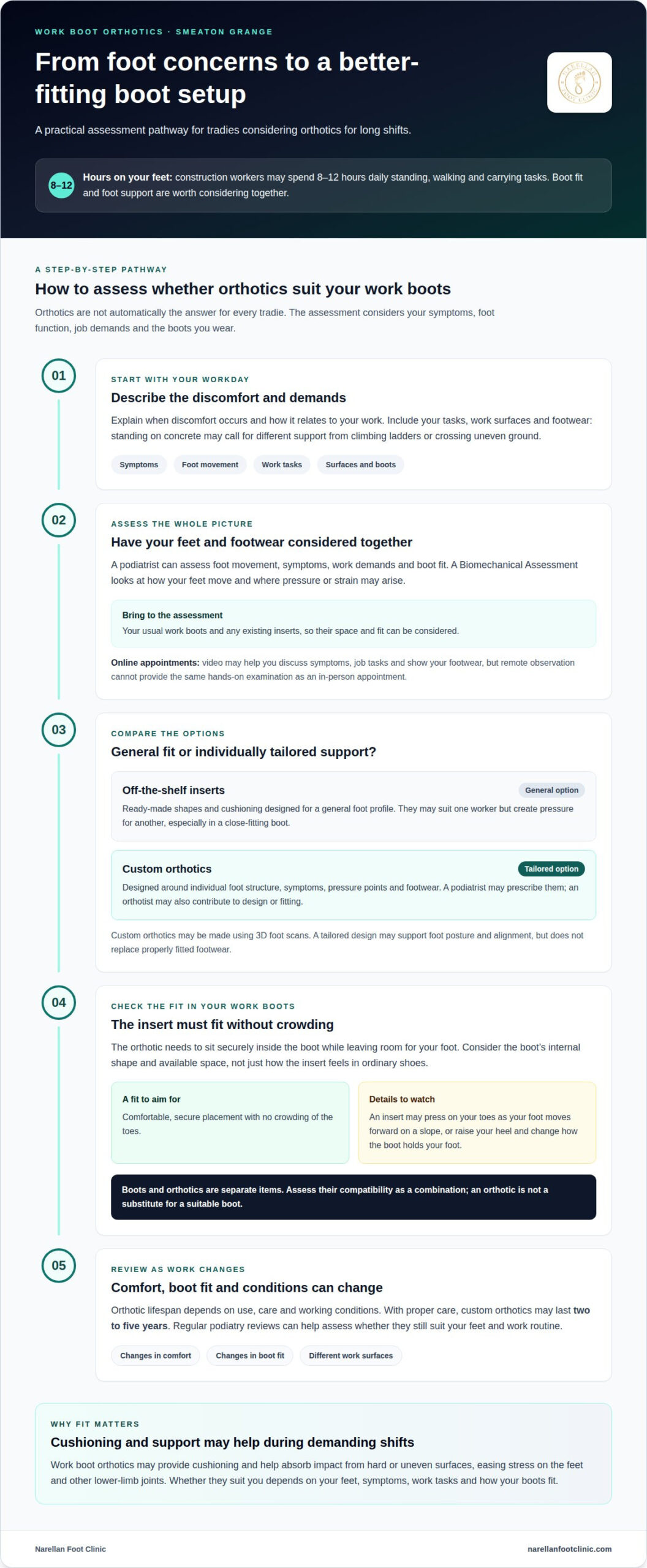
Orthotics may be worth considering if foot discomfort or strain affects your work, but they aren’t right for every tradie. A podiatrist’s assessment can consider your symptoms, foot function, work tasks and boots together. Someone who stands on concrete, for example, may need different support from a worker who climbs ladders or crosses uneven ground.
Before recommending orthotics, a podiatrist can discuss when discomfort occurs, assess foot movement and consider how your work boots fit. Bring your usual boots and any existing inserts so their space and fit can inform the assessment. A Biomechanical Assessment evaluates how your feet move and where pressure or strain may arise. Orthotics are designed around individual needs, not chosen simply because a particular boot feels uncomfortable.
Online assessment can be a useful way to discuss symptoms, job tasks and the type of boots you wear. A video appointment may let you show your footwear and describe when discomfort starts. However, remote observation has limits: it cannot provide the same hands-on examination as an in-person appointment. A podiatrist uses the available information to determine whether further physical assessment is needed before recommending orthotics.
Orthotic lifespan depends on use, care and working conditions. With proper care, custom orthotics may last two to five years, depending on usage and work conditions. Regular podiatry reviews can help assess whether an orthotic still suits your feet and work routine. For instance, changes in comfort, boot fit or the surfaces you work on may be useful details to discuss at a review.
Tradies sometimes search for “podiatrist-designed safety boots”, but orthotics and boots are separate items. A podiatrist can assess whether a boot accommodates an orthotic and whether the combination suits your foot concerns. This means considering the insert, internal space and fit together, rather than treating the orthotic as a substitute for a suitable boot. A podiatrist assesses compatibility, not manufactures safety footwear.
Biomechanical assessment considers how feet move under load. This approach can also be relevant to tradies who spend the day walking, standing or carrying equipment. Describe your tasks, work surfaces and footwear, and explain how they relate to your symptoms. This context helps a podiatrist assess whether orthotics may suit your needs.
For workers and employers in Australia, tax deductibility depends on the circumstances of the purchase and applicable tax rules; orthotic suitability alone doesn’t establish eligibility. Orthotic-friendly work boot prices in Smeaton Grange vary with the boot’s construction, materials, brand and safety features, so the right comparison is between models that fit the job and accommodate the insert.
Custom-made and off-the-shelf orthotics
A podiatrist can assess foot function and prescribe custom orthotics, while an orthotist may also be involved in orthotic design or fitting. Off-the-shelf inserts are general options; custom devices are tailored to individual foot structure and concerns.
Custom design and boot fit
Custom work boot orthotics can be designed to address pressure points and help distribute weight more evenly. Their design considers your foot structure, symptoms and footwear, including the internal shape and space in your work boots. The device needs to sit securely without crowding your toes or lifting your heel out of position. Bring your usual boots to the fitting so the orthotics and footwear can be assessed together.
Podiatrist and orthotist fitting
In Smeaton Grange, a podiatrist can assess your feet and work demands, then recommend an orthotic approach suited to your concerns. An orthotist may contribute to the design or fitting of an orthotic device. The relevant professional depends on the assessment and the device required. For a tradie, fitting should account for how the insert sits inside the boot, not just how it feels in ordinary shoes.
Off-the-shelf inserts are ready-made, with shapes and cushioning designed for a general foot profile. They may suit one worker but create pressure for another, particularly in a close-fitting boot. Custom orthotics can provide more targeted support for individual pressure points and foot mechanics. This difference matters if a standard insert shifts, bunches or makes your boot feel cramped during a shift.
Custom design starts with understanding the person, rather than choosing a generic shape. A podiatrist considers foot structure, movement, the location of discomfort and work tasks. The orthotic can then be shaped to address those concerns and support foot posture and alignment. This tailored approach may help reduce the risk of overuse injuries, but it doesn’t replace properly fitted footwear.
Small fit details can shape how comfortable work boots feel. An insert may seem supportive at first but press against your toes when your foot moves forward on a slope. A thick insert might also raise your heel and change how the boot holds your foot. These examples show why comfort should be assessed in the footwear you actually wear at work.
Custom orthotics may be made using 3D foot scans to address individual biomechanical issues. The resulting design can provide support where it’s needed while accounting for the boot’s shape and available room. If you’re considering a tailored option, a custom orthotics assessment can help relate your foot concerns to the footwear you wear on the job.
Comfort and fatigue during long shifts
Construction workers may spend 8-12 hours daily on their feet, moving between standing, walking and carrying tasks. By the end of a shift, tired feet can make each step feel harder. Work boot orthotics can provide cushioning and comfort to help minimise foot fatigue during long work hours. They’re most useful as part of a comfortable footwear setup, rather than a substitute for boots that fit properly.
Cushioning affects how each step feels. Someone standing on a hard floor may value a more cushioned feel, while a worker moving across a site needs an insert that stays stable inside the boot. Orthotics can also support foot posture and alignment. The amount and placement of support depend on foot structure, pressure points and boot fit.
Notice when fatigue begins and where it builds. You might feel soreness after prolonged standing, discomfort under the forefoot while carrying materials, or heel pain during repeated walking. These patterns help distinguish general tiredness from a recurring concern worth discussing with a podiatrist. Note the task, surface and footwear involved, such as whether symptoms begin on concrete or after climbing ladders.
Boot fit can change during a shift as your feet move and the orthotic takes up space inside the footwear. Cramped toes, a slipping heel or pressure beneath one area can affect comfort despite added cushioning. Try the boots with your orthotics in place while standing and walking. Check that the insert lies flat, doesn’t shift and leaves enough room for your foot to sit naturally.
Fatigue can reflect your work pattern as well as your insert. Long periods in one position place different demands on your feet from work that alternates between walking and standing. Where your tasks allow, changing position and taking brief movement breaks can vary the load on your feet. Orthotics provide support inside the boot, but don’t replace suitable work practices or a good fit.
Monitor comfort across your shifts. Note whether the cushioning feels supportive during the workday, whether discomfort changes location and whether the boot remains secure. If heel pain or other foot discomfort continues to affect work, an assessment can consider your symptoms, foot function and footwear together. This gives you a clearer basis for deciding what to do next than relying on a thicker insert alone.
Impact absorption on hard and uneven surfaces
Walking and standing on concrete send repeated impact through each step. Orthotics can absorb shock from hard surfaces, reducing stress on the feet, ankles, knees and hips. For a tradie moving across a warehouse floor, this may make the impact feel less abrupt. The effect depends on the orthotic, the boot and the way each foot contacts the ground.
Uneven ground creates a different challenge. A worker crossing compacted soil, gravel or changing floor levels needs secure footwear as well as underfoot support. The boot’s sole and fit matter on these surfaces; an orthotic doesn’t replace suitable tread or a stable boot. If an insert shifts inside the boot, it can feel distracting and affect how comfortably your foot sits.
A tailored orthotic can be designed around your foot structure and concerns. Someone who feels pressure under one area of the foot may need different support from someone with more widespread discomfort. The aim is to address relevant pressure points and help distribute weight more evenly. Even an insert that feels comfortable on a flat floor needs to fit the boots you wear on site.
Assess the boot-and-orthotic combination on surfaces you regularly encounter. Walk on a flat indoor floor and notice how it feels during ordinary movement. If your job involves uneven ground, pay attention to whether your foot feels secure inside the boot. Note any rubbing, shifting or concentrated pressure, and whether it occurs on a particular surface or during a specific task.
Impact absorption isn’t just about a soft sensation underfoot. Too much bulk can crowd the boot, while an insert that doesn’t sit flat may create a pressure point. Check that the orthotic lies evenly inside the boot and your heel stays seated. If your heel lifts while walking, the overall fit may need attention rather than extra cushioning alone.
Notice how the setup feels during familiar tasks, such as walking between work areas or standing at a workstation. If discomfort continues, record where it occurs and which surfaces bring it on. This information helps a podiatrist consider the orthotic, boot fit and foot function together. A well-matched combination can support comfort across hard or uneven work areas without treating every ache as an impact problem.
Work boot features that support orthotics
The best work boot for an orthotic accommodates it without making your foot feel cramped or unstable. Look for enough internal room, a secure heel and a fit that remains comfortable while standing and walking. For tradies considering work boot orthotics in Smeaton Grange, assess the complete combination, not just the boot. A boot that fits without an insert may feel tight once the orthotic takes up space.
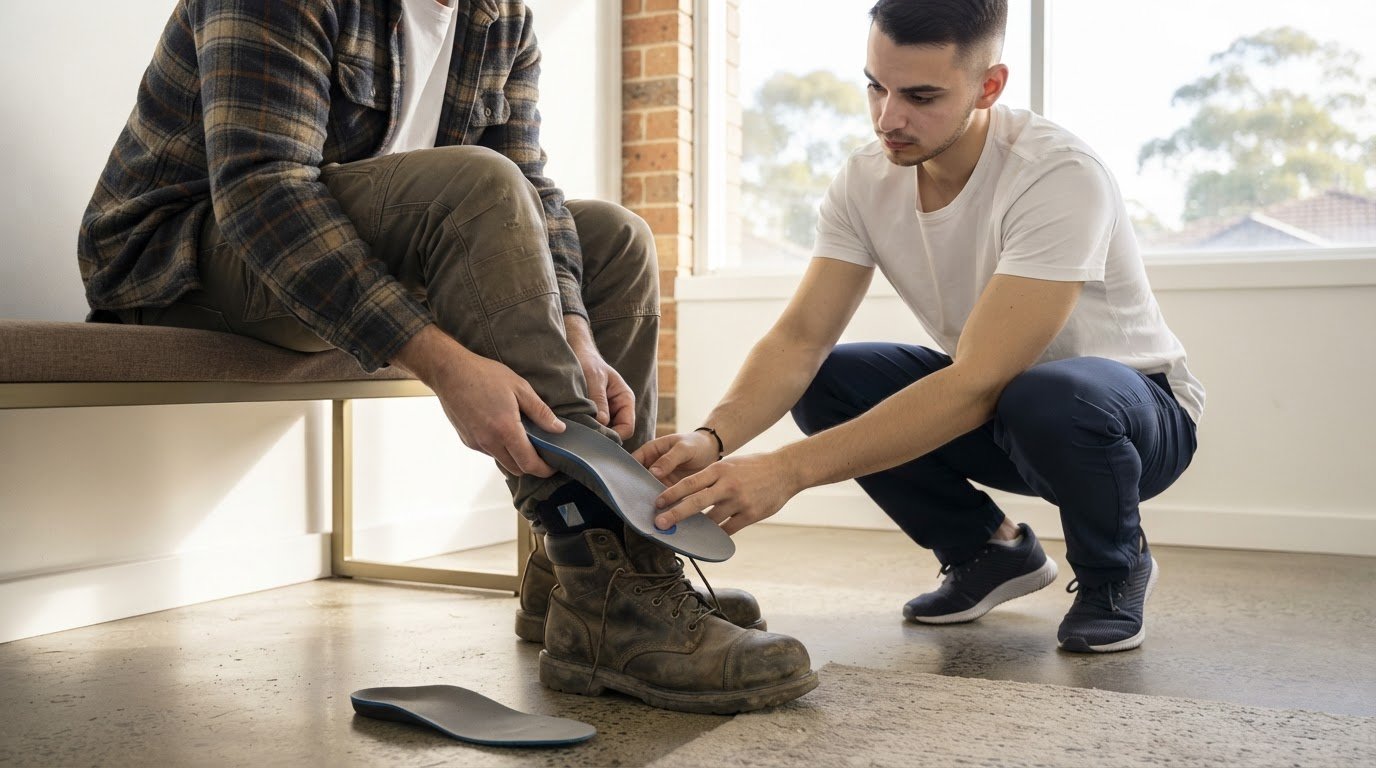
Check whether the boot has a removable insole. Removing it may create space for an orthotic, but the resulting fit still needs to feel secure. Put the orthotic in the boot, wear your usual work socks and lace the boot as you normally would. Stand and walk to check that the insert sits flat and your heel stays seated rather than lifting with each step.
Room around your toes matters too. An insert that raises your foot can leave less space inside the upper, pressing your toes against the front or sides. Try bending and walking in the boots as well as standing still. Notice whether the orthotic shifts, the heel slips or pressure develops. These signs can indicate that the boot and insert aren’t working comfortably together.
Foot alignment is another consideration. Custom orthotics can be designed around individual foot structure and concerns to support posture and alignment. That doesn’t make every boot suitable for every orthotic. If you have plantar fasciitis, for example, consider how the boot accommodates the device and whether the complete fit feels stable during work tasks. Orthotics may help reduce the risk of overuse injuries, but they don’t replace well-fitting footwear.
Poorly fitting safety boots can make orthotics uncomfortable by adding pressure, rubbing or crowding your foot. A loose fit can also let your foot or the insert move inside the boot. A raised heel or squeezed toes during a short walk, for example, are signs that the combination needs attention before a full shift.
Consider your work when assessing boot features. Someone walking between indoor work areas may prioritise a secure, comfortable fit, while a worker on uneven ground needs a boot that feels stable with each step. Try the orthotic in the boots you wear for those tasks. If the insert substantially changes the fit, the boot or orthotic may need adjustment.
A podiatrist can assess how your orthotic sits inside your work boots and how the combination relates to your foot concerns. For advice on work boot orthotics in Smeaton Grange, book an assessment for custom orthotics at Narellan Foot Clinic to discuss your footwear and work demands.
To ensure optimal comfort with your orthotics, consult a podiatrist regularly about custom orthotics. You can describe how the insert feels in your work boots and mention any pressure, slipping or crowding you notice. A podiatrist can assess how the orthotic sits in the boot and how the combination relates to your foot concerns, helping you consider whether the fit remains comfortable for your work.
Narellan Foot Clinic: Custom Orthotics
Narellan Foot Clinic helps tradies assess whether custom orthotics may suit their foot concerns and work boots. A Biomechanical Assessment considers how your feet move and the demands of your footwear, helping guide an orthotic design around your individual needs.
Consider an assessment if discomfort keeps returning during shifts, your orthotics don’t sit comfortably in your boots, or you’re unsure whether a tailored option is appropriate. Bringing your work boots and current inserts can connect the discussion to your everyday fit and tasks. Custom orthotics aren’t a universal fix, so an assessment can help determine whether they’re suitable for you.
Contact Narellan Foot Clinic to discuss custom orthotics and your work boot concerns.
Make your next shift a more informed step
Start by noticing how your feet respond to your work routine. Keep track of when discomfort begins, which tasks bring it on, and whether it changes between boots or surfaces. These practical details can make a discussion about work boot orthotics in Smeaton Grange more focused on your needs.
Narellan Foot Clinic offers Biomechanical Assessment to evaluate foot movement and Custom Orthotics tailored to individual concerns. It also offers Ingrown Toenail Surgery as a separate treatment. Orthotics aren’t suitable for every foot concern, so an assessment can help clarify whether they’re appropriate for you.
Bring your work boots and any inserts you currently use to help connect your concerns with your everyday footwear. For a considered next step, contact Narellan Foot Clinic to discuss your foot concerns and work demands. A clearer understanding of what your feet need can help you move forward with confidence.
Frequently Asked Questions
What work boot brands and styles have removable insoles for custom orthotics?
Choose work boots by their insole design and fit, not by brand name alone. Look for a removable footbed that leaves room for your custom orthotic, then try the boot with your usual work socks and insert. A lace-up style can help you adjust the fit around the instep. Check that your heel stays secure and your toes aren’t pressed against the boot.
How do I choose the right work boots for custom orthotics and workplace safety requirements?
Start with the safety features your workplace requires, then assess the boot with your orthotic in place. The insert shouldn’t crowd your toes, lift your heel or make the boot feel unstable when you walk. Try standing, bending and walking in the boots while wearing your usual work socks. The right option should provide a secure, comfortable fit while meeting your job’s needs.
Are steel-toe or composite-toe work boots compatible with orthotics?
Steel-toe and composite-toe boots can both be worn with orthotics if the complete fit is suitable. Toe cap material doesn’t determine whether an insert fits; available space, foot position and boot shape matter. Try each pair with your orthotic in place and check for toe pressure, heel movement or a change in stability. Keep the boot’s protective toe area unobstructed and don’t alter its construction.