Small, controlled movements are a practical place to start when you want to improve foot flexibility. A daily routine can include at least 5 minutes of foot stretching, using gentle toe movements and exercises for the soles. The aim is to build regular movement into your day, not force your feet into a stretch.
Stiff toes or a tight-feeling sole can make everyday movement less comfortable. You don’t need special equipment to try basic exercises: a towel, bottle or ball can help you work your toes and feet at home.
This guide covers toe stretches, towel curls and ways to roll the sole over a household item. You’ll also learn how often to practise and what to consider when exercising barefoot or in socks. Start gently and notice how each movement feels, so you can build foot mobility into your routine with care.
Key Takeaways
- Try controlled toe raises, points, curls and toe splaying to practise moving your toes through different positions.
- Build foot exercises into a regular routine, from several days a week to daily, and choose barefoot or socks based on what feels steady.
- Use a small towel to practise gripping and scrunching with your toes, keeping the movement gentle.
- Pick up marbles one at a time to practise toe control, then progress to rolling a ball or bottle under your sole.
- Stop if an exercise continues to hurt; persistent discomfort may need individual assessment rather than more stretching.
1. Toe stretching to create space between toes
Useful stretches combine toe splaying, toe extension and gentle foot movements. A practical starting point for how to improve foot flexibility is to move slowly and stay within a comfortable range. These movements can help maintain flexibility, while toe raises, points and curls practise controlled movement and strengthen the small muscles that support your feet.
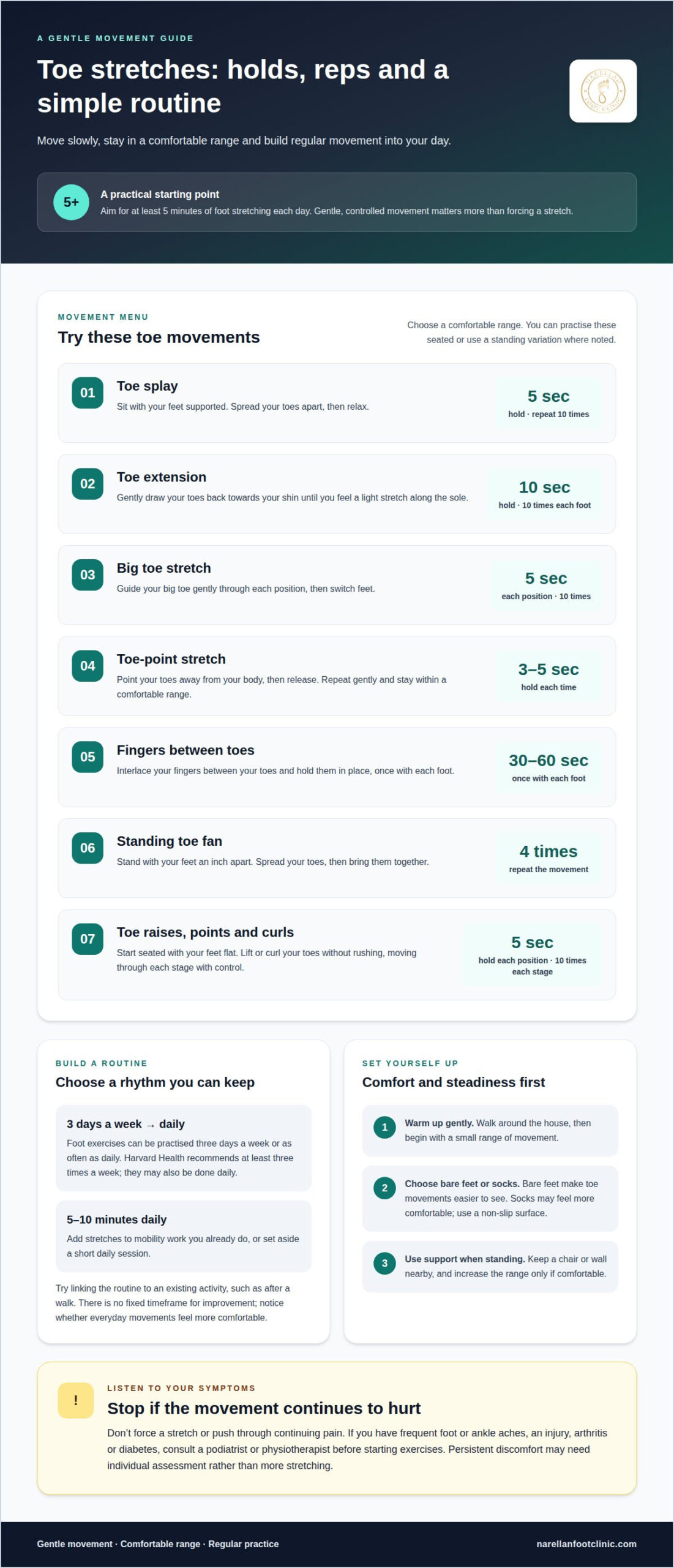
To practise toe splaying, sit with your feet supported and spread your toes apart. Hold for 5 seconds, then relax; repeat the motion 10 times. For toe extension, gently draw your toes back towards your shin until you feel a light stretch along the sole. Hold for 10 seconds and repeat 10 times on each foot.
Try a big toe stretch by guiding the toe gently through each position. Hold each position for 5 seconds and repeat 10 times before switching feet. For a toe-point stretch, point the toes away from your body, hold for 3 to 5 seconds, then release. Repeat the toe-point stretch gently, staying within a comfortable range.
Another option is the toe stretch with fingers interlaced between the toes. According to Harvard Health, hold the fingers in place for 30 to 60 seconds, once with each foot. A toe fan exercise offers a standing variation: place your feet an inch apart, spread your toes, then bring them together. Repeat four times.
Poor foot flexibility can relate to how loose the ligaments in your feet are. Gentle movement works through the available range, while toe raises, points and curls add controlled movement. For those exercises, hold each position for 5 seconds and repeat each stage 10 times. Keep your feet flat during the seated start, then lift or curl the toes without rushing.
Foot stretches can help maintain flexibility and ease discomfort. For plantar fasciitis or stiff toes, gentle mobility may support comfortable movement, but stop if an exercise continues to hurt. If foot or ankle aches are frequent, or you have an injury, arthritis or diabetes, consult a podiatrist or physiotherapist before starting exercises.
To make how to improve foot flexibility part of your routine, add stretches to existing mobility work or set aside 5 to 10 minutes daily. Include an Achilles stretch by leaning towards a wall with one leg behind you; hold for 30 seconds and repeat three times on each side. For a standing calf stretch, keep the back heel down and hold for 15 to 30 seconds on each leg, repeating three times. These movements complement toe stretches by working the lower leg and tissues that help the ankle move.
2. Exercise frequency and performing exercises barefoot or in socks
You can do foot exercises three days a week or as often as daily. Choose a regular time, such as after a walk, and link the routine to an activity you already do. Bare feet make toe movements easier to see; socks may feel more comfortable, but use a non-slip surface. If socks slide on your floor, practise barefoot or choose a stable, seated exercise.
Toe movements, ankle circles and calf stretches target different aspects of foot and ankle mobility. For ankle circles, sit down, lift one foot slightly and draw slow circles with your toes, then reverse direction. Repeat with the other foot. You can also trace letters in the air with your big toe, moving from the ankle rather than swinging your whole leg.
When learning how to improve foot flexibility, begin with a gentle warm-up, such as walking around the house. Move through a small range, then gradually increase it if comfortable. Keep a chair or wall nearby for support during standing exercises. Don’t force a stretch, and stop if it continues to hurt.
There’s no fixed timeframe for improvement. Progress depends on your starting mobility, consistency and what contributes to stiffness. Look for practical changes, such as an easier ankle circle or a more comfortable step after sitting. These observations help you track your routine without expecting a set result by a particular date.
Before running, walk to warm up your feet and ankles, then add gentle ankle circles and toe movements. Return to your usual running gradually rather than increasing your activity and stretching effort at the same time. If running brings on foot pain, or plantar fasciitis symptoms worsen during an exercise, stop that movement. Pain involving a tendon or other tissue may need assessment.
Harvard Health recommends foot exercises at least three times a week and says they may also be done daily. To work out how to improve foot flexibility safely, consider your health and symptoms before choosing a schedule. If you have frequent foot or ankle aches, an injury, arthritis or diabetes, consult a health professional before starting. Stop and seek advice if pain continues during an exercise.
If stiffness affects walking or running, an individual biomechanical assessment can help evaluate how your feet move and what may be limiting comfortable activity.
Gentle foot mobility exercises may help maintain flexibility and ease discomfort. Warm up by walking around the house or riding a stationary bike, then move on to toe, ankle and calf exercises. Choose the warm-up that fits your routine, keep the first movements gentle and use a comfortable range. If an exercise continues to hurt, stop rather than pushing through. Practise regularly and notice whether everyday movements, such as stepping after sitting, feel more comfortable. Adjust your routine in response to symptoms, and seek professional advice if pain persists.
3. Towel toe curls
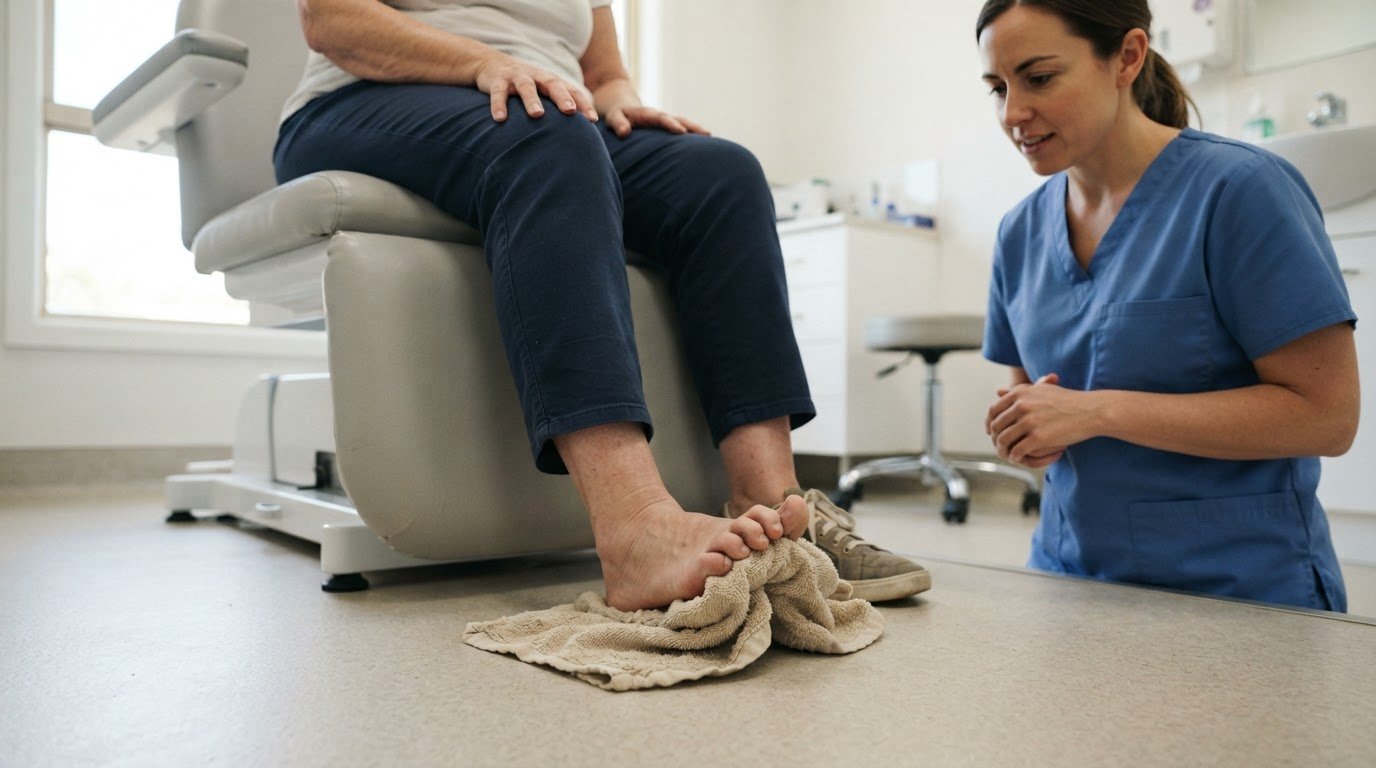
A small towel makes a seated exercise that works the muscles along the soles of your feet. As your toes grip and draw the fabric towards you, they practise controlled movement that supports everyday foot mobility. The towel also gives your toes a soft surface to hold, rather than asking them to curl against something hard.
Sit on a firm chair with both feet on the floor. Place a small towel flat beneath one foot, with its edge just in front of your toes. Keep your heel down and the ball of your foot in contact with the towel. Curl your toes to gather the fabric towards your heel, release, then smooth it flat before the next repetition.
Use this sequence to keep the movement controlled:
- Begin with your toes relaxed and the towel spread flat.
- Grip the fabric with your toes, drawing it towards your heel.
- Pause briefly when the towel bunches, then slowly uncurl your toes.
- Reset the towel and repeat the grasp with the same foot.
Keep your ankle and heel steady while your toes do the work. If your whole foot slides forward, reposition the towel and gently press your heel down. Harvard Health recommends scrunching the towel two or three times with each foot. Another suggested approach is three to five repetitions per foot. Choose one count rather than combining all the suggested totals in one set.
Notice where you feel the effort. Your toes should gather the towel while the muscles beneath your foot help control the movement. If your toes cramp, pause and let them rest, then try a smaller curl. Avoid pulling the towel with your heel or leaning forward, as these adjustments shift the work away from your toes.
To make the exercise more challenging, place a small weight at the far end of the towel. The added resistance makes the fabric harder to draw towards your foot, so begin with an easy grip and stop if the movement becomes painful. Keep the weight stable and the towel flat before you start; a bunched or shifting towel can make the exercise awkward.
Practise towel curls as part of a balanced foot routine rather than relying on them alone. For example, alternate them with toe movements or ankle mobility work on different days. Aim for a smooth, repeatable curl through a comfortable range. Consistent control matters more than pulling the towel a long way.
4. Picking up marbles with the toes
Marble pickup practises gripping and releasing with your toes, using a small object as a clear target. Set out 20 marbles beside a bowl or container, then sit on a stable chair with both feet supported. Place the container within easy reach, so you can move each marble without twisting your body or losing balance.
Start with one foot and place a marble on the floor in front of it. Use your toes to grasp the marble, lift it and move it into a container. Release it gently, then return your foot to the starting position. Repeat with each marble, keeping your heel steady rather than lifting your whole foot.
Move slowly enough to control each pickup. If the marble slips, reposition it and try again with a lighter grip. Keep your knee pointing forward and avoid leaning far across your body. Place the container close to your foot to make the transfer easier, and use a wide opening as a simple target for releasing the marble.
This exercise involves more than lifting. Your toes close around the marble, hold it briefly, then open to release it. This sequence gives your toes practice changing position and handling a small object. Repeated grasping and releasing may help develop toe control, which contributes to foot strength and flexibility.
To work both sides evenly, complete the task with one foot, then put the marbles back within reach and repeat with the other. Notice whether gripping or releasing is harder on one side. If a marble repeatedly drops, try a smaller, more controlled movement. Do the exercise seated if standing makes balance difficult.
Marble pickup is a coordination exercise, not a race. Move one marble at a time and relax your foot and ankle between attempts. Avoid gripping so tightly that your toes cramp. If discomfort appears, stop rather than pushing through it. A stable chair, clear floor space and a container placed in front of you make a simple setup at home.
Once the 20 marbles are in the container, pause and let your toes relax. You can then repeat the activity with the other foot, keeping the same setup and pace. The main benefit is practising a precise toe action: grasp, lift, transfer, and release. Unlike a broad stretch, this task asks the toes to move actively while your heel stays supported.
5. Rolling the foot over a bottle or ball
Rolling an object beneath your sole applies gentle, moving pressure along the bottom of your foot. Try a golf ball, lacrosse ball or frozen water bottle. This exercise is commonly recommended for plantar fasciitis, arch strain and foot cramps, but it doesn’t replace medical assessment or treatment if symptoms persist.
Begin seated on a stable chair, with your knee bent and heel supported. Place a golf ball beneath the ball of your foot, just behind your toes. Press lightly and roll it slowly towards your heel, then back towards your toes. Keep your ankle relaxed and move the ball across the sole rather than rushing over one tender spot.
For a simple target, roll a golf ball under the ball of your foot for two minutes. Use steady, comfortable pressure. If you find a sensitive area, pause briefly or reduce the pressure instead of bearing down. Aim to move the ball smoothly; stop if you feel sharp or worsening pain.
A frozen water bottle provides a broader surface than a golf ball. Sit with your knee straight or comfortably bent, place the bottle under your sole, then roll your foot forward and back. Keep the bottle on a stable floor and use light pressure. Its cold surface adds a cooling sensation, while the rolling action moves contact along your sole.
A lacrosse ball provides another firm surface for controlled foot rolling. Start seated so your body weight doesn’t press heavily through your foot. Roll from beneath your toes towards the arch, then back again. Avoid rolling over your toes, and keep your other foot grounded. This position lets you adjust pressure without straining your ankles or losing balance.
Rolling differs from stretching: the ball or bottle moves beneath your foot while your leg stays mostly still. It can form one part of a flexibility routine, alongside active toe and ankle movements. For example, after a two-minute golf-ball roll, stand and walk a few steps to notice how your foot feels.
Foot rolling is a self-care exercise, not a diagnosis for heel or arch pain. If discomfort affects walking, keeps returning or worsens during the exercise, stop and seek medical advice. For a fungal nail concern, rolling a ball won’t address the nail itself; fungal nail laser treatment is a separate clinical treatment.
Towel curls are another option alongside foot rolling. They are recommended for people with hammertoes, toe cramps and pain in the ball of the foot. Because they differ from rolling a ball or bottle beneath the sole, choose the movement that suits your concern rather than treating the exercises as interchangeable. Keep comfort in mind and stop if pain becomes sharp or worsens. Persistent, recurring or walking-limiting discomfort still warrants medical advice; an exercise cannot identify the cause or replace appropriate assessment.
Narellan Foot Clinic
Narellan Foot Clinic can help if foot stiffness persists, limits walking or makes everyday movement uncomfortable. A Biomechanical Assessment looks at how your feet move, helping identify factors that may affect your mobility and guide suitable care.
Depending on your needs, care may include Custom Orthotics to support foot function. If pain continues despite gentle exercises, or you’re unsure which movements suit you, an assessment can clarify the next step. Toe and sole exercises can support mobility, but they don’t replace individual care for ongoing symptoms.
For guidance on persistent foot stiffness, contact Narellan Foot Clinic.
Make comfortable movement your next step
Knowing how to improve foot flexibility is useful, but progress also means noticing how your feet respond during everyday activities. Pay attention to patterns: perhaps stiffness appears after a long walk, first thing in the morning, or when you change direction. These observations can help you adjust your routine and describe your concerns clearly if you seek individual guidance.
Keep moving gently and consistently, and avoid pushing through pain. If stiffness keeps returning or affects walking, a Biomechanical Assessment can help identify factors that may limit comfortable movement. The right next step depends on what contributes to your symptoms and how your feet function.
For personalised guidance, contact Narellan Foot Clinic. Each comfortable step is a worthwhile move towards feeling more at ease on your feet.
Frequently Asked Questions
How often and how long should you stretch your feet?
Include foot stretching at least three days each week, or practise daily if it suits your routine. Aim for at least 5 minutes of foot stretches per day; a 5 to 10-minute session can fit alongside other mobility work. For example, add a short foot routine after a walk or during a regular stretching session. Use comfortable movements and keep the time consistent rather than forcing a longer session.
What are the risks or warning signs when stretching feet?
Stop if a stretch causes ongoing pain or discomfort worsens as you move. Don’t try to stretch through a new injury or persistent foot and ankle aches. If you have arthritis or diabetes, get professional advice before starting a routine. Notice whether pain changes during and after exercise, rather than judging a stretch only by how far your toes move.
Are there Australian health guidelines or trusted resources for foot mobility exercises?
For advice suited to your feet, speak with a podiatrist in Australia, especially if stiffness affects daily activities or you have an ongoing foot concern. Harvard Health provides general foot-exercise guidance, including recommendations on regular practice, but it isn’t an Australian health guideline. A podiatrist can consider your symptoms, movement and health history when discussing suitable exercises.