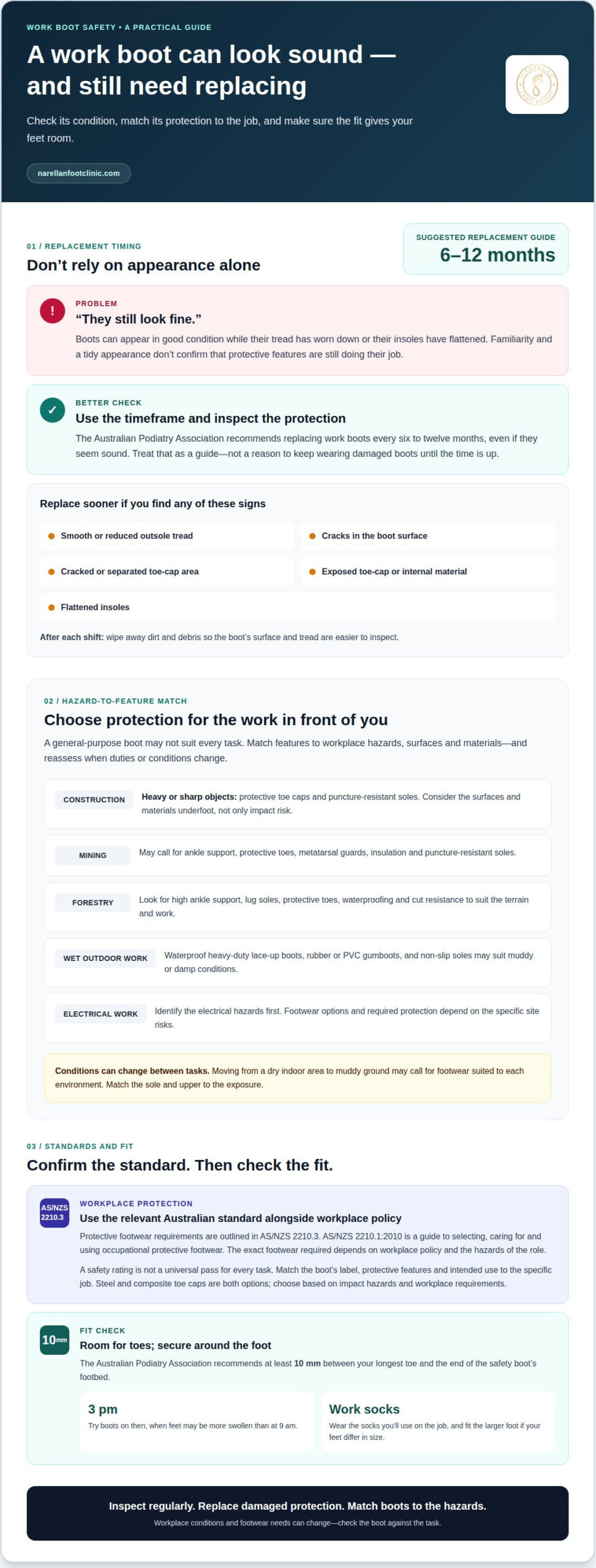
A work boot can look sound and still need replacing. When choosing safe footwear for work, appearance alone isn’t enough: the Australian Podiatry Association recommends replacing work boots every six to twelve months, even when they seem to be in good condition.
It’s easy to keep wearing a familiar pair, especially when there’s no obvious damage. But the right choice also depends on workplace hazards, how the boot fits and whether its sole and protective features suit your tasks.
This guide explains when to replace your boots and how to assess Australian safety standards, toe-box room, support and grip. It also covers footwear considerations for bunions, flat feet and plantar fasciitis, helping you make a more informed choice and feel more comfortable on the job.
Key Takeaways
- According to the Australian Podiatry Association, replace work boots every six to twelve months, even if they still look sound, and sooner if key protective features show damage.
- Match footwear protection to the hazards of your role, and look for the Australian standard relevant to the work, including AS/NZS 2210.3.
- Try boots on with your work socks and walk in them. A secure fit should leave room for your toes without pinching or slipping.
- Choose soles for the conditions underfoot: grip for slippery areas, puncture resistance around sharp debris and heat resistance for high-temperature work.
- Foot conditions can change what feels supportive; wide toe-box room may help with bunions, while persistent discomfort is a reason to seek podiatry advice.
1. How often should tradies replace their work boots, even if they don’t look worn out?
The Australian Podiatry Association recommends replacing work boots every six to twelve months, even when they appear to be in good condition. Use that timeframe as a guide, but also consider the condition of the protective features and the hazards at your workplace. A boot may look tidy but have flattened insoles or reduced tread, while visible damage can mean it needs replacing sooner.
Inspect the sole, upper and protective toe area. Replace protective footwear if the tread is smooth, the surface is cracked or protective components such as the toe box are visible. For safety-toe boots, check for a cracked or separated toe-cap area, exposed internal toe-cap material, reduced outsole tread or flattened insoles. These signs may mean the footwear no longer provides the protection required for the job.
Choose features that address the actual hazards in your workplace rather than relying on one general-purpose boot for every task. Employers should conduct written hazard evaluations to determine whether protective footwear is needed. The assessment should identify risks such as falling objects, sharp material underfoot, slippery surfaces or electrical exposure. Match the footwear’s protective features to those risks.
- Construction: Heavy or sharp objects call for protective toe caps and puncture-resistant soles. Consider the surfaces and materials underfoot, not just the risk of impact.
- Mining: Work in mines may call for ankle support, protective toes, metatarsal guards, insulation and puncture-resistant soles.
- Forestry and logging: Look for high ankle support, lug soles, protective toes, waterproofing and cut resistance to suit the terrain and work.
- Wet outdoor jobs: A heavy-duty waterproof lace-up boot or a rubber or PVC gumboot can suit muddy conditions. For damp plumbing work, waterproof materials and non-slip soles are relevant features.
- Electrical work: Identify the electrical hazards first. Footwear options and required protection depend on the specific site risks.
Conditions can also vary between tasks. A tradie moving from a dry indoor area to muddy ground needs footwear suited to each work environment. Match the sole and upper to the exposure, and reassess if duties or hazards change. Protective footwear is not one-size-fits-all.
After each shift, wipe away dirt and debris so you can inspect the boot’s surface and tread. If the toe cap is exposed, the sole is worn smooth or cracks appear, don’t wait until the six-to-twelve-month point. Replace damaged boots with footwear suited to the hazards identified at your workplace.
2. How Do You Know Which Safety Standard to Look For?
In Australia, protective footwear requirements are outlined in AS/NZS 2210.3. AS/NZS 2210.1:2010 is a guide to selecting, caring for and using occupational protective footwear. Safety footwear is a legal workplace requirement in many industries, including construction, manufacturing and warehousing, but the exact requirements depend on workplace policy and the hazards of the role.
Choose footwear designed for the risks identified at your workplace, then match its protective features to those requirements. A safety rating isn’t a universal pass for every task. Construction work, for example, may involve impacts, sharp objects and electrical hazards. The combination of toe protection, sole features and electrical properties required depends on the site.
Who pays for required safety footwear in Australian workplaces? Payment is handled through workplace arrangements and the requirements and policy for the role. The standard describes protective footwear requirements, while workplace arrangements determine how the boots are provided.
What are typical prices for compliant safety boots in Australia? Prices vary according to protective features, materials and construction. A boot with a protective toe cap, puncture-resistant sole or other task-specific features may cost differently from a lighter shoe designed for warehousing.
Steel and composite toe caps are both options for protective footwear. Composite-toe boots meet the same safety standards as steel-toe boots, and their non-metallic construction can suit workers who pass through metal detectors. Choose based on impact hazards and workplace requirements, not material alone. For warehousing and light logistics, a safety sneaker or lightweight composite-toe athletic-style work shoe may suit the task where workplace requirements allow.
After each shift, wipe dirt and debris from safety-toe shoes so damage and wear are easier to spot. Let footwear air out between wears and condition leather regularly. If cracks, separation or exposed toe-cap material appear, replace the boots rather than relying on cleaning to restore protection. These care steps help maintain footwear, but don’t replace its care instructions or workplace policy.
Use the standard alongside workplace policy: the standard helps identify the required protective footwear, while the policy applies those requirements to the role and site. A warehouse worker and a construction worker, for example, may need different footwear even if both need toe protection. Before wearing boots on site, match their label, protective features and intended use to the specific job.
3. Fit, toe-box room and arch support
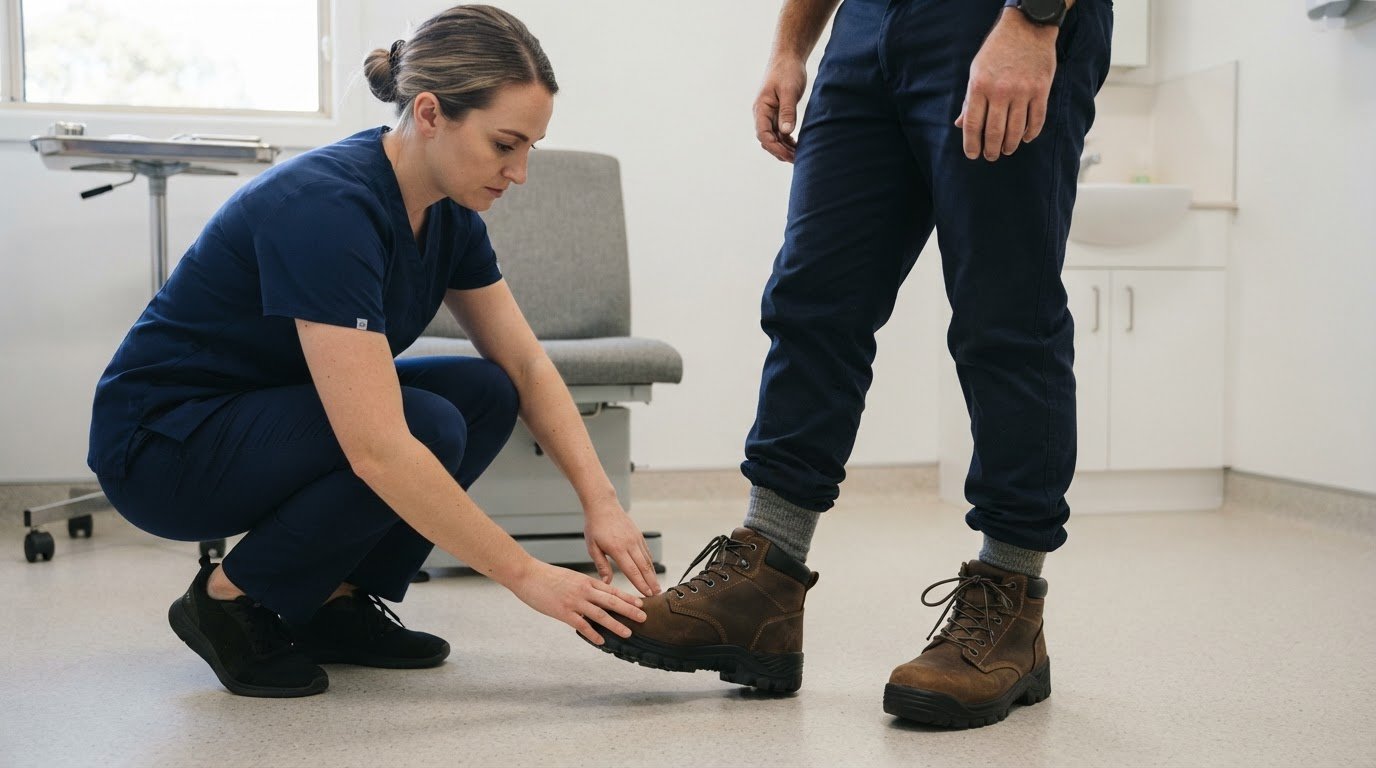
Good fit helps keep your foot stable through a long shift. Try boots on at 3 pm, when feet may be more swollen than they are at 9 am. Wear the socks you’ll use at work, and fit the larger foot if your feet differ in size. The Australian Podiatry Association recommends leaving at least 10 mm between your longest toe and the end of the safety boot’s footbed.
Check the fit while standing and walking. Your toes should move slightly without pressing against the protective cap, and your heel should feel secure rather than slip. Fasten the boot firmly and check that it doesn’t pinch or restrict movement. A boot may feel comfortable at first but rub during a normal stride, so walk around before deciding. If your foot hangs over the midsole, try a different style.
Use these checks to assess support and movement:
- Flex point: The boot should bend where your foot bends, at the ball of the foot. A mismatch can make each step feel awkward.
- Heel: Look for support and grip around the heel, with a bevelled or rounded heel edge. This shape helps the boot roll through a step.
- Sole: Choose a flexible, cushioned sole for comfort, while keeping the grip and protection suited to your work environment.
- Weight: Lighter materials may feel easier during a long shift, but don’t choose them at the expense of a required electrical hazard feature.
Sole material affects how a boot feels underfoot. EVA provides lightweight cushioning, which can add comfort during extended standing. TPU is light and elastic, and is designed for rugged terrain. Neither material alone determines whether a boot suits your job: consider the sole’s structure, grip and the conditions underfoot. A flexible, cushioned sole may feel different on a hard indoor floor than on uneven ground.
Arch support should suit your feet and the demands of your shift. For flat feet, sturdy heels and firm arch support can help limit overpronation. For plantar fasciitis, cushioned heels and shock-absorbing insoles are recommended. Women’s-specific safety footwear may offer a closer fit around a narrower heel and a more accurate arch profile. Choose an option that sits securely and comfortably with your work socks.
Comfort depends on the whole fit, not just the arch or toe box. If an insole feels flattened or a boot has lost its shape, support may change. Notice how your feet feel after walking and standing, not only during a quick fitting. A well-fitted boot should feel secure at the heel, leave room for your toes and allow the ball of your foot to flex naturally.
4. Slip-, puncture- and heat-resistant soles
The outsole and midsole protect against different hazards, so assess both when choosing work footwear. The outsole contacts the ground and affects grip; a puncture-resistant midsole helps shield the foot from sharp objects below. A composite toe protects the front of the foot but doesn’t replace sole protection. Match each feature to the hazards identified for your workplace and the relevant safety standards.
For wet floors, oil spills or uneven surfaces, look for slip-resistant outsoles with deep tread and suitable rubber compounds. Tread with sipes has narrow grooves that help disperse liquid beneath the sole. Rubber can provide grip on wet or slippery sites. Smooth or worn tread offers less contact with the surface, so inspect the outsole and replace footwear when the tread is reduced.
Sharp materials require a different feature. If your work involves nails, debris or sharp objects underfoot, choose footwear with a puncture-resistant midsole. This layer sits between the insole and outsole, helping protect the sole of your foot from penetration. Check that puncture resistance is listed among the boot’s protective features rather than assuming a thick-looking outsole provides it.
Heat exposure also affects your choice. Welders and workers near extreme heat need heat-resistant outsoles designed for those conditions. A sole built for wet-floor grip isn’t automatically suitable for hot surfaces. Consider where the heat comes from, how close your feet are to it and whether the footwear’s safety standards address the hazard.
Waterproof and water-resistant materials can help in wet conditions, but they offer different levels of protection. For muddy outdoor work, a heavy-duty waterproof lace-up boot or rubber or PVC gumboot may suit the conditions. In damp plumbing work, pair waterproof materials with non-slip soles. Consider how long the footwear will be exposed to water and whether splashes, standing water or mud are part of the task.
Chemical exposure calls for footwear selected for the substance and work environment. Rubber, PVC or neoprene boots are options for resisting chemical exposure. Don’t assume every boot made from one of these materials will resist every chemical. Identify the exposure and choose footwear intended for that hazard, alongside the workplace’s required protective measures.
Before a shift, check the sole for embedded nails, cuts, worn tread or separation from the upper. Inspect for damage after work too, especially following contact with oil, chemicals or hot surfaces. Clean off mud and debris so the tread remains visible. If damage affects the sole’s grip or protective barrier, replace the footwear rather than relying on a composite toe cap to compensate.
5. Footwear for different foot conditions
A boot can meet workplace safety requirements and still feel uncomfortable if it doesn’t suit your feet. Conditions such as bunions, flat feet and plantar fasciitis can affect which features matter most. For tradies, choosing safe footwear for work means balancing proper support and room with required protection, such as a steel toe cap. A snug fit shouldn’t press on a sensitive joint or force your foot into an awkward position.
For bunions, look for a wide toe box. Extra room around the forefoot can help minimise joint strain and skin irritation during a shift. Check that the bunion doesn’t rub against the boot’s upper when you walk and that the protective toe cap doesn’t crowd your toes. If your work involves falling-object hazards, toe-box comfort still needs to work alongside the required impact protection.
Flat feet may need a different balance of support. Sturdy heels and firm arch support can help limit overpronation, where the foot rolls inwards excessively as it moves. Consider how the boot feels while walking and standing on the surfaces you encounter at work. A firm, supportive heel can help steady the foot, while an uncomfortable arch profile may create pressure instead of useful support.
- For flat feet: Look for a sturdy heel and firm arch support that feels supportive during your usual work movements.
- For plantar fasciitis: Cushioned heels and shock-absorbing insoles are recommended to help soften impact underfoot.
- For bunions: Choose a wide toe box to reduce pressure around the affected joint and limit rubbing.
With plantar fasciitis, pay particular attention to the heel and insole. Cushioned heels and shock-absorbing insoles can help absorb impact as your foot meets the ground, which may matter during work involving repeated walking or standing. The boot should still fit securely, so cushioning doesn’t cause your heel to slip or your foot to move around inside it.
Foot conditions can also make a previously comfortable pair feel different. A changed fit, rubbing over a bunion or persistent heel discomfort are signs to reassess your footwear. Choosing safe footwear for work also means noticing how boots feel during the movements your role requires, not judging them only while seated. Don’t alter or remove protective components to make a boot more comfortable.
Persistent foot discomfort is a reason to seek advice from a podiatrist. An assessment can consider your symptoms, foot mechanics and the demands of your job, then inform individualised treatment strategies. For support with how your feet move and respond to work footwear, book a biomechanical assessment.
Narellan Foot Clinic
Narellan Foot Clinic can help if work footwear causes persistent discomfort or your foot condition makes finding a comfortable fit difficult. A Biomechanical Assessment considers how your feet move, helping inform footwear and support needs. Where appropriate, Custom Orthotics may also be part of an individual approach to foot support. These services can be useful if you’ve tried adjusting your work boots but still experience pressure, rubbing or discomfort during your shift. For concerns such as ingrown toenails or fungal nails, the clinic also offers Ingrown Toenail Surgery and Fungal Nail Laser Treatment. If you’d like to discuss your foot concerns, contact Narellan Foot Clinic.
Take the next step towards a better fit
Choosing safe footwear for work also means noticing how your feet respond over a full shift. Pay attention to when discomfort starts, which movements bring it on and where your footwear rubs or feels tight. These details can make a conversation about your feet and work demands more useful. Persistent discomfort is worth discussing rather than simply putting up with it.
If your work boots remain uncomfortable despite a careful fitting, or a foot condition makes suitable footwear difficult to find, personalised podiatry advice can help you consider the next step. A comfortable fit should support your day without distracting you from your work.
For guidance tailored to your foot concerns, contact Narellan Foot Clinic. A considered next step can help you move towards footwear that feels more suitable for your working day.
Frequently Asked Questions
How often should tradies replace their work boots, even if they don’t look worn out?
The Australian Podiatry Association recommends replacing work boots every six to twelve months, even if they appear sound. Treat the calendar as a guide, not the only factor: hours worn, moisture exposure and rough site conditions all affect how quickly footwear deteriorates. A pair used daily on uneven ground may lose support sooner than boots worn occasionally indoors. Include boot condition in regular workwear checks, not just when buying replacements.
What are the most common problems tradies experience due to wearing the wrong work boots?
Poorly fitting work boots can cause rubbing, pressure points, blisters and sore feet, particularly during long shifts or repeated walking. Boots that don’t fit securely can also let the foot slide, making movement less stable on uneven or slippery surfaces. Footwear without features suited to site hazards may leave feet exposed to impacts or sharp objects. Persistent discomfort is a sign to reassess the fit, support and demands of the job.
Do different industries require different certification levels?
Footwear requirements vary with the hazards and tasks in each workplace, rather than following one universal specification for every industry. Construction, warehousing and manufacturing can expose workers to different risks, so the required protective features may differ. In Australia, protective footwear requirements are outlined in AS/NZS 2210.3. Workplace policy and hazard assessments help determine what footwear is appropriate for a particular role and site.
How do comfort features affect long-term wear?
Cushioned insoles, breathable linings, flexible outsoles and lighter materials are comfort features to consider for safety footwear worn on long shifts. Boots that rub or create pressure can make walking and standing uncomfortable, while a stable fit supports natural movement. Consider comfort alongside protective requirements: cushioning or lighter weight doesn’t replace the safety features required for your work. Try footwear with your usual work socks and walk in it before wearing it on site.
How do you know which safety standard to look for?
In Australia, AS/NZS 2210.3 outlines protective footwear requirements, while AS/NZS 2210.1:2010 guides selection, care and use. The relevant choice depends on your workplace hazards and policy. Identify the tasks and risks first, then ensure the footwear’s protective features suit them. For instance, a role involving sharp debris needs different sole protection from one where slipping is the main concern. Don’t treat a standard as a substitute for matching boots to the job.
How much room should be in the toe box?
The Australian Podiatry Association recommends at least 10 mm between your largest toe and the end of a safety boot’s footbed. Your toes should also move slightly without pressing against the protective cap. Try boots with your work socks, and check both feet because one may be larger. A roomy toe box shouldn’t mean a loose boot: the heel and midfoot still need to feel secure while you walk.
How can I be sure that my work shoe fits correctly?
Try work shoes with the socks you’ll wear on the job, then walk around rather than judging the fit while standing still. Your heel should stay secure, your toes should have room to move, and the ball of your foot should align with the shoe’s flex point. Check that the fastening holds the shoe firmly without pinching. Test the fit later in the day, when feet may be more swollen.
How does the type of trade, such as construction, plumbing or electrical work, influence the choice of work boot?
Your trade helps identify which hazards to prioritise. Construction can involve falling objects and sharp materials underfoot, making toe and puncture protection relevant. Damp plumbing tasks may call for waterproof materials and slip-resistant soles. Electrical work requires footwear selected for the electrical hazards identified at the workplace, often with non-metallic components. The job title alone isn’t enough: tasks, surfaces and site requirements determine the protective features needed.