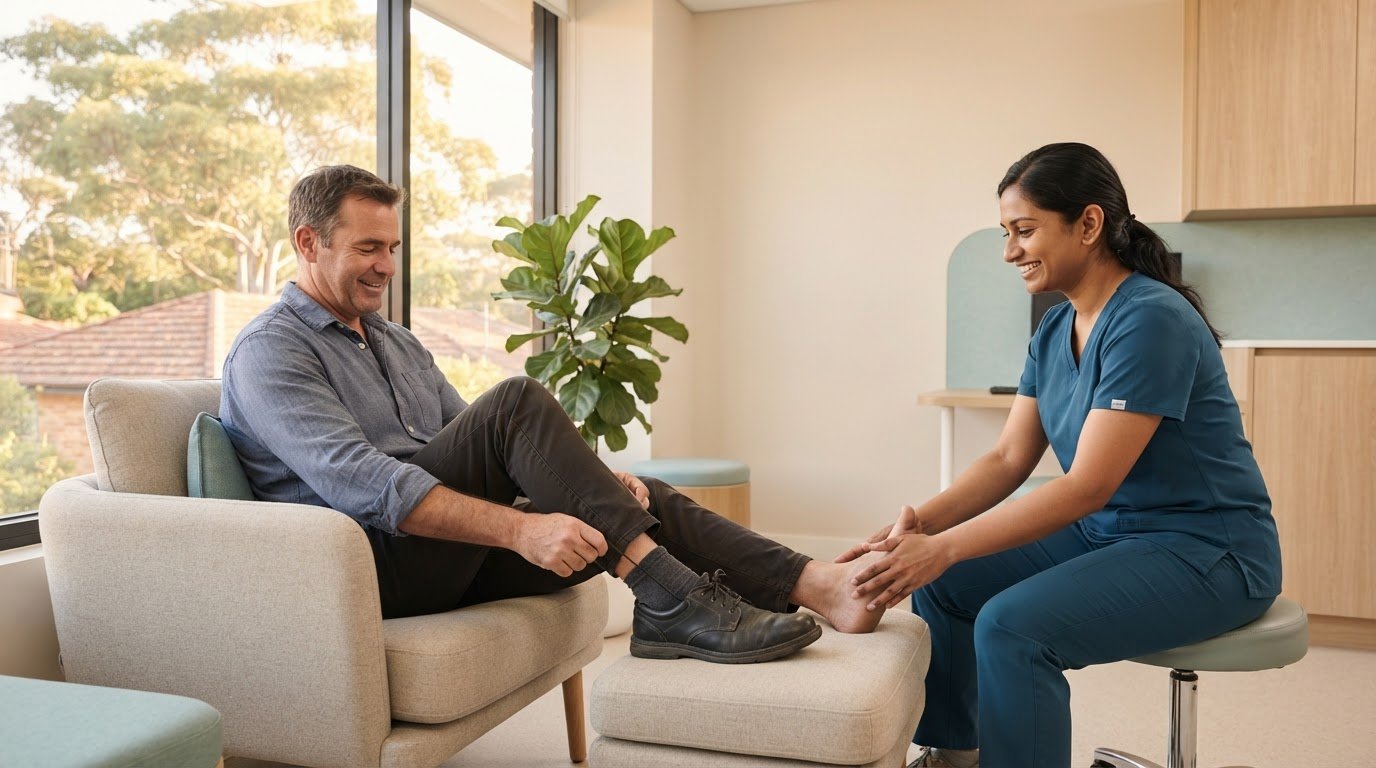
What if the first step towards sore feet from standing all day relief is to ease the load, rather than simply push through the ache? After a long shift or busy day, tired, sore feet can make even the trip home uncomfortable. It’s understandable to wonder whether rest, a change of shoes or another simple measure will help.
A few practical adjustments can make your feet more comfortable. How you recover after standing matters, but so do your footwear, the surface beneath you and opportunities to change position during the day. If discomfort keeps returning, it can help to understand what may be contributing to the strain.
This guide covers ways to ease soreness, reduce repeat pressure and make long periods on your feet more manageable. You’ll also learn which ongoing or unusual symptoms may need professional attention. At Narellan Foot Clinic, more than 25 years of experience serving the local community informs a patient-centred approach, including biomechanical assessment when recurring discomfort calls for a closer look.
Key Takeaways
- Standing-related soreness is a symptom, not a diagnosis. Noticing when and where it occurs can help you understand what may be contributing.
- For sore feet from standing all day relief, try a gentle wind-down routine at home, including rest and elevating your feet if comfortable.
- Check whether your shoes feel stable, secure and roomy enough. Also consider the floor and whether you can change position during the day.
- Build practical habits before, during and after work. If you’re returning to longer shifts, increase your time on your feet gradually where possible.
- If soreness keeps returning or worsens, a podiatry assessment can consider your symptoms, daily demands, footwear and foot or lower-limb movement.
Why do your feet get sore from standing all day?
Long shifts on your feet can leave them aching, tired or tender by the time you get home. That discomfort is real, but it doesn’t point to one specific condition on its own. Standing-related soreness has several possible contributors, and understanding them is a useful first step towards sore feet from standing all day relief.
Your feet support your body while you stand. Walking regularly changes how your feet move and take load, whereas staying in one position can keep pressure on similar areas for longer. Muscles and other tissues may become fatigued, while joints can feel stiff after limited movement. This doesn’t mean one particular structure is necessarily injured; soreness develops differently from person to person.
What can prolonged standing do to your feet?
Time on hard floors can add to the sense of fatigue, especially during a shift with few chances to sit, walk or change position. Some people also notice their feet feel fuller or more uncomfortable later in the day. Sustained loading and limited movement may play a part, but they aren’t the only factors to consider.
Footwear can change how pressure is distributed. Shoes that are worn, restrictive or poorly fitting may feel less comfortable than a stable pair with enough room, although no single style suits everyone. Your usual activity level matters too: returning to a long period on your feet after time away may feel different from maintaining a familiar routine. Individual foot and lower-limb mechanics can also influence where you feel strain. One person may notice general tiredness, while another feels soreness mainly around the heel or forefoot. The location alone doesn’t confirm the cause.
Is end-of-day soreness always a cause for concern?
Mild tiredness after an unusually busy day may settle with rest and a change in routine. Notice how your feet feel the next morning and whether discomfort eases when the demands of the day reduce. A brief episode that improves is different from soreness that keeps returning, becomes more intense or starts limiting work, walking or other everyday activities.
“Foot soreness is a symptom to understand, not a diagnosis that identifies its cause.” That distinction matters: recurring discomfort can have different contributing factors, so assuming it’s simply normal fatigue may delay finding a more suitable approach.
Consider seeking a podiatry assessment if the pain persists, worsens or interferes with daily life, particularly if it feels unusual for you. Sudden severe pain, substantial swelling, redness or warmth, numbness, or difficulty putting weight on the foot also warrants prompt medical advice. A podiatrist can consider your symptoms alongside your activity demands, footwear and foot or lower-limb movement, rather than treating standing as the only possible explanation.
How to get sore feet from standing all day relief at home
After a demanding day, start gently. A simple routine may help settle tired feet, but comfort measures won’t work the same way for everyone or explain why soreness keeps returning. For sore feet from standing all day relief, let your symptoms guide you and avoid anything that makes them worse.
A gentle recovery routine after a long day
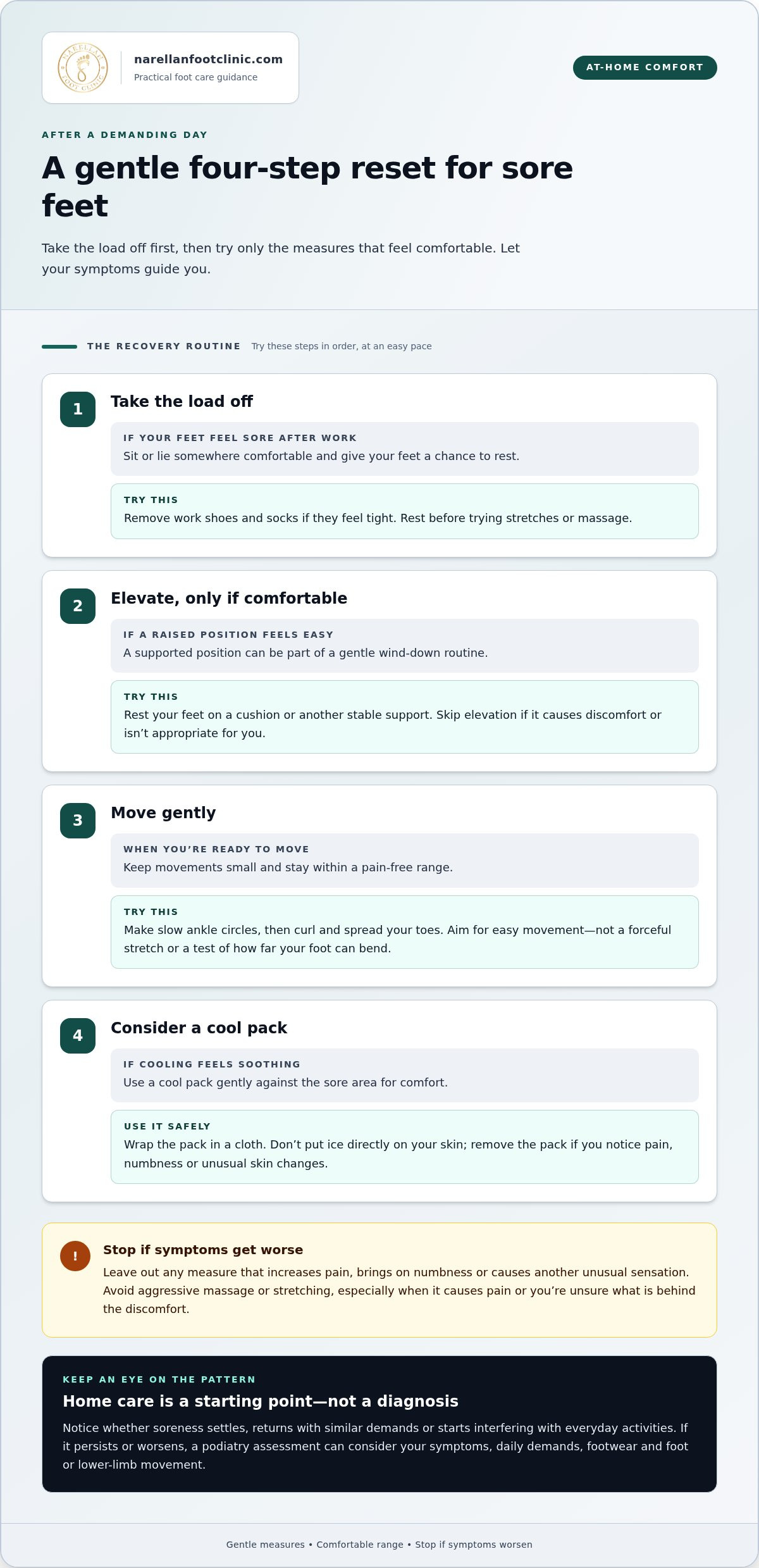
Try these steps in order, taking your time and staying within a comfortable range:
- Take the load off. Sit or lie somewhere comfortable and remove your work shoes and socks if they feel tight. Give your feet a chance to rest before trying stretches or massage.
- Elevate your feet if comfortable. Rest them on a cushion or another stable support. Choose a position that feels easy, and skip elevation if it causes discomfort or isn’t appropriate for you.
- Move gently. Try slow ankle circles, then curl and spread your toes. Keep the movements small and within a pain-free range. The aim is easy movement, not a forceful stretch or a test of how far your foot can bend.
- Consider a cool pack for comfort. If it feels soothing, wrap a cool pack in a cloth and place it gently against the sore area. Don’t put ice directly on your skin, and remove the pack if you notice pain, numbness or unusual skin changes.
You don’t need to complete every step if one doesn’t suit you. Stop any movement or measure that increases your pain, brings on numbness or causes another unusual sensation. If you’re unsure whether a home measure is suitable, leave it out and seek individual advice.
What to avoid when your feet are sore
Sharp, worsening or unexplained pain isn’t something to push through. Avoid aggressive massage or stretching, particularly if it causes pain or you don’t know what’s behind the discomfort. More pressure doesn’t necessarily mean more relief, and a technique that feels comfortable for one person may aggravate another’s symptoms.
Home care can offer comfort after a long day, but it may not address why soreness is happening. Pay attention to whether the discomfort settles, returns with similar demands or starts interfering with your usual activities. If it persists or worsens, an individual biomechanical assessment can consider your foot and lower-limb movement alongside your symptoms and daily demands. Self-care is a starting point, not a substitute for assessment when symptoms keep troubling you.
Footwear, floors and breaks: what makes standing easier?
If your feet are uncomfortable by the end of a shift, look at the conditions they’ve been working in, not just how long you’ve been standing. Shoes, flooring and opportunities to change position can all affect how your feet feel. Small adjustments may make a workday more manageable, though no single change suits everyone.
Comfort depends on your footwear, how long you stand and your individual needs. A shoe that feels supportive for one person may rub, feel restrictive or offer too little cushioning for someone else. Pay attention to how your feet feel during the shift, not only when trying shoes on briefly.
What should comfortable work shoes feel like?
A comfortable work shoe should feel secure without squeezing or rubbing. Look for enough room for your toes to move, a fit that holds your foot in place, and cushioning that feels comfortable to you. Check for worn soles, damaged fastenings or areas that have become loose or uncomfortable. Replace footwear that no longer feels supportive, and don’t assume one shoe style is right for every foot.
If your feet tend to swell or feel tight as the day goes on, notice whether the fit remains comfortable throughout your shift. A shoe that’s too loose may move around, while a restrictive fit can add pressure. These are useful details to track when considering sore feet from standing all day relief.
How can you reduce strain during a standing shift?
Where your duties allow, vary what you’re doing rather than staying in one position for long stretches. A short walk to complete a task changes the way your feet move and take load. If you can’t leave your station, changing your stance or shifting weight from one foot to the other can break up stillness. Follow workplace procedures and keep any movement safe for your task.
- Alternate tasks: Switch between standing, walking and seated duties where practical.
- Take brief breaks: Sit down when your work permits, or change position regularly rather than waiting until your feet feel very tired.
- Consider the floor: A cushioned floor mat may suit some standing work areas. It shouldn’t create a trip hazard or interfere with safe movement, and it may not feel comfortable for everyone.
Notice which changes make a difference over several shifts. For example, you might find that a different work shoe feels better on a hard floor, or that a brief change of position helps you stay more comfortable. In warehouse and industrial settings, improving workspace layouts with well-planned shelving and storage from colbydandenong.com.au can also assist by keeping goods accessible and minimising awkward, prolonged static standing. You don’t need to make several changes at once; adjusting one factor can help you work out what suits you.
If discomfort continues despite practical changes, or the same areas become sore repeatedly, footwear and breaks may not tell the whole story. A podiatry assessment can consider your symptoms alongside your footwear and foot mechanics, helping identify whether a more individual approach may be useful.
How to prevent sore feet when you stand for long hours
You may not be able to avoid long periods on your feet, but a consistent routine can help you notice what supports your comfort and reduce avoidable strain. There’s no guaranteed way to prevent soreness, and the best approach depends on your work, footwear and individual needs. Treat sore feet from standing all day relief as part of a wider plan, not a one-off fix.
A simple routine for busy days on your feet
Before work, check that your shoes still fit comfortably and feel suitable for the tasks ahead. If you’re returning to longer shifts after time away, build up your standing time gradually where possible rather than jumping straight into a demanding routine.
- Before your shift: Choose comfortable footwear that feels secure, gives your toes room and suits your work. Notice any rubbing or pressure before you leave home.
- During the day: Change position and move briefly whenever your duties allow. If you can, alternate standing tasks with walking or seated tasks. Even a small change in posture can break up time spent in one position.
- After work: Note when soreness began, where you felt it and what seemed to ease or aggravate it. Gentle ankle or toe movements, rest or elevating your feet may feel comfortable; stop if a measure makes symptoms worse.
A short record can help you spot patterns. Note whether soreness starts earlier on a particular type of shift, follows a footwear change or affects the same area each time. These details can help you decide whether a routine adjustment is working and provide useful context if you seek professional advice.
When might an individual foot assessment help?
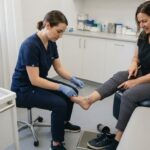
If soreness keeps returning despite reasonable changes, worsens or interferes with everyday activities, an individual assessment may help explore contributing factors. A podiatrist can discuss your symptoms and activity demands, then assess foot function and movement. A biomechanical assessment looks at how foot and lower-limb movement may relate to recurring discomfort; it isn’t a requirement for everyone with tired feet.
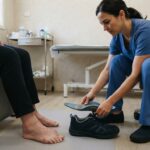
Next steps should follow your individual assessment, rather than assuming that one product or treatment suits everyone. Custom orthotics may be considered when your assessment indicates they are appropriate. They are not a default solution for standing-related soreness.
If your foot discomfort keeps coming back, book a podiatry assessment to discuss your symptoms and daily demands. Understanding when the soreness appears and how you move can help guide a more individual conversation about what may be contributing.
When sore feet need a podiatry assessment in Narellan
Occasional tiredness after a long day may settle, but soreness that keeps returning, gets worse or interferes with work and everyday activities deserves attention. If practical changes haven’t helped, an individual podiatry assessment may help clarify what’s contributing and what steps could be appropriate. The aim isn’t to assume there’s one cause, but to consider your symptoms in the context of how you use your feet.
What might a podiatrist assess?
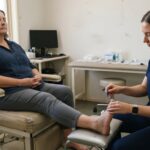
An assessment can begin with a conversation about where the discomfort is, when it started, what brings it on and what seems to ease it. Your usual standing demands matter too, including the type of tasks you do, how long you’re on your feet and the footwear you wear. A podiatrist may also observe foot function and lower-limb movement where clinically appropriate.
These details help inform recommendations based on your circumstances and assessment findings. A biomechanical assessment considers how movement patterns may relate to discomfort. If custom orthotics are relevant, they can be considered in light of your individual needs rather than treated as a standard fix for everyone with sore feet.
Before your appointment, it may help to note when soreness starts, where you feel it, what your workday involves and any changes you’ve made to shoes or routines. You can also mention whether symptoms are becoming more frequent or limiting activities. These observations provide useful context, but you don’t need to have worked out the cause yourself.
When should you seek prompt medical advice?
Some symptoms call for timely attention rather than waiting to see whether routine adjustments help. Seek prompt medical advice for severe or rapidly worsening pain, a significant injury or difficulty bearing weight. New numbness, marked swelling, redness or heat also needs timely assessment, particularly if symptoms are changing quickly.
If you have diabetes, seek professional advice promptly about a new foot problem, even if it seems minor. Early guidance can help you decide what care is appropriate for your situation.
Narellan Foot Clinic has served the local community for more than 25 years. If recurring foot soreness is affecting your day, a personalised assessment can explore your symptoms, activity demands and foot or lower-limb movement. For sore feet from standing all day relief that takes your individual needs into account, book an assessment with Narellan Foot Clinic.
Take the next step towards more comfortable days
Long hours on your feet may be part of your routine, but ongoing discomfort doesn’t have to be something you simply put up with. If soreness keeps returning, use what you’ve noticed about your symptoms to guide a conversation with a podiatrist. A clearer understanding of your individual needs can help you decide what to try next.
For sore feet from standing all day relief, there’s no single approach that suits everyone. Narellan Foot Clinic can assess recurring discomfort and discuss your symptoms and daily demands. On-the-spot health fund claims are available through HICAPS, which may make handling your claim more convenient.
If persistent foot soreness is affecting your work or everyday activities, take a considered next step and book an assessment with Narellan Foot Clinic. With individual guidance, you can work towards feeling more comfortable and confident on your feet.
Frequently Asked Questions
How long should sore feet last after standing all day?
Mild soreness may ease after you stop standing and rest, but there’s no set recovery time that applies to everyone. Notice whether your feet feel better by the next morning and whether similar shifts bring the discomfort back. For sore feet from standing all day relief, keep a brief record of how long symptoms last and what your day involved. Ongoing or worsening pain is a reason to seek professional advice.
Can standing on concrete make your feet more sore?
It can contribute to discomfort for some people. Concrete offers little give underfoot, so a long shift on it may feel different from working on a more forgiving surface. Your shoes, tasks and individual foot mechanics also affect comfort. If possible, compare how your feet feel on different shifts, noting the surface and footwear. A cushioned work mat may be worth considering where it can be used safely.
Can compression socks help with sore feet from standing?
Compression socks may help some people manage swelling, but they aren’t a universal solution for foot soreness and don’t address every possible cause. Fit matters: socks that feel painfully tight, cause numbness or leave unusual marks should be removed. If you have a medical condition affecting circulation, sensation or swelling, ask a health professional whether compression garments are appropriate before trying them.
Can standing all day cause swollen feet and ankles?
Feet and ankles can feel or look swollen after long periods standing, an issue that frequently arises during long transit days and flights. When travelling abroad, booking dedicated transport like Prague Airport Chauffeur helps eliminate extended queues and standing after landing, offering tired legs a welcome break. If swelling is mild and settles after rest, keep track of whether it returns during similar shifts. Sudden or substantial swelling, swelling with redness or heat, or swelling that’s painful or mainly affects one leg needs timely medical advice. Don’t assume new or persistent swelling is simply from being on your feet.
Can standing all day contribute to plantar fasciitis?
Long periods standing may add repeated load to the plantar fascia, a band of tissue along the sole, and could contribute to heel discomfort in some people. But sore heels after a shift don’t confirm plantar fasciitis; other issues can feel similar. If heel pain keeps recurring, particularly if it’s changing how you walk or manage daily tasks, an assessment can help clarify what may be contributing.
Should I keep working if my feet hurt when I stand?
It depends on the severity and how the pain affects your movement. Don’t push through sharp, rapidly worsening or unexplained pain, or keep standing if you can’t bear weight safely. If discomfort is mild, see whether a safe change of task, position or brief rest helps, and follow workplace procedures. Recurring pain that affects your ability to work deserves professional advice rather than repeated guesswork.
When should I seek medical advice for sore feet?
Seek prompt medical advice for severe or rapidly worsening pain, a significant injury, inability to bear weight, new numbness, marked swelling, redness or heat. If you have diabetes, get professional advice promptly about any new foot problem. For persistent soreness, a podiatry assessment in Narellan may help. Whether you’re in Sydney, Blacktown, Campbelltown, Windsor or Penrith, don’t delay urgent care for concerning symptoms.