
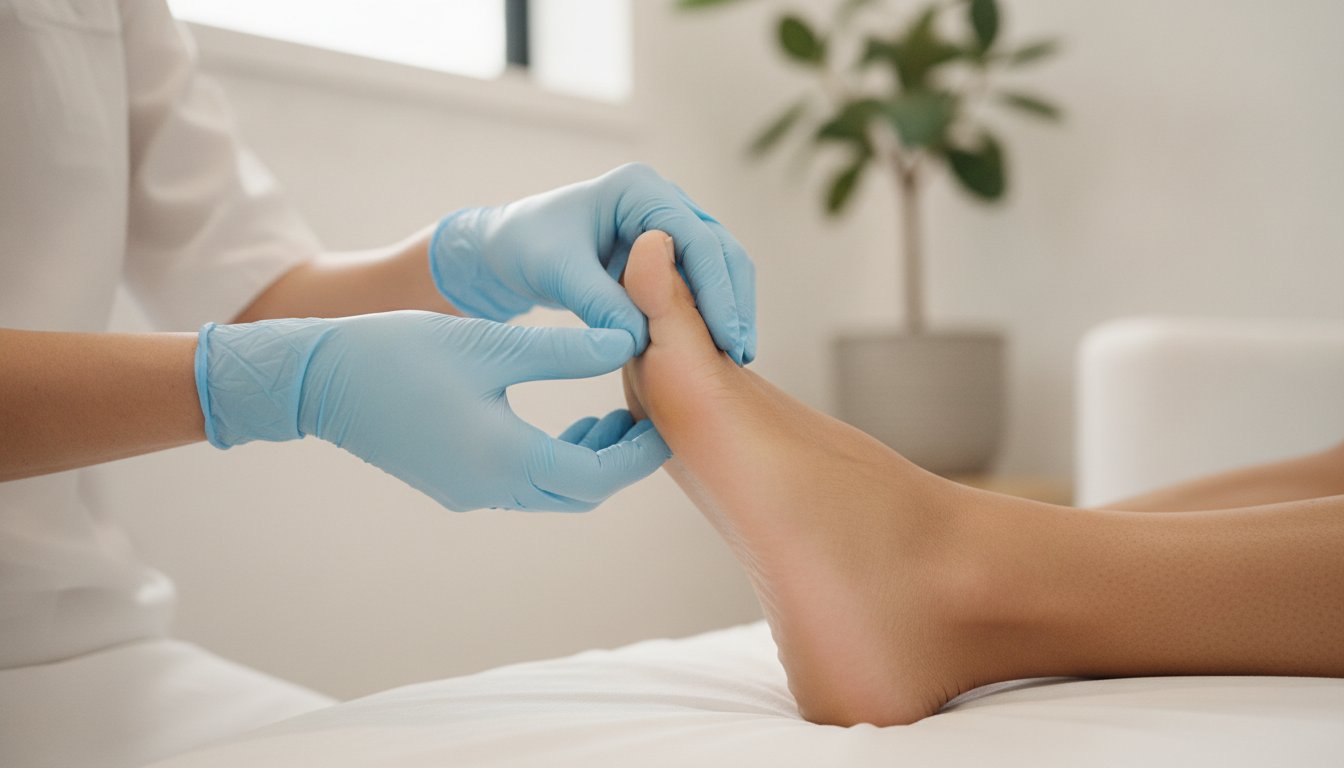
Imagine waking up and dreading that first step out of bed because a sharp, pebble-like sensation is stabbing into the sole of your foot. It’s a frustrating reality for many in Narellan who find that a small, stubborn growth is suddenly dictating their every move and making even a simple walk to the shops feel like a chore. If you’ve struggled with failed chemist patches or messy home remedies, seeking a professional plantar wart treatment is often the only way to find lasting relief and stop the embarrassment of hiding your feet.
We understand that you want more than just a temporary fix; you want the confidence of clear, healthy skin and the freedom of pain-free movement. This guide will help you discover the most effective clinical and home-based options to clear the underlying viral infection and restore your comfort. We’ll explore how modern podiatric techniques, such as photo-biomodulation and expert clinical care, can resolve these painful lesions. You’ll also learn why it’s vital to recognise the symptoms early and seek expert confirmation that your growth isn’t something more serious, putting you back in a safe pair of hands for your recovery.
Key Takeaways
- Understand why plantar warts are caused by the HPV virus and how the pressure of standing forces them to grow deeper into the sole of your foot.
- Compare various clinical options and learn why a tailored plantar wart treatment plan is essential for clearing stubborn infections that chemist remedies often miss.
- Discover the benefits of professional debridement and clinical precision over imprecise home treatments that can accidentally damage healthy surrounding skin.
- Find out how 25 years of local expertise in Narellan provides a “safe pair of hands” for those seeking a permanent resolution to persistent foot pain.
- Gain clear insights into the transition from daily discomfort and embarrassment to the freedom of clear, healthy skin and pain-free movement.
Understanding Plantar Warts: Why They Are So Stubborn
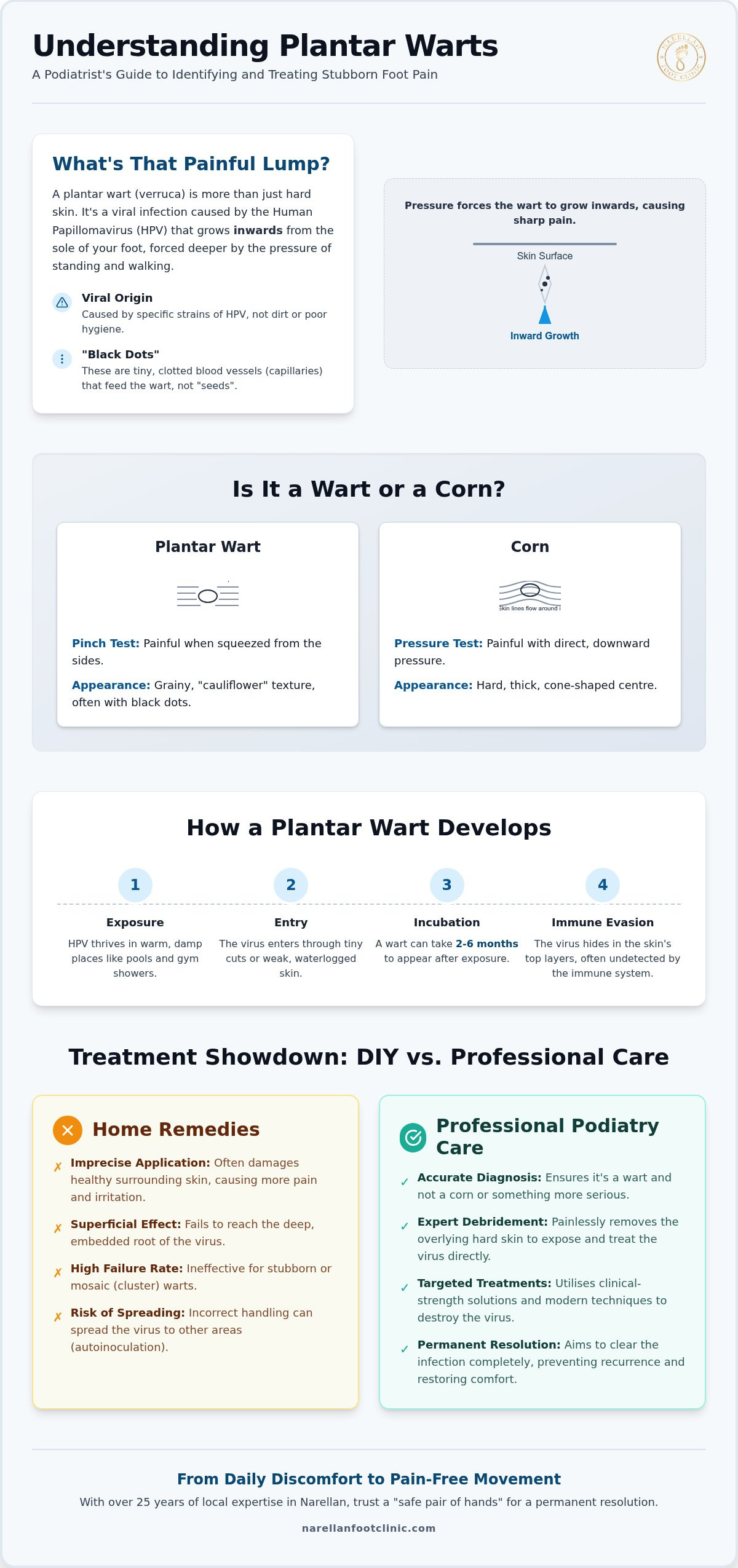
Plantar warts, or verrucae, are far more than just a minor skin blemish; they are a persistent viral infection caused by the Human Papillomavirus (HPV). Unlike warts found on the hands that often grow outward, those on the soles of your feet are forced inward by the constant weight and pressure of every step you take. This deep-seated growth is exactly why finding an effective Understanding Plantar Warts strategy is so important for long-term comfort. When you inspect the lesion, you might notice tiny black dots. While often mistaken for “seeds”, these are actually tiny clotted capillaries that the virus has recruited to supply itself with nutrients. This viral persistence explains why many Narellan residents find that these growths don’t simply vanish, often leading to a subtle change in gait as you instinctively shift your weight to avoid the sharp, stabbing pain.
Plantar Wart vs. Corn: How to Tell the Difference
Distinguishing between a wart and a corn is a common challenge for many patients. A simple diagnostic tool is the “pinch test”. Generally, a wart will feel more painful when squeezed firmly from the sides, while a corn typically causes discomfort under direct, vertical pressure. Another clue lies in your skin’s natural ridges, which function much like a fingerprint. A plantar wart will interrupt these lines, whereas a corn usually allows the skin lines to pass through or around it. If you’re struggling to tell them apart, biomechanical assessments provide a professional way to determine if your pain is caused by a pressure-related corn or a viral infection requiring specific plantar wart treatment.
Common Symptoms and Warning Signs
Being proactive about symptoms can prevent a single lesion from spreading into a more complex issue. You should keep an eye out for:
- A rough, grainy, or “cauliflower-like” lesion, usually appearing on the ball of the foot or the heel where pressure is highest.
- Persistent, sharp pain when walking on hard surfaces, such as the polished floors of Narellan Town Centre or local footpaths.
- The spreading of multiple warts into a cluster, often referred to as mosaic warts, which can be much harder to resolve.
- A thick callus that seems to have formed over a very specific, tender “spot” on the sole.
Catching these signs early means you can address the infection before it begins to impact your daily exercise or work routine. When the virus is allowed to linger, it becomes more deeply embedded in the skin layers, making it significantly more resistant to standard chemist-bought treatments.
The Science of Infection: How HPV Affects Your Feet
The infection begins when the Human Papillomavirus (HPV) finds a way through the protective outer layer of your skin. While there are over 100 strains of HPV, only a few specific types, such as strains 1, 2, and 4, have a preference for the thick, resilient skin on the soles of your feet. These viral particles are remarkably hardy. They enter through microscopic abrasions or weak spots, often caused by moisture or friction. Once inside, the virus hijacks the skin cells, causing them to multiply rapidly and form the characteristic rough lump. This process is subtle, and you won’t feel the virus entering your system.
One of the most confusing aspects of this infection is the incubation period. You might not see a growth for two to six months after the initial exposure. This long delay makes it difficult to pinpoint exactly where or when you picked up the virus. Additionally, the virus is a master of disguise. Because it stays within the upper layers of the skin and doesn’t enter the bloodstream, your body’s immune system often fails to recognise it as a threat. This “immune evasion” is why a professional Home Remedies vs. Professional Clinical Care comparison is so useful; clinical interventions often work by finally “alerting” your immune system to the virus’s presence.
Where Do You Catch Plantar Warts?
The virus thrives in warm, damp environments where people congregate. Public swimming pools, gym showers, and communal change rooms are common hotspots for transmission. For residents in the Macarthur region, this includes local sports clubs or leisure centres where people frequently walk barefoot. If you have a small cut or even just soggy skin from a long swim, the virus can easily take hold. You also need to be careful of autoinoculation. This happens when you pick at a wart or use the same pumice stone on different parts of your foot, effectively spreading the virus to new, healthy areas of skin.
Risk Factors for Developing Stubborn Warts
While anyone can develop a wart, certain groups are more susceptible. Children and teenagers often catch them because their immune systems haven’t yet built up a strong defence against these specific HPV strains. Similarly, if you have a chronic health condition that weakens your immune response, the virus can become much more established and resistant to standard plantar wart treatment. This is particularly concerning for those requiring specialised diabetic foot care. In these cases, a wart isn’t just a minor nuisance; it’s a potential source of secondary infection or ulceration if it’s not managed with professional precision. If you’ve noticed a new, painful growth on your sole, arranging a professional skin check is the best way to ensure your feet remain healthy and resilient.
Plantar Wart Treatment Roundup: Comparing Your Options
Choosing the right path for your recovery depends on your lifestyle, the wart’s location, and how long you’ve been dealing with the infection. This Plantar Wart Treatment Roundup highlights that while many patients start with home care, clinical intervention often provides more predictable and lasting results. It’s important to remember that every foot is unique; what works for a small, superficial lesion might not be effective for a deep-seated cluster. This tailored approach ensures you’re in a safe pair of hands throughout your recovery, focusing on clearing the virus while protecting the healthy skin surrounding the site.
Chemist Remedies and Home Care
Many people begin their journey at the local chemist, using salicylic acid paints or patches. These work by slowly dissolving the infected skin layers, but they often require months of diligent daily application to see results. We frequently see patients who’ve attempted “bathroom surgery” using unsterilised tweezers or needles to dig at the lesion. This is incredibly risky. It can lead to secondary infections, spreading the virus further, or causing permanent scarring. Even the popular “duct tape occlusion” method, which aims to suffocate the virus, has shown mixed results in clinical studies and rarely succeeds on the thick skin of the sole without professional debridement.
Professional Clinical Treatments
Professional clinical options provide a higher level of precision and speed. Cryotherapy, which involves applying liquid nitrogen to freeze the viral tissue, is a common standard for many practitioners. For particularly large or stubborn cases, curettage and cautery may be used to surgically remove the lesion under local anaesthetic. Modern podiatry also utilises innovative techniques like dry needling and photo-biomodulation. Rather than just destroying tissue, these methods work by stimulating your body’s own immune response, effectively teaching your system to recognise and clear the HPV virus naturally. Maintaining general foot care during these treatments is essential to keep your skin resilient and support faster healing.
Advanced Laser Therapy
Advanced laser therapy represents a modern shift in how we manage stubborn infections. The laser works by targeting the tiny blood vessels that supply the wart, essentially cutting off its nutrient source without damaging the surrounding healthy tissue. Much like the technology used in laser treatment for fungal nails, this high-tech clinical alternative offers a focused, efficient solution. The benefits include minimal downtime and high precision, making it an excellent choice for busy individuals who can’t afford to be off their feet. This professional approach to plantar wart treatment ensures the infection is addressed at its source, significantly reducing the likelihood of the wart returning in the future.
Home Remedies vs. Professional Clinical Care
A common question we hear is whether it’s better to wait for a wart to disappear on its own. While some minor viral infections eventually clear, waiting often leads to the virus spreading or becoming more deeply embedded. This delay can turn a single, manageable lesion into a complex cluster that is much harder to resolve. Professional care isn’t just about speed; it’s about the precision of the process. Podiatrists use specialised debridement techniques to remove the overlying callus with surgical accuracy. This is a stark contrast to home filing, which often irritates the healthy skin around the site and can inadvertently spread the virus to other parts of your foot.
Safety is another critical factor when choosing between home kits and clinical intervention. Over-the-counter acid treatments are blunt instruments that don’t account for your specific skin type or the wart’s depth. Without professional application, these acids can easily leak onto healthy tissue, causing painful chemical burns and potential scarring. At Narellan Foot Clinic, we operate in a fully sterilised clinical environment, drawing on over 25 years of experience to ensure your plantar wart treatment is both safe and effective. This clinical rigour provides the “safe pair of hands” you need to move from a state of worry to one of long-term comfort.
When to See a Podiatrist Immediately
While some people manage minor spots at home for a short time, certain red flags require an immediate professional assessment. You should book an appointment if:
- The lesion is bleeding, changing colour, or spreading rapidly across the sole.
- The pain is forcing you to change the way you walk, leading to secondary aches in your knees or hips.
- You have a pre-existing condition such as diabetes or poor circulation. In these cases, any foot growth is a high-risk concern that requires expert management to prevent serious complications.
What to Expect During Your Clinical Consultation
Your first visit is designed to be thorough and reassuring. We begin with a visual diagnosis, often involving the gentle debridement of any hard skin to reveal the true extent of the infection. We then assess the wart’s size, depth, and vascularity. This isn’t a “one size fits all” approach; we take the time to understand your daily activity levels and health history. Finally, we develop a tailored treatment plan that targets the virus while ensuring you can return to your daily routine with minimal hindrance. If you’re ready to move beyond temporary fixes, you can book your clinical assessment at Narellan Foot Clinic today.
Professional Wart Removal at Narellan Foot Clinic
Effective plantar wart treatment shouldn’t be a source of stress or ongoing frustration. At Narellan Foot Clinic, we approach every case with the understanding that you’ve likely already tried several unsuccessful remedies before reaching our doors. David J. Miller brings over 25 years of experience to the Macarthur community, providing a seasoned perspective that combines clinical authority with a warm, empathetic touch. We focus on modern, evidence-based therapies that go beyond simply masking symptoms. By utilising advanced techniques such as dry needling and photo-biomodulation, we aim to trigger your body’s natural immune response to clear the virus from the inside out. This gentle, patient-centric approach is designed to minimise discomfort, making it an ideal choice for children or those who may be nervous about clinical procedures.
Our Commitment to Sterile, Expert Care
Choosing a professional clinic over a beauty salon or home environment ensures you are receiving care that meets the highest medical standards. Our fully sterilised clinical environment is essential for preventing cross-contamination and ensuring that every procedure is performed safely. Diagnostic accuracy is the cornerstone of our practice; we take the time to confirm that your lesion is indeed a viral wart and not something more serious that requires a different medical path. For families in Narellan, Campbelltown, and the greater Macarthur region, we make the process as seamless as possible with on-the-spot HICAPS and Medicare claims. This allows you to focus on your recovery rather than the paperwork, ensuring your transition to pain-free movement is smooth and efficient.
Preventing Recurrence: Post-Treatment Advice
Clearing the initial infection is only half the battle; preventing the virus from returning is vital for long-term foot health. Once your treatment is complete, we provide practical, easy-to-follow advice to keep your feet protected. This includes:
- Sanitising your footwear and washing socks in hot water to eliminate any lingering viral particles.
- Maintaining a strong skin barrier by keeping your feet hydrated, as cracks and dry spots provide easy entry points for HPV.
- Using protective footwear in communal areas like gym change rooms or local swimming pools.
- Regularly inspecting your feet to catch any new changes before they become painful or spread.
Our goal is to return you to your daily activities, whether that’s a morning run or a busy day at work, without the hindrance of persistent foot pain. We pride ourselves on being a reliable sanctuary for foot health, where modern techniques and a high standard of care come together to deliver results. If you are tired of the embarrassment and discomfort of a stubborn infection, it’s time to put your feet in a safe pair of hands. Organise a professional wart assessment at Narellan Foot Clinic today and take the first step toward clear, healthy skin.
Step into a Pain-Free Future
Living with persistent foot pain shouldn’t be your “new normal”. We’ve explored how these stubborn viral infections take hold and why professional plantar wart treatment is the most reliable path to clear, healthy skin. By choosing clinical care, you move away from the risks of imprecise home remedies and toward a solution that addresses the infection at its source. You’re opting for a strategy that finally alerts your immune system to the presence of the virus, ensuring a more permanent resolution.
At Narellan Foot Clinic, you’re in a safe pair of hands with David J. Miller, who brings over 25 years of local experience to every consultation. Our use of advanced photo-biomodulation technology ensures that your recovery is as gentle and efficient as possible. With our convenient Narellan location and on-the-spot HICAPS claims, the journey to comfort is straightforward and supported. Don’t let a minor growth dictate your lifestyle or comfort any longer. Book Your Professional Wart Assessment at Narellan Foot Clinic today and reclaim the confidence of healthy, pain-free feet. We’re here to help you walk with ease once again.
Frequently Asked Questions
Is plantar wart treatment painful?
Most modern treatments are designed to be as gentle as possible. While older methods like cryotherapy can cause a brief stinging sensation, our clinic utilises advanced options like photo-biomodulation and dry needling which focus on stimulating your immune system rather than just destroying tissue. We prioritise patient comfort, especially for nervous children or adults. Any minor tenderness after a session usually settles quickly, allowing you to return to your daily activities in Narellan without significant downtime.
How long does it take for a plantar wart to disappear with professional treatment?
Recovery times vary depending on the wart’s size, depth, and how long it has been present. While some small lesions resolve after a few sessions, deeper or mosaic warts may require a more structured plan over several weeks. Because the virus can be stubborn, professional plantar wart treatment focuses on a thorough resolution rather than a quick fix. We monitor your progress closely to ensure the skin is healing correctly and the underlying infection is fully cleared.
Can I go swimming after having a wart treated at the clinic?
You can usually return to the water shortly after treatment, provided you follow specific aftercare instructions. We often recommend using a waterproof dressing to protect the site from bacteria found in public pools or communal showers around Campbelltown. Keeping the area clean and dry between swims helps the skin barrier recover. During your consultation, we will provide a clear timeline for resuming sports and leisure activities based on the specific treatment method we use for your foot.
Why do my warts keep coming back after I use chemist treatments?
Chemist remedies often fail because they only treat the very top layer of skin without reaching the viral core. Without professional debridement to remove the overlying callus, the active ingredients cannot penetrate deep enough to be effective. Additionally, these products don’t always trigger the immune response needed to kill the HPV virus. Professional care addresses these issues by using clinical-grade techniques that target the entire lesion while protecting the healthy surrounding tissue from damage.
Are plantar warts contagious to other members of my family?
Yes, the virus that causes warts is contagious and can spread through direct contact or shared surfaces. It thrives in damp environments like bathrooms and tiled floors. To protect your family, it’s best to avoid sharing towels or socks and to wear thongs in communal areas. Seeking prompt treatment at our Narellan clinic helps reduce the viral load and lowers the risk of passing the infection to others in your household.
Does Medicare or private health insurance cover wart removal?
Most private health funds provide rebates for podiatry services, and we offer on-the-spot claims through HICAPS for your convenience. Medicare may also cover a portion of the cost if you have a GP referral under a Chronic Disease Management plan. We recommend checking with your provider to confirm your specific level of cover. Our staff are happy to assist with the paperwork to ensure you receive the maximum benefit available for your clinical care.
Is it a wart or a corn? How can a podiatrist tell?
A podiatrist uses several diagnostic signs to tell them apart. Warts typically interrupt the natural ridges of your skin and may contain tiny black dots, whereas corns are concentrated plugs of hard skin caused by pressure. We also perform a “pinch test”; warts are usually more painful when squeezed from the sides. Accurate diagnosis is vital because a corn requires biomechanical adjustments, while a wart needs specific antiviral strategies to prevent it from spreading further.
What happens if I leave a plantar wart untreated?
Leaving a wart untreated can lead to the infection spreading across the sole or to other people. Over time, the lesion may grow deeper into the foot, making it significantly more painful to walk or stand. This often causes you to subconsciously change your gait to avoid the pain, which can lead to secondary aches in your knees, hips, or lower back. Early intervention ensures a faster recovery and prevents a minor spot from becoming a chronic mobility issue.




2 Comments
[…] While they can look similar, a corn is caused by mechanical pressure, whereas a plantar wart is a viral infection. A corn typically has a hard central “plug” and hurts when pressed directly. Warts often have tiny black dots and tend to be more painful when squeezed from the sides. Our experienced team can accurately diagnose the lesion and provide the appropriate treatment, whether it’s general foot care or specialised plantar wart treatment. […]
[…] growth on the sole of your foot may be a viral lesion rather than a corn, exploring professional plantar wart treatment options can help you find lasting relief and avoid ineffective home remedies. Professional […]