
What if that sharp, stabbing sensation in your toe isn’t actually the root problem, but merely a persistent warning sign from your body? For many Australians, living with the constant sting of a corn feels like walking on a shard of glass, making every trip to the shops or stroll through the park a genuine ordeal. You’ve likely felt the frustration of a recurring corn and perhaps even the embarrassment of how your feet look in sandals. It is tempting to reach for medicated pads or attempt risky “bathroom surgery” at home, but these methods often lead to infection rather than lasting comfort.
By consulting a professional corn removal podiatrist, you can secure immediate, painless relief in a fully sterilised clinical environment. We understand that you want to move from a state of constant worry to one of complete ease. This article explains why professional care is the only safe way to stop the cycle of pain and how identifying the biomechanical cause of the pressure can prevent the corn from ever coming back. You’ll discover the transition from gingerly limping to walking with confidence, knowing your foot health is in a safe pair of hands.
Key Takeaways
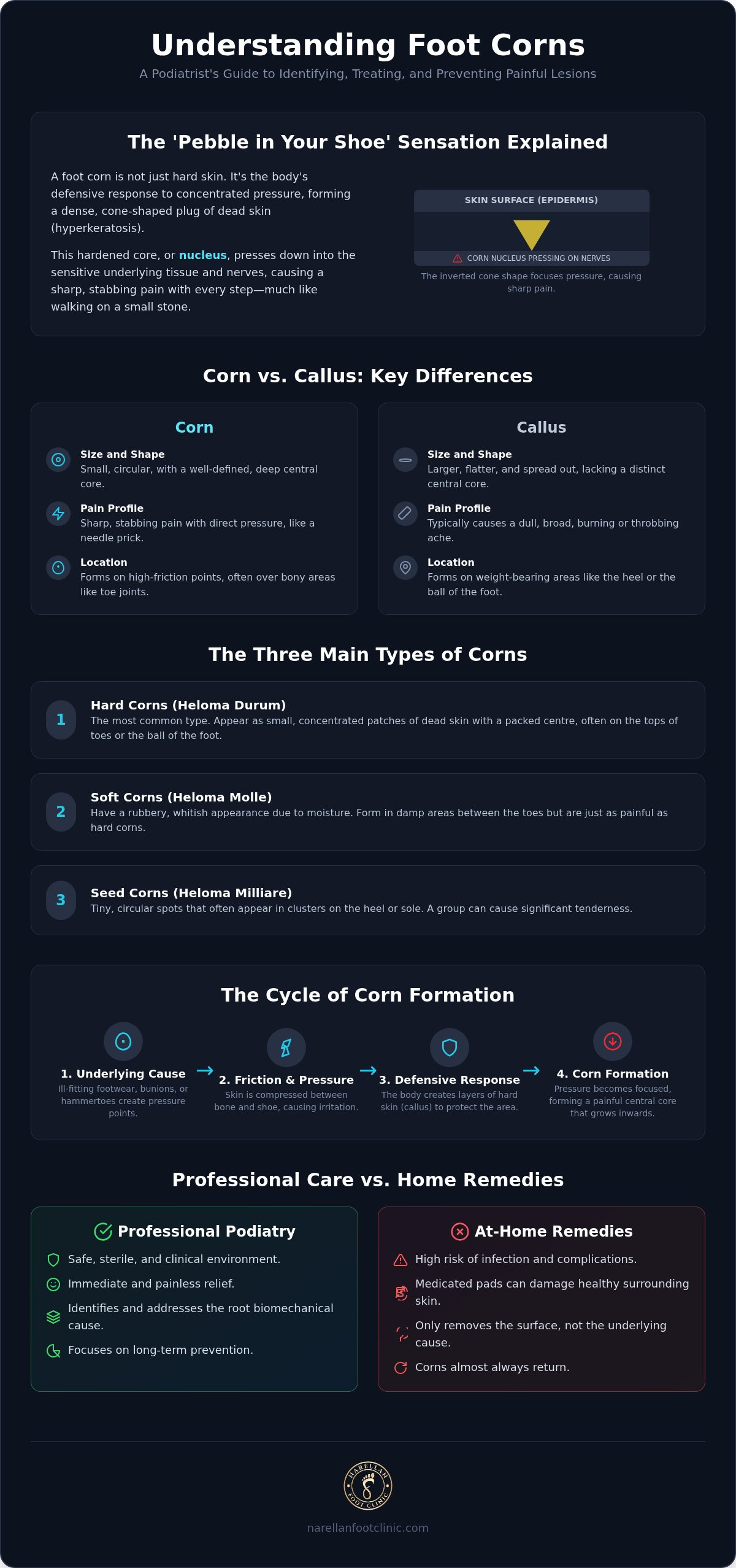
- Learn why foot corns are more than just dry skin and how the “plug” of thickened tissue creates that sharp, pebble-like sensation with every step.
- Discover how a corn removal podiatrist provides immediate, painless relief by safely clearing the lesion in a sterile clinical environment.
- Understand the risks of home remedies and why pharmacy-bought medicated pads can accidentally damage the healthy skin surrounding the corn.
- Find out why corns often return and how a professional biomechanical assessment can help identify the underlying pressure points in your footwear or gait.
- Get a clear preview of the clinical removal process, which is typically quick and comfortable because the tissue being treated is already dead skin.
What is a Foot Corn? Understanding the “Pebble in Your Shoe”
Many patients come into the clinic describing a sensation that feels exactly like a small, sharp stone is stuck in their shoe. This discomfort isn’t just in your head; it’s a physical reality caused by a localised area of hyperkeratosis. Technically, to understand what a foot corn is, we must look at how the skin reacts to repeated, concentrated pressure. Unlike a callus, which spreads out over a larger surface, a corn develops a central “plug” or nucleus. This hardened core is shaped like an inverted cone, with the point pressing directly into the sensitive nerves of the foot every time you take a step.
A foot corn is essentially the body’s defensive response to concentrated friction, creating a dense barrier to protect the underlying tissue. While this starts as a helpful way to shield your feet, the resulting buildup eventually becomes the source of the pain itself. While a callus might feel like a broad, burning sensation, the pain from a corn is typically sharp and pinpoint. Seeking out a professional corn removal podiatrist is the most efficient way to address this, as we can safely remove that painful central core without damaging the healthy skin around it.
The Three Main Types of Corns
Not all corns are created equal, and identifying which variety you’re dealing with is the first step toward lasting relief. Our clinical assessments focus on these three common presentations:
- Hard Corns (Heloma Durum): These are the most common type. They usually appear as small patches of thickened, dead skin with a packed centre, often found on the tops of toe joints or the ball of the foot.
- Soft Corns (Heloma Molle): These have a rubbery, white appearance because they form in moist areas between the toes. Sweat keeps them soft, but they’re no less painful than their hard counterparts.
- Seed Corns (Heloma Milliare): These are tiny, circular spots that often appear in clusters on the heel or the sole. While a single seed corn might be painless, a group of them can feel quite tender.
Corn vs Callus: How to Tell the Difference
It’s very common to confuse these two conditions, but they have distinct characteristics that require different management strategies. A corn removal podiatrist looks for these specific markers during your consultation:
- Size and shape: Corns are smaller, circular, and possess a deep, defined centre. Calluses are larger, flatter, and lack a distinct core.
- Pain profile: Corns hurt with direct, vertical pressure, similar to a needle prick. Calluses usually result in a dull, throbbing ache after a long day on your feet.
- Location: Calluses typically form on weight-bearing areas like the heel or the outer edge of the foot. Corns appear on high-friction points where shoes rub against bony prominences.
Understanding these differences helps us move you from a state of worry to one of comfort. If you’re tired of that “pebble” sensation, a professional assessment is the safest path back to pain-free walking.
Why Corns Form: Pressure, Friction, and Foot Mechanics
Corns don’t appear without a specific reason. They’re the end product of a relentless physical equation: Pressure + Friction = Thickened Skin. When your skin is trapped between a bony prominence and the hard interior of a shoe, your body attempts to shield itself by layering up tough tissue. Narrow toe boxes and high heels are the primary offenders, as they compress the toes into unnatural shapes and force weight onto the forefoot. Beyond footwear, structural changes like bunions or hammertoes create permanent “hot spots” that are highly susceptible to friction. If your gait is slightly off, you might be shifting your entire body weight onto a tiny patch of skin, making a visit to a corn removal podiatrist a regular necessity for many people.
This buildup of skin is a protective mechanism that has simply gone too far. As the skin thickens, it takes up more space inside your shoe, which in turn increases the pressure on the area. This creates a painful cycle where the corn continues to grow deeper and more compact. Understanding that the corn is a symptom of mechanical stress is vital for effective treatment. Without addressing the source of the rubbing, any removal will only be a temporary fix.
The Role of Biomechanics in Corn Development
The way your feet move determines where the most stress is placed during your daily activities. If you have particularly high arches or your feet tend to roll inwards, a condition known as overpronation, you aren’t distributing weight effectively across the foot. This misalignment causes specific areas to bear the brunt of every step, leading to recurring lesions. Simply removing the corn provides temporary relief, but the underlying pressure remains. We use a Biomechanical Assessment to identify these mechanical failures. By understanding the “why” behind the pressure, we can implement strategies like custom orthotics to offload those areas permanently.
Lifestyle Factors in Greater Western Sydney
Living and working in Greater Western Sydney presents unique challenges for foot health. Many locals are in trades or service industries, spending long shifts on concrete floors or uneven sites in heavy work boots. This constant loading is a major catalyst for corn formation. Even our leisure time can be a factor; a brisk weekend walk at Mount Annan in older joggers can quickly turn a small rub into a painful hard corn. We also see a spike in issues during the warmer months. When we switch to thongs or sandals, the lack of support and increased toe-gripping can trigger soft corns between the toes. If you’ve noticed a new sore spot, reaching out to the Narellan Foot Clinic for an early check-up can prevent a minor irritation from becoming a debilitating pain.
Professional Removal vs Home Remedies: Why Safety Matters
When the sharp sting of a corn makes every step a misery, the temptation to find a quick fix at home is understandable. Many people reach for tweezers, nail clippers, or even sewing needles in an attempt at “bathroom surgery” to dig out the painful centre. This approach is fraught with danger, as unsterile tools and imprecise movements can easily lead to deep cuts and serious infections. Instead of finding relief, you risk a trip to the doctor for antibiotics and a much longer recovery time. Choosing a professional corn removal podiatrist ensures that the lesion is managed with the right tools and clinical expertise, moving you safely from a state of worry to one of comfort.
At Narellan Foot Clinic, our podiatrists operate in a fully sterilised medical environment to ensure your safety and peace of mind during every procedure. This clinical setting is vital for preventing cross-contamination and managing the foot health of high-risk patients. While a home environment is filled with bacteria, our clinic provides a sanctuary where your feet are treated with the same level of hygiene as any minor surgical theatre.
The Dangers of Medicated Corn Pads
It’s a common sight in any local chemist: shelves stocked with medicated corn pads and liquid removers. These products typically rely on salicylic acid to soften the thickened skin, but they are far from a “set and forget” solution. The primary issue is that the acid cannot distinguish between the dead tissue of the corn and the healthy, sensitive skin surrounding it. If the pad shifts slightly during the day, the acid can cause significant chemical burns on the healthy tissue, leading to intense pain and inflammation.
For individuals living with diabetes or peripheral vascular disease, these over-the-counter treatments are strictly prohibited. Because these conditions often involve reduced sensation or poor circulation, a chemical burn can quickly escalate into a non-healing ulcer without the patient even realising it. A professional corn removal podiatrist provides a much safer alternative by physically removing the corn without the need for corrosive chemicals that endanger the surrounding skin.
The Clinical Advantage: Precision and Sterility
The difference between a home remedy and professional care lies in the precision of the instruments used. We utilise single-use, sterile surgical blades to perform a process called debridement. Because the corn itself is made of dead skin cells, this procedure is generally painless and provides immediate relief the moment the central pressure is cleared. We don’t just “mask” the pain; we physically remove the source of the discomfort with anatomical accuracy.
- Specialised Tools: Beyond scalpels, we use high-speed clinical burs to smooth the skin, leaving the area feeling soft and comfortable.
- Expert Assessment: We evaluate the health of the underlying skin to ensure there are no hidden issues like bursitis or underlying infections.
- No Mess, No Fuss: You walk out of the clinic with a clean, dressed site and immediate mobility, avoiding the messy ointments and sticky tapes of home kits.
By trusting a “safe pair of hands” at our clinic, you’re not just getting a quick fix. You’re receiving a comprehensive treatment that prioritises your long-term wellness and mobility.
What to Expect During Your Corn Removal Appointment
Entering a clinic can feel daunting if you’re expecting a painful procedure. However, a session with a corn removal podiatrist is remarkably straightforward and comfortable. Because the corn is composed entirely of dead skin cells, the treatment involves no needles and very little, if any, sensation. Most patients feel an almost instant sense of relief as the pressure is lifted from the sensitive nerves beneath the lesion. We focus on a gentle, methodical approach that prioritises your comfort, ensuring you walk out feeling significantly better than when you arrived.
Your appointment begins with a thorough visual and physical assessment of your feet. We don’t just look at the corn; we examine your skin integrity, circulation, and the way your toes sit within your footwear. This allows us to determine if the corn is a simple hard corn or a more complex soft corn hidden between the toes. By understanding the specific nature of your discomfort, we can tailor the treatment to provide the most effective results.
Step-by-Step: From Consultation to Relief
We believe in transparency, so you’ll always know exactly what is happening during your treatment. The clinical process follows a logical sequence designed for both safety and efficacy:
- Step 1: Thorough cleaning and skin preparation. We begin by sanitising the area to maintain a sterile environment, which is a critical step that home treatments often skip.
- Step 2: Gentle removal of the hard skin layers. Using specialised, single-use instruments, we carefully perform debridement. This involves thinning down the overlying hard skin to reveal the central core.
- Step 3: Careful “flicking out” of the central corn core. This process, known as enucleation, is the most vital part. We precisely remove the hardened “plug” that causes the sharp pain.
- Step 4: Smoothing the area with a clinical podiatry drill. We use a fine, high-speed burr to smooth the edges of the skin, leaving the area feeling soft and preventing immediate snagging on socks.
Immediate Aftercare and Comfort
Once the corn is removed, we focus on protecting the area while the skin recovers. We often apply specialised protective padding, sometimes called “donuts,” which deflects pressure away from the treated site. This padding provides a cushion that allows you to return to your daily activities immediately without the fear of the pain returning the moment you put your shoes back on. We’ll also provide tailored advice on moisturising and skin maintenance to keep the tissue supple and resilient.
For those looking to maintain their results long-term, our guide on General Foot Care offers excellent tips on daily skin health. If you are ready to experience this immediate relief for yourself, you can book your appointment at Narellan Foot Clinic today and let our experienced team return you to pain-free walking.
Preventing Recurrence: Moving Beyond the Quick Fix
While the immediate relief provided by a corn removal podiatrist is life-changing, the ultimate goal is to ensure that the pain doesn’t return. If you simply clear the corn but continue to wear the same tight shoes or walk with the same biomechanical imbalances, the skin will inevitably thicken again. Think of a corn as a biological alarm system; it’s your body’s way of telling you that a specific area of your foot is under too much stress. To silence that alarm for good, we must look at pressure offloading, which involves redirecting force away from the vulnerable site and onto parts of the foot designed to handle it.
A professional footwear review is a cornerstone of this preventative strategy. Often, patients are surprised to learn that their “comfortable” joggers or work boots are actually contributing to the problem because of a narrow toe box or lack of structural support. By identifying these external triggers, we can help you make informed choices that protect your feet. We view ourselves as your long-term partners in foot health, moving beyond a one-off treatment to provide a sustainable path toward mobility and comfort.
Custom Orthotics and Pressure Redistribution
For many, the most effective way to permanently address the root cause of a corn is through Custom Orthotics. Unlike the generic, soft insoles you might find at a local chemist, clinical orthotics are bespoke medical devices designed from a precise 3D model of your feet. They don’t just provide a bit of extra cushioning; they actively correct your gait and realign your joints to ensure weight is distributed evenly. This redistribution is vital for chronic corn sufferers, as it removes the mechanical friction that forces the skin to harden in the first place. Over time, this leads to improved gait efficiency and prevents the development of secondary issues like joint strain or callus buildup.
The Narellan Foot Clinic Approach
At Narellan Foot Clinic, we’ve spent over 25 years helping the local community transition from a state of constant worry to one of complete physical freedom. We understand that effective healthcare should be both expert and accessible. That’s why we offer on-the-spot HICAPS claims, allowing you to receive your private health rebate immediately at the time of your consultation. Our clinical environment is a safe sanctuary where your concerns are heard and your mobility is prioritised. If you’re tired of the “quick fix” and want to stop the cycle of corn pain once and for all, we invite you to book a comprehensive assessment. Let us provide the safe pair of hands you need to return to your daily activities without hindrance.
Step Forward into Lasting Comfort
Living with the constant, sharp sting of a foot corn can drain your energy and limit your daily lifestyle. We have explored how professional clinical care provides a safe, painless alternative to risky home treatments, allowing you to walk without that “pebble in your shoe” sensation. By identifying the specific biomechanical pressures that cause your skin to thicken, a dedicated corn removal podiatrist ensures that you aren’t just getting a temporary fix; you’re securing a long-term solution for your foot health.
With over 25 years of experience serving the local community, Narellan Foot Clinic offers a fully sterilised medical environment and the convenience of on-the-spot HICAPS and Medicare claims. You don’t have to suffer through another painful day of limping or discomfort. Book your professional corn removal at Narellan Foot Clinic today and experience the transition from worry to complete physical ease. We are here to provide the safe pair of hands you need to get back to your favourite activities with confidence and freedom.
Frequently Asked Questions
Is corn removal by a podiatrist painful?
No, the procedure is generally painless because the corn itself consists of dead skin cells that lack nerve endings. Most patients at our Narellan clinic experience immediate relief the moment the central core is removed. We use sterile, precision instruments to ensure the process is gentle and safe. You’ll likely find the sensation much more comfortable than the sharp, stabbing pain you feel while walking with the corn intact.
How long does a corn removal appointment take?
A standard appointment with a corn removal podiatrist typically takes between 20 and 30 minutes. This timeframe allows us to conduct a thorough assessment of your foot health, identify the type of corn, and perform the clinical removal. We also use this time to discuss preventative strategies, such as footwear changes or padding, to help you stay mobile and comfortable long after you leave our sterilised clinical environment.
Will my corn grow back after it is removed?
Corns will often return if the underlying cause of pressure or friction isn’t addressed. While clinical removal provides instant relief, it is only half of the solution. To prevent recurrence, we may recommend a biomechanical assessment to identify how your foot structure or gait is creating “hot spots.” Using custom orthotics can help redistribute your weight, permanently shifting the pressure away from the vulnerable area and stopping the cycle of pain.
Can I use corn pads if I have diabetes?
No, you should never use medicated corn pads if you have diabetes. These pads contain salicylic acid which can burn healthy skin and lead to serious complications like non-healing ulcers or infections. Because diabetes can reduce sensation in your feet, you might not feel the burn until damage is already done. We strongly recommend a professional diabetic foot assessment to manage any lesions safely in our sterile Narellan clinic.
What is the difference between a corn and a plantar wart?
While they can look similar, a corn is caused by mechanical pressure, whereas a plantar wart is a viral infection. A corn typically has a hard central “plug” and hurts when pressed directly. Warts often have tiny black dots and tend to be more painful when squeezed from the sides. Our experienced team can accurately diagnose the lesion and provide the appropriate treatment, whether it’s general foot care or specialised plantar wart treatment.
Do I need a referral to see a podiatrist for corn removal?
You don’t need a referral to visit us as a private patient in Narellan, Campbelltown, or the surrounding suburbs. You can simply book an appointment and use our on-the-spot HICAPS facility for immediate health fund rebates. However, if you’re seeking a rebate through Medicare, you’ll need a specific Chronic Disease Management plan from your GP. We’re happy to process these claims on-the-spot to make your care as accessible as possible.
Can I walk normally immediately after the procedure?
Yes, you can walk normally and return to your daily activities immediately after the procedure. In fact, most of our patients find they can walk much better because the source of their sharp pain has been removed. We often apply protective padding or “donuts” to the area to ensure your foot remains cushioned and comfortable inside your shoes. There’s no downtime required, making it an efficient solution for busy locals.
How much does professional corn removal cost in Narellan?
The cost of treatment at our Narellan clinic depends on the complexity of the corn and whether you require a full biomechanical assessment or general foot care. While we don’t provide fixed quotes over the phone, we offer on-the-spot HICAPS and Medicare claims to reduce your out-of-pocket expenses. Our focus is on providing high-quality, professional care in a sterile environment, ensuring you receive the best possible outcome for your long-term mobility and wellness.



3 Comments
[…] of pain, these minor injuries can quickly develop into non-healing ulcers. This is why professional corn removal is vital. Attempting to treat corns or calluses at home with “bathroom surgery” can […]
[…] “at-home” remedies for painful spots, only to find the problem returns. We provide safe corn removal using precision instruments to clear the lesion and identify the underlying pressure point. Our […]
[…] corn pads often contain acids that can damage healthy skin and lead to ulcers. Consulting a corn removal podiatrist for safe, clinical treatment is a far more effective approach than risking infection with home […]