
Imagine waking up in your Campbelltown home and, for the first time in years, the floor doesn’t feel like a bed of hot coals. For many local seniors, that first step out of bed is a daily hurdle, defined by a stubborn stiffness that makes even a short walk to the kettle feel like a chore. It’s completely natural to feel anxious about losing your independence when every trip to Macarthur Square is overshadowed by persistent aches and the struggle to find comfortable footwear. Finding the right arthritic foot care Campbelltown doesn’t have to be a source of stress or confusion.
We understand that you want to stay active and involved in your community without the constant worry of pain or the looming fear of surgery. This article provides a comprehensive 2026 checklist to help you manage arthritis-related discomfort through proven, non-surgical podiatry insights. We will explore how professional biomechanical assessments and custom orthotics can restore your comfort. You’ll gain a clear understanding of your treatment options and learn how to find a local podiatrist who truly understands the unique needs of seniors.
Key Takeaways
- Learn why specialised arthritic foot care Campbelltown focuses on preserving joint function rather than just masking symptoms to ensure your long-term mobility.
- Discover how a biomechanical assessment uses gait analysis to pinpoint the specific pressure points causing your morning stiffness and walking discomfort.
- Access a structured senior’s checklist for daily foot observations and monthly clinical milestones to help you stay ahead of arthritis-related changes.
- Understand how custom orthotics and professional general foot care work together to redistribute pressure and maintain healthy skin and nails.
- Find out why choosing a clinic with over 25 years of local experience ensures you receive a methodical, patient-centric approach to managing chronic pain.
Understanding Arthritic Foot Care in Campbelltown
For many seniors across the Macarthur region, the simple act of walking to the letterbox or browsing the stalls at a local market has become a daunting task. You might feel that your world is shrinking as foot pain dictates where you can go and how long you can stay there. Specialized arthritic foot care Campbelltown is a dedicated branch of podiatry that focuses on joint preservation. Rather than simply masking the pain, this approach seeks to protect the structural integrity of your feet so you can remain an active participant in your community.
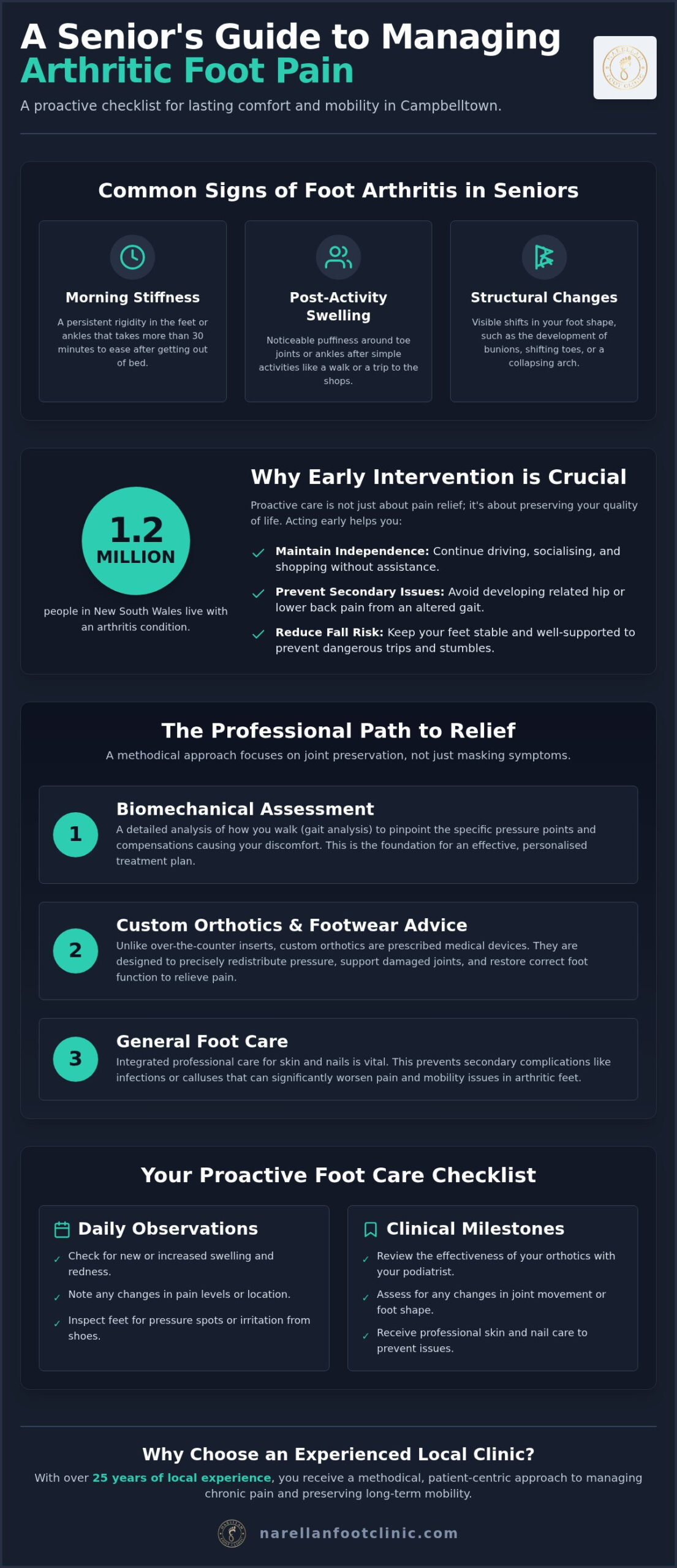
To find the right path forward, it helps to understand the foundational question: What is Arthritis? In New South Wales, approximately 1.2 million people live with this condition. While there are many variations, most seniors experience one of two types. Osteoarthritis is often described as “wear and tear,” where the protective cartilage between bones thins over time. Inflammatory arthritis, such as rheumatoid arthritis, involves the immune system attacking the joint lining. Both conditions can significantly alter how you move, but a methodical care plan can help manage these changes effectively.
Common Symptoms Seniors Face
Arthritis rarely appears overnight. It often starts as a dull ache that gradually begins to interfere with your daily routine. Recognising these signs early allows for more effective management before your mobility is severely restricted. You should look out for:
- Morning stiffness: A persistent rigidity in the feet or ankles that takes more than 30 minutes to “loosen up” after you get out of bed.
- Post-activity swelling: Noticeable puffiness around the toe joints or ankles, especially after a trip to the shops or a walk through the park.
- Structural changes: Visible shifts in your foot shape, including the development of bunions, shifting toes, or a collapsing arch.
Why Early Intervention Matters
Waiting until you can no longer walk comfortably often limits your treatment options. Seeking professional advice early is about maintaining your independence and your ability to drive, socialise, and shop without assistance. Proactive care helps prevent secondary issues, such as hip or lower back pain, which often develop when you change your gait to avoid a sore foot. It also plays a vital role in fall prevention, as stable feet are your primary defence against trips and stumbles. Integrating regular general foot care into your routine ensures that skin and nail health are maintained, reducing the risk of infections that can complicate arthritic conditions. By acting now, you can often reduce your long-term reliance on heavy pain medications and keep your feet moving comfortably for years to come.
Why a Biomechanical Assessment is Vital for Arthritis
Arthritis doesn’t just cause pain; it fundamentally changes how your body interacts with the ground. When a joint becomes stiff or inflamed, your foot naturally attempts to compensate by shifting weight to other areas. This often results in “hot spots” of high pressure that lead to secondary aches in your knees or lower back. Professional arthritic foot care Campbelltown focuses on these mechanical shifts to ensure your feet can still absorb shock effectively. By understanding these changes, we can develop a strategy that preserves your joint health and keeps you moving.
A detailed clinical review is the first step in managing Arthritis of the Foot and Ankle. When your joints aren’t aligned, every step you take can increase inflammation. An experienced podiatrist looks beyond the surface to see how your entire lower limb is functioning. This methodical approach ensures that your management plan isn’t just a temporary fix but a long-term solution for maintaining your independence. A thorough podiatry consultation can clarify these mechanical issues and provide a clear path toward lasting relief.
The Gait Analysis Process
The core of a biomechanical assessment is gait analysis. This involves carefully observing you as you walk to identify subtle compensations you might be making to avoid pain. We look for:
- Clinical Observation: Mapping exactly where your foot hits the ground and how it rolls through each step to find areas of overload.
- Pressure Mapping: Identifying “hot spots” where the joints are under excessive stress during your daily walk.
- Compensatory Movements: Checking if your gait has changed in a way that puts your balance at risk or causes muscle fatigue.
Identifying Joint Restrictions
Once we understand how you move, we need to determine why those movements are occurring. This requires a hands-on evaluation of your joint and muscle health. We focus on:
- Manual Testing: Checking the range of motion in each joint to see exactly where arthritis has caused restrictions.
- Muscle Strength: Identifying any muscle weakness that contributes to joint instability, which is a common cause of trips and falls.
- Footwear Assessment: Reviewing your current shoes to ensure they offer the stability needed to protect arthritic joints.
By aligning the joints correctly, we can significantly reduce the internal friction that leads to swelling. This logical path from assessment to alignment is the most effective way to manage chronic discomfort without immediately resorting to more invasive options.
The Senior’s Checklist: Managing Arthritis Foot Pain
Managing arthritis is a shared journey. While clinical treatments are essential, your daily habits at home form the foundation of your mobility. Think of this checklist as your personal toolkit for arthritic foot care Campbelltown. It’s designed to help you monitor changes without feeling overwhelmed by the process. By staying observant, you can catch small issues before they interfere with your ability to enjoy a walk through the local botanical gardens or a trip to the shops.
Daily and Weekly Self-Checks
Consistency is your best ally. Taking a few minutes each day to inspect your feet can prevent minor irritations from becoming significant health hurdles. Focus on these three areas:
- Skin Irritation: Use a mirror to check the soles of your feet for red spots or calluses. Arthritis can change your foot shape, causing shoes to rub in new, uncomfortable ways.
- Swelling Patterns: Monitor your joints in the morning versus the evening. If you notice that swelling doesn’t subside after a night’s rest, your joints may be under excessive strain.
- The 1-10 Pain Scale: Be honest about your discomfort during daily activities. If your usual “level 3” ache is creeping toward a 7, it’s a clear sign that your current management strategy needs a professional review.
Footwear and Environment Audit
Your environment plays a massive role in how your joints feel. A quick audit of what you wear around the house and down the street can yield immediate improvements in your comfort levels. Check the following:
- The Sole Test: Flip your shoes over and look at the tread. If the soles are worn thin or unevenly, they won’t provide the shock absorption your arthritic joints desperately need.
- Slipper Safety: Most falls happen at home. Ensure your slippers have a firm back and a non-slip grip rather than being loose, “scuff” style footwear.
- Sock Elasticity: Avoid socks with tight bands at the top. These can restrict circulation and cause unnecessary pressure on swollen ankles.
When to See a Professional
While home care is vital, there are specific “trigger” moments when you should seek clinical advice. You don’t have to wait for a crisis to ask for help. Seeking expert podiatric care for arthritis is recommended if you experience any of the following:
- Pain that keeps you awake at night or doesn’t improve with rest.
- A sudden change in your balance or a feeling that your ankle might “give way.”
- Visible redness, heat, or new lumps around the joints.
- Difficulty performing basic foot hygiene, such as trimming your toenails, due to joint stiffness.
Early action is the most effective way to protect your independence. If you’ve ticked off several items on this list and still feel restricted, it’s time to move from home management to a professional care plan.
Evidence-Based Treatments for Arthritic Feet
Modern podiatry offers a range of non-invasive tools designed to manage chronic joint pain effectively. While the senior’s checklist helps you monitor your symptoms at home, professional arthritic foot care Campbelltown provides the active intervention required to preserve your joint function. These treatments don’t work in isolation; they are part of a coordinated strategy to address both the structural alignment of your feet and the health of the surrounding tissues. For instance, MoveMed offers exercise physiology and hydrotherapy that complement podiatric care by strengthening the muscles that support your joints. By combining these methods, we often help seniors avoid or significantly delay the need for invasive surgical procedures, allowing for a smoother transition from a state of worry to one of comfort and ease.
Many people initially try chemist-bought insoles, but these mass-produced items often lack the specific support required for arthritic joints. Custom orthotics are precisely engineered based on the findings of your unique biomechanical assessment. For arthritic feet, we focus on high-grade cushioning to reduce impact and targeted arch support to stabilise shifting joints. This level of customisation ensures that pressure is redistributed away from painful “hot spots.” The fitting process involves detailed clinical measurements to ensure the device sits perfectly in your footwear, providing a level of reliability and results that off-the-shelf options simply cannot match.
Complementary Therapies
Beyond structural support, we utilise modern therapies that target soft tissue tension and inflammation. Dry needling is particularly effective for releasing tight muscles that have become overworked while compensating for joint stiffness. Manual therapy and gentle joint mobilisation can also help maintain your range of motion, making it easier to stay active in the community. For those seeking broader relief from compensatory muscle tension, Body Therapist provides remedial massage services that can support your overall mobility. We often provide advice on anti-inflammatory topical treatments or warm saline soaks to manage flare-ups between visits. These tools, alongside regular general foot care, ensure your skin and nails remain healthy. Maintaining good skin integrity is vital for seniors, as it prevents secondary irritations that can complicate your overall mobility plan.
Choosing the right provider for your long-term health is a significant decision, especially when chronic pain is involved. Narellan Foot Clinic, led by principal podiatrist David J. Miller, has been a trusted cornerstone of the Macarthur community for over 25 years. Providing specialised arthritic foot care Campbelltown seniors can rely on requires more than just clinical expertise; it demands a deep understanding of the local community’s needs. Our clinic is established as a reliable sanctuary, offering a professional yet warm environment where you are treated as an individual rather than just another appointment on a list.
We pride ourselves on maintaining a fully sterilised, contemporary clinical environment that meets the highest standards of healthcare. This commitment to safety, combined with a patient-centric approach, ensures that every visitor feels they are in a “safe pair of hands.” We focus heavily on the transition from a state of worry and physical restriction to one of comfort and physical freedom. Our methodical way of working ensures that every treatment plan is grounded in experience and tailored to your specific lifestyle goals.
A Reassuring Clinical Experience
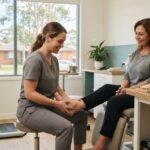
During your first consultation for arthritic pain, we focus on listening to your story. We understand that morning stiffness and the struggle to find comfortable shoes are more than just minor inconveniences; they are barriers to your independence. Our team provides gentle, compassionate care, ensuring that every assessment is conducted at a pace that feels comfortable for you. We don’t believe in rushed consultations. Instead, we take the time to explain our findings clearly, using accessible language that avoids unnecessary medical jargon.
We also work closely with your GP to ensure your foot care is integrated into your broader health strategy. For seniors with chronic conditions like arthritis, we facilitate Medicare Enhanced Primary Care (EPC) plans. As of 1 July 2026, patients on a GP Management Plan can receive a Medicare rebate of $64.30 for up to five podiatry visits per calendar year. This collaboration makes professional care more accessible, allowing you to focus on your recovery rather than the paperwork. Our goal is to make the entire process, from the first greeting to the final treatment, feel seamless and supportive.
Booking Your Appointment
We’ve made it simple for local seniors and their families to access the care they need. Our Narellan centre is conveniently located to serve residents across the Macarthur region, including Campbelltown and Harrington Park. For added convenience, we offer on-the-spot health fund claims via HICAPS. This means you can claim your private health rebate immediately and only pay the remaining gap, removing the stress of manual claiming. Our efficient systems are designed to respect your time while ensuring you receive thorough, attentive care.
Whether you are looking for a biomechanical assessment to address walking pain or need regular general foot care to maintain your mobility, our seasoned experts are here to guide you. You don’t have to accept foot pain as an inevitable part of getting older. Take the first step toward a more active, comfortable future by contacting our friendly team. Regain your mobility and return to your daily activities without hindrance by booking your consultation today.
Take the Next Step Toward Lasting Mobility
Managing arthritis is a journey that requires both daily vigilance and professional expertise. By using the senior’s checklist and understanding the value of a biomechanical assessment, you’ve already taken the first steps toward reclaiming your comfort. Quality arthritic foot care Campbelltown focuses on more than just temporary relief; it’s about preserving your joints so you can continue enjoying walks through Macarthur Square or local parks without the fear of pain holding you back.
David J. Miller and the team at Narellan Foot Clinic bring over 25 years of experience to every consultation, ensuring you receive the personalised care you deserve. We provide a safe, welcoming environment where your long-term wellness is our primary goal. With HICAPS available for on-the-spot health fund claims, accessing expert support is straightforward and stress-free. It’s time to move away from the worry of morning stiffness and toward a future of physical freedom. Book your arthritic foot assessment at Narellan Foot Clinic today and let us help you stay active, independent, and comfortable for years to come.
Frequently Asked Questions
Is arthritic foot pain just a normal part of getting older?
No, persistent foot pain is not an inevitable part of ageing. While joint changes are common as we get older, pain that limits your mobility or makes it difficult to get out of bed is a signal that your feet need professional attention. Effective arthritic foot care Campbelltown focuses on reducing this discomfort so you can stay active. You don’t have to accept aches as your new normal; intervention can often restore your comfort.
Can podiatry really help with rheumatoid arthritis in the feet?
Yes, podiatry is a vital component of managing rheumatoid arthritis (RA). Because RA involves systemic inflammation, it can cause significant changes to the joints and soft tissues in your feet. We focus on using custom orthotics to protect the joints from excessive pressure and managing skin health to prevent complications. These conservative treatments aim to reduce flare-ups and maintain your ability to walk comfortably despite the challenges of an autoimmune condition.
How much does a podiatry visit cost with a Medicare EPC plan?
If you have a Chronic Disease Management plan from your GP, you are eligible for a Medicare rebate. As of 1 July 2026, the rebate amount is $64.30 for up to five visits per calendar year. While this significantly reduces your out-of-pocket expenses, the final cost will depend on the specific treatment provided during your consultation. We facilitate these claims on-the-spot to make the process as simple as possible for local seniors.
Will I need to buy expensive new shoes if I get custom orthotics?
You don’t always need to replace your entire wardrobe of shoes. Custom orthotics are designed to be versatile and can often fit into your existing supportive footwear, such as walking shoes or firm-soled boots. During your assessment, we review your current footwear to see what works and what might need replacing. Our goal is to ensure your orthotics provide maximum stability without forcing you into unnecessary purchases that don’t suit your lifestyle.
How often should a senior with arthritis see a podiatrist?
The frequency of your visits depends on the severity of your symptoms and your mobility goals. Many seniors with arthritis benefit from a general foot care appointment every six to ten weeks to maintain nail and skin health. If you are using custom orthotics, we typically recommend a biomechanical review once a year to ensure your alignment is still optimal. Regular check-ups allow us to catch small changes before they become painful hurdles.
What is the difference between a podiatrist and an orthopaedic surgeon for foot pain?
A podiatrist focuses on conservative, non-surgical treatments to manage pain and improve function. This includes biomechanical assessments, custom orthotics, and dry needling. An orthopaedic surgeon is a medical specialist who performs invasive procedures, such as joint fusions or replacements, when conservative options are no longer effective. Most patients start with a podiatrist to explore every possible path toward relief before considering the risks and recovery time associated with surgery.
Can dry needling help with the stiffness caused by arthritis?
Yes, dry needling is an effective tool for managing the secondary muscle stiffness associated with arthritis. When a joint is stiff, the surrounding muscles often work overtime to compensate, leading to painful trigger points. By using sterile needles to release this tension, we can improve your overall range of motion and reduce the “heaviness” you might feel in your legs. This modern technique is a gentle way to support your long-term wellness and mobility.
Does Narellan Foot Clinic offer on-the-spot health fund claims?
Yes, we provide the convenience of on-the-spot health fund claims through our HICAPS facility. This means you can claim your private health insurance rebate immediately after your appointment and only pay the remaining gap. It’s an efficient system that removes the need for manual paperwork or waiting for refunds. Whether you are from Narellan, Campbelltown, or Harrington Park, our goal is to make your visit as smooth and stress-free as possible.