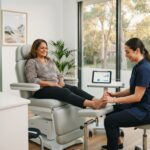

Booking professional foot care shouldn’t feel like a financial gamble, especially when persistent pain is already disrupting your day. If you find podiatry consultation fees NSW clinics charge confusing to compare, you’re certainly not alone. Between deciphering private health fund rebates, worrying about unexpected out-of-pocket gap payments, and wondering whether Medicare covers private clinic visits, getting straightforward answers can feel surprisingly difficult.
You deserve complete clarity before you step into a treatment room. In this guide, you’ll discover how consultation fees work across New South Wales, how to access Medicare rebates through an eligible GP chronic condition management plan, and how to claim private health extras instantly using HICAPS. We’ll also unpack the distinct differences between comprehensive initial assessments, routine reviews, and specialised therapies, helping you invest with confidence in your long-term mobility.
Key Takeaways
- Learn how comprehensive initial appointments differ from routine reviews, and why podiatry consultation fees NSW clinics establish reflect diagnostic precision and clinical safety.
- Find out how an eligible GP chronic condition management referral unlocks Medicare rebates to assist with ongoing lower limb and foot health challenges.
- Discover how to maximise your private health extras cover and minimise out-of-pocket expenses using instant on-the-spot HICAPS claims.
- Identify the core clinical markers of high-quality care, including hospital-grade sterilisation protocols and experienced practitioners committed to your long-term mobility.
Understanding Podiatry Consultation Fee Structures in NSW
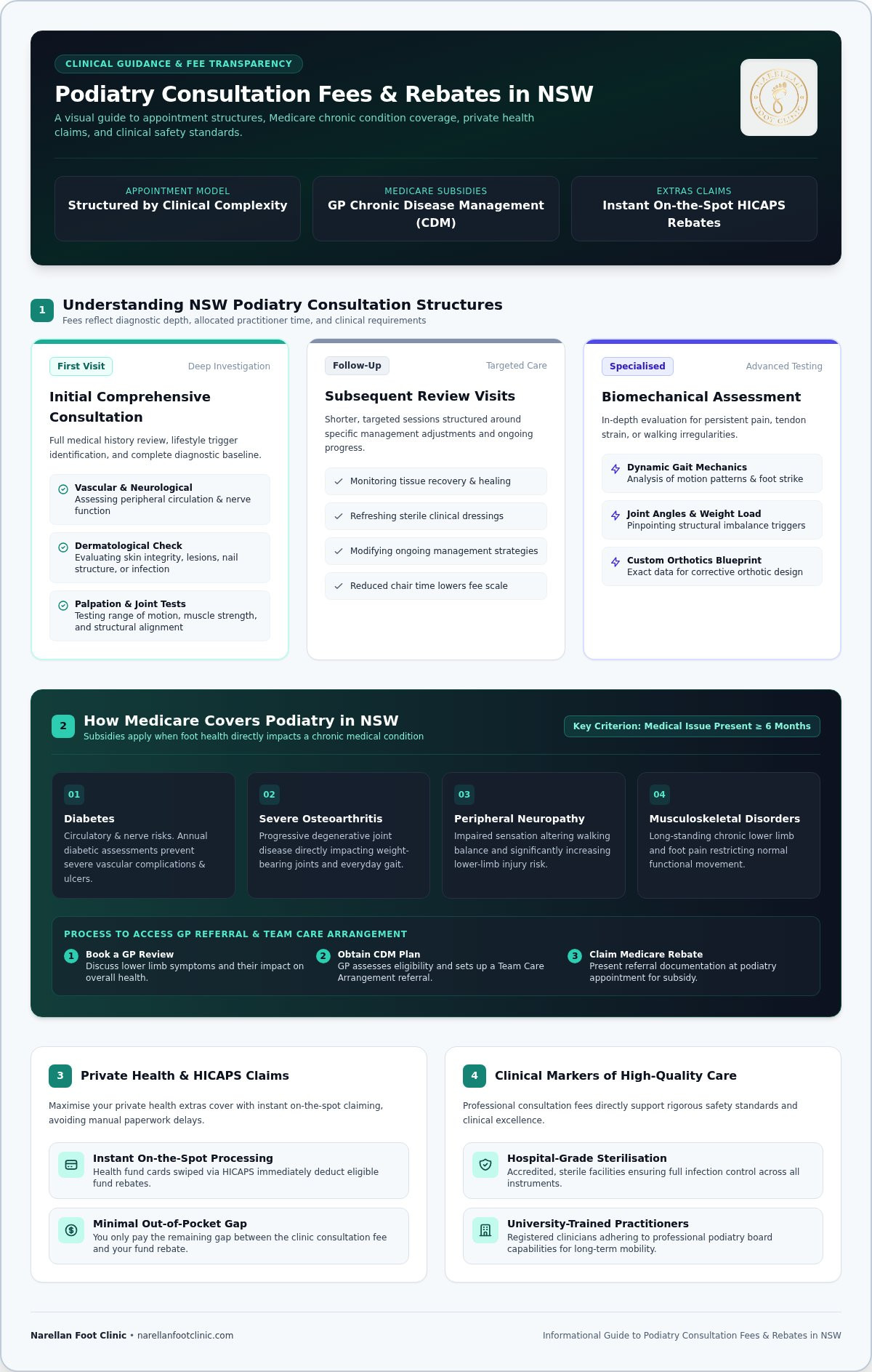
When booking private foot and lower limb care, many patients wonder what actually shapes the fee schedule. Across New South Wales, professional consultation rates are structured around clinical complexity, allocated appointment time, and diagnostic depth. In modern podiatry, fees directly compensate university-trained, registered clinicians working within accredited, sterile facilities, ensuring your treatment is both safe and effective from day one.
Rather than adopting a one-size-fits-all model, practices divide appointments into distinct categories. This structure ensures you only pay for the clinical expertise and time your specific condition requires.
Initial Comprehensive Consultations vs Subsequent Review Visits
An initial visit represents a deep investigative assessment. Your clinician takes time to understand your full medical history, identify lifestyle triggers, and examine your condition thoroughly. This appointment typically involves:
- Vascular and neurological checks: Assessing peripheral circulation and nerve function to rule out underlying systemic complications.
- Dermatological examinations: Evaluating skin integrity, lesions, nail structure, or infection.
- Physical palpation and joint tests: Checking range of motion, muscle strength, and structural alignment to locate the root cause of discomfort.
In contrast, subsequent review visits are shorter and more targeted. These sessions concentrate on monitoring recovery, refreshing sterile dressings, evaluating healing tissue, or modifying management strategies. Because review appointments require less clinical investigation and less time in the chair, their fees are structured accordingly.
Specialised Diagnostic Assessments and Clinical Scope
Certain persistent concerns, such as chronic heel pain, tendon strain, or walking irregularities, demand specialised testing beyond a standard review. In these cases, clinicians schedule a dedicated biomechanical assessment to analyse complex lower limb movement patterns.
During these focused sessions, your practitioner evaluates dynamic gait mechanics, joint angles, and weight distribution. This advanced functional data provides the exact blueprint required to design and prescribe corrective custom orthotics. Transparent practices discuss the scope, objectives, and associated podiatry consultation fees NSW patients can expect before undertaking these advanced diagnostic evaluations, keeping you fully informed at every stage of your care.
How Medicare Covers Podiatry Consultation Fees in NSW
One of the most frequent sources of confusion for patients is how Medicare interacts with private clinical visits. As a general rule, Australia’s public health system does not subsidise routine nail maintenance or general preventative foot care. However, Medicare provides structured financial support when foot health issues directly connect to a chronic medical condition managed by your doctor.
Practitioners maintaining high clinical standards align their care with the professional capabilities for podiatrists, ensuring every treatment plan addresses complex underlying health factors alongside primary mobility goals.
Chronic Disease Management (CDM) Eligibility Criteria
Patients living with a medical issue present for six months or longer may qualify for allied health funding under a GP Chronic Condition Management Plan. Common qualifying diagnoses include:
- Diabetes: Circulatory and nerve issues place feet at high risk. An annual diabetic foot assessment is crucial for preventing severe vascular complications and ulcers.
- Severe osteoarthritis: Progressive degenerative joint disease impacting weight-bearing joints and everyday gait.
- Peripheral neuropathy: Impaired sensation that alters walking balance and increases injury risk.
- Chronic musculoskeletal disorders: Long-standing lower limb pain restricting normal movement.
Navigating the GP Referral and Team Care Arrangement
Accessing government subsidies requires proper medical documentation before you attend your appointment. You can secure support by following these practical steps:
- Book a GP review: Discuss your lower limb symptoms and their impact on your health.
- Establish the care plan: Your doctor prepares a Chronic Condition Management Plan and Team Care Arrangement.
- Confirm service allocation: Your GP allocates up to five allied health visits across the calendar year, which can include podiatry.
- Bring your referral: Present your paperwork at your visit so the practice can register your allocation.
Understanding the Out-of-Pocket Gap Payment
Medicare provides a fixed rebate for each approved consultation, but it rarely covers the entire cost of treatment. Most private practices set their schedule to reflect running clinical overheads and time commitments. The gap payment represents the remaining difference between the rebate and the total fee.
Modern clinics process this seamlessly. By swiping your Medicare card and EFTPOS card through digital terminals, you pay the consultation amount and receive your government rebate back into your bank account on the spot. If you are managing an ongoing condition, connecting with our experienced clinic ensures you receive transparent guidance regarding your eligible entitlements and overall podiatry consultation fees NSW rebate balances.
Private Health Insurance and Rebates: Maximising Your Extras Cover
Most Australians fund their day-to-day podiatric care through private health insurance rather than public programs. While qualifying patients can claim government-backed Medicare rebates for podiatry for chronic illness management, private extras policies offer direct, flexible access without needing a GP referral. You simply book an appointment whenever discomfort arises.
Understanding how private policies interact with podiatry consultation fees NSW practitioners establish makes managing your healthcare budget straightforward. Because every private insurer designs its own ancillary benefit schedules, your exact rebate depends on your selected policy tier, your remaining annual category limit, and whether you have served relevant waiting periods.
How HICAPS On-the-Spot Claiming Operates
Manual insurance claims and tedious claim forms are largely a thing of the past. Accredited clinics use digital claiming networks like HICAPS to process your fund rebate instantly at the reception counter.
The on-the-spot process works through a few simple steps:
- Present your card: Tap or swipe your physical health fund card or digital smartphone wallet pass on the payment terminal.
- Instant calculation: The terminal communicates directly with your health fund, calculating your policy rebate in seconds.
- Settle the gap: The fund pays its allocated contribution directly to the clinic, leaving you to pay only the remaining out-of-pocket balance via EFTPOS or credit card.
This automated claiming eliminates delayed bank deposits and guesswork, letting you know your precise out-of-pocket contribution before walking out the door.
Essential Podiatry Item Numbers and Fund Limits
If you want to know your exact rebate before stepping into the clinic, contact your private health fund and quote the specific clinical item codes. This clarity allows you to evaluate podiatry consultation fees NSW clinics charge against your exact policy coverage.
Common clinical billing codes include:
- Item F004: Represents a comprehensive initial consultation, including clinical history taking, vascular screening, and physical assessment.
- Item F012: Indicates a standard subsequent consultation for ongoing care, treatment progression, or dressing changes.
- Item F111 or F221: Applies to custom orthotic device design, manufacturing, and clinical fitting appointments.
Keep a close eye on your policy calendar. Most health funds operate on a calendar year starting January 1st, though some run on the financial year. Reviewing your remaining allied health limit ensures you make full use of your annual benefits before they reset.
Key Factors Influencing Clinical Podiatry Fees Across NSW
Transparent healthcare relies on understanding what drives clinic operational standards and fee variations. Professional podiatry consultation fees NSW practices establish are not arbitrary figures. Instead, they reflect continuous investments in patient safety, diagnostic infrastructure, and clinical experience that directly protect your mobility.
Practitioner Experience and Clinical Diagnostics
A practitioner’s depth of clinical experience heavily influences treatment outcomes. Senior podiatrists draw on decades of hands-on diagnostic exposure to quickly identify the true source of pain, whether it stems from subtle tendon dysfunction, spinal compensation, or joint misalignment. Getting an accurate diagnosis during your initial consultation prevents unnecessary imaging referrals, delays in recovery, and inappropriate therapies. This clinical efficiency delivers superior long-term health value.
Specialised Treatment Modalities and Advanced Technologies
Modern clinical care requires purpose-built medical environments and specialised tools. Providing advanced therapies, including fungal nail laser treatment, dry needling, and clinical general foot care, demands ongoing education and meticulous protocols. Accredited clinics invest in hospital-grade autoclaves, ultrasonic cleaning equipment, and sterile tracking systems to eliminate infection risks. Reputable clinics maintain full fee transparency, ensuring patients understand any procedural or consumable requirements before treatment begins.
Third-Party Funding: DVA and NDIS Coverage Guidelines
Several Australian statutory schemes follow structured fee schedules, offering clear funding paths for eligible patients navigating podiatry consultation fees NSW clinics maintain:
- Department of Veterans’ Affairs (DVA): Gold Card holders receive fully funded clinical care for lower limb conditions with an active D904 GP referral, leaving no out-of-pocket expense.
- NDIS participants: Those with self-managed or plan-managed funding can allocate funds from their Capacity Building budget to support functional mobility goals and custom foot support.
- WorkCover and CTP claims: Approved workplace or motor accident claims are billed directly to the designated insurer, removing out-of-pocket payment hurdles for recovering workers.
If you need assistance arranging a referral or confirming third-party paperwork, contact our experienced team to ensure your consultation claims are processed smoothly from your very first visit.
Investing in Long-Term Foot Health with Narellan Foot Clinic
Seeking professional treatment for foot or lower limb discomfort is ultimately an investment in your lifelong physical independence. Everyday mobility, balance, and joint health depend heavily on stable foot function. For patients weighing up podiatry consultation fees NSW clinics maintain, the greatest return on investment comes from accurate clinical diagnosis, targeted therapies, and a practitioner committed to genuine, lasting relief.
For more than 25 years, Narellan Foot Clinic has served as a trusted clinical sanctuary for individuals and families across South West Sydney. Guided by principal podiatrist David J. Miller, our clinic combines clinical authority with a compassionate, patient-first approach that removes the anxiety often surrounding clinical appointments and healthcare billing.
Transparent Consultation Care Backed by 25 Years of Experience
We believe every patient deserves absolute clarity regarding their diagnosis, management roadmap, and clinical expenses. Rather than booking open-ended review cycles, we outline an honest treatment plan at the start of your care. This includes:
- Clear recovery timelines: Defining expected appointment intervals so you understand exactly what your treatment involves.
- Evidence-based therapies: Providing realistic guidance on whether simple conservative adjustments or precision custom orthotics are necessary for your recovery.
- Personalised care: Adapting clinical techniques to match the physical demands of active children, busy workers, or seniors aiming to stay active.
Streamlined Booking and Payment Processing in Narellan
Conveniently located to assist residents across Narellan, Camden, Campbelltown, and the wider Macarthur region, our modern clinic simplifies your clinical visit from start to finish. Our welcoming front desk team helps you clarify GP documentation, check fund eligibility, and understand how your private health or Chronic Disease Management benefits apply.
Because we operate digital HICAPS and Medicare claiming terminals on site, you can process your rebates immediately, leaving only the gap payment on the day. Take the first step toward lasting comfort and reliable mobility by booking your consultation today with our experienced clinical team.
Take the Next Step Toward Confident, Pain-Free Movement
Understanding podiatry consultation fees NSW clinics establish doesn’t have to be a complicated puzzle. When you recognise how diagnostic depth shapes initial appointments, how GP referrals unlock valuable Medicare assistance, and how health funds offset routine visits, you can make informed choices about your physical health. Prioritising lower limb comfort ensures you stay active, capable, and mobile for years to come.
At Narellan Foot Clinic, principal podiatrist David J. Miller delivers trusted, patient-focused care backed by over 25 years of continuous service across the Macarthur community. As an independently owned and operated clinic, we believe in open communication and genuine support. With seamless, on-the-spot health fund and Medicare processing via HICAPS, accessing high-quality foot care has never been easier. Book your comprehensive foot consultation today and experience the lasting relief of professional, personalised podiatry.
Frequently Asked Questions
How much does an initial podiatry consultation cost in NSW?
Initial consultation costs vary across New South Wales based on clinical location, the practitioner’s clinical experience, and the diagnostic depth required. An initial visit includes comprehensive history taking, vascular and neurological screenings, and structural assessments. Rather than a flat rate, podiatry consultation fees NSW clinics establish reflect the extended appointment duration and equipment needed to design an accurate treatment plan. Contact your local clinic directly to discuss their specific fee schedule prior to booking.
Can I claim my podiatrist visit on Medicare without a chronic disease referral?
No, Medicare does not subsidise standard private podiatry appointments without an active GP referral. To receive government rebates, you must have an established Chronic Disease Management plan arranged by your general practitioner for a condition lasting six months or longer. If you don’t have this formal care plan, you will need to settle the clinic fee privately or claim a benefit through your private health insurance extras cover.
Does private health insurance cover the full cost of a podiatry appointment?
Private health insurance rarely covers the entire consultation amount, meaning you’ll usually have a modest gap payment. Your rebate depends entirely on your specific insurer, your chosen level of extras cover, and your remaining annual allied health limit. Most accredited clinics use electronic HICAPS terminals, allowing your fund’s rebate to be calculated and deducted instantly at reception so you only pay the outstanding balance on the day.
What is the typical out-of-pocket gap fee for a private podiatry consultation?
The out-of-pocket gap fee represents the exact difference between the practitioner’s consultation charge and the rebate provided by Medicare or your private insurer. Gap amounts vary widely depending on whether you’re claiming via an eligible GP management plan or a premium health fund extras tier. Because health funds maintain different rebate schedules, contacting your insurer with the relevant consultation item number provides exact clarity regarding your out-of-pocket contribution.
Do I need a doctor referral to see a private podiatrist in NSW?
No, you don’t need a doctor’s referral to see a private podiatrist in New South Wales. Private patients can contact a clinic directly to schedule an assessment and claim immediate rebates through private health extras. You only need a formal referral from your GP if you intend to claim Australian Government Medicare rebates under a Chronic Disease Management plan or access fully funded care through the Department of Veterans’ Affairs.
Can I claim podiatry consultation fees through NDIS funding?
Yes, eligible NDIS participants can claim podiatry consultation fees NSW practices charge, provided the treatment relates directly to their disability and mobility goals. Funding is typically drawn from the Capacity Building category of your plan. Self-managed and plan-managed participants can coordinate directly with accredited clinics across South West Sydney and the greater Macarthur region to establish clinical service agreements, ensuring invoices are processed smoothly according to official NDIA pricing arrangements.
Are custom orthotics and surgical procedures included in the standard consultation fee?
No, custom orthotic devices and minor surgical procedures, such as ingrown toenail surgery, are not included in a standard consultation fee. These treatments require dedicated clinical time, custom laboratory fabrication, specialised instruments, and sterile consumables. Reputable clinics discuss these separate treatment fees thoroughly during your initial assessment, ensuring you receive a transparent breakdown of device costs, surgical fees, and applicable private health fund item numbers before proceeding.