

Could ankle pain that feels like a simple sprain have another cause and need a different treatment plan? Finding the right ankle pain treatment Narellan starts with understanding what may be behind the discomfort, especially if it’s affecting your walking, work, exercise or everyday routine.
It can be hard to know whether to rest at home or seek professional advice. Ankle pain may stem from a sprain, tendon irritation, joint changes or other issues. The right care depends on which structures are involved and how your ankle moves under load. This article explains common causes, practical care options and symptoms that call for prompt medical attention, including severe pain or difficulty bearing weight.
You’ll also learn what a podiatry assessment may involve and how its findings can guide an individual plan. At Narellan Foot Clinic, a biomechanical assessment can explore how movement and loading relate to your symptoms. The clinic has served the Narellan community for more than 25 years. Its Narellan location is relevant to people across Sydney, including Campbelltown, Blacktown, Windsor and Penrith.
Key Takeaways
- Ankle pain can affect walking, work and sport. Notice patterns such as stiffness, swelling, tenderness or pain with movement.
- A biomechanical assessment can explore how foot mechanics, movement and loading may contribute to your symptoms.
- Sprains, tendon irritation and joint stiffness can call for different approaches, guided by assessment findings and your goals.
- Ease activities that aggravate your ankle, choose comfortable footwear and arrange an assessment if pain persists or worsens.
- Ankle pain treatment Narellan can help clarify your next steps, with care shaped around your individual needs.
Ankle Pain Treatment in Narellan: Which Symptoms Should You Take Seriously?
Ankle pain can make everyday routines feel uncertain. A short walk, a shift at work or a return to sport may become difficult. Uneven ground can also feel daunting if your ankle is sore or unstable. Swelling, stiffness, tenderness and pain when moving the foot are common patterns, but symptoms vary from person to person.
What ankle pain symptoms can tell you, and what they cannot
Where the pain sits, how it began and which movements aggravate it can help guide an assessment. Sudden pain after a twist may point to an injury, while discomfort that builds gradually may have a different cause. Neither pattern confirms whether a ligament, tendon or joint is involved. An overview of common ankle problems illustrates how varied the possible causes can be.
Notice changes as well as the pain itself. Swelling or bruising after an injury, marked tenderness or difficulty putting weight through the foot deserves careful attention. These signs don’t identify the cause on their own, but they can help a health professional understand what has happened and decide what assessment is appropriate.
When ankle pain needs prompt medical attention
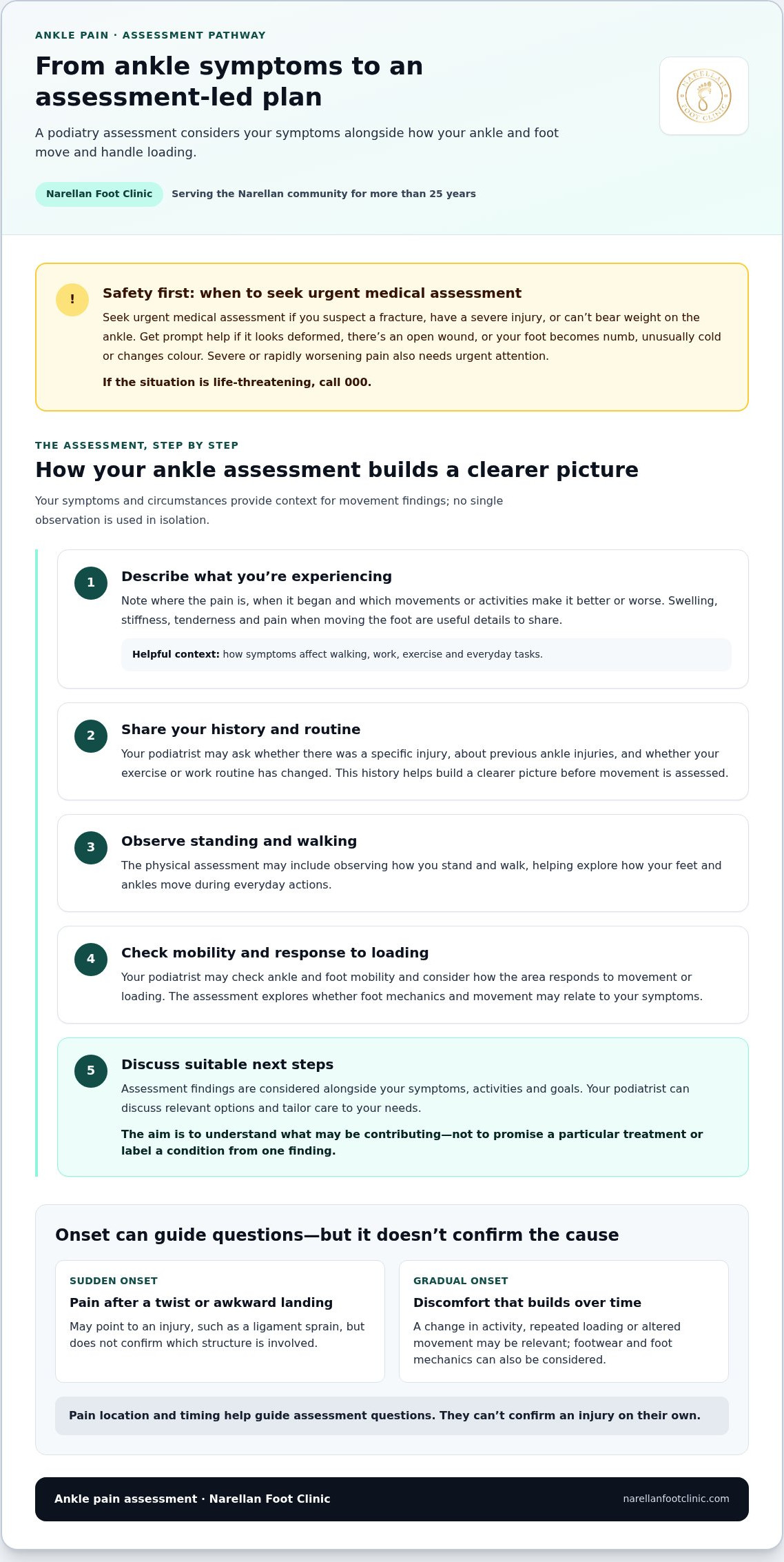
Seek urgent medical assessment if you suspect a fracture, have a severe injury or can’t bear weight on the ankle. Get prompt help if the ankle looks deformed, there’s an open wound, or the foot becomes numb, unusually cold or changes colour. Severe or rapidly worsening pain also needs urgent attention. If the situation is life-threatening, call 000.
If symptoms are less severe but aren’t settling, are getting worse or are interfering with daily activities, arrange an assessment rather than pushing through. A podiatrist can assess ankle and foot movement and loading, but urgent injuries need medical attention first. For non-emergency concerns, ankle pain treatment Narellan can begin with a podiatry assessment of your symptoms and circumstances. Knowing what to watch for can help you choose a safe next step without trying to diagnose the problem yourself.
Common Causes of Ankle Pain and How a Narellan Podiatrist Assesses Them
Ankle pain can come from different structures, and the same symptom doesn’t always point to the same cause. A sprain may affect ligaments after the foot rolls inwards or outwards. Tendon irritation, joint stiffness or changes in foot mechanics can also contribute. A biomechanical assessment looks at how your feet and ankles move and handle loading, helping relate what you feel to how you move.
How injuries and movement patterns may contribute
A twist or awkward landing can strain ankle ligaments, but discomfort can also develop gradually. A change in activity, repeated loading or altered movement may be relevant, particularly if symptoms arise during a regular walk or after exercise. Footwear and foot mechanics are also factors to consider, not proof of a particular cause. Pain location and timing can guide questions, but can’t confirm an injury on their own.
For an overview of how sprains are assessed and managed, see Mayo Clinic’s guide to Diagnosing and treating a sprained ankle. The appropriate next step depends on the individual presentation, including whether further medical assessment is needed.
What happens during an ankle pain assessment
Your podiatrist will ask when the pain began, whether there was a specific injury, what activities make it better or worse, and how it affects everyday tasks. Previous ankle injuries and changes in your exercise or work routine can provide useful context. This history helps build a clearer picture before movement is assessed.
The physical assessment may include observing how you stand and walk, checking ankle and foot mobility, and considering how the area responds to movement or loading. These findings are considered alongside your symptoms, rather than used in isolation to label a condition or promise a particular treatment. Read more about what a biomechanical assessment involves.
Based on the findings, your podiatrist can discuss suitable next steps and tailor care to your needs and goals. For ankle pain treatment Narellan, a biomechanical assessment at Narellan Foot Clinic can explore how movement and loading may relate to your symptoms. The clinic has served the local community for more than 25 years. Explore podiatry care in Narellan.
Comparing Ankle Pain Treatment Options: What May Suit Your Assessment Findings?
There isn’t one plan that suits every sore ankle. Options depend on your symptoms, assessment findings, activities and goals. Ankle pain can have different causes, as outlined in this guide to common causes of ankle pain, so treatment choices should be considered in context rather than selected from symptoms alone.
Depending on the findings, ankle pain treatment Narellan may involve practical adjustments, support options or a clinical technique. The table outlines possibilities, not a prescription. Your podiatrist can explain which approaches are relevant to you and why.
| Option | When it may be considered | What it aims to address |
|---|---|---|
| Activity adjustment | An activity appears to aggravate symptoms | Temporarily reducing irritating loads while the ankle is assessed |
| Footwear and movement guidance | Your usual shoes or movements are relevant to comfort or activity demands | Helping you make practical choices around fit, comfort and daily movement |
| Custom orthotics | Assessment identifies a relevant biomechanical need | Providing individualised support in line with the assessment findings |
| Dry needling or photo-biomodulation | A clinician considers the technique suitable for your presentation | Forming part of an individual care plan where appropriate |
Footwear, activity changes and orthotics
If a particular activity increases discomfort, your podiatrist may discuss modifying it temporarily while your symptoms are assessed. This doesn’t necessarily mean stopping all movement. Guidance can take your ankle, routine and goals into account. Footwear advice may consider fit, comfort and the demands of your day. Custom orthotics may be discussed if assessment indicates they’re relevant, rather than treated as a default solution. Read more in this custom orthotics guide.
Clinical techniques and individual care
Narellan Foot Clinic offers dry needling and photo-biomodulation. A clinician may consider these techniques when appropriate for your presentation, and dry needling is performed only with your informed consent. Ask your podiatrist to explain the intended role of a technique and its suitability for your circumstances. Not every option fits every person, and treatment plans and expected progress vary. Your care should reflect your assessment findings and personal goals, with the reasoning explained clearly.
What You Can Do for Ankle Pain Before and Between Appointments
A few practical steps can help you manage day-to-day demands and give your podiatrist useful context. They aren’t a substitute for assessment, especially if pain is worsening or affecting your ability to move normally.
A simple plan for the first steps
- Track what you notice. Record when the pain started, where it is, whether there’s swelling or bruising, and which activities make it better or worse. Note any changes over time.
- Ease activities that aggravate it. Temporarily modify movements that clearly increase your pain, such as running or prolonged walking. Don’t push through worsening symptoms.
- Choose comfortable footwear. Wear shoes that feel secure and comfortable for your usual activities. Where practical, take care on uneven or unstable surfaces.
- Arrange an assessment if needed. Seek advice if pain persists, returns or limits everyday activities, even if you can’t recall a specific injury.
These steps can help you notice patterns, but they can’t establish whether a ligament, tendon or joint is involved. If you suspect a fracture, have a severe injury or can’t bear weight, seek urgent medical assessment. A visibly deformed ankle, an open wound, numbness, a cold or discoloured foot, or severe and rapidly worsening pain also calls for urgent attention. Don’t rely on home care to manage these warning signs.
How to prepare for an ankle pain appointment
A little preparation can make it easier to describe what’s happening. You don’t need to arrive with a diagnosis. Clear details about your symptoms and routine can help your podiatrist understand how the problem affects you.
- Note when the pain began, whether it followed an injury, and any previous ankle problems or treatment.
- Describe changes to work, exercise or daily activity, and which movements tend to affect your symptoms.
- Bring or describe the footwear you use for work, exercise and everyday wear.
- Share relevant medical conditions and medicines, and mention any previous imaging or treatment.
These details can support a focused assessment and help guide the conversation about next steps. If you’re ready to discuss ankle pain treatment Narellan, book an ankle pain assessment with Narellan Foot Clinic.
Book Ankle Pain Treatment in Narellan: Your Next Steps
If ankle pain is affecting your routine, an assessment can help you understand what may be contributing and what steps could be suitable. A podiatrist considers your symptom history alongside how your feet and ankles move and handle load. The findings can inform an individual care plan, without assuming that one treatment suits everyone or promising a particular diagnosis or result.
Why choose local podiatry care for ankle pain in Narellan
Narellan Foot Clinic has served the local community for more than 25 years. The clinic provides a local setting to discuss how ankle symptoms affect your work, exercise and everyday movement. A biomechanical assessment can explore the relationship between your movement, symptoms and functional goals, helping shape care around your presentation and assessment findings.
Your podiatrist can explain what the assessment suggests, discuss relevant options and help you understand the reasoning behind recommended next steps. Share what matters most to you, whether that’s walking more comfortably, managing work demands or returning to an activity safely.
How to take the next step towards an ankle assessment
To prepare, note when your symptoms started, what seems to aggravate them and how they affect your day. Mention previous ankle problems, changes in your activity, the footwear you use and any treatment or imaging you’ve already had. These details give the assessment useful context. If you have a severe injury, suspect a fracture or can’t bear weight, seek urgent medical assessment rather than waiting for a routine appointment.
HICAPS and Medicare claiming facilities are available at the clinic. Medicare rebates for podiatry may apply if you have a chronic medical condition and a GP-issued Chronic Disease Management plan with a referral. Eligibility and service conditions apply. Ask your GP whether a plan is appropriate for you, and check your private health fund for details of any extras cover.
For ankle pain treatment Narellan, a podiatry assessment can be a considered first step towards understanding your symptoms and discussing an individual plan. Book an appointment with Narellan Foot Clinic.
Take the Next Step Towards More Comfortable Movement
Ankle pain can have several possible causes, so symptoms alone may not reveal what’s involved. A podiatry assessment can explore how your ankle moves and handles load, helping guide care around your presentation and everyday goals. Depending on the findings, options such as activity adjustments, footwear guidance or custom orthotics may be discussed.
Narellan Foot Clinic has served the local community for more than 25 years and offers biomechanical assessment to investigate movement-related factors. HICAPS and Medicare claiming facilities are available. Medicare rebates may apply for people with a chronic medical condition and a GP-issued Chronic Disease Management plan and referral. Eligibility and service conditions apply.
If ankle discomfort is affecting your routine, an assessment can help clarify possible next steps. Book an appointment with Narellan Foot Clinic.
Frequently Asked Questions
Can a podiatrist treat ankle pain?
Yes. A podiatrist can assess your foot and ankle, consider how movement and loading relate to your symptoms, and discuss suitable next steps. A biomechanical assessment may help explore contributing factors, while care is tailored to your presentation and goals. Narellan Foot Clinic is based in Narellan, NSW, and is relevant to people across Sydney, including Campbelltown, Blacktown, Windsor and Penrith. Suspected fractures or severe injuries need urgent medical assessment.
When should I see a podiatrist for ankle pain?
Arrange a podiatry assessment if ankle pain persists for more than a few days, keeps returning, is severe or makes everyday activities harder. Swelling, redness or difficulty bearing weight also deserve attention. If you suspect a fracture, have a severe injury or can’t put weight on the ankle, seek urgent medical assessment rather than waiting for a routine appointment. A podiatrist can assess ongoing symptoms and discuss appropriate next steps.
What is the most common cause of ankle pain?
Ankle sprains are among the most common causes, particularly after a twist or awkward landing. Other possible contributors include tendon irritation, joint stiffness, arthritis and changes in foot mechanics. Pain location or the way it began can help guide an assessment, but neither confirms the cause by itself. If symptoms are severe, worsening or affecting your ability to walk, arrange an assessment rather than relying on guesswork.
Can ankle pain go away on its own?
Some mild ankle discomfort may settle with time, especially if you ease activities that aggravate it. However, improvement isn’t guaranteed, and pain can have different causes that need different care. Avoid pushing through worsening symptoms. Arrange an assessment if pain persists, returns or limits normal activities. Seek urgent medical attention for a suspected fracture, severe injury or inability to bear weight.
Do I need orthotics for ankle pain?
Not necessarily. Custom orthotics may be considered if an assessment identifies a relevant biomechanical need, but they aren’t automatically suitable for every person with ankle pain. Your podiatrist will consider your symptoms, movement, footwear, activities and goals before discussing options. The aim is to match care to the assessment findings, rather than assuming orthotics are needed based on pain alone.
Should I walk on a painful ankle?
It depends on the severity and how walking affects your symptoms. If gentle walking is manageable, avoid increasing distance or activity if pain worsens, and choose comfortable, supportive footwear. Don’t push through significant or increasing pain. If you can’t bear weight, suspect a fracture or have a severe injury, seek urgent medical assessment. For ongoing or recurring discomfort, a podiatry assessment can help guide your next steps.