
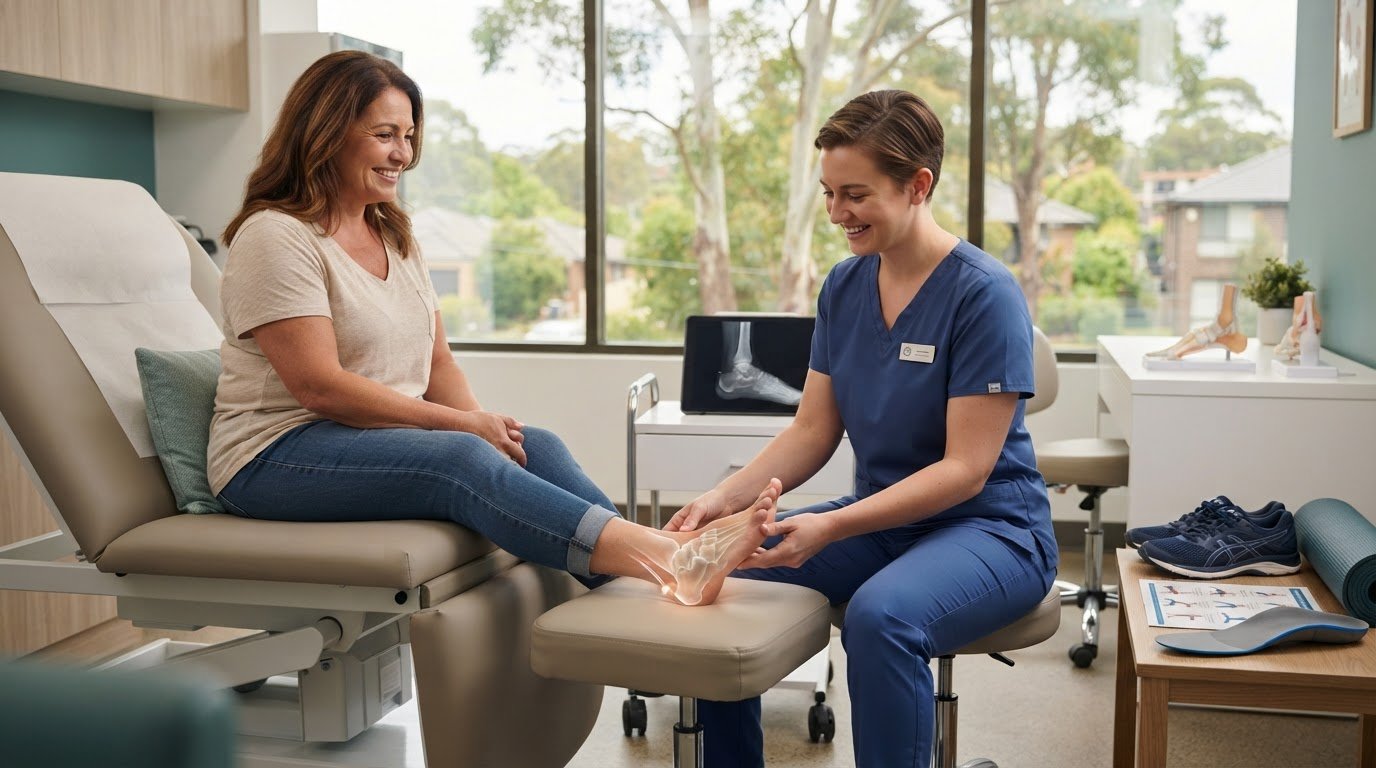
What if the heel spur on your X-ray isn’t what’s making each step hurt? Heel pain can make walking, standing and everyday tasks uncomfortable, so it’s understandable to look for a clear cause. But a spur doesn’t always cause symptoms. Pain may instead relate to irritation of the plantar fascia or other factors. That’s why heel spur treatment Campbelltown should start with understanding your symptoms, not just the imaging result.
This article explains what a heel spur means, what may be contributing to your discomfort and which approaches could help. You’ll learn what a podiatrist assesses, how a biomechanical assessment examines the way your foot moves, and why care may be tailored to you rather than based on an X-ray finding alone. Depending on your needs, options such as footwear changes, exercises or custom orthotics may be considered. Understanding the possible causes and next steps can help you make a more confident decision about seeking support.
Key Takeaways
- A heel spur is a bony growth, but its presence on an X-ray doesn’t necessarily explain your pain.
- A podiatrist considers your symptoms, daily activities and physical findings, rather than relying on imaging alone.
- Heel spur treatment Campbelltown may involve different approaches, selected to suit your symptoms and needs.
- Considered adjustments to footwear and activity may help you manage discomfort while arranging an assessment.
- Narellan Foot Clinic has served the Narellan community for more than 25 years and offers individualised podiatry care for nearby Campbelltown residents.
Heel spur treatment in Campbelltown: what the diagnosis does and does not mean
Heel pain can make the walk to the car, a shift at work or everyday errands around Campbelltown harder than they should be. Seeing “heel spur” on an X-ray may seem to explain it, but an image alone can’t show exactly what’s causing your pain. The right heel spur treatment Campbelltown patients need depends on their symptoms and examination findings, not just the spur.
A heel spur is a bony growth on the heel bone; heel pain is a symptom that needs its own explanation. The two can occur together, but finding a spur doesn’t automatically mean it’s the source of pain or needs treatment.
What is a heel spur, and why might it show on an X-ray?
The heel bone, or calcaneus, supports the back of the foot. A spur is a projection of bone that may form on its underside, near where the plantar fascia attaches, or at the back of the heel. An X-ray can reveal this bony shape, but it can’t determine by itself whether nearby tissues are irritated or whether the spur is causing your symptoms. For a general overview of what a heel spur is, see this explanation of calcaneal spurs.
A spur may be present without being the main source of discomfort. Its appearance doesn’t, on its own, show how much pain you should feel or mean it will keep growing. A podiatrist considers where and when you feel pain, how it affects your movement and what a physical assessment finds.
Is a heel spur the same as plantar fasciitis?
No. The plantar fascia is a strong band of tissue along the sole that helps support the foot’s arch. It attaches to the heel bone and can become painful, particularly near where it connects to the heel. Plantar fascia pain and a heel spur can occur together, but they’re different findings: one involves soft tissue symptoms, while the other is a bony growth.
This distinction matters because care should address the likely source of symptoms, rather than target an X-ray finding alone. A podiatrist may ask about your pain pattern and assess your foot to understand what could be contributing. Heel pain can also have other causes. Read our heel pain treatment guide for a broader overview.
How a Campbelltown podiatrist assesses heel spur pain
A heel spur on an X-ray is one piece of information, not a complete explanation for heel pain. A podiatrist’s assessment aims to understand your symptoms, the demands you place on your feet and any factors that may be contributing. Effective heel-spur care starts by identifying likely sources of pain, not by treating an image in isolation.
What happens during a heel pain assessment?
Your podiatrist will ask where the discomfort is, when it began and what makes it better or worse. Mention if pain is strongest with your first steps after resting, builds during a work shift or follows a walk. It’s also useful to describe what you’ve already tried and how it affected your comfort.
The conversation may cover your work routine, usual walking and exercise, and the shoes you wear. A physical assessment can include checking the heel and surrounding tissues, as well as how your foot and ankle move. Your podiatrist may also look at how you stand and walk to understand how your lower limb handles everyday movement. These findings help build a picture of your individual situation.
Imaging is considered in context when clinically appropriate. An X-ray may show a spur, but it doesn’t explain symptoms on its own, and not everyone needs imaging. The American Academy of Orthopaedic Surgeons explains that heel spurs are not the cause of plantar fasciitis pain, underscoring why symptoms and clinical findings matter alongside an image.
Why movement and loading can matter
Walking, standing and work tasks place different demands on your feet. A biomechanical assessment looks at how your feet and lower limbs move and respond to those demands. It can help guide care that fits your needs, but movement findings don’t prove a single cause by themselves. They’re considered alongside your history and physical examination.
For a closer look at what this type of assessment involves, read our biomechanical assessment guide. Together, the findings can help a podiatrist discuss suitable next steps, rather than selecting treatment just because an X-ray shows a spur. If heel pain is affecting your routine, you can book a podiatry assessment with the Narellan team.
Heel spur treatment options: matching care to your symptoms
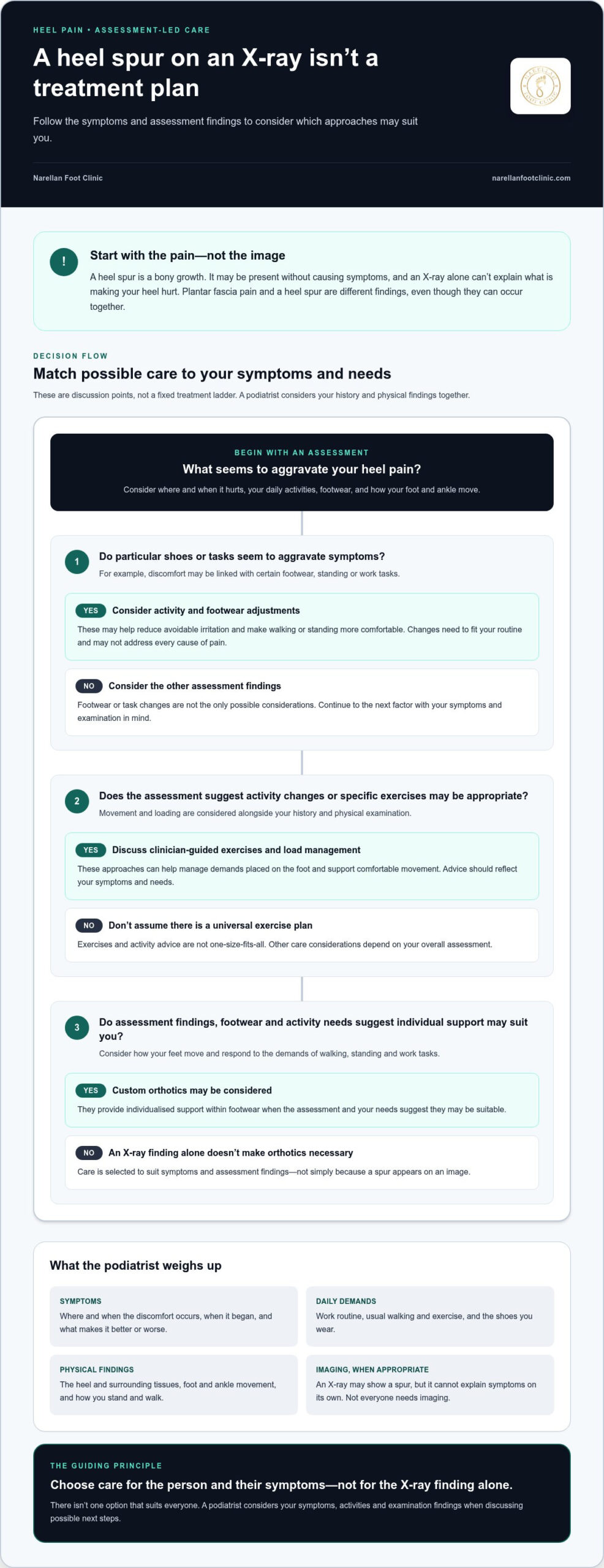
Care for heel pain isn’t chosen simply to remove a spur seen on an X-ray. The aim is to ease symptoms and address factors that may be contributing, based on your assessment, daily activities and comfort. For heel spur treatment Campbelltown patients can discuss different non-surgical approaches with a podiatrist. There isn’t one option that suits everyone.
| Option | Purpose | When it may be considered | Key limitations |
|---|---|---|---|
| Activity and footwear adjustments | Reduce avoidable irritation and make walking or standing more comfortable. | If particular shoes or tasks seem to aggravate symptoms. | Changes need to suit your routine; they won’t address every possible cause of pain. |
| Clinician-guided exercises and load management | Help manage the demands placed on the foot and support comfortable movement. | When assessment suggests changes to activity or specific exercises may be appropriate. | There’s no universal exercise plan. Advice should reflect your symptoms and needs. |
| Custom orthotics | Provide individualised support within footwear. | If assessment findings, footwear and activity needs suggest they may be suitable. | They aren’t necessary for every heel spur and should be considered as one part of care. |
Can heel spur pain improve without surgery?
A clinician may begin by considering non-surgical care tailored to your symptoms and assessment. This could include reviewing footwear, adjusting activities that aggravate your heel or discussing suitable exercises and other ways to manage loading. The right combination varies, and no approach can guarantee a particular result or recovery timeline. If more invasive options are being considered, discuss whether they’re appropriate with your treating clinician.
When might custom orthotics be considered?
Custom orthotics aren’t required just because an X-ray shows a spur. A podiatrist may consider them after assessing how your feet move, the footwear you use and the demands of work or other activities. Their potential role depends on whether they suit your individual needs and the wider care plan. Read our custom orthotics buyer’s guide to learn more about this option.
Small, considered changes may be a sensible starting point, but worsening pain deserves review rather than being pushed through. A podiatry assessment can help connect your symptoms with suitable options, focusing on how your foot feels and functions, not simply on changing an X-ray finding.
Managing heel pain while arranging care in Campbelltown
While you’re arranging care, a few measured adjustments may help you stay comfortable without guessing at the cause. Avoid trying to “push through” worsening pain, and don’t make sudden changes to your walking or exercise routine. These steps aren’t a cure for a heel spur, but they can help you notice what affects your symptoms and share useful details at an assessment.
Which everyday changes may help reduce irritation?
- Choose comfortable footwear. Wear shoes that feel supportive and don’t press on the sore area. If a particular pair makes your heel hurt more, switch to a more comfortable option where practical.
- Modify clear triggers for now. Consider easing back on activities that reliably aggravate your heel, while staying within what feels comfortable. Avoid stopping and then suddenly resuming strenuous exercise or long walks.
- Track how symptoms change. Note where you feel pain, what you were doing beforehand and whether it settles or worsens. This can help explain how heel pain affects your daily routine.
- Avoid forceful self-treatment. Don’t aggressively massage or stretch a painful area, or rely on a home remedy as a guaranteed fix. Seek clinical advice if symptoms persist, change or become harder to manage.
Gradual adjustments are generally more practical than abrupt changes. If an activity causes increasing discomfort, scale it back rather than treating pain as something to work through.
When should you book a podiatry appointment?
Consider an assessment if heel pain keeps returning, persists or starts limiting work, walking or other daily activities. Worsening, unexplained or unusual symptoms also deserve timely professional advice. Campbelltown-area patients can seek an individual assessment at Narellan Foot Clinic, where the team considers symptoms and movement when discussing care. If you’re looking into heel spur treatment Campbelltown, an assessment can help clarify a sensible next step.
Seek urgent medical attention for severe, sudden heel pain, pain following a significant injury, or an inability to bear weight on the foot. Don’t wait for a routine podiatry appointment in these circumstances.
If ongoing heel pain is affecting your routine, book an individual podiatry assessment with the Narellan team.
Heel spur treatment near Campbelltown: what to expect at Narellan Foot Clinic
If heel pain is affecting your work, walking or everyday plans, an assessment can help make the next step clearer. Narellan Foot Clinic has served the Narellan community for more than 25 years and welcomes people from nearby Campbelltown for individual podiatry care. The focus is on understanding how your symptoms relate to your feet and daily activities, rather than choosing a plan from an X-ray finding alone.
How assessment informs your personalised care plan
Your podiatrist will discuss what you’re experiencing, how your foot moves and what you’d like to get back to doing. The assessment findings help guide recommendations around your needs and comfort. A biomechanical assessment may help explain how your foot and lower limb move. Custom orthotics may also be considered if they suit your situation.
These options aren’t automatic requirements for a heel spur. Your podiatrist considers them alongside your symptoms, footwear, movement and everyday demands. Recommendations can be reviewed in light of how you respond and whether your needs change. The aim is to develop a considered plan, with realistic expectations and no assumption that one approach suits everyone.
For people exploring heel spur treatment Campbelltown, this individual approach connects assessment findings with practical choices. It also gives you an opportunity to discuss questions about your pain and understand why a particular option may or may not fit your circumstances.
Taking the next step for heel pain near Campbelltown
At your appointment, the podiatrist can clarify what may be contributing to your heel pain and discuss suitable next steps. Bring along any relevant imaging or reports you already have, and be ready to describe when symptoms occur and what affects them. Imaging can be considered as part of the wider clinical picture, rather than treated as the only answer.
Narellan Foot Clinic has HICAPS and Medicare claiming facilities. Private health benefits depend on your fund and cover. Medicare rebates may apply to eligible patients with a GP-prepared Chronic Disease Management Plan, and not every service is necessarily claimable. Eligibility and applicable services matter.
If heel pain is limiting your daily life, book an assessment at Narellan Foot Clinic to discuss your symptoms, understand the findings and consider a plan tailored to you.
Take a considered next step towards comfortable movement
A heel spur on an X-ray doesn’t automatically explain heel pain or determine the treatment you need. An assessment that considers your symptoms, movement and everyday demands can help guide care tailored to you. For heel spur treatment Campbelltown residents can access individualised podiatry care at Narellan Foot Clinic, which has served the Narellan community for more than 25 years.
A biomechanical assessment can help explore how your feet move, while custom orthotics may be considered if they suit your needs. Narellan Foot Clinic also has HICAPS and Medicare claiming facilities. Eligibility and claimability depend on the service and applicable requirements.
If heel pain is affecting your daily life, book a heel pain assessment with Narellan Foot Clinic to discuss what may be contributing and consider a sensible plan.
Frequently Asked Questions
Does a heel spur always cause heel pain?
No. A heel spur is a bony growth that can appear on an X-ray without being the source of pain. Symptoms may relate to surrounding tissues or other factors, so an imaging result needs to be considered alongside your history and examination. If heel discomfort is affecting walking or daily activities, a podiatrist can assess what may be contributing rather than assume the spur itself is responsible.
Can heel spur pain go away without surgery?
Heel pain can be managed without surgery in some cases, but the appropriate approach depends on the cause and your individual assessment. A podiatrist may discuss options such as comfortable footwear, adjusting aggravating activities or clinician-guided exercises. These approaches don’t guarantee a particular outcome or timeframe. If symptoms persist or worsen, seek professional advice to review the likely cause and whether your care plan needs to change.
What is the difference between a heel spur and plantar fasciitis?
A heel spur is a bony growth on the heel bone; plantar fasciitis refers to pain involving the plantar fascia, the band of tissue along the sole that supports the foot’s arch. They can occur together, but they aren’t the same condition. A spur on an X-ray doesn’t by itself establish that it’s causing pain, so symptoms and physical findings help guide assessment.
How is heel spur pain assessed by a podiatrist?
A podiatrist asks where the pain is, when it began, what aggravates it and how it affects your routine. They may examine the heel and assess foot, ankle and lower-limb movement, while considering footwear, work demands and walking patterns. Imaging may be considered when clinically appropriate, but not everyone needs it. The aim is to understand possible contributors to pain and inform individual care.
Can custom orthotics help with heel spur pain?
Custom orthotics may be considered if assessment findings suggest they could suit your symptoms, footwear and activity needs. They’re one possible part of an individual care plan, not a required treatment for every heel spur. A podiatrist can assess how your feet move and discuss whether orthotics are appropriate alongside other options. Their suitability and potential role depend on your circumstances, and outcomes can’t be guaranteed.
When should I seek heel spur treatment near Campbelltown?
Consider a podiatry assessment if heel pain persists, keeps returning or limits work, walking or everyday activities. Narellan Foot Clinic serves the Narellan and Campbelltown community and has served Narellan for more than 25 years. The clinic’s NSW focus also includes Sydney, Blacktown, Windsor and Penrith. Seek urgent medical attention for severe sudden pain, significant injury or inability to bear weight.
How long does heel spur treatment take to work?
There’s no single timeframe, as progress depends on what’s contributing to your pain, your activity demands and how you respond to the care plan. A podiatrist can discuss what to monitor and review recommendations if symptoms change or don’t improve as hoped. Avoid relying on a promised recovery date. If pain worsens, persists or starts limiting daily activities, arrange a professional assessment for individual guidance.