
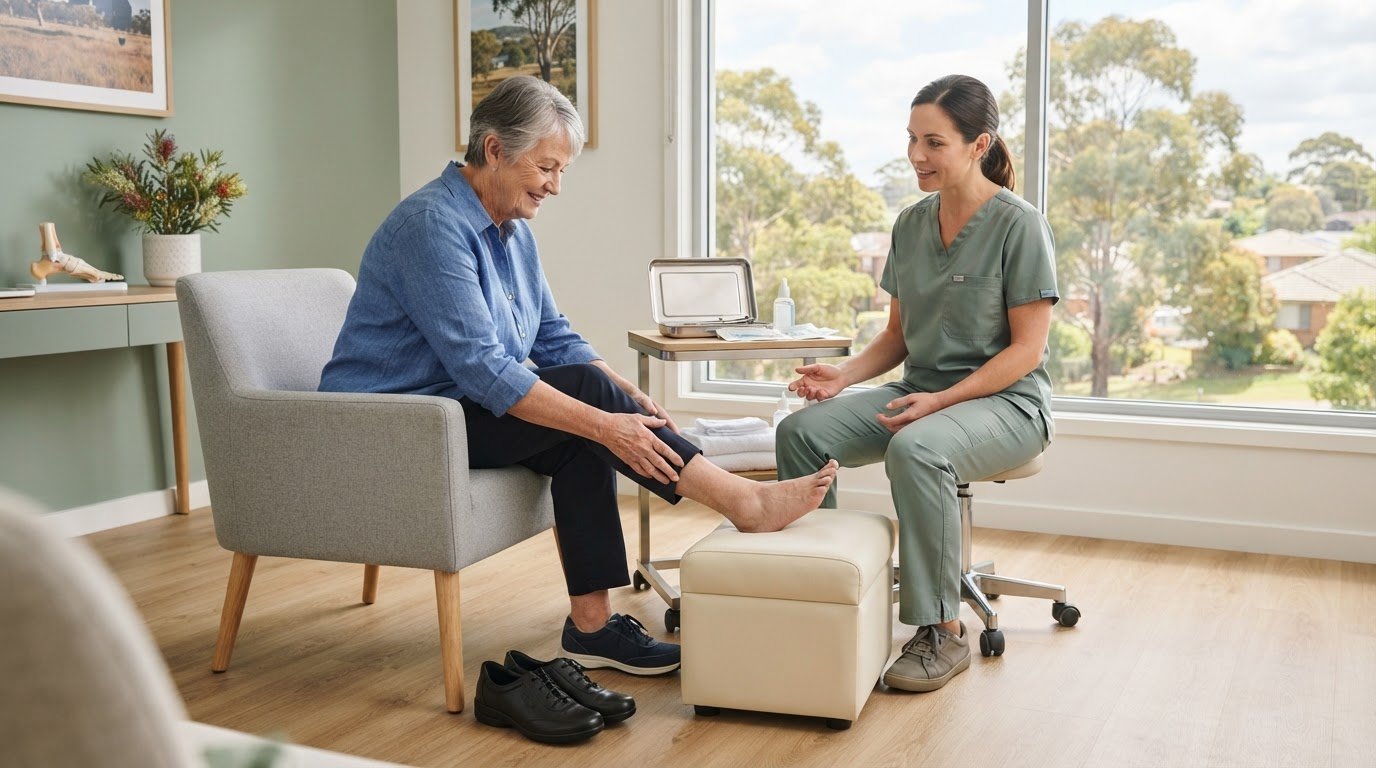
A change in your feet can make a familiar walk feel less comfortable, but it doesn’t always mean you need to stop doing the things you enjoy. Practical seniors foot care Harrington Park residents can follow starts with gentle daily habits and knowing when a change deserves professional attention.
Ageing can make routine care harder, especially if bending, eyesight or mobility are a challenge. Persistent discomfort, skin or nail changes, and concerns linked to diabetes are worth discussing with a health professional rather than trying to manage alone. An individual assessment can help clarify what may be happening and what steps are appropriate for your needs.
This guide covers simple ways to care for your feet at home, changes that should be assessed, and what to expect from a podiatry appointment. It also explains how general foot care and diabetic foot assessments can support your needs. Narellan Foot Clinic has served its local community for over 25 years. The guidance is relevant to older adults in Harrington Park and across NSW, including Sydney, Blacktown, Campbelltown, Windsor and Penrith.
Key Takeaways
- Changes in comfort, skin or nails can affect walking. Notice what has changed and when it began.
- Use a gentle routine to check and care for your feet, and recognise when home care has its limits.
- A podiatrist may consider your symptoms, health history, footwear and everyday mobility needs.
- Before an appointment, note changes, relevant health conditions, medicines and the footwear you usually wear.
- Narellan Foot Clinic provides general foot care, diabetic foot assessments and biomechanical assessments for the local community.
Senior foot care in Harrington Park: why small changes deserve attention
If familiar shoes feel less comfortable, walking takes more effort or routine foot care is becoming difficult, it’s understandable to feel concerned. These changes can affect confidence and everyday mobility. A useful approach to seniors foot care Harrington Park residents can follow is to build a gentle daily routine and seek professional advice when a change persists or develops.
Ageing alone doesn’t explain the cause of pain, skin changes or a change in the way you walk. A podiatrist can consider your symptoms, health and mobility needs. Learn more about what a podiatrist assesses. Routine checks can help you notice changes, while a new or ongoing concern deserves individual attention. Healthdirect Australia’s guidance on diabetes and foot care also recommends checking feet and seeking professional advice about problems.
Which foot changes can affect comfort and mobility?
Discomfort, thickened nails, corns or difficulty reaching your feet can make walking and wearing shoes less comfortable. These signs don’t identify a cause by themselves, but they’re useful to mention during an assessment. Shoes that feel tighter than usual, rub in a new spot or affect your balance may also make everyday activities harder, from moving around the house to going out.
Note when the change began and what seems to bring it on, such as standing, walking or wearing particular shoes. A short record of what you notice and how it affects your day can help you explain the concern at an appointment.
When should an older person seek a foot assessment?
Arrange prompt clinical advice for a wound, a possible infection or pain that is sudden or getting worse. Pay particular attention if you have diabetes, reduced sensation or concerns about circulation, as these can make it harder to notice or judge a foot problem. Don’t rely on pain alone to decide whether a change matters.
Seek urgent medical care if symptoms are severe or worsening rapidly. Call 000 for an emergency. For a persistent concern or difficulty managing your feet, a podiatry assessment can help you understand possible next steps without assuming every change is serious.
Common foot concerns in older adults and what a podiatrist assesses
Foot pain, thickened or uncomfortable nails, corns and other skin concerns can make walking or wearing shoes harder. Reaching your feet for routine care may also become difficult. These concerns don’t point to one cause on their own. A podiatrist considers the whole picture, including how the issue affects your everyday movement.
Persistent or changing foot symptoms deserve an individual assessment, not a diagnosis based on one sign alone. Healthdirect Australia advises seeking guidance from a health professional for foot problems, particularly for people living with diabetes. For a general overview of common foot-health topics, see the American Podiatric Medical Association’s Common foot concerns.
What happens during a senior podiatry assessment?
The appointment begins with a conversation. The podiatrist may ask when the concern started, what makes it better or worse, and how it affects activities such as walking, standing or putting on shoes. They’ll also ask about relevant health conditions and medicines to understand the concern in context.
Depending on your needs, the clinical examination may include looking at your feet and nails, checking your footwear and observing relevant aspects of movement. The podiatrist will discuss recommendations based on your individual findings. A single symptom doesn’t guarantee a particular diagnosis or treatment.
Why diabetes and reduced sensation need added attention
Reduced sensation can make it harder to notice a blister, cut or other injury. Diabetes Australia highlights that nerve damage may reduce feeling in the feet, so a problem can develop without being noticed straight away. If you have diabetes, professional advice can help guide your foot care. The right timing for checks depends on your individual circumstances and health needs.
A diabetic foot assessment can help Harrington Park residents discuss changes in foot health and day-to-day care. If you’re unsure whether a concern needs attention, an appointment with Narellan Foot Clinic gives you the opportunity to discuss your symptoms and mobility needs with an experienced local practice.
Safe foot care at home: a simple routine and its limits
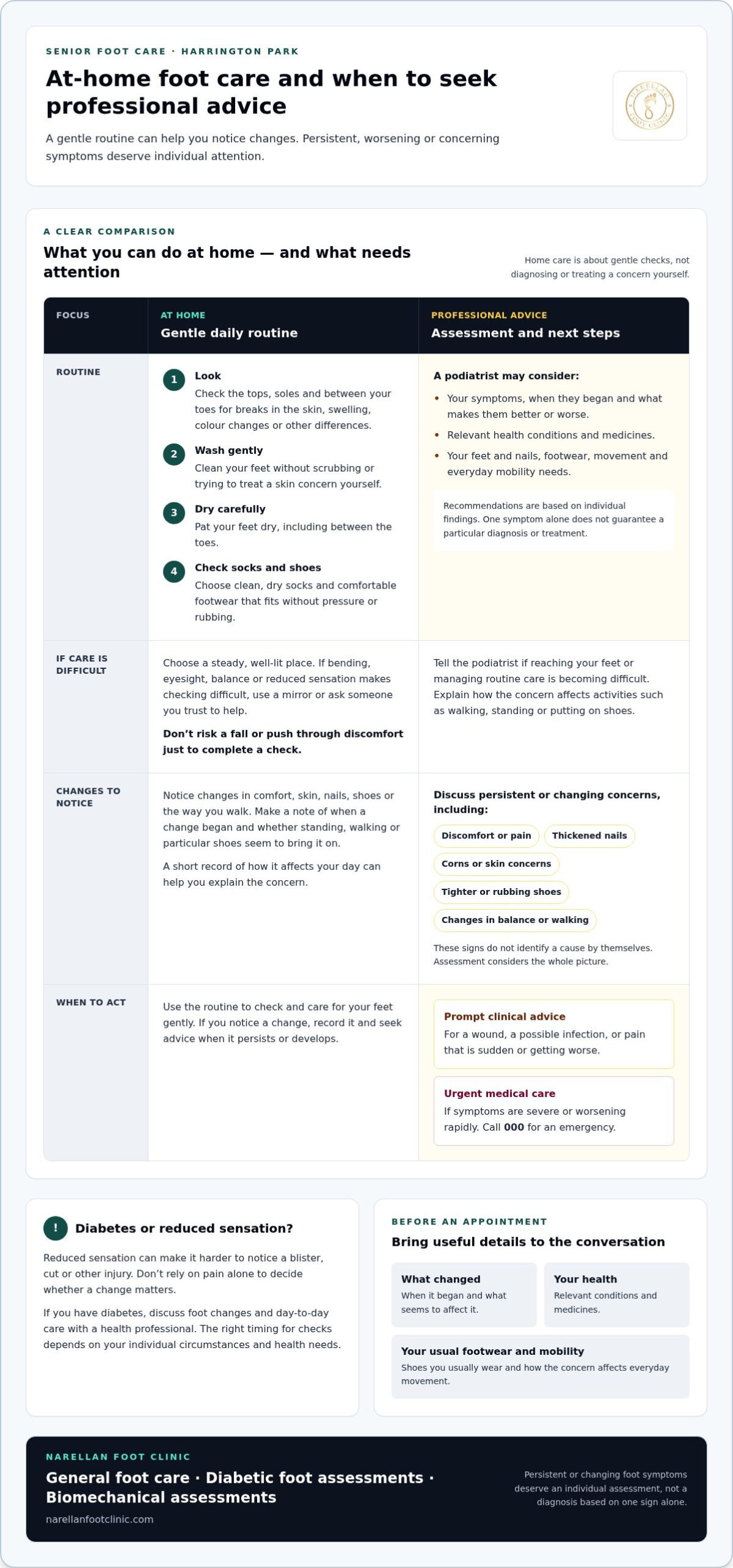
A gentle routine can help you notice changes and keep everyday foot care manageable. For seniors foot care Harrington Park residents can do at home, focus on checking, washing and drying carefully, and choosing shoes that feel comfortable. Information about common foot problems in older people can also help you recognise concerns worth discussing with a health professional.
A practical routine for older feet
Choose a steady, well-lit place to check your feet. If bending, eyesight, balance or reduced sensation makes this difficult, use a mirror or ask someone you trust to help. Don’t risk a fall or push through discomfort just to complete a check.
- 1. Look: Check the tops, soles and between your toes for breaks in the skin, swelling, colour changes or other differences.
- 2. Wash gently: Clean your feet without scrubbing or trying to treat a skin concern yourself.
- 3. Dry carefully: Pat your feet dry, including between the toes.
- 4. Check socks and shoes: Choose clean, dry socks and comfortable footwear that fits without pressure or rubbing.
If you notice a change, make a note of what it looks like and when you first saw it. Seek clinical advice if it persists, worsens or affects your walking.
When not to manage a foot problem alone
Home care does not replace professional assessment of a wound or a persistent foot concern. Avoid trying to treat a wound or suspected infection yourself, especially if you have diabetes or reduced sensation, as an injury may be harder to notice. A podiatrist can also assess painful or difficult-to-reach nails and skin concerns.
Don’t cut corns or calluses or rely on home remedies to resolve a problem. If safe self-care is difficult, a trusted person may be able to help with visual checks, but that doesn’t replace clinical advice about a change you’re concerned about. General foot care at Narellan Foot Clinic provides an opportunity to discuss your individual concerns and suitable next steps.
Finding senior foot care near Harrington Park and preparing for a visit
For Harrington Park residents seeking podiatry in the Narellan area, a little preparation can make an appointment more useful and comfortable. Note what has changed, when you first noticed it and how it affects everyday activities. If a family member or carer has noticed a change in walking or footwear, they can share their observations with the older person’s agreement.
What to bring and discuss at a podiatry appointment
Before your visit, write down your main concerns and gather details that may help the podiatrist understand your needs. You may wish to bring:
- A brief description of your symptoms and when they began, including anything that makes them better or worse.
- Relevant health conditions and a current list of medicines.
- The shoes you usually wear, particularly if they feel uncomfortable or affect how you walk.
- Observations about changes to your balance, walking or daily routines.
It’s also helpful to mention any access, communication or support needs before the assessment. You can ask a family member or carer to attend or help explain what you’ve noticed, while staying involved in decisions about your care.
How local podiatry support can fit into ongoing care
A podiatrist can assess a specific foot concern, consider your health history and mobility needs, then discuss suitable next steps based on the findings. General foot care can help with concerns that are difficult to manage at home. Read more about professional general foot care.
Podiatry appointments provide clinical care for foot concerns. My Aged Care is a separate Australian Government service that helps older people explore and access aged-care support; it isn’t a substitute for a podiatry assessment. Narellan Foot Clinic facilitates on-the-spot claims through HICAPS and Medicare, subject to relevant claim requirements. Eligibility depends on individual circumstances and applicable rules.
For seniors foot care Harrington Park residents can access in the Narellan area, book a podiatry appointment with Narellan Foot Clinic to discuss a foot concern and your everyday mobility needs.
Personalised senior foot care with Narellan Foot Clinic
Foot discomfort, changes in the skin or nails, and difficulty keeping up with routine care can all affect confidence and mobility. For older adults in Harrington Park, Narellan Foot Clinic provides podiatry care shaped around each person’s concerns, health context and everyday needs. The independently operated practice has served the Narellan community for over 25 years.
Foot care shaped around the person, not just the symptom
An assessment starts with understanding what you’ve noticed and how it affects daily life. That may include discomfort while walking, trouble reaching your feet, or changes that need attention because of diabetes or another health condition. Your podiatrist considers these details alongside relevant examination findings, then discusses appropriate next steps with you.
Care may include general foot care when nail or skin concerns are difficult to manage at home, or a diabetic foot assessment when diabetes is part of your health picture. If walking comfort or movement is a concern, a biomechanical assessment can examine how your feet function in relation to movement. Learn more about biomechanical assessment.
Recommendations depend on individual findings, not age or one symptom alone. Talk through what matters most to you, such as feeling more comfortable in footwear, managing foot care safely or maintaining your usual activities. The aim is to consider your needs and possible care options, rather than assume the same approach suits everyone.
A reassuring next step for Harrington Park residents
If you’re unsure what a foot change means, or home care has become difficult, a clinic appointment gives you the opportunity to discuss your concerns and assessment options. Bring notes about your symptoms, relevant health conditions and medicines, as well as footwear that feels uncomfortable or affects your walking. A family member or carer can also help share observations, with your agreement.
Narellan Foot Clinic provides convenient booking options for Harrington Park residents seeking podiatry in the Narellan area. Book an appointment to discuss your foot-care concerns and what assessment may be appropriate.
Book an appointment with Narellan Foot Clinic.
Take a steady next step towards more comfortable walking
Good foot care doesn’t need to be complicated. Gentle checks and suitable footwear can help you notice changes, while persistent discomfort, wounds or concerns about skin and nails deserve professional attention. If bending, eyesight or mobility makes routine care difficult, you don’t have to manage every concern alone.
Narellan Foot Clinic provides general foot care, diabetic foot assessments and individualised podiatry support for older adults in Harrington Park and the local community. The clinic has served the Narellan community for over 25 years. On-the-spot claims are facilitated through HICAPS and Medicare, subject to applicable eligibility and claim requirements.
If a change is affecting your comfort or daily routine, discussing it with a podiatrist can help you understand possible next steps. Book an appointment with Narellan Foot Clinic to talk through your foot-care concerns. A considered assessment can be a reassuring step towards looking after your feet and staying active.
Frequently Asked Questions
Is foot pain a normal part of ageing?
Foot pain isn’t something you have to accept as an inevitable part of ageing. Changes in comfort can have different causes, and age alone can’t explain pain or altered walking. If discomfort persists, worsens or affects everyday activities, arrange an assessment with a health professional. A podiatrist can consider your symptoms, health history and mobility needs and discuss appropriate next steps.
How often should seniors have their feet checked?
There isn’t one checking schedule that suits every older person. How often you need professional advice depends on your health, foot history and any changes you notice. People with diabetes, reduced sensation or circulation concerns should discuss an appropriate checking routine with a health professional. Between appointments, look out for changes and seek advice rather than waiting for a routine visit if a concern develops.
Can an older person safely cut their own toenails?
It depends on whether you can see and reach your feet comfortably and manage nail care without pain or risk of injury. If bending, eyesight, mobility or reduced sensation makes this difficult, don’t force it. People with diabetes or a foot concern should seek individual advice before managing nails themselves. A podiatrist can assess painful, thickened or hard-to-reach nails and discuss suitable care.
What happens during a podiatry appointment for an older adult?
A podiatry appointment usually starts with a conversation about your symptoms, health conditions, medicines and how the concern affects daily activities. The podiatrist may examine your feet and nails, look at your footwear and consider relevant aspects of movement. Explain what matters to you, such as walking comfort or managing foot care. Recommendations are based on your individual findings and discussed with you.
When should a senior see a podiatrist about a foot problem?
Seek prompt clinical advice for a wound, a possible infection or sudden or worsening pain. Take changes seriously if you have diabetes, reduced sensation or circulation concerns, as an injury may be harder to notice. A persistent change or difficulty caring for your feet is also worth discussing with a podiatrist. For severe or rapidly worsening symptoms, seek urgent medical care; call 000 in an emergency.
Does Narellan Foot Clinic provide foot care for older adults near Harrington Park?
Yes. Narellan Foot Clinic serves the Narellan community in NSW and provides general foot care, diabetic foot assessments and biomechanical assessments. Older adults from Harrington Park can discuss foot concerns, health context and mobility needs at a clinic appointment. The independently operated practice has over 25 years of experience serving the local community. Assessment and care recommendations are individualised.
Can Medicare or my health fund help with podiatry costs?
Medicare or private health insurance may contribute to eligible podiatry costs, depending on applicable requirements and your cover. Medicare claims may require a GP referral and an eligible care plan. Narellan Foot Clinic facilitates on-the-spot claims through Medicare and HICAPS; private health fund benefits and any gap vary. Check your individual eligibility and cover before relying on a rebate or claim.