

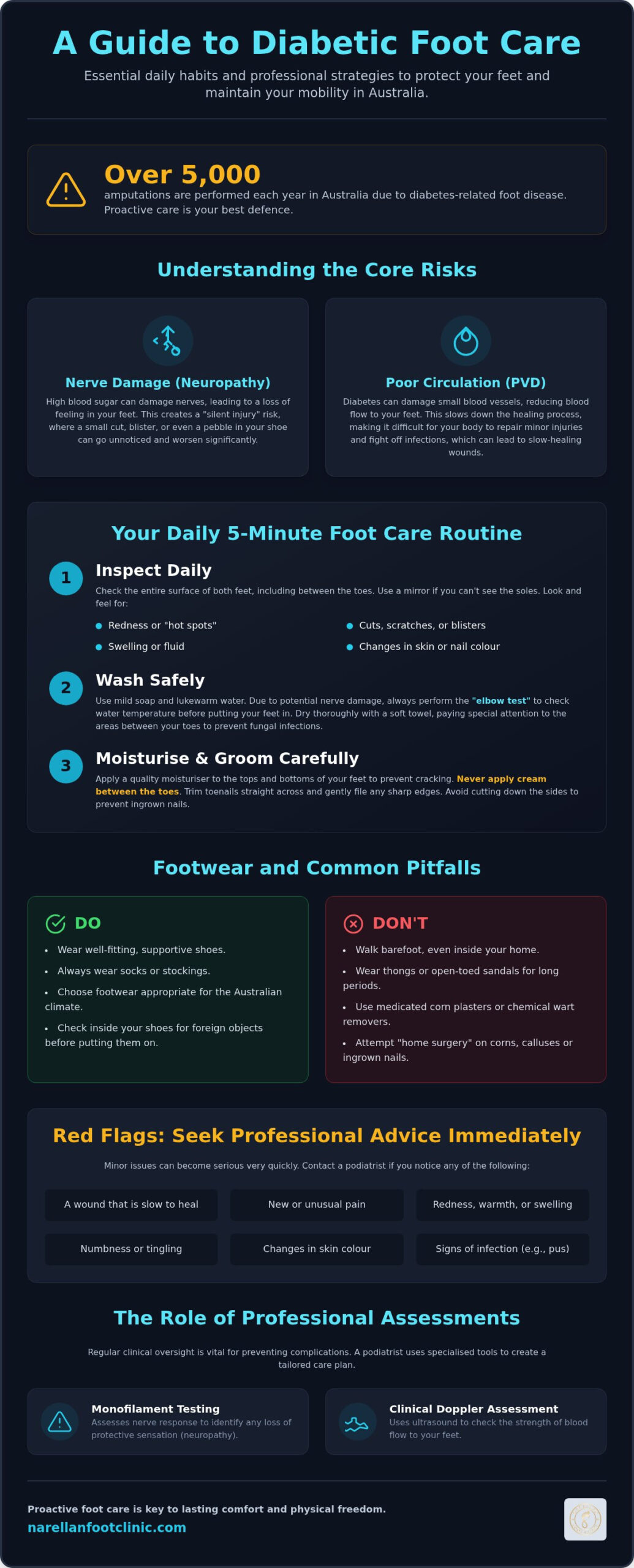
Did you know that around 5,000 amputations are performed every year across Australia due to diabetes-related foot disease? It’s a sobering statistic that often fuels a deep sense of anxiety for those living with the condition. We understand that the fear of losing your mobility is real, and it’s often made worse by conflicting hygiene advice or the physical difficulty of inspecting the soles of your own feet. Mastering effective foot care for diabetics isn’t just about following a checklist; it’s about establishing a reliable sanctuary of health that keeps you moving through life with ease.
You deserve to feel confident and in control of your wellbeing. This guide provides a clear, logical path toward better health by detailing the essential daily habits and professional strategies needed to prevent serious complications. You’ll discover a simple routine to protect your feet, learn how to identify critical red flags early, and understand when it’s time to seek the expert guidance of a podiatrist. By combining meticulous personal care with clinical oversight, you can transition from a state of worry to one of lasting comfort and physical freedom.
Key Takeaways
- Establish a consistent five-minute daily routine to inspect your feet and safely wash them using the “elbow test” to ensure water temperature is safe.
- Understand why walking barefoot or wearing thongs increases your risk of injury and how to choose appropriate footwear for the Australian climate.
- Learn to distinguish between minor concerns and urgent red flags that require immediate professional attention to prevent serious complications.
- Discover how proactive foot care for diabetics, including clinical Doppler and monofilament testing, helps maintain your independence and long-term mobility.
Understanding the Connection Between Diabetes and Foot Health
High blood sugar levels over time can lead to significant complications of diabetes, particularly in the lower limbs. These issues generally stem from two main sources: nerve damage and reduced blood flow. When these factors combine with poor biomechanics, the risk of developing a serious wound increases dramatically. Effective foot care for diabetics starts with recognising that your feet may no longer send the warning signals they once did. This lack of feedback means that small, manageable issues can quickly become significant health challenges.
Neuropathy: Why You Might Not Feel an Injury
Nerve damage, or neuropathy, often begins as a subtle tingling or a burning sensation in the toes. Over time, this can progress to complete numbness, which creates a “silent injury” risk. You might walk all day with a small pebble or a folded sock in your shoe without feeling any discomfort. Neuropathy is the clinical loss of protective sensation that normally alerts you to pain or irritation. Without this early warning system, minor friction or a small cut goes unnoticed, allowing it to worsen throughout the day.
Poor Circulation and the Challenge of Healing
Peripheral Vascular Disease (PVD) occurs when high glucose levels damage the lining of your small blood vessels. This restricts the delivery of oxygenated blood, which is the primary fuel your body uses to repair skin breaks and fight off bacteria. You might notice your feet feel unusually cold, or the skin takes on a bluish discolouration. When circulation is compromised, a simple blister doesn’t just stay a blister. It lacks the resources to close properly, leaving the door open for infection and slow-healing wounds. Understanding that diabetes affects multiple systems—including metabolic health as highlighted by the Digestive Centre—is crucial for comprehensive care.
The Role of Pressure and Biomechanics
While many focus solely on hygiene, the way you walk plays a massive role in foot health. If your gait is uneven or your foot structure has changed, certain areas bear excessive weight. In a healthy foot, the resulting pain would force you to shift your weight or change your shoes. For someone with diabetes, that constant mechanical stress on one spot can cause the skin to break down from the inside out. This is why a small red mark can escalate into a deep ulcer within just a few days. We use professional categorisation to determine if your feet are “at-risk,” allowing us to create a tailored plan that addresses these high-pressure zones before they cause a break in the skin.
Your Daily 5-Minute Diabetic Foot Care Routine
Consistency is the foundation of effective Daily foot care. Establishing a reliable five-minute ritual ensures that small changes don’t go unnoticed and escalate into larger health concerns. It’s best to choose a time when you aren’t rushed, such as just after your morning shower or right before you climb into bed. This simple habit is one of the most powerful tools in your arsenal for maintaining your long-term mobility and independence.
The Inspection: What to Look For
Start your check by looking for redness, swelling, or any new blisters and cuts. Pay close attention to changes in nail colour or thickness, as these can indicate underlying pressure or fungal issues. If you find it difficult to see the soles of your feet due to limited flexibility, don’t skip this step. You can place a hand mirror on the floor to get a clear view of your heels and arches. Use the back of your hand to feel for “hot spots” or areas that feel unusually warm, as an increase in temperature is often the first sign of inflammation before a wound even appears. This proactive approach is a vital part of comprehensive foot care for diabetics, and pairing it with a regular diabetes foot check from a qualified podiatrist ensures nothing is missed.
Safe Hygiene and Grooming Habits
When washing, always use lukewarm water and a mild, non-irritating soap. It’s critical to test the water temperature with your elbow first, because neuropathy can make your feet poor judges of heat, leading to accidental burns. After washing, dry your feet thoroughly with a soft towel. Be particularly careful to dry between the toes, as trapped moisture in these dark, warm gaps is a primary cause of fungal infections. Once dry, apply a quality moisturiser to the tops and bottoms of your feet to keep the skin supple and prevent painful cracking. However, never apply cream between the toes, as this can cause the skin to become too soft and break down.
Safety is paramount when it comes to grooming and managing minor issues. You should never use medicated corn plasters or sharp blades at home. These products often contain acids or carry a high risk of accidental cuts that can lead to deep wounds. When trimming your toenails, always cut straight across and avoid digging into the corners. This prevents the development of painful ingrown nails that can quickly become infected. If you find this task difficult or have thickened nails, our team at Narellan Foot Clinic provides professional General Foot Care to ensure your feet are managed in a sterile, safe environment.
Choosing Footwear and Socks for the Australian Climate
Living in Australia often means embracing a relaxed, outdoor lifestyle, but for those managing diabetes, your choice of footwear is a critical safety decision. Our harsh summer brings unique challenges, from scorching pavement to the cultural ubiquity of thongs. Proper footwear is a cornerstone of effective foot care for diabetics, providing a physical barrier against the injuries that neuropathy might otherwise mask. By choosing the right shoes and socks, you create a safe environment for your feet to function without the constant threat of skin breakdown.
Walking barefoot is a significant risk, whether you are inside your own home or strolling along a sandy beach. Hot sand can cause severe burns before you even realise there is a problem, and a stray shell or splinter can easily lead to a serious infection. While thongs are a staple of our local culture, they are generally unsuitable for high-risk feet. They offer no structural support, leave the toes exposed to trauma, and the toe post can cause friction blisters that are notoriously slow to heal. A safe shoe should feature a firm heel counter to stabilise your foot and adjustable fastenings, such as laces or Velcro, to accommodate natural swelling. Ensure the shoe has a deep, wide toe box so your toes aren’t cramped. Before you slide your feet in, always reach inside to check for grit, small stones, or worn linings that could cause irritation.
The Golden Rules for Buying New Shoes
It is best to shop for new footwear in the afternoon. Your feet naturally swell as the day progresses, so buying later ensures the fit remains comfortable even at the end of a long day. When trying on a pair, ensure there is a thumb-width of space between your longest toe and the end of the shoe. This prevents the nails from hitting the front of the shoe during movement. Opt for natural, breathable materials like leather or high-quality mesh to reduce moisture build-up and keep the skin healthy.
Diabetic-Friendly Socks: What to Look For
Socks are your first line of defence against friction and skin irritation. Look for designs with non-elastic tops that don’t constrict your circulation or leave deep indentations on your skin. We recommend choosing light-coloured socks, such as white or pale grey. If you have a hidden wound that begins to bleed or discharge, the stain will be immediately visible on the fabric, allowing you to take action quickly. Moisture-wicking fibres are also essential to help prevent tinea and skin breakdown in our humid climate. If you are unsure if your current shoes are providing enough protection, a professional diabetic foot assessment can help identify the best footwear choices for your specific needs.
Recognising Red Flags: When to See Your Podiatrist
Spotting a new mark or a change in sensation on your feet can be unsettling. However, the most dangerous strategy for any diabetic patient is the “wait and see” approach. Because healing is often delayed and pain signals are muted, what looks like a minor irritation today can become a significant medical emergency by tomorrow. Effective foot care for diabetics relies on your ability to categorise symptoms and take decisive action. By having a formal foot protection programme in place with your local clinic, you ensure that you aren’t guessing when it comes to your safety. We position ourselves as a safe pair of hands to help you navigate these concerns before they escalate.
Immediate Concerns: The “Same Day” Symptoms
Certain symptoms require a consultation on the same day they are discovered. These are the critical warnings that your body’s natural defences are struggling. You must seek professional help immediately if you notice:
- Signs of infection: This includes the presence of pus, a foul odour, or skin that feels hot to the touch.
- Spreading redness: If a red area is expanding away from a small nick or blister, it indicates a potential cellulitis risk.
- Sudden changes in shape: Unexplained swelling or a change in the contour of your foot can be a sign of Charcot foot, a serious condition that requires urgent immobilisation.
- Open wounds: Any break in the skin or ulcer, regardless of whether it hurts, is an immediate red flag.
While clinical diagnosis from your podiatrist is essential for managing infections, you can learn more about mrsatest.co.uk to see how at-home screening for resistant bacteria like MRSA is being made accessible to patients.
Secondary Signs: The “Within a Week” Symptoms
Other changes may not be immediate emergencies, but they still require expert attention within the week. These signs often indicate that your current routine or footwear needs adjustment. Look out for the appearance of new calluses or corns, which are clear indicators of high-pressure areas where the skin is at risk of breaking down. Similarly, if a toenail begins to look red or feels tender at the edges, it may be the start of an ingrown nail. You should also watch for cracked skin on the heels. These fissures are more than just a cosmetic issue; they provide a direct entry point for bacteria into the deeper layers of your tissue. For a more comprehensive look at what to monitor, you can refer to our Diabetic Foot Assessment Narellan guide.
Addressing these secondary signs early is the most effective way to avoid the “same-day” emergencies that lead to hospitalisation. If you have noticed any of these changes, don’t leave your health to chance. We invite you to contact Narellan Foot Clinic to arrange a professional review and ensure your feet remain healthy and functional.
Professional Diabetic Foot Assessments in Narellan
While your daily home routine is your first line of defence, professional oversight provides the clinical precision needed for long-term safety. At Narellan Foot Clinic, we’ve spent over 25 years refined our specialised Diabetic Foot Assessment service to act as a “safe pair of hands” for the local community. These screenings are designed to catch what the naked eye might miss, ensuring that foot care for diabetics is proactive rather than reactive. By combining modern diagnostic tools with decades of experience, we help you transition from a state of uncertainty to one of calm confidence in your mobility.
What Happens During Your Clinical Screening?
Our comprehensive neuro-vascular assessment is a methodical process that evaluates the two primary risk factors: circulation and nerve sensation. We use Doppler ultrasound to listen to the blood flow in your feet, which gives us an objective measure of your vascular health. To check for neuropathy, we perform Monofilament testing, applying a calibrated, gentle pressure to specific points on your soles to ensure your “protective sensation” is intact. If you’d like to understand exactly what each stage of this process involves, our detailed guide on the diabetes foot check procedure and what to expect walks you through every step.
We also conduct a detailed Biomechanical Assessment to identify high-pressure zones caused by your unique gait or foot structure. If we find areas at risk of breakdown, we often recommend Custom Orthotics. These devices are precision-engineered to redistribute weight away from vulnerable spots, effectively cushioning your feet and preventing ulcers before they start. At the end of the session, we document your “risk status”—low, medium, or high—which determines the ideal frequency for your future clinical check-ups.
Medicare and Private Health Fund Support
Accessing professional foot care for diabetics is made simpler through the Australian healthcare system. If you have a chronic condition like diabetes, your GP can provide a Chronic Disease Management (CDM) plan. From 1 July 2026, the Medicare rebate for a podiatry consultation under this plan (MBS Item 10962) is $63.40, covering up to five allied health services per calendar year. This rebate helps make regular professional screenings an affordable part of your health journey.
For those with private health cover, we provide on-the-spot HICAPS claims to ensure a smooth, efficient experience. David J. Miller and our team are committed to providing a sanctuary for patients, where clinical expertise meets a warm, empathetic approach. Our sterile environment and methodical testing protocols ensure that every patient receives a high standard of care tailored to their specific needs. By integrating professional assessments with your daily home care, you can maintain your physical freedom and return to your daily activities without hindrance.
Protecting Your Mobility for the Years Ahead
Maintaining healthy feet while living with diabetes is a journey built on small, consistent choices. By establishing a reliable daily inspection routine and choosing footwear that respects your foot’s unique shape, you significantly reduce the risk of serious complications. You don’t have to navigate these challenges alone. Proactive foot care for diabetics is most effective when it combines your personal vigilance with the clinical precision of regular professional screenings. This dual approach ensures that even the smallest changes are identified and managed before they can hinder your lifestyle.
With over 25 years of experience serving the Narellan community, principal podiatrist David J. Miller provides the expert care and “safe pair of hands” you need to stay active. We offer on-the-spot HICAPS and Medicare claims to make your visit as smooth and efficient as possible. Don’t wait for a small irritation to become a major concern. Book your Diabetic Foot Assessment at Narellan Foot Clinic today and take a confident step toward long-term comfort and physical freedom. You have the tools and the support to keep moving through life with ease.
Frequently Asked Questions
How often should a person with diabetes see a podiatrist?
At a minimum, you should have a professional review once a year. However, the exact frequency depends on your individual risk level. During a Diabetic Foot Assessment, we categorise your feet as low, medium, or high risk. Those with existing neuropathy or poor circulation may need to visit every six to eight weeks. Regular clinical oversight is a pillar of effective foot care for diabetics, ensuring that small changes are caught early.
Can I cut my own toenails if I have diabetes?
You can trim your own nails if you have good vision, steady hands, and no existing complications. Always cut straight across and never into the corners. However, if your nails are thickened or if you struggle to reach your feet, it is safer to seek professional help. We provide General Foot Care in a sterile environment to prevent accidental nicks and ingrown nails, which can lead to serious infections for those with diabetes.
What are the best shoes for diabetics in Australia?
The best shoes feature a firm heel counter, adjustable fastenings like laces, and a deep, wide toe box. In our local climate, breathable materials such as leather or high-quality mesh are essential to prevent moisture build-up. You should avoid thongs and flimsy slip-ons, as they offer little protection and can cause friction. Correct footwear acts as a protective shield, reducing the mechanical stress that often leads to skin breakdown and ulcers.
Why are my feet always cold even when it is warm in Narellan?
Cold feet are often a sign of Peripheral Vascular Disease (PVD), where blood flow to your extremities is restricted. Even on a warm day in Narellan, damaged blood vessels may struggle to deliver enough oxygenated blood to your feet. This isn’t just about comfort; poor circulation significantly slows the healing process for minor injuries. If you notice your feet are persistently cold or look bluish, it is time for a professional vascular evaluation.
Does Medicare cover podiatry for diabetics?
Yes, Medicare provides rebates for podiatry services through a Chronic Disease Management (CDM) plan. You’ll need a referral from your GP, which can grant you a rebate for up to five allied health consultations per calendar year. As of July 2026, the rebate is $63.40 per session. At Narellan Foot Clinic, we facilitate on-the-spot Medicare and HICAPS claims to make your specialised foot care for diabetics as accessible and efficient as possible.
What should I do if I find a blister on my foot?
If you find a blister, do not pop it and seek professional advice on the same day. An open blister is a direct entry point for bacteria, and for a person with diabetes, an infection can spread rapidly. Clean the area gently with mild soap and cover it with a sterile dressing. Because neuropathy can mask the pain, a blister is a critical red flag that requires immediate attention from your podiatrist.
Is it okay to walk barefoot at home if I have diabetes?
It is never recommended to walk barefoot, even inside your own home. Small objects like crumbs, splinters, or even a stray pet toy can cause a puncture wound that you might not feel due to nerve damage. Hard surfaces also increase pressure on specific parts of your foot. Wearing supportive indoor shoes or slippers with a solid sole provides a constant barrier of protection against accidental injury and excessive mechanical stress.
What is a diabetic foot ulcer and why is it serious?
A diabetic foot ulcer is an open sore or wound that typically occurs on the bottom of the foot. These are serious because they are often slow to heal due to poor circulation and can go unnoticed because of neuropathy. If left untreated, ulcers can lead to deep-seated infections in the bone or tissue. With approximately 28,000 hospitalisations for ulcers in Australia annually, early intervention and professional management are essential to prevent the risk of amputation.




2 Comments
[…] A mirror is a helpful tool for seeing the underside of your foot, but it cannot detect the early stages of peripheral vascular disease or subtle nerve changes. It also struggles to reveal ‘hidden’ calluses that might be masking an underlying wound. We often find that moisture hiding between the toes leads to fungal infections or skin breakdown that a quick glance in a mirror might miss. For a detailed breakdown of what you should be looking for every morning, refer to our Diabetic Foot Care: Daily Guide to Prevent Complications. […]
[…] has already caused damage. For a complete overview of evidence-based habits, our detailed guide on foot care for diabetics outlines every step you need to protect your feet between clinical […]