

Sitting on the couch and waiting for the pain to disappear isn’t actually a recovery plan; it’s often a recipe for re-injury. It’s incredibly frustrating to watch your hard-earned fitness slip away while you’re stuck in a moon boot, wondering if every little twinge is a sign of progress or a major setback. You likely feel caught between the fear of starting too soon and the desperation to get moving again. We understand that the uncertainty of stress fracture foot recovery can be just as painful as the injury itself.
This guide provides the exact steps you need to manage your healing process with confidence, from the initial diagnosis through to a safe return to sport. You’ll discover the clinical timeline for bone repair, which typically spans six to eight weeks for low-risk fractures, and learn which specific exercises keep you mobile without risking a non-union. We will also explore how a professional biomechanical assessment and custom orthotics act as an essential insurance policy for your feet. By the end of this article, you’ll have a clear roadmap to transition from worry to physical freedom, ensuring your gait is supported every step of the way.
Key Takeaways
- Learn the four distinct stages of stress fracture foot recovery, moving from essential bone off-loading to the gradual introduction of non-impact activity.
- Discover why a biomechanical assessment is the gold standard for identifying root causes like overpronation, ensuring your injury doesn’t become a recurring issue.
- Master the “10% Rule” and a structured walk-run programme to safely rebuild your fitness without overloading healing bones.
- Understand how custom orthotics and smart habits like footwear rotation provide a long-term insurance policy for your ongoing mobility and foot health.
- Gain the clarity to distinguish between normal rehabilitation sensations and genuine warning signs, allowing you to return to sport with total confidence.
What is a Stress Fracture? Recognising the Signs and Symptoms
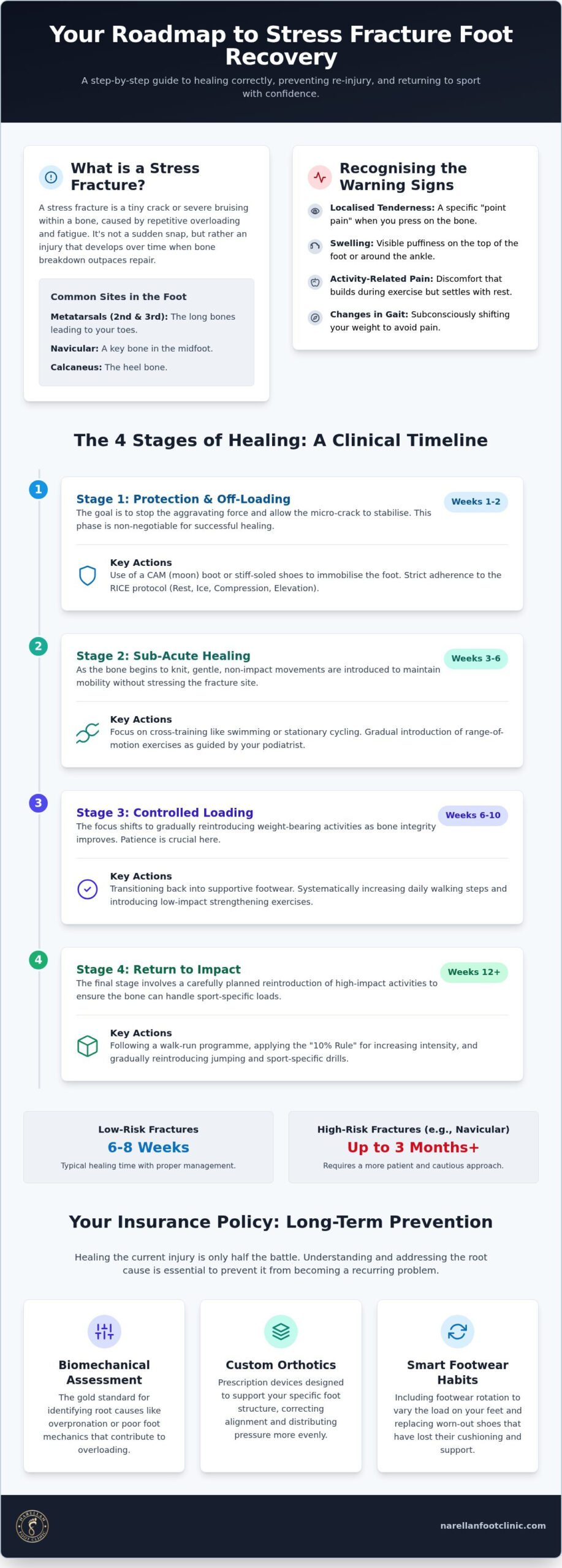
Many patients are surprised to learn that a bone injury doesn’t always involve a sudden, dramatic snap. What is a stress fracture? At its core, it is a tiny crack or a zone of severe bruising within the bone caused by repetitive overloading. It’s helpful to think of it as a fatigue injury. Initially, you might experience a “stress reaction,” which is an early stage where the bone becomes inflamed and weakened. If the repetitive stress continues without rest, this inflammation progresses into a true fracture that can be seen on clinical imaging. Understanding this progression is the first step toward an effective stress fracture foot recovery.
In the foot, these injuries typically occur in bones that absorb the most impact. The second and third metatarsals, the long bones leading to your toes, are the most common sites. However, we also frequently treat fractures in the navicular bone of the midfoot and the calcaneus, or heel bone. Recognising the symptoms early can prevent the injury from worsening. Typical signs include:
- Localised tenderness: A specific “point pain” that you can find by pressing on the bone.
- Swelling: Visible puffiness, often on the top of the foot or around the ankle.
- Activity-related pain: Discomfort that builds during exercise but usually settles quickly once you rest.
- Changes in gait: Subconsciously shifting your weight to the outside of your foot to avoid the pain.
Why Foot Stress Fractures Occur
Your bones are living tissues that are constantly “remodelling.” This is a natural process where your body breaks down old bone cells and replaces them with new, stronger ones. A problem arises when the rate of breakdown exceeds the rate of repair. This imbalance often occurs after a sudden increase in training volume or intensity. Triggers can include switching from soft grass to hard bitumen, wearing worn-out joggers that have lost their cushioning, or having poor foot mechanics. Sometimes, systemic issues like a Vitamin D deficiency or low bone density can also make your bones more susceptible to these micro-traumas. For those looking to manage their broader health, including cardiovascular wellness, specialist clinics like Kingsford Medical Services offer expert diagnostics that support long-term physical resilience.
When to See a Narellan Podiatrist
If you have foot pain that lasts for more than 48 hours after your last workout, you should seek professional advice. Early intervention is the key to a faster stress fracture foot recovery. During your consultation, we perform a thorough physical assessment and clinical palpation to identify the exact source of your pain. If a fracture is suspected, we can organise a referral for an X-ray or an MRI to get a definitive diagnosis. Catching the problem while it is still a stress reaction often means a much shorter rehabilitation period and a more straightforward path back to your favourite activities.
The 4 Stages of Stress Fracture Foot Recovery
Healing a bone isn’t just about waiting for the calendar to flip. It’s a precise biological sequence that requires the right amount of stress at the right time. For a successful stress fracture foot recovery, we follow a structured four-stage protocol. This timeline ensures the bone has the structural integrity to handle weight before you return to the pavement or the pitch. While low-risk fractures often heal within six to eight weeks, high-risk areas like the navicular bone may require a more patient approach of up to three months.
- Stage 1: Protection (Weeks 1-2) – Immediate off-loading to stop the crack from widening.
- Stage 2: Sub-Acute Healing (Weeks 3-6) – Introduction of gentle, non-impact movements while the bone begins to knit.
- Stage 3: Controlled Loading (Weeks 6-10) – Moving back into supportive footwear and increasing daily walking steps.
- Stage 4: Return to Impact (Weeks 12+) – A phased reintroduction of running, jumping, and sport-specific drills.
Stage 1: The ‘Off-Loading’ Phase
The goal during these first two weeks is simple: stop the aggravating force. We often use CAM boots, commonly known as moon boots, or very stiff-soled shoes to immobilise the midfoot or heel. This period is non-negotiable because even normal walking can prevent the micro-crack from stabilising. In the Australian climate, we still recommend the RICE protocol (Rest, Ice, Compression, and Elevation) to manage the initial inflammatory response. This initial foot and ankle stress fracture treatment is vital for long-term success. You must commit to absolute rest from the activity that caused the injury, allowing the cellular repair team to start their work without interruption.
By week three, most low-risk fractures enter the sub-acute phase. You might start low-resistance stationary cycling or swimming, provided there is zero pain. This keeps your cardiovascular fitness up while the bone remains protected from vertical impact forces. It’s about maintaining your health without compromising the site of the injury.
Stage 3: Transitioning to Normal Footwear
Knowing when to ditch the boot is a major milestone. We look for the ability to walk around the house pain-free before transitioning back to shoes. During this phase, your choice of footwear is critical. You should opt for supportive trainers with a firm midsole rather than flat thongs or flexible plimsolls. A bone callous is the internal biological bridge of new bone that signifies the fracture has successfully healed. This bridge needs gradual, controlled pressure to harden and mature. If you feel any sharp pain during this transition, it’s a sign that the loading is too aggressive. If you’re feeling unsure about your progress, a professional review of your stress fracture foot recovery plan can provide the reassurance you need to keep moving forward safely.
Finally, stage four involves a very specific “return to play” programme. For most athletes, this happens around the three-month mark, once the bone is strong enough to withstand the three to four times body weight force generated during running.
Why Biomechanical Assessments are Critical for Bone Healing
A stress fracture is rarely just a random event. It is often the physical manifestation of underlying mechanical issues that have reached a breaking point. While rest allows the bone to knit, it doesn’t address the reason the bone failed in the first place. This is why a biomechanical assessment is considered the gold standard in modern podiatry. By evaluating your posture, joint range of motion, and muscle strength, we can pinpoint exactly where your movement patterns are placing excessive load on specific bones.
During your assessment at Narellan Foot Clinic, we use digital gait analysis to visualise your foot strike in real time. This technology identifies “hot spots” or areas of high pressure that are invisible to the naked eye. For example, if you overpronate, your foot rolls inward excessively, often shifting the burden of weight-bearing onto the second metatarsal. Stress fracture recovery depends on neutralising these forces so the bone can heal without being constantly re-traumatised by your natural stride.
Identifying the Root Cause
Is your foot structure inherently putting you at risk? High arches can be just as problematic as flat feet because they lack the shock absorption needed for hard surfaces. We also look for limb length discrepancies or specific muscle tightness in the calves and hamstrings, which can alter your gait and lead to bone fatigue. Whether you are walking through the Australian Botanic Garden or running laps at your local Narellan sports track, understanding how your foot interacts with the ground is vital. Identifying these mechanical flaws early ensures that your stress fracture foot recovery is a permanent fix rather than a temporary pause in your training.
Custom Orthotics as a Recovery Tool
Once we identify the mechanical cause, we often use custom orthotics to provide a long-term solution. Unlike generic “off-the-shelf” inserts that offer basic cushioning, these are medical-grade devices prescribed to your exact foot shape. They work by redistributing pressure away from the healing bone and onto areas better equipped to handle the load. For many athletes, these devices become a permanent part of their kit. They act as an insurance policy against re-injury, giving you the confidence to return to your favourite activities knowing your gait is supported and your bones are protected from future fatigue.
How to Safely Return to Running and Sport After a Fracture
The transition from walking to running is the most vulnerable phase of your stress fracture foot recovery. While the bone callous has formed, it hasn’t yet regained the full density required to withstand the repetitive impact of a five-kilometre run. To manage this safely, we advocate for the “10% Rule.” This means you should never increase your total weekly running volume or intensity by more than 10% from the previous week. This conservative approach allows the bone to adapt to the new loads without triggering a secondary stress reaction.
Surface selection is equally important. Initially, you should avoid the hard concrete footpaths around Narellan. Instead, seek out softer options like the grass at local sports fields or synthetic tracks. These surfaces offer better shock absorption, reducing the peak force transmitted through your metatarsals. You must also monitor for “latent pain.” This is discomfort that isn’t felt during the session but appears the following morning. If you wake up with localised tenderness, it’s a clear signal that your bone isn’t yet ready for that level of load.
The Walk-Run Protocol
A structured return begins with a walk-run programme. This method gradually reintroduces impact in manageable “bites.” A typical first month back on your feet might look like this:
- Week 1: 1 minute of light jogging followed by 4 minutes of walking (repeat 4 times).
- Week 2: 2 minutes of jogging followed by 3 minutes of walking (repeat 4 times).
- Week 3: 3 minutes of jogging followed by 2 minutes of walking (repeat 4 times).
- Week 4: 4 minutes of jogging followed by 1 minute of walking (repeat 4 times).
Rest days between these sessions are mandatory. They provide the 24 to 48 hours your body needs to remodel bone tissue in response to the exercise. If you experience sharp, localised pain at any point, you must “pull the pin” on the session immediately. This prevents a minor setback from becoming a major relapse.
Cross-Training for Fitness Retention
You don’t have to sacrifice your cardiovascular health while waiting for your bones to strengthen. Low-impact alternatives like swimming or deep-water running at the local leisure centre are excellent for maintaining fitness without taxing the metatarsals. As you increase your activity, you might notice secondary muscle tightness in your calves or shins as they work harder to support your gait. We often use dry needling to release these trigger points and ensure your muscles aren’t pulling unevenly on the healing bone. If you’re ready to start your journey back to the track, book a return-to-sport consultation to ensure your plan is safely tailored to your specific injury and goals.
Preventing Recurrence: Long-Term Strategies for Foot Health
Healing the bone is only half the battle. To ensure your stress fracture foot recovery is permanent, you need a strategy that addresses the daily wear and tear on your feet. Prevention isn’t just about avoiding the “too much, too soon” trap; it’s about creating a resilient environment for your bones to thrive. This involves a combination of smart habits, strength training, and proactive clinical monitoring.
Regular general foot care is a surprisingly effective diagnostic tool in this process. Changes in callus patterns, skin irritation, or uneven nail wear often signal subtle shifts in your gait before they cause pain. By monitoring these clinical signs, we can detect if you are subconsciously over-loading a specific area. Footwear rotation is another non-negotiable for active people. You shouldn’t wear the same pair of joggers two days in a row. The foam in your shoes requires 24 to 48 hours to fully decompress after a run. Alternating between two pairs ensures your feet always have the maximum shock absorption available.
Strength training shouldn’t stop at your calves or glutes. Focusing on the “intrinsic” muscles—the small muscles within the foot itself—helps maintain your arch and distribute weight correctly across the metatarsals. Annual biomechanical check-ups at Narellan Foot Clinic allow us to monitor these changes and ensure your alignment remains optimal as your training evolves over the years.
The Role of Nutrition in Bone Strength
Bone health is heavily influenced by your systemic health. For Aussie athletes, ensuring adequate Calcium and Vitamin D intake is vital, particularly during the winter months or for those who train early in the morning. We also watch for signs of “Relative Energy Deficiency in Sport” (RED-S). This occurs when your energy intake doesn’t match your training output, which can lead to weakened bone density and a higher risk of injury. If fractures become recurrent, we collaborate with your GP to organise blood tests and investigate potential underlying causes. Taking a broader view of your health through services like Feel Your Best Self can help you address the nutritional and systemic foundations necessary for a robust recovery.
Your Recovery Checklist
Successful stress fracture foot recovery relies on a methodical, evidence-based approach. Follow these four pillars to ensure a safe return to activity:
- Early Diagnosis: Don’t ignore “point pain” or localised swelling.
- Strict Off-loading: Respect the initial healing phase to allow the bone to knit.
- Biomechanical Correction: Identify and fix the root cause with a professional assessment.
- Gradual Return: Follow the 10% rule and use a structured walk-run protocol.
Booking a professional consultation is the best way to avoid permanent bone damage and ensure you stay active for years to come. Book your biomechanical assessment at Narellan Foot Clinic today.
Take the First Step Toward Physical Freedom
Recovering from a bone injury requires more than just patience; it demands a proactive approach to your biomechanics. By moving through the four stages of healing and addressing the root cause of your discomfort, you can ensure your return to activity is both safe and permanent. We’ve seen throughout this guide that a structured transition and professional guidance are the keys to a successful stress fracture foot recovery.
At Narellan Foot Clinic, Principal Podiatrist David J. Miller brings over 25 years of experience to the local community, providing a safe pair of hands for your rehabilitation. We make the process as seamless as possible with on-the-spot HICAPS and Medicare claims, allowing you to focus entirely on your health. Don’t let uncertainty hold you back from the sports and activities you love. Book a Biomechanical Assessment at Narellan Foot Clinic to receive a personalised roadmap for your recovery. We are here to help you move with confidence and comfort once again.
Frequently Asked Questions
How long does a stress fracture in the foot take to heal?
Most low-risk stress fractures, such as those in the second or third metatarsals, take approximately six to eight weeks to knit. However, high-risk fractures in bones with poor blood supply, like the navicular, often require three to six months of dedicated care. A full stress fracture foot recovery and return to unrestricted sport usually takes around three months. We monitor your progress through clinical assessments to ensure the bone is strong enough for impact.
Can I walk on a foot stress fracture?
Walking is typically discouraged during the initial protection phase to prevent the tiny crack from progressing into a full break. Depending on the severity and location, we may prescribe absolute rest or protected weight-bearing. If you are permitted to walk, you’ll likely need a moon boot or a very stiff-soled shoe. Continuing to walk on an untreated fracture in the Narellan area can lead to a non-union, where the bone fails to knit correctly.
Is a stress fracture the same as a broken foot?
Yes, a stress fracture is a type of broken bone, but it differs from an acute fracture caused by a sudden trauma. It’s a fatigue injury where repetitive overloading causes a small crack or severe bruising within the bone. While it doesn’t usually involve the bone shifting out of place, it requires the same biological healing process as a clean break. Early intervention at our clinic ensures these micro-cracks don’t become complete fractures.
Will I need a moon boot for a stress fracture?
Many patients require a CAM boot, or moon boot, for the first two to six weeks of recovery. This medical device immobilises the foot and redistributes weight away from the injured bone. For lower-risk injuries, a rigid-soled shoe might be sufficient. During your assessment in Narellan, we determine the best off-loading strategy based on your specific fracture site and daily activity levels to ensure the most efficient healing process.
How do I know if my foot pain is a stress fracture or tendonitis?
Stress fractures typically cause “point pain,” which is sharp tenderness directly on the bone that you can pinpoint with one finger. Tendonitis pain is usually more diffuse and felt along the soft tissue or at a tendon attachment point. Stress fracture pain often builds during exercise and persists afterward, while tendonitis might “warm up” and feel better during movement. A professional clinical palpation and gait analysis are necessary for an accurate diagnosis.
Can custom orthotics prevent future stress fractures?
Custom orthotics are a highly effective long-term insurance policy against re-injury. They work by correcting biomechanical issues, such as overpronation or high arches, that cause “hot spots” of high pressure on specific bones. By redistributing these forces across the entire foot, orthotics reduce the repetitive strain that leads to bone fatigue. We design these corrective devices specifically for your foot structure after a thorough biomechanical assessment at our clinic.
Does Medicare cover podiatry for stress fracture recovery in Australia?
Medicare provides rebates for podiatry services if you have a chronic condition and a valid Chronic Disease Management plan from your GP. This plan allows for up to five rebated consultations per calendar year. At Narellan Foot Clinic, we offer on-the-spot Medicare claims via HICAPS to make your stress fracture foot recovery more affordable. You should check your current eligibility with your doctor before booking your initial appointment with us.
What are the best shoes to wear after a foot stress fracture?
Once you transition out of a boot, the best shoes are supportive trainers with a firm midsole and excellent cushioning. You should avoid flat thongs, flexible plimsolls, or worn-out joggers that have lost their structural integrity. We often recommend footwear with a slight rocker-sole to reduce pressure on the metatarsals. Rotating between two pairs of high-quality shoes is also a smart strategy to ensure the cushioning foam has time to recover between sessions.