
Why does your fungal nail infection seem to thrive despite every “miracle” lacquer you buy at the local chemist? It’s incredibly frustrating to spend months meticulously painting your nails only to see the same yellow, thickened texture staring back at you. If you’ve been hiding your feet in socks during a Sydney summer or feeling a sharp pinch every time you put on your favourite shoes, you aren’t alone. Most people start their journey toward fungal nail treatment with over-the-counter remedies, hoping for a quick fix that rarely arrives.
The truth is that standard topical paints often fail because they simply cannot penetrate the hard nail plate to reach the fungal source underneath. At Narellan Foot Clinic, we see patients every day who are tired of wasting money on products that don’t deliver results. We’re here to provide a safe pair of hands and a clear path toward healthy, clear-looking nails. In this article, we’ll debunk five common myths about fungal nails and explain how modern clinical treatments, like specialised laser therapy, offer the permanent solution you’ve been looking for.
Key Takeaways
- Understand why fungal infections are a progressive health issue rather than a simple cosmetic concern that can be safely ignored.
- Learn why the nail’s natural keratin barrier makes most over-the-counter topical paints ineffective at reaching the deep-seated source of the infection.
- Discover how professional fungal nail treatment using modern laser technology provides a pain-free path to clear nails without the side effects of oral medication.
- Identify the essential post-treatment steps, including footwear sanitisation, required to prevent stubborn fungal spores from causing a reinfection.
- See how 25 years of clinical expertise can help you stop wasting money on DIY remedies and finally achieve lasting, healthy results.
Fungal Nail Treatment Myths: Why It Is More Than a Cosmetic Concern
Many people view a yellowed or crumbly toenail as a minor blemish, something to be hidden under a coat of polish or tucked away inside a thick sock. This is the first and most dangerous myth we encounter. Fungal nail treatment isn’t merely about vanity or getting your feet “beach ready” for a holiday. In reality, Onychomycosis is a persistent fungal infection of the nail bed and plate. It is a progressive medical condition that, if left unmanaged, can lead to genuine physical discomfort and secondary health complications.
As the infection takes hold, the nail structure changes. It often becomes significantly thickened and distorted, which alters how your foot fits inside your footwear. This isn’t just a matter of tight shoes; the increased pressure can lead to subungual haematomas, which is bruising under the nail, or painful ulcerations. For many of our patients in Narellan, what started as a small discoloured spot eventually turned into a sharp, stabbing pain with every step. When the nail becomes brittle and breaks, it also creates entry points for bacteria, increasing the risk of painful paronychia or skin infections around the toe.
The Risk for Diabetics and the Elderly
For those living with diabetes or compromised circulation, a fungal infection is never just a cosmetic issue. It’s a serious clinical concern. Because diabetes can reduce sensation in the feet, you might not notice the irritation caused by a thickened fungal nail until an ulcer has already formed. These wounds are notoriously slow to heal and can serve as a gateway for cellulitis, a deep skin infection that requires urgent medical attention. During our professional diabetic foot assessments, we prioritise identifying these fungal risks early to prevent avoidable hospitalisations. We act as a safe pair of hands, ensuring that a simple infection doesn’t escalate into a threat to your long-term mobility.
Myth: “It Will Eventually Grow Out on Its Own”
It’s a common hope that if you just wait long enough, the damaged part of the nail will simply grow out and disappear. Unfortunately, biology doesn’t work that way with fungus. The infection lives within the nail bed, the very place where your nail is produced. This creates a “conveyor belt” effect: as the nail grows forward, the infected bed immediately colonises the new, healthy nail cells. You can’t outrun the infection because the source is anchored deep within the tissue. Waiting only gives the spores more time to thrive, making the eventual fungal nail treatment more complex and increasing the likelihood of the infection spreading to your other toes or loved ones at home.
The Science of Onychomycosis: Why Topical Creams Often Fail
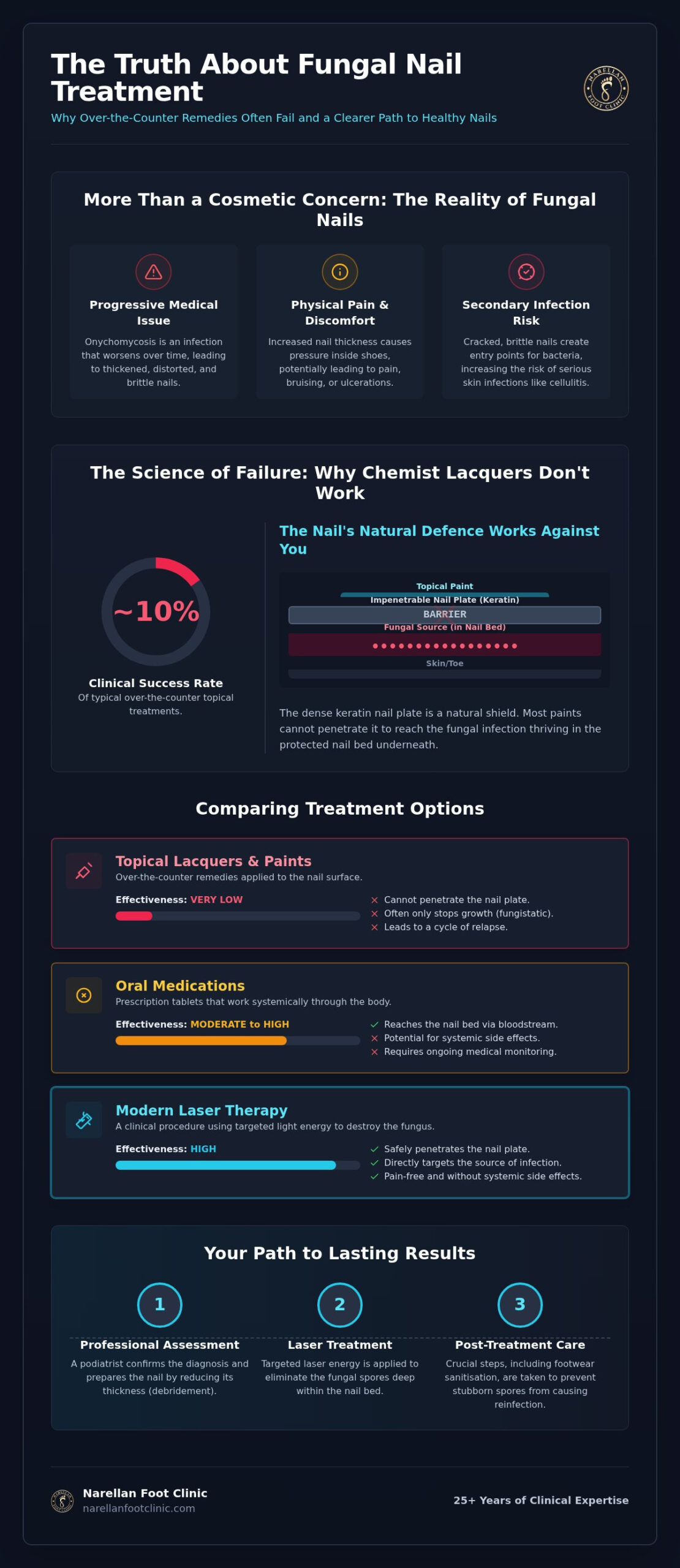
It’s a ritual many Australians know well. Every night, you carefully apply a medicated lacquer or paint to the nail surface, hoping this will be the month you finally see clear growth. Unfortunately, the biological reality of your foot is working against you. The nail plate is composed of dense, compacted layers of keratin designed by nature to be a tough, waterproof shield. While this protects your toes from injury, it also acts as a nearly impenetrable barrier for liquids. This is why most chemist-bought paints have a clinical success rate of less than 10-15%. They simply cannot soak through the plate to reach the infection site.
Fungus doesn’t live on top of your nail. It thrives in the dark, warm, and highly protected environment between the nail plate and the nail bed. By the time you notice discolouration, the infection is already deep within the structure. For a deeper look at clinical classifications and standard care, the Mayo Clinic guide to nail fungus provides an excellent overview of how these infections take hold. Without a delivery method that bypasses the keratin shield, your fungal nail treatment is likely only touching the surface. Consulting a toenail fungus podiatrist is the most reliable way to access treatments that can genuinely reach the source of the infection.
The Problem with “Over-the-Counter” Expectations
Many “fungistop” products found on supermarket shelves are fungistatic rather than fungicidal. This means they are designed to stop the fungus from growing further, but they don’t necessarily kill the existing spores. If you miss even a single day of application, the fungus can resume its spread. Over months of inconsistent use, this can actually encourage more resistant fungal strains to develop. Relying solely on these products often leads to a cycle of temporary improvement followed by a frustrating relapse.
The Role of Professional Debridement
To give any treatment a fighting chance, we must first address the physical thickness of the nail. Professional debridement involves a podiatrist using specialised clinical tools to thin the nail plate safely. This mechanical reduction removes the bulk of the infected material and allows secondary treatments to actually reach the nail bed. You should never attempt “bathroom surgery” by picking or filing your nails aggressively at home. This often causes trauma to the surrounding skin, which invites further infection. If you’re tired of the DIY cycle, our team at Narellan Foot Clinic can professionally prepare your nails to ensure your treatment actually works. For a comprehensive understanding of why nails become so difficult to manage in the first place, our guide to thick toenails treatment explains the clinical causes and restoration options in detail.
Comparing Treatment Options: Topicals, Tablets, and Laser Therapy
If you’ve already discovered that over-the-counter paints aren’t delivering results, you might believe the only remaining option is a course of strong prescription tablets. This leads us to our third myth: the idea that oral medication is the only “real” way to clear a deep-seated infection. While tablets were once the primary choice for clinical fungal nail treatment, modern podiatry has evolved significantly. We now have access to technology that targets the infection directly without the systemic risks associated with traditional drugs.
Finding an effective fungal nail treatment shouldn’t mean compromising your general health. At Narellan Foot Clinic, we believe in providing a clear, logical path toward recovery that balances efficiency with patient safety. By comparing the three main pillars of care, you can make an informed decision that suits your lifestyle and health history.
Oral Antifungals: Benefits vs. Risks
The Laser Advantage: A Modern Clinical Approach
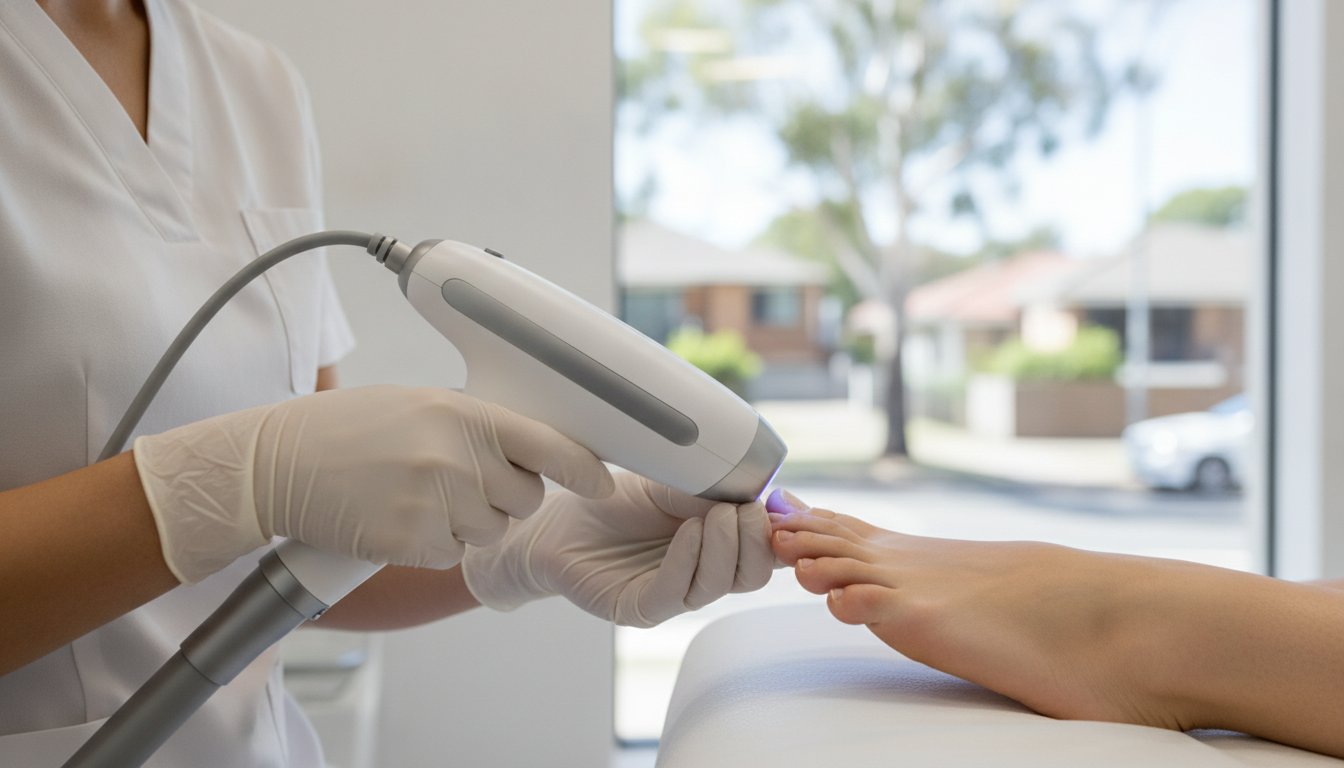
The most significant breakthrough in recent years is laser treatment for toenail fungus. This approach uses specific wavelengths of light to target and destroy fungal cells through a process called photo-biomodulation. It’s a highly targeted method that focuses solely on the infected area without damaging the surrounding healthy tissue or affecting your internal organs.
What does it actually feel like? Most patients describe a gentle, warming sensation during the procedure. It’s entirely pain-free, requires no needles, and involves no downtime. Because the laser can penetrate the nail plate more effectively than any cream, it often provides the fastest route to seeing healthy, clear nail growth. It offers a “safe pair of hands” for those who want clinical-strength results without the baggage of systemic side effects. By choosing a modern clinical solution, you’re opting for a treatment that respects your overall wellness while aggressively tackling the infection at its source.
This emphasis on clinical-strength technology is mirrored in other fields; for example, The Hair Clinic offers specialised therapeutic solutions for those seeking effective hair restoration beyond standard over-the-counter options.
Similarly, Arden Clinic utilises advanced laser and skincare technologies to provide clinical-grade aesthetic treatments, highlighting how professional medical standards are applied across various specialised health and beauty fields.
Preventing Recurrence: Your Post-Treatment Foot Care Routine
Completing a course of clinical fungal nail treatment is a significant achievement, but it isn’t the final whistle. A common misconception is the belief that once the infection has cleared, your feet are permanently immune. This is our fourth myth. Fungal spores are microscopic survivors that can linger in your environment for months. Without a proactive maintenance plan, even the most successful clinical outcome remains at risk of a relapse.
One of the biggest culprits for reinfection is untreated Tinea, commonly known as Athlete’s Foot. This skin-based fungus often lives quietly between the toes or on the soles of the feet. If left unmanaged, it acts as a reservoir, allowing the infection to migrate back to the newly healthy nail plate. Keeping the skin clear is just as vital as treating the nail itself to ensure your results last for years to come.
Footwear Hygiene and Environment
Your shoes are essentially a nursery for fungus. They provide the dark, warm, and humid conditions where spores thrive. To break this cycle, you must rotate your footwear every 24 hours. This simple habit allows the internal materials to dry out completely before you wear them again. We also recommend switching to moisture-wicking socks made from natural fibres like bamboo or wool. Unlike synthetic materials, these fibres pull sweat away from the skin, keeping your feet dry. While antifungal sprays aren’t a primary fungal nail treatment, using them inside your shoes acts as an excellent preventative measure to kill dormant spores.
Lifestyle Adjustments for Long-Term Success
The 5-Step “Fungus-Free” Maintenance Checklist:
- Sanitise all current footwear with a clinical-grade antifungal spray to kill dormant spores.
- Discard old, heavily contaminated socks and replace them with bamboo or wool alternatives.
- Practise meticulous drying between every toe after every shower, bath, or swim.
- Always wear protective footwear in public showers, changing rooms, and pool decks.
- Treat any itchy or peeling skin immediately to prevent Tinea from spreading back to the nails.
Maintaining clear nails requires a team effort between you and your podiatrist. If you have questions about which products are best for your skin type, contact our Narellan team for personalised advice and ongoing support.
Professional Podiatry Care at Narellan Foot Clinic
A common mistake is assuming that every clinic you visit will offer the same level of care. This brings us to our final myth: the idea that all podiatrists treat fungal nails the same way. At Narellan Foot Clinic, we believe that effective fungal nail treatment requires more than a one-size-fits-all approach. David J. Miller brings over 25 years of clinical experience to the Narellan and Macarthur community, providing a level of expertise that combines seasoned clinical judgment with modern medical advancements.
We don’t just look at the nail; we look at the entire environment of your foot. Our 360-degree solution integrates the three essential pillars of recovery: professional debridement to prepare the nail plate, advanced laser therapy to target the infection, and comprehensive patient education to stop the fungus from coming back. Every instrument we use is processed in a fully sterilised clinical environment, giving you the peace of mind that you’re in a safe pair of hands from the moment you walk through our doors.
What to Expect During Your First Consultation
Your journey begins with a thorough diagnostic assessment. It’s vital to confirm the presence of fungus before starting any treatment, as conditions like nail psoriasis or repetitive trauma can often mimic the appearance of onychomycosis. Once we have a clear diagnosis, we’ll create a personalised plan that fits your specific needs and health history. For our local patients, we offer the convenience of on-the-spot HICAPS and Medicare processing, making the administrative side of your healthcare as smooth and stress-free as the clinical side.
Booking Your Path to Clearer Nails
Delaying treatment only allows the infection to become more stubborn and the nail to grow thicker and more painful. In many cases, neglecting a fungal nail can lead to secondary complications that might eventually require ingrown toenail surgery if the nail plate becomes too distorted and begins to pierce the surrounding skin. Early intervention is always the most efficient path to recovery.
Our clinic is centrally located to serve residents in Narellan, Campbelltown, Camden, and the wider Macarthur region. We pride ourselves on being a reliable sanctuary for those seeking relief from foot discomfort. Don’t spend another Sydney summer hiding your feet in the sand or feeling embarrassed at the beach. Get a professional assessment today and start the transition from a state of worry to one of comfort and healthy, clear nails.
Step Toward Healthier, Clearer Nails Today
You don’t have to settle for the frustration of ineffective chemist paints or the systemic risks of oral medication. Understanding that your infection is a medical condition rather than a simple cosmetic flaw is the first step toward finding a lasting solution. By choosing a clinical fungal nail treatment that combines professional debridement with advanced laser technology, you can finally target the infection where it lives.
At Narellan Foot Clinic, David J. Miller uses over 25 years of local experience to guide you through a safe and effective recovery. We provide advanced laser therapy in a fully sterilised environment, with the added convenience of on-the-spot HICAPS and Medicare claims for our Macarthur neighbours. It’s time to reclaim your confidence and walk comfortably in sandals again. You are in a safe pair of hands with our methodical and caring approach to podiatry.
Book Your Fungal Nail Assessment at Narellan Foot Clinic Today
Frequently Asked Questions
How do I know if I have a fungal nail infection or just a bruised nail?
A fungal infection typically causes progressive thickening and yellow or white discolouration that spreads across the nail plate. In contrast, a bruised nail, known as a subungual haematoma, usually appears dark red, purple, or black immediately after a specific injury. While a bruise will slowly grow out with the nail, a fungal infection will worsen over time without intervention. A professional assessment is the only way to confirm the diagnosis accurately.
Is laser fungal nail treatment covered by private health insurance in Australia?
Many Australian private health funds provide rebates for laser therapy under their podiatry extras cover. The exact amount you can claim depends on your specific provider and your level of insurance. At our clinic, we offer on-the-spot HICAPS claims, which allows you to determine your out-of-pocket expenses immediately. We recommend contacting your fund directly to confirm your eligibility for laser-based fungal nail treatment before your appointment.
How many sessions of laser therapy are usually required to see results?
Most patients require a series of sessions to achieve the best possible clinical outcome. While every case is unique, a standard course often involves three to four treatments spaced several weeks apart to target the fungus effectively. It’s important to remember that results aren’t instantaneous. You’ll see clear, healthy nail growth emerge from the base as the old, damaged nail plate slowly grows out over several months.
Can I wear nail polish during my fungal nail treatment?
We generally advise against wearing traditional nail polish while undergoing treatment. Standard polishes create a waterproof, airtight seal that traps moisture underneath the nail, which can actually encourage fungal growth. If you have a special event, you might consider specialised oxygen-permeable polishes that allow the nail to breathe. However, for the fastest results, keeping the nails clear allows our clinical interventions to work without any unnecessary barriers.
Is toenail fungus contagious to other people in my house?
Yes, toenail fungus is highly contagious and can easily spread between family members. The infection moves through direct skin contact or by touching contaminated surfaces like bathroom tiles, bath mats, and shared towels. To protect others in your home, avoid walking barefoot in communal areas and never share nail clippers or hosiery. Regularly washing bath mats in hot water can also help reduce the risk of cross-contamination.
Why do my fungal nails keep coming back after I think they are cured?
Recurrence usually happens because microscopic spores are still present in your environment, particularly inside your footwear. If you don’t sanitise your shoes or treat accompanying skin infections like Tinea, the fungus will simply reinfect the nail as it grows. Long-term success with fungal nail treatment requires a dedicated maintenance routine, including rotating your shoes and keeping your feet dry, to ensure the infection doesn’t find a way back.
Does Medicare cover podiatry appointments for fungal nails?
Medicare typically only covers podiatry consultations for patients with chronic health conditions, such as diabetes, under a specific management plan from their GP. This is known as a Team Care Arrangement or Enhanced Primary Care plan. If you have one of these plans, you may be eligible for a rebate on your consultation fee. We can process these claims on-site to make the experience as straightforward as possible for you.
What is the fastest way to get rid of thick, yellow toenails?
The most efficient path to clear nails is a combination of professional debridement and advanced laser therapy. Debridement involves a podiatrist safely thinning the nail, which provides immediate relief from pressure and improves the nail’s appearance. Following this with laser therapy allows the light energy to penetrate deep into the nail bed to neutralise the infection. This clinical approach is significantly more effective than using over-the-counter paints alone. If you are struggling with severely thickened nails, our dedicated resource on thick toenails treatment and professional restoration outlines exactly what to expect from a clinical assessment and care plan.




1 Comment
[…] Before committing to another round of over-the-counter products, it’s worth reading about the common myths surrounding fungal nail treatment that may be keeping you from finding a solution that actually […]