

Have you ever wondered why your toenails have become so stubborn and thick that standard clippers simply won’t do the job anymore? It’s incredibly frustrating when something as simple as putting on a pair of joggers or heading to the beach becomes a source of physical pain or social embarrassment. You aren’t alone in feeling hesitant to show your feet or worried about the risks of “bathroom surgery” when trying to manage them yourself. Seeking a professional thick toenails treatment is often the first step toward reclaiming your comfort and mobility.
In this guide, you’ll learn exactly why toenails thicken and discover the professional steps required to safely manage, thin, and treat them for long-term relief. We’ll explore the transition from constant shoe pressure to pain-free walking by looking at clinical debridement and advanced restoration techniques. By the end of this article, you will understand how to achieve nails that look healthy and normal, ensuring you can return to your daily activities with a sense of calm confidence and the freedom to wear your favourite sandals again.
Key Takeaways
- Identify the root cause of your nail changes, whether it’s medical onychauxis or a response to repetitive physical pressure.
- Use the simple “colour test” to distinguish between fungal infections and physical trauma before starting any thick toenails treatment.
- Master safe maintenance techniques to avoid the dangers of home-based “bathroom surgery” and prevent secondary bacterial infections.
- Understand how excessive nail thickness acts as a lever, potentially causing painful ulcers and skin damage underneath the nail plate.
- Discover the benefits of professional clinical debridement for immediate relief and a healthier, more natural nail appearance.
Why Are My Toenails Getting Thicker? Understanding the Root Causes
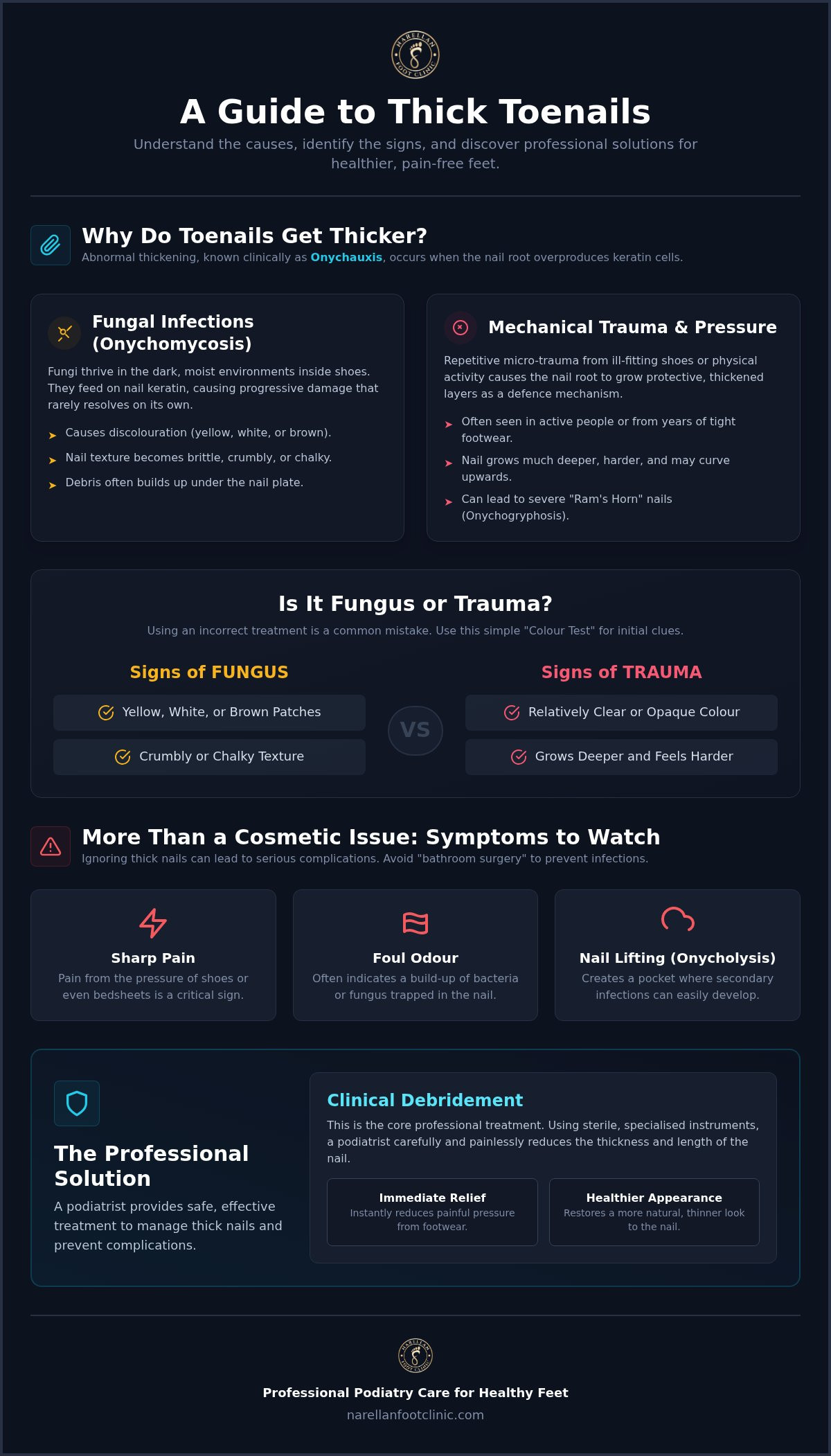
Noticing your toenails becoming increasingly hard to trim can be a stressful experience. It’s often the first sign that you need a professional thick toenails treatment to address the underlying issue. In the clinical world, we call this abnormal thickening Onychauxis. This condition occurs when the nail matrix, which is essentially the “root” of your nail located under the skin, begins to produce an excess of keratin cells. This overproduction can be triggered by various factors, ranging from external pressure to internal health shifts.
While many people assume a thick nail is always a sign of a hygiene issue, that’s rarely the case. We typically categorise the primary causes into three main areas: fungal infections, physical trauma, and changes in circulation. Occasionally, systemic health conditions like psoriasis or even certain vitamin deficiencies can also manifest through your nails. Identifying the specific trigger is the first step toward a successful thick toenails treatment plan.
Fungal Infections (Onychomycosis)
Microscopic fungi are opportunistic. They thrive in the dark, moist environments often found inside Australian work boots or well-worn joggers. Once the fungus takes hold, it begins to feed on the keratin of the nail plate. This leads to a distinct change in appearance. You might notice your nails turning yellow, white, or brown. Over time, debris builds up under the nail, and the texture becomes brittle or crumbly. This is a progressive condition. It rarely resolves on its own and usually requires a targeted clinical approach to clear the infection and restore the nail’s health. Consulting a toenail fungus podiatrist ensures you receive medical-grade treatment that reaches the source of the infection rather than relying on over-the-counter options that rarely penetrate a thickened nail plate.
Mechanical Trauma and Pressure
Physical injury is another major culprit. We often see “micro-trauma” in the active Narellan community, particularly among those who enjoy long walks or local sports. If your toes constantly “bump” against the end of your shoes, the nail root reacts by growing in protective, thickened layers. In cases of long-term neglect or severe injury, this can lead to Onychogryphosis, often called “Ram’s Horn” nails. The nail becomes extremely thick, curved, and difficult to manage with standard home tools. Whether it’s a one-off accident or years of tight footwear, the result is a nail that feels like it’s growing upwards rather than outwards.
Identifying the Culprit: Is it Fungus or Something Else?
Many Australians spend a small fortune on over-the-counter antifungal lacquers before realising their thick nails aren’t actually infected. If your nail has thickened due to years of sport or ill-fitting shoes, an antifungal thick toenails treatment won’t provide any relief. It’s a common mistake that leads to unnecessary frustration and expense. Distinguishing between a biological infection and mechanical damage is the essential first step to getting your feet back in top shape.
A simple “colour test” at home can offer some initial clues. As highlighted by the Mayo Clinic on Nail Fungus, infections often present with distinct discolouration like yellow, white, or brown patches. These nails often have a “crumbly” or chalky texture. Conversely, nails thickened by trauma often remain relatively clear or opaque but grow much deeper and harder. In some cases, the thickness is actually caused by a small bone spur, known as a subungual exostosis, which sits under the nail and physically pushes the plate upward.
Sometimes the way you walk is the hidden culprit behind your nail changes. A biomechanical assessment helps us identify if your gait is causing your toes to claw or strike the ground in a way that damages the nail root. Identifying these movement patterns is often the key to preventing the thickness from returning after we’ve reduced the nail. If you’re unsure why your nails are changing, a professional general foot care appointment can provide the clinical clarity you need.
The Symptoms You Shouldn’t Ignore
There are specific red flags that suggest your nails need professional attention sooner rather than later. If you feel sharp pain when your bedsheets touch your toes at night or when wearing your usual footwear, the pressure has reached a critical point. A foul odour often signals a buildup of bacteria or fungus trapped within the thickened layers. You should also watch for the nail plate lifting away from the bed. This condition, called onycholysis, creates a pocket where secondary infections can easily take root.
When Ageing Plays a Part
As we get older, our peripheral circulation naturally slows down. This physiological shift affects how the nail grows, often resulting in a “brittle-thick” texture rather than the rock-hard thickness seen in younger athletes. While ageing is a natural factor, it doesn’t mean you have to accept discomfort as a part of life. We focus on gentle, effective ways to manage these changes, ensuring your mobility remains unhindered. Professional care can transform these difficult nails into something much more manageable and comfortable for your daily walks.
How to Manage and Thin Thick Toenails Safely
Managing your feet at home requires a delicate touch and the right equipment. Attempting a DIY thick toenails treatment without proper preparation often leads to more harm than good. Standard fingernail clippers are simply not designed for the density of a thickened toenail. They can slip easily or require so much force that the nail shatters, potentially leading to painful skin tears. Instead of a quick fix, focus on a methodical approach that prioritises safety over speed. For those dealing with infections, Cleveland Clinic’s Guide to Toenail Fungus Treatment notes that keeping nails trimmed short helps reduce pressure and pain, but it must be done correctly.
The best time to attend to your nails is immediately after a shower or bath. Keratin, the protein that makes up your nails, absorbs water and becomes significantly more pliable when wet. This simple step makes the trimming process much easier and reduces the risk of the nail cracking under the pressure of the nippers.
Safe Home Trimming Techniques
- Step 1: Soften the nail plate with a warm, not hot, soak for five to ten minutes if you haven’t just showered.
- Step 2: Use high-quality, stainless steel podiatry-grade nippers. These tools provide better leverage and a cleaner cut than “guillotine” style cutters.
- Step 3: Make small, incremental cuts starting from one side of the nail. Don’t try to take the whole nail off in one go, as this can cause the nail to split.
- Step 4: Use a wide-grit emery board to gently file the top surface of the nail. This helps reduce vertical height and takes the pressure off your shoes.
The Hazards of “Over-Trimming”
While it’s tempting to cut as much as possible, aggressive trimming can create new problems. You should never cut deep into the corners of the nail. This habit often leaves a small spike of nail behind, which can grow into the skin and eventually require ingrown toenail surgery to correct. Filing the surface too aggressively can also be counterproductive, as it may thin the plate to the point where the sensitive nail bed is exposed and vulnerable to irritation.
Using blunt or improper tools also carries the risk of physical trauma to the nail bed. A subungual haematoma is a painful collection of blood under the nail that often occurs when blunt, insufficient tools cause crushing trauma during trimming. If you find your nails are too hard to manage with these safe steps, it’s a clear sign that professional intervention is required to restore your comfort safely.
Preventing Complications: Why Thick Nails Are More Than a Cosmetic Issue
While it’s tempting to view thickened nails as a minor cosmetic annoyance, they often indicate a deeper mechanical or biological shift. Ignoring the need for a thick toenails treatment can lead to a cascade of painful complications that extend far beyond the nail itself. When a nail plate thickens significantly, it begins to act like a lever. Every time you take a step, your shoe presses down on the front of the nail, which then pivots and exerts immense pressure on the sensitive nail bed beneath. This repeated force can cause subungual ulcerations, which are essentially sores that form under the hard nail plate where you cannot see or easily treat them.
The risks aren’t just limited to the nail bed. A distorted or thickened nail is much more likely to pierce the surrounding skin, especially if it’s been neglected. This often leads to paronychia, a painful bacterial infection characterised by redness, swelling, and pus around the nail fold. For our senior patients in Narellan, excessively long or thick nails can even become a trip hazard. If a nail is too thick to fit comfortably in a standard shoe, it can alter your balance or snag on socks and carpets, increasing the risk of a fall. Maintaining your general foot care is a vital part of staying active and mobile as you age.
Special Considerations for Diabetics
For those living with diabetes, thick nails represent a significant health risk rather than a simple nuisance. Many diabetics suffer from peripheral neuropathy, which reduces the ability to feel pain or pressure in the feet. If a thick nail creates a sore or ulcer underneath, you might not notice it until a serious infection has already taken hold. These hidden wounds are a leading cause of diabetic foot complications. We strongly recommend that all Narellan residents with diabetes attend regular professional screenings. Early detection and safe nail reduction are essential to prevent minor issues from becoming life-altering emergencies.
Secondary Fungal Spread
If the thickening is caused by a fungal infection, leaving it untreated creates a reservoir of spores on your skin. These spores don’t stay confined to one toe. They can easily spread to your other toes, your fingernails, or even other members of your household through shared bathroom floors and towels. This often leads to a cycle of “tinea-fungal nail” infections where the skin and nails constantly reinfect each other. Understanding the facts in our guide to fungal nail treatment is the first step in breaking this cycle and protecting your family’s foot health. If you’ve noticed your nails becoming difficult to manage, it’s time to book a professional assessment to ensure your feet stay healthy and pain-free.
Professional Podiatry Treatments at Narellan Foot Clinic
When home care becomes too difficult or risky, professional intervention offers a safe and efficient path to relief. At Narellan Foot Clinic, we’ve spent over 25 years serving the Macarthur region, providing a reliable sanctuary for those struggling with foot discomfort. Our thick toenails treatment is performed in a fully sterilised clinical environment, ensuring the highest standard of hygiene and care. We understand that physical pain and embarrassment can be a heavy burden, and our goal is to guide you back to a state of comfort with clinical precision and a gentle touch.
A podiatrist can achieve in minutes what would often take hours of frustrating and potentially dangerous effort at home. By using specialised medical equipment, we can safely reduce nail thickness to a normal level, immediately relieving the pressure that causes so much pain in your favourite shoes. This professional approach doesn’t just manage the symptoms; it sets the foundation for long-term nail health and improved mobility.
Clinical Nail Thinning (Debridement)
The process of clinical debridement involves the use of high-speed medical burrs and drills designed specifically for nail tissue. To ensure your comfort throughout the procedure, we utilise water-cooled sprays that keep the toe cool and prevent any heat buildup from friction. This makes the thinning process generally painless and provides instant relief from the “tight shoe” feeling. We don’t just thin the nail; we carefully re-shape it to improve its appearance and ensure it no longer catches on socks or hosiery. You’ll walk out of the clinic with nails that look and feel significantly better than when you arrived.
Advanced Laser Therapy Solutions
For patients whose thickening is caused by a persistent infection, we offer laser treatment for toenail fungus as a modern, clinical solution. This technology is considered the gold standard because it utilises photo-biomodulation to target fungal cells deep within the nail plate. Unlike topical paints or “chemist” lacquers that often struggle to penetrate a thick nail, laser energy passes through the keratin to treat the infection at its source without damaging the surrounding skin.
For our Narellan patients, we typically develop a structured treatment plan that combines initial debridement with a series of laser sessions. This dual approach ensures the nail is thin enough for the laser to be most effective while providing an immediate aesthetic improvement. It’s a methodical, trustworthy way to clear the infection and allow a healthy, clear nail to grow back in its place, giving you the freedom to return to your daily activities without hesitation. To learn more about how professional clinical expertise replaces guesswork with results, explore our dedicated guide on professional toenail fungus podiatrist treatments for clearer nails.
Reclaiming Your Comfort and Foot Health
Restoring the health of your feet begins with understanding that thickened nails are a manageable clinical symptom rather than a permanent burden. Whether your condition stems from years of sports-related trauma or a persistent fungal infection, the right thick toenails treatment can provide immediate relief from shoe pressure and physical discomfort. By choosing professional care over risky home maintenance, you protect your feet from secondary complications and ensure your mobility remains unhindered.
At Narellan Foot Clinic, principal podiatrist David J. Miller brings over 25 years of experience to the Macarthur community, offering expert solutions in a fully sterilised environment. We provide on-the-spot HICAPS and Medicare claims to make your path to recovery as smooth as possible. Don’t let physical pain or embarrassment hold you back from your favourite activities any longer. Book your professional nail assessment at Narellan Foot Clinic today and take the first step toward walking with confidence and ease. Your journey to healthy, normal-looking nails starts with a single appointment in a supportive, caring environment.
Frequently Asked Questions
Can I use Vicks VapoRub to treat thick toenails at home?
Vicks VapoRub isn’t a clinically proven thick toenails treatment, though some people use it as a home remedy. While it contains ingredients like menthol and eucalyptus oil, it lacks the penetrative power to reach deep infections within a thickened nail plate. Using unverified home remedies can often delay effective care and allow the underlying issue to worsen. A professional assessment ensures you’re using targeted, medical-grade solutions that actually resolve the root cause of the thickness.
How often should I see a podiatrist to have my thick nails thinned?
Most patients find that a visit every six to ten weeks is ideal for maintaining comfort and appearance. This timeframe allows your podiatrist to safely reduce the nail height before it begins to cause painful pressure against your shoes. If you’re managing a specific condition like diabetes or severe mechanical trauma, we might suggest a more frequent schedule. Regular clinical debridement prevents the return of physical pain and keeps your nails looking healthy and manageable.
Is the thickening of toenails always caused by a fungal infection?
No, thickening is not always a sign of a fungal infection. While onychomycosis is a common culprit, many cases are actually caused by repetitive mechanical trauma or reduced peripheral circulation as we age. For example, constant pressure from tight footwear or a past injury to the nail root can cause the nail to grow in protective layers. Distinguishing between these causes is vital, as treating a traumatic nail with antifungal medication is ineffective and a waste of resources.
Can thick toenails be cured permanently, or will they always grow back thick?
Whether thick nails can be permanently cured depends entirely on the underlying cause. If the thickness is due to a fungal infection, advanced laser therapy can often clear the pathogen and allow a healthy nail to grow back. However, if the nail root has been permanently damaged by severe trauma or physiological aging, the nail may continue to grow thick. In these cases, regular professional maintenance is the best path to ensure long-term comfort and a normal appearance.
Is it safe to go to a nail salon for a pedicure if I have thick, yellow nails?
It’s generally safer to avoid traditional nail salons if your nails are thick and yellow. Standard pedicures focus on aesthetics and often use tools that aren’t medically sterilised, which can spread infections or cause injury to a compromised nail. A podiatrist provides a medical-grade service in a fully sterilised environment, using precision instruments to thin the nail safely. This approach prioritises your health while achieving a much better cosmetic result for difficult, stubborn nails.
Why do my toenails feel like they are “lifting” off the bed as they get thicker?
That sensation of the nail lifting is a clinical condition known as onycholysis. As the nail plate thickens or becomes infected with fungus, debris builds up underneath, physically pushing the nail away from the bed. This creates a gap that can trap moisture and bacteria, often leading to secondary infections or a foul odour. Professional debridement removes this buildup, reducing the “lever” effect and allowing the nail to sit flatter and more comfortably against the toe.
Does Medicare or private health insurance cover thick toenail treatment?
Yes, many patients can access rebates for a professional thick toenails treatment. Narellan Foot Clinic offers on-the-spot HICAPS claims for those with eligible private health insurance extras cover. Additionally, if you have a chronic health condition and a referral from your GP under an Enhanced Primary Care plan, Medicare may cover a portion of your consultation fees. We recommend checking your specific policy or chronic disease management plan to confirm your level of coverage.
Will I need to take oral medication to fix my thick fungal nails?
Oral medication is no longer the only option for fixing thick fungal nails. While doctors once relied heavily on tablets, many patients now prefer laser therapy because it avoids the risk of liver toxicity and other systemic side effects. Laser energy targets the infection directly through the nail plate. At our clinic, we assess your health history and the severity of the infection to determine if laser, topical solutions, or oral medication is the most effective path.




2 Comments
[…] leaves behind. For those struggling with the discomfort of distorted nail shapes, our guide on thick toenails treatment offers practical advice on restoring the nail’s appearance and relieving pressure while the […]
[…] understanding of why nails become so difficult to manage in the first place, our guide to thick toenails treatment explains the clinical causes and restoration options in […]