Have you spent another summer hiding your feet in the sand or avoiding the local pool because of thick, discoloured nails? It’s incredibly frustrating to invest months into messy topical paints that simply don’t work, or to worry about the potential liver strain associated with heavy-duty oral medications. You aren’t alone in this struggle, as fungal infections affect about 10% of Australians and can be notoriously stubborn to shift. This is why many residents are now turning to laser treatment for toenail fungus as a modern, clinical alternative that prioritises both safety and long-term wellness.
At Narellan Foot Clinic, we understand that you want more than just a temporary fix; you want a safe pair of hands to guide you back to comfort. You’ll discover how advanced laser therapy effectively eliminates infections without the systemic side effects of traditional tablets. We’ll explain the science behind this painless process and provide expert guidance on preventing re-infection. This article outlines the logical path from embarrassment to confidence, ensuring you have the clear, healthy-looking nails you deserve through a professional and methodical treatment program.
Key Takeaways
- Understand how selective photothermolysis uses light energy to destroy fungal pathogens while leaving your healthy tissue completely unharmed.
- Discover why laser treatment for toenail fungus is a preferred clinical choice for those wanting to avoid the potential liver risks of oral antifungal tablets.
- Learn why professional debridement by a qualified podiatrist is a necessary step to ensure the laser penetrates deeply into the nail bed.
- Compare the long-term success rates of advanced laser therapy against traditional topical lacquers and messy home remedies.
- Gain expert advice on the post-care protocols needed to protect your investment and prevent the fungus from returning after your sessions.
Understanding Toenail Fungus (Onychomycosis) in the Australian Climate
Onychomycosis (toenail fungus) is a persistent infection that takes hold within the nail bed and the nail plate itself. It’s a stubborn condition. While it might start as a faint white or yellow spot, it quickly progresses into a deeper issue that changes the very structure of your nail. In our warm, humid Australian climate, fungal spores find the perfect breeding ground. Our love for the outdoors, combined with the heat trapped inside work boots or runners, creates a “greenhouse effect” that encourages fungus to thrive and spread rapidly.
You’ll likely notice specific changes as the infection matures. Common symptoms include a noticeable thickening of the nail, distinct yellow or brown discolouration, and a brittle texture that causes the nail to crumble at the edges. Beyond the physical appearance, the social impact is significant. Many people feel a deep sense of embarrassment, choosing to hide their feet even in the height of summer. If you’re also struggling with nails that have become difficult to manage, understanding your options for thick toenails treatment can help you take the right clinical steps before the condition worsens. Dealing with this early is vital, especially since modern options like laser treatment for toenail fungus offer a way to address the root cause without the risks of older methods.
Why Chemist Lacquers and Home Remedies Frequently Fail
It’s common to reach for a bottle of lacquer from the local chemist as a first line of defence. Unfortunately, these topical treatments often fall short because they cannot easily penetrate the hard, protective layer of the nail. Fungal colonies also produce a “biofilm”; this is a slimy, protective barrier that acts like a shield against superficial creams. Because toenails grow so slowly, you might find yourself applying these paints daily for 12 months with very little to show for it. This cycle of effort and failure is why many patients eventually seek the precision of laser treatment for toenail fungus to achieve real results. Before committing to another round of over-the-counter products, it’s worth reading about the common myths surrounding fungal nail treatment that may be keeping you from finding a solution that actually works.
The Risks of Ignoring a Fungal Nail Infection
Leaving an infection to “clear up on its own” is a risky strategy. Fungal spores are highly contagious and can easily spread to your other toes or to family members sharing the same shower. Over time, the distorted nail can become painful or lead to secondary bacterial infections, such as cellulitis. This is a particular concern for those with compromised circulation or underlying health conditions. We strongly recommend a professional diabetic foot assessment Narellan residents with diabetes can rely on for anyone with diabetes who notices nail changes, as what seems like a minor cosmetic issue can quickly escalate into a serious medical complication. Taking decisive action now protects both your comfort and your overall foot health.
The Science of Laser Treatment for Toenail Fungus
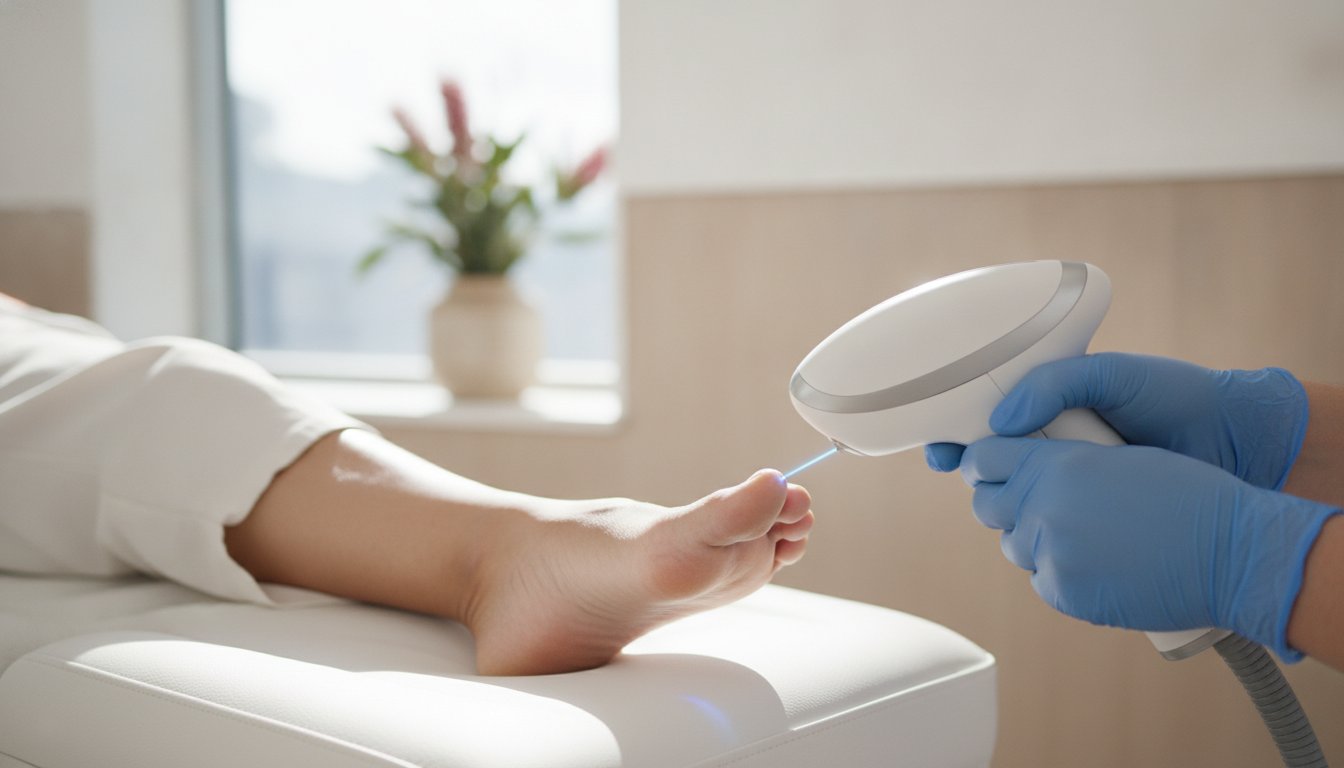
Modern laser treatment for toenail fungus isn’t just about applying heat; it’s a matter of clinical precision. The technology uses specific wavelengths of light energy that are absorbed specifically by the fungal pathogens living under your nail. This process is known as selective photothermolysis. It allows the laser to target and destroy the fungus while leaving your healthy skin and nail tissue completely untouched. A systematic review of laser treatment indicates that this targeted approach provides a significant clinical advantage over older, more invasive methods.
One of the most reassuring aspects of this therapy is the total absence of systemic side effects. Unlike oral antifungal medications that must be processed by your liver and travel through your entire bloodstream, the laser works only at the site of infection. You don’t have to worry about the stomach upsets or potential organ strain that often accompany long-term tablet use. There’s also a vital secondary benefit to consider. The light energy naturally increases local blood circulation to the nail bed. This surge in nutrients and oxygen helps your body “push out” the damaged nail and replace it with fresh, clear growth more efficiently.
Thermal Laser vs. Cold Laser Therapy
In the podiatry field, we generally categorise lasers into two groups: thermal and cold. Thermal lasers use controlled heat to physically neutralise the fungus. Cold lasers, on the other hand, use specific light frequencies to trigger your body’s own immune response to fight the infection. At Narellan Foot Clinic, we select our technology based on what provides the most comfortable and effective experience for our patients. Don’t let the word “laser” worry you; there’s no harmful radiation involved and certainly no “burning” of the skin. Most patients describe the feeling as a mild warmth or a slight tingling sensation.
The Role of Photo-biomodulation in Nail Recovery
A key part of the healing process is a phenomenon called photo-biomodulation. Photo-biomodulation is the use of light to stimulate healing at a cellular level. By targeting the mitochondria within your cells, the laser provides the energy needed for rapid repair. This process is essential because it accelerates the growth of a new, healthy nail plate. It’s a gentle yet powerful way to ensure your recovery is as swift as possible. If you’re tired of waiting for results from messy paints, you might want to speak with our team about how this technology can work for you.
Comparing Laser Therapy to Traditional Antifungal Methods
Deciding on a treatment path requires a clear understanding of the trade-offs involved. Traditionally, patients were limited to topical lacquers or oral tablets. Topical paints demand a rigorous daily commitment for up to a year, yet they frequently struggle to bypass the nail’s protective biofilm. Oral medications offer higher efficacy but come with the risk of liver toxicity, often necessitating regular blood monitoring to ensure your organs aren’t under undue strain. For many Australians, laser treatment for toenail fungus has become the preferred clinical solution because it bypasses these systemic risks entirely.
When you consider the “time-value” of your treatment, the choice becomes even clearer. Daily applications of lacquers are easy to forget and slow to work, leading to months of frustration. In contrast, a professional laser program focuses on a few high-impact sessions that treat the infection at its source. This localized approach is particularly beneficial for patients with pre-existing health conditions or those already taking multiple medications who cannot safely tolerate the metabolic load of oral antifungal drugs. Understanding the expert-debunked myths about fungal nail treatment can help you make a more informed decision about which path is right for you.
Why Podiatrist-Led Laser is Superior to Beauty Salon Treatments
It’s tempting to visit a beauty salon for a quick fix, but fungal infections are medical conditions that require clinical expertise. At Narellan Foot Clinic, we provide a fully sterilised environment to ensure your safety and prevent cross-contamination. Our diagnostic knowledge is also vital; we can accurately distinguish between a fungal infection and look-alike conditions such as nail trauma or psoriasis. Beauty salons often use lower-powered aesthetic devices that lack the clinical strength of the laser treatment for toenail fungus provided in a podiatry setting, which can lead to poor results and wasted investment.
Clinical Success Rates and Realistic Expectations
Success in treating onychomycosis is a partnership between advanced technology and your body’s natural biology. While the laser effectively neutralises the pathogens, your body must then grow a new, healthy nail to replace the damaged one. This process usually takes between 9 and 12 months for a full replacement. Factors such as your age, circulation, and the initial severity of the infection will influence how quickly you see a clear result. Sometimes, repeated nail trauma from sport or poor-fitting shoes creates a gateway for reinfection. In these cases, David J. Miller might suggest a biomechanical assessment to ensure your movement patterns aren’t contributing to the recurring damage of your nail plates.
Your Clinical Journey: What to Expect During Laser Treatment
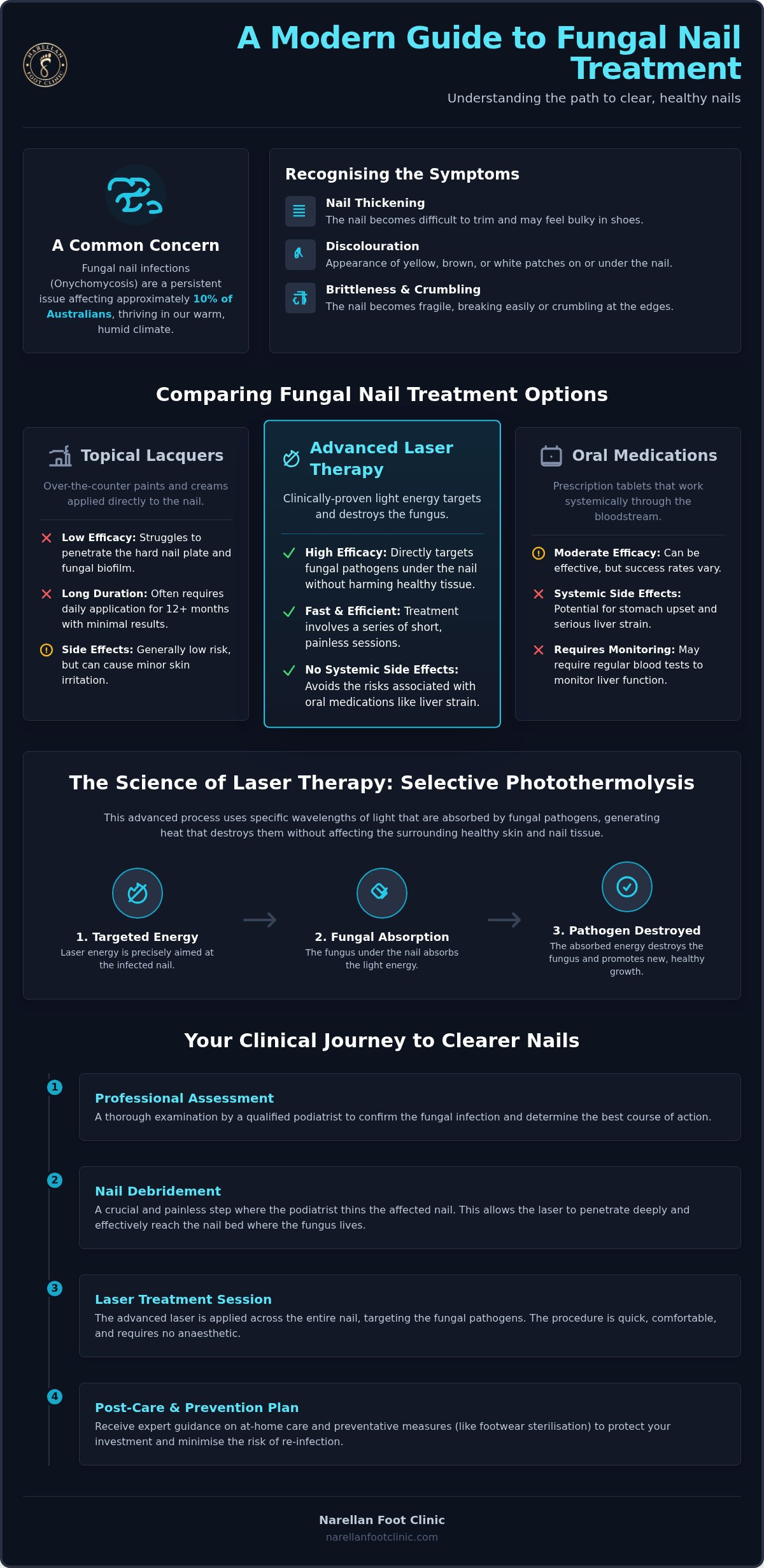
The path to clear nails begins with a methodical diagnostic phase. During your initial consultation, David J. Miller will assess the extent of the infection and confirm that onychomycosis is indeed the culprit. Once diagnosed, the first physical step is professional debridement. This involves carefully thinning the thickened nail plate using specialised clinical tools. For patients whose nails have become particularly difficult to manage due to their density, a dedicated thick toenails treatment protocol may be incorporated into this preparatory stage. This step is essential because it allows the light energy to penetrate deeply into the nail bed where the fungus resides. Without this expert preparation, the efficacy of laser treatment for toenail fungus is significantly reduced, which is why podiatrist-led care is so vital.
When the treatment commences, you’ll find the process quite straightforward and comfortable. As the laser moves across the nail, most patients experience only a mild, soothing warming sensation. There is no need for local anaesthesia or downtime; you can walk out of the clinic and return to your daily activities immediately. For moderate to severe infections, clinical data suggests that between 3 and 8 sessions are typically required to neutralise the pathogens effectively. If you’re ready to start this process, you can book your initial assessment with our experienced team today.
Preparing for Your Laser Appointment
To ensure the best possible results, a small amount of preparation is required from your side. Please remove all nail polish, shellac, or nail enhancements at least 24 hours before your appointment. This allows the nail to “breathe” and ensures no residue interferes with the laser’s path. We also ask that you bring a fresh pair of clean socks to put on immediately after your session. Putting your treated feet back into old, contaminated socks can lead to immediate re-exposure to fungal spores. Footwear sanitisation is another critical part of this preparation; treating your shoes before you arrive helps create the sterile environment needed for success.
Post-Treatment Hygiene: The Key to Permanent Results
While the laser does the heavy lifting in the clinic, your home-care routine determines the longevity of the results. Fungal spores are resilient and can survive in your environment for weeks. To protect your investment, we recommend the following protocols:
- Use a high-quality anti-fungal spray inside all your shoes daily.
- Wash all socks, hosiery, and bath mats in hot water (at least 60°C) to kill lingering spores.
- Maintain a “clean environment” protocol by regularly disinfecting bathroom floors and shower recesses.
Post-laser success is directly linked to the consistent sanitisation of the patient’s environment. By following these methodical steps, you aren’t just treating the current infection; you’re building a sanctuary that prevents the fungus from ever finding a foothold again.
Why Choose Narellan Foot Clinic for Fungal Nail Solutions?
Choosing where to receive your laser treatment for toenail fungus is a decision that impacts your long-term foot health. At Narellan Foot Clinic, you’re placing your care in a safe pair of hands. Led by principal podiatrist David J. Miller, our team brings over 25 years of experience to the Narellan community. We’ve spent decades refining our clinical approach to ensure every patient receives methodical, evidence-based care in a fully sterilised, medical-grade environment. This level of professional oversight is what sets us apart from non-clinical settings.
We understand that modern life is busy, so we’ve designed our practice to be as accessible as possible for residents across Campbelltown, Camden, and the broader Macarthur region. You don’t need to travel into the city for advanced technology. We offer on-the-spot HICAPS claims and Medicare processing for eligible patients, making the administrative side of your recovery seamless. Our goal is to remove the stress from healthcare, allowing you to focus entirely on your journey toward improved physical freedom and comfort.
A Holistic Approach to Foot Health
While we specialise in fungal solutions, we view your foot health through a much wider lens. Often, nail issues are just one part of a larger picture involving your gait or footwear. Our team is equipped to address related concerns, whether you’re seeking heel pain relief or require professional guidance on custom orthotics. We focus on mobility and relief for the long term, positioning our clinic as the primary sanctuary for comprehensive foot health in Sydney’s southwest. We don’t just treat symptoms; we look for the root cause to keep you active and pain-free.
Booking Your Consultation in Narellan
Reclaiming your confidence and the health of your nails starts with a single step. Our friendly reception team is here to make your booking process easy and stress-free. We invite local residents to reach out and discover how our professional laser treatment for toenail fungus can change their daily lives. Don’t let another season pass by with the frustration of hidden feet. Contact us today to arrange your initial assessment and move one step closer to the clear, healthy nails you’ve been waiting for.
Reclaim Your Confidence with Healthy, Clear Nails
You don’t have to live with the frustration of discoloured nails or the worry of systemic side effects from oral tablets. Modern technology offers a precise path toward recovery that respects your overall wellness. By targeting the infection at its source and supporting your body’s natural healing process, laser treatment for toenail fungus provides a reliable clinical solution. It’s about more than just aesthetics; it’s about returning to your daily activities without the burden of physical discomfort or social embarrassment. Pairing your laser sessions with a commitment to professional general foot care ensures that every aspect of your foot health is managed by seasoned clinical experts, giving you the best possible foundation for lasting results.
With over 25 years of experience serving the Narellan community, Principal Podiatrist David J. Miller and his team are here to provide the expert guidance you need. We offer a safe pair of hands in a fully sterilised environment, complemented by the convenience of on-the-spot HICAPS and Medicare claims. Take the first step toward lasting relief and physical freedom today. We invite you to Book Your Fungal Nail Assessment at Narellan Foot Clinic and start your journey toward healthier feet. You deserve to walk with comfort and ease once again.
Frequently Asked Questions
Does laser treatment for toenail fungus hurt?
Laser treatment for toenail fungus is generally a painless procedure. Most patients experience a mild, soothing warmth or a slight tingling sensation as the light energy targets the infection. There’s no need for local anaesthesia or needles, and the process is designed to be as comfortable as possible. We carefully monitor your comfort throughout the session to ensure a stress-free experience that prioritises your well-being.
How many laser sessions will I actually need?
Most patients require between 3 and 8 sessions to effectively neutralise a fungal infection. The exact number depends on the severity of the condition and how many nails are involved. During your initial consultation, David J. Miller will assess your specific needs and create a methodical treatment plan. This ensures we address the root cause of the fungus while providing a clear path toward healthy nail growth.
Can I wear nail polish or shellac during the treatment period?
You must remove all nail polish, shellac, and enhancements at least 24 hours before each laser session. These substances can block the laser’s light energy from reaching the fungal pathogens in the nail bed. Between sessions, it’s best to leave the nails bare to allow them to breathe and grow. If you must wear polish for a special occasion, choose a non-toxic, breathable brand and remove it promptly.
How long does it take to see the results of laser therapy?
Visible results take time because the damaged nail must grow out completely. You’ll typically see a clear, healthy nail appearing at the base within 3 to 6 months, but a full replacement can take 9 to 12 months. Because toenails grow slowly, patience is essential. We’ll monitor your progress during follow-up appointments to ensure the new growth remains healthy and free from re-infection.
Is laser treatment for toenail fungus covered by Medicare or private health funds?
Medicare does not currently cover laser treatment for toenail fungus as it’s often categorised as a cosmetic procedure. However, many private health funds provide partial rebates if your policy includes podiatry extras. At Narellan Foot Clinic, we offer on-the-spot HICAPS claims to make the process as simple as possible. We recommend checking with your specific provider to confirm your level of cover before starting your clinical journey.
Is laser therapy safe for people with diabetes?
Yes, laser therapy is a safe and effective option for people with diabetes. Unlike oral medications that can interact with other drugs or topical treatments that may cause skin irritation, the laser is non-invasive and targeted. It’s particularly beneficial because it avoids systemic risks. We always perform a thorough biomechanical assessment Narellan diabetic patients can trust first to ensure your circulation and skin health are suitable for the procedure.
What happens if I don’t treat my toenail fungus?
Leaving a fungal infection untreated can lead to several complications. The infection can spread to other toes or family members, and the nail may become thick, painful, and difficult to trim. Over time, the damaged nail can create entry points for bacteria, increasing the risk of serious secondary infections like cellulitis. This is a significant concern for those with compromised immune systems or circulation issues. Maintaining a consistent routine of general foot care with professional clinical support is one of the most effective ways to catch these issues early and prevent them from escalating.
Can I go back to work or exercise immediately after the session?
You can return to your normal daily activities, including work and exercise, immediately after your appointment. There is no downtime or recovery period required following the procedure. We simply recommend that you put on a fresh, clean pair of socks to avoid immediate re-contamination from fungal spores. This efficiency allows you to prioritise your foot health without disrupting your busy Australian lifestyle or work commitments.




8 Comments
[…] injections. The same advanced laser technology used in heel pain recovery is also available as a laser treatment for toenail fungus, offering a safe and effective clinical solution for stubborn nail infections without the systemic […]
[…] most significant breakthrough in recent years is laser treatment for toenail fungus. This approach uses specific wavelengths of light to target and destroy fungal cells through a […]
[…] tissue regeneration during the healing process. Because of this high precision and safety profile, laser treatment for toenail fungus has become the gold standard in professional podiatry […]
[…] if you notice thickening or discolouration of the nail plate alongside your ingrown nail, laser treatment for toenail fungus may be a complementary clinical option worth discussing with your […]
[…] prevents complications. Similarly, if you notice discolouration or thickening of the nails, seeking laser treatment for toenail fungus early is far more effective than waiting. If you’re unsure about a new mark or sensation, […]
[…] this hard barrier effectively, leading to a cycle of frustration and wasted money. This is where laser treatment for toenail fungus offers a superior path to relief. The laser energy passes through the nail to target the infection […]
[…] pipeline.” When left untreated, the fungus can migrate under the nail plate, leading to fungal nail infections. Once the fungus takes hold in the nail, it becomes significantly harder to eradicate because the […]
[…] and other conditions. Sometimes, what looks like a runner’s toe is actually one of several fungal nail infections. Fungal issues typically develop slowly and cause the nail to become brittle or yellow, whereas a […]