
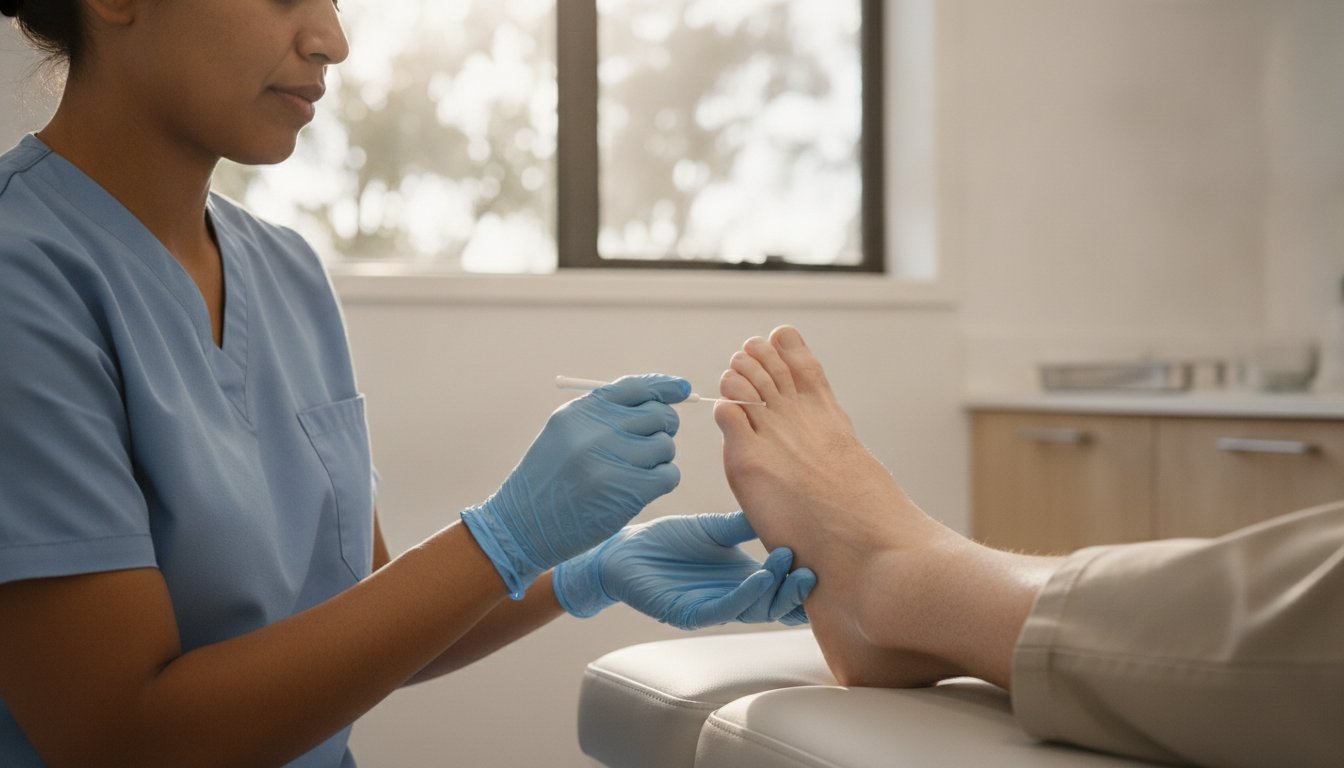
What if the most important step in managing your diabetes wasn’t a blood test, but a simple look at your feet? With over 1.3 million Australians currently living with diabetes, the risk of foot complications is a reality that many face with a sense of quiet anxiety. It’s completely understandable to feel overwhelmed by clinical terms like neuropathy or the frightening prospect of amputation. You might even find it physically difficult to perform thorough self-inspections at home, leaving you wondering if you’ve missed something vital.
We believe that healthcare should be a source of relief rather than stress. In this guide, you’ll discover exactly what happens during a professional diabetic foot check and how a specialised biomechanical assessment Narellan residents trust can protect your long-term mobility. Our team at Narellan Foot Clinic provides a safe, supportive environment where complex medical data is translated into clear, actionable advice. We’ll walk you through a practical daily care routine and help you understand your personal risk level with total clarity. By the end of this article, you’ll feel confident in the clinical process and empowered to maintain your physical freedom for years to come.
Key Takeaways
- Understand how professional screenings identify early signs of neuropathy and circulation issues to prevent serious complications.
- Learn how a comprehensive biomechanical assessment Narellan podiatrists perform evaluates your foot structure to reduce pressure points and protect your skin.
- Discover the painless, modern techniques used to map nerve sensitivity and blood flow during your clinical consultation.
- Find out how to interpret your personal risk stratification results and what they mean for your long-term foot health.
- Master a simple daily home care routine, including the “mirror test,” to maintain healthy feet between professional visits.
What is a Diabetic Foot Assessment and Why is it Critical?
A diabetic foot assessment is a specialised clinical screening designed to detect the earliest signs of damage caused by high blood glucose levels. Unlike a standard pedicure or a quick home check, this evaluation focuses on three pillars: neurological health, vascular efficiency, and skin integrity. It’s a proactive shield for your mobility. Because diabetes often causes “silent” changes, professional intervention is the only way to identify risks before they escalate into visible wounds. This screening is a fundamental part of your broader diabetes management plan, ensuring that your feet remain healthy enough to support your daily activities.
Chronic high blood sugar can lead to Diabetic foot disease, a condition where nerve damage and poor circulation combine to create a high-risk environment for the lower limbs. During a comprehensive biomechanical assessment Narellan patients receive at our clinic, we look beyond just the surface. We analyse how your foot structure and walking pattern might be creating high-pressure areas that lead to calluses or ulcers. By identifying these mechanical stresses early, we can implement strategies to redistribute pressure and prevent skin breakdown.
The Role of the Podiatrist in Your Healthcare Team
David J. Miller brings over 25 years of experience to the Narellan and Macarthur community. He doesn’t work in isolation; he acts as a vital link between your GP and endocrinologist to provide holistic care. While you might use a mirror at home to check for redness, a podiatrist uses clinical tools to detect what the eye cannot see. We look for subtle shifts in skin temperature, tiny changes in pulse strength, and early loss of protective sensation. This level of expert scrutiny is what defines a “safe pair of hands” for your foot health.
Understanding the Risks: From Neuropathy to Ulceration
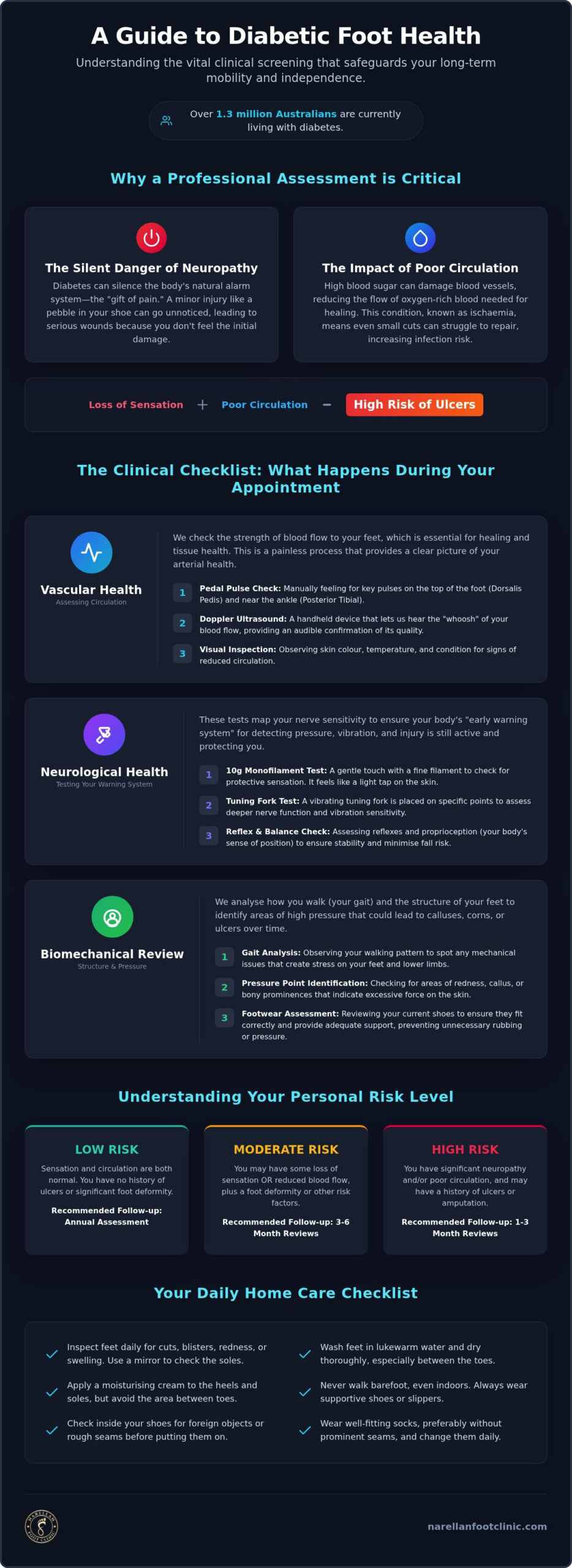
Pain is usually our body’s alarm system, but diabetes can silence that alarm. This loss of the “gift of pain” means a small pebble in your shoe or a minor blister can go unnoticed for days. When you combine this with ischaemia, which restricts the oxygen-rich blood needed for repair, a tiny nick can quickly turn into a chronic ulcer. Recent data from the Australian Diabetes Clinical Quality Registry shows that 12% of adults attending diabetes services reported peripheral neuropathy. Regular podiatry visits are proven to significantly reduce the risk of hospitalisation by catching these issues while they are still manageable. Our diabetes foot check guide explains in detail how these clinical screenings work to protect your long-term mobility.
The Clinical Checklist: What Happens During Your Narellan Appointment?
Walking into a clinical environment can sometimes feel daunting, but many patients feel an immediate sense of relief once they realise that a diabetic foot check is entirely painless. It’s a methodical, calming process designed to catch issues before they become common diabetic foot problems. We focus on how your nerves, blood vessels, and skin are performing. Understanding how a biomechanical assessment Narellan podiatrists provide can safeguard your mobility ensures you have a clear map of your current health status.
Vascular Health: Listening to Your Circulation
We begin by checking your pedal pulses, specifically the Dorsalis Pedis on top of the foot and the Posterior Tibial near the ankle. These are your primary lifelines for foot health. We also use a Doppler ultrasound, which allows us to hear the “whoosh” of your blood flow. This gives us a clear, audible picture of your arterial health. Just as we use this for vascular health, diagnostic specialists like Poliklinika Dr. Nabil employ ultrasound to monitor other critical systems, such as the thyroid, which is essential for overall hormone balance in diabetic patients. We also observe skin temperature and colour, as these are vital indicators of how well your body is delivering oxygen and nutrients to your toes to support natural healing.
To map your nerve sensitivity, we use a 10g monofilament. It’s a small, flexible tool that feels like a gentle tap on the skin. We also use a tuning fork to test for vibration sensitivity, which helps us assess deeper nerve function. These tests are vital because they tell us if your “early warning system” is still active. We also check your reflexes and proprioception, which is your body’s ability to sense its position, to ensure your balance remains stable and your risk of falls is minimised.
Biomechanical Assessment and Footwear Review
A key part of our service is a thorough biomechanical assessment Narellan patients find incredibly insightful. We analyse your gait and foot structure to see where pressure is concentrating. This is why we ask you to bring your everyday shoes, work boots, and even your slippers to the clinic. We examine the wear patterns on your soles to understand your movement. If we find high-pressure zones, custom orthotics can be designed to offload that stress and protect vulnerable skin sites.
Finally, we perform a dermatological review to look for corns, calluses, or fungal infections that might cause complications if left untreated. We’ll also discuss how your footwear choices impact these conditions. If it’s been a while since your last check, booking a professional diabetic foot assessment at Narellan Foot Clinic is a proactive way to stay ahead of any changes and maintain your physical freedom.
Risk Stratification: Understanding Your Personal Results
Once the clinical tests are finalised, we translate the data into a clear risk category. This stratification is the cornerstone of modern diabetic care in Australia, moving away from reactive treatments toward proactive prevention. By identifying exactly where you sit on this scale, we can create a management plan that balances clinical safety with your personal lifestyle goals. This categorisation helps us decide how often you need professional care and what specific precautions you should take at home.
- Low Risk: You have normal sensation and healthy pulses. We focus on maintaining this status with a standard annual review and education on healthy foot habits.
- Medium Risk: We’ve detected early signs of neuropathy or peripheral vascular disease. This requires increased clinical vigilance and perhaps changes to your footwear or activity levels.
- High Risk: This category is for those with a history of foot ulcers, amputations, or significant structural deformities. Frequent specialised care is essential to prevent new complications.
- Active Category: If you have a current wound, ulcer, or infection, you require immediate and ongoing management to promote healing and protect the limb.
A comprehensive biomechanical assessment Narellan podiatrists perform allows us to see how your gait influences these risk factors over time. We specifically look for “hot spots” where high pressure meets reduced sensation. This structural analysis is vital because a foot deformity can elevate your risk level even if your circulation is currently healthy.
How Often Should You Have a Foot Check?
Standard Australian guidelines recommend an annual review for those at low risk. If changes are detected, we typically move to reviews every three to six months to stay ahead of any progression. For high-risk individuals, bi-monthly visits are often necessary to provide a “safe pair of hands” for nail and skin care. You should never wait for your scheduled appointment if you notice sudden changes such as persistent redness, new swelling, localised heat, or any break in the skin. Consistency in these checks is what prevents the serious complications often seen in national health statistics.
Decoding Your Podiatry Report
Your podiatry report is a clinical summary of your foot health. It might contain specialised terms like “ischaemia” or “loss of protective sensation”. We don’t expect you to be a medical expert; we take the time to explain these results in plain English during your consultation. We also ensure a copy is sent to your Narellan GP to be included in your medical records, facilitating a coordinated approach to your diabetes care. For those who require additional support with their medical and rehabilitative needs at home, you can check out Everest Peak Home Health Care. Our shared goal is to maintain your current health and prevent a transition into a higher risk category through a tailored biomechanical assessment Narellan residents can rely on for long-term wellness.
Your Daily Home Care Checklist
A professional clinical check provides the foundation for your health, but your daily habits at home are what sustain it. While a biomechanical assessment Narellan podiatrists perform identifies structural risks, your eyes are the first line of defence against daily wear and tear. Setting aside just one minute every morning can be the difference between a minor irritation and a significant clinical complication. By integrating these simple steps into your routine, you take active control of your long-term wellness.
The “mirror test” is a simple, effective technique for those with limited flexibility. Place a hand mirror on the floor to inspect the soles of your feet for any redness, blisters, or dry skin. This daily habit ensures that no part of your foot is left unmonitored. Before sliding your feet into your shoes, always perform a quick internal sweep. Shake out your shoes and feel for small pebbles, torn linings, or rough seams. Because neuropathy can dull your sensation, you might not feel a sharp object until it has already caused damage. For a complete overview of evidence-based habits, our detailed guide on foot care for diabetics outlines every step you need to protect your feet between clinical visits.
Skin hydration is equally vital for maintaining integrity. Applying a quality urea-based cream helps prevent painful heel fissures that can become entry points for infection. However, keep the cream away from the gaps between your toes, as excess moisture in these dark areas can encourage fungal growth. Proper nail maintenance is also critical; professional trimming prevents the complications that often lead to ingrown toenail surgery.
The 60-Second Daily Inspection
Your morning routine should include a search for specific red flags: localised swelling, “hot spots” that feel warmer than the surrounding skin, or any unusual odours. The golden rule for diabetic foot health is to never walk barefoot, even inside your own home. A stray crumb or a hard floor surface can create enough pressure to cause a bruise or break in the skin. If you discover a minor cut or blister tonight, clean it with mild antiseptic and apply a sterile dressing immediately.
Safe Management of Minor Issues
It’s tempting to treat a corn or callus at home, but “bathroom surgery” is incredibly risky for anyone with diabetes. Over-the-counter corn pads often contain acids that can damage healthy skin and lead to ulcers. Consulting a corn removal podiatrist for safe, clinical treatment is a far more effective approach than risking infection with home remedies. Choosing professional general foot care for calluses and corns is a far safer alternative that protects your skin integrity and prevents complications. Similarly, if you notice discolouration or thickening of the nails, seeking laser treatment for toenail fungus early is far more effective than waiting. If you’re unsure about a new mark or sensation, it’s always safer to book a professional review at Narellan Foot Clinic rather than attempting home remedies. A specialised biomechanical assessment Narellan residents trust can determine if these minor issues are being caused by underlying structural pressure.
Booking Your Assessment at Narellan Foot Clinic
Choosing the right provider for your diabetic care is about finding a “safe pair of hands” you can trust for the long term. At Narellan Foot Clinic, we’ve spent over 25 years supporting the South West Sydney community with professional, empathetic care. Led by David J. Miller, our clinic operates in a fully sterilised environment. We ensure your safety is our absolute priority. We understand that physical discomfort and the complexities of diabetes can be stressful. That’s why we’ve designed our practice to be a welcoming sanctuary for those seeking relief and long-term wellness.
While our focus is on diabetic safety, we also look at your overall mobility. A comprehensive biomechanical assessment Narellan residents receive often uncovers the root cause of other issues. This might include a requirement for heel pain treatment. By addressing these concerns together, we help you return to your daily activities with confidence and ease. Our clinic is conveniently located for locals in Narellan, Campbelltown, and the broader Macarthur region. We offer easy parking to make your visit as smooth as possible.
Medicare and Health Fund Information
Accessing professional care is made easier through various Australian healthcare initiatives. If you have a chronic condition like diabetes, you may be eligible for a Medicare rebate through a Chronic Disease Management (CDM) plan. You’ll need a referral from your GP to access this support. We also provide on-the-spot HICAPS processing for all major private health insurers. This allows you to claim your extras benefit immediately, leaving only the gap payment to be settled. Our clinic proudly supports NDIS participants and Department of Veterans’ Affairs (DVA) patients. We believe high-quality care should be accessible to everyone in our community.
Preparing for Your Appointment
To get the most out of your consultation, we recommend a little preparation. Please bring the footwear you wear most often. This includes work boots or slippers, as these provide vital clues about your gait during a biomechanical assessment Narellan patients find very thorough. Having a current list of your medications and your latest HbA1c results helps us build a complete clinical picture. A comprehensive assessment typically takes around 30 to 45 minutes. We move at a steady, methodical pace that never feels rushed. You’re always welcome to bring a family member or carer along for support or to help take notes. We’re here to ensure you feel informed and supported throughout the entire interaction.
Securing Your Mobility and Future Health
Managing diabetes is a lifelong commitment, but you don’t have to walk this path alone. By combining a diligent daily home care routine with regular clinical screenings, you can effectively manage risks and maintain your physical freedom. A professional biomechanical assessment Narellan at our clinic provides the detailed insights needed to protect your feet from the “silent” complications of neuropathy and reduced circulation. These assessments act as an early-warning system, identifying pressure points before they escalate into serious health challenges.
With over 25 years of local clinical experience in Narellan, Principal Podiatrist David J. Miller offers a safe pair of hands for your foot health. Our team is dedicated to providing a gentle, patient-centric experience in a fully sterilised environment. We also make the administrative side simple with on-site HICAPS and Medicare claim processing for your convenience. Book Your Comprehensive Diabetic Foot Assessment at Narellan Foot Clinic today and gain the confidence that comes with expert, compassionate care. Taking this proactive step now ensures you can continue enjoying your daily activities without hindrance for years to come.
Frequently Asked Questions
Is a diabetic foot assessment painful?
A diabetic foot assessment is completely painless and non-invasive. We use gentle tools like a 10g monofilament and Doppler ultrasound to check your nerves and circulation without any discomfort. Most patients find the process quite relaxing as we move methodically through each clinical test. It’s designed to be a supportive experience that provides total clarity about your health rather than causing any physical stress or worry during your consultation.
Can I get a Medicare rebate for podiatry in Narellan?
Yes, eligible patients with a Chronic Disease Management (CDM) plan from their GP can access Medicare rebates for up to five podiatry visits per year. At Narellan Foot Clinic, we facilitate on-the-spot Medicare processing to make the experience as seamless as possible for our local Campbelltown and Narellan residents. You’ll just need to bring your current referral to your appointment so we can process the claim and reduce your out-of-pocket costs.
What is the difference between a pedicure and a diabetic foot check?
A pedicure is a cosmetic treatment focused on appearance, whereas a diabetic foot check is a comprehensive medical evaluation. While a pedicure might involve soaking and nail painting, our clinical assessment focuses on identifying life-altering issues like neuropathy and poor circulation. We operate in a fully sterilised environment using medical-grade equipment to ensure your safety, which is a standard far beyond what a typical beauty salon can provide for your feet.
Why do I need a foot check if I have no pain?
You need a check because diabetes can often silence your body’s natural alarm system through nerve damage. This means you might have a blister, cut, or pressure sore without feeling any pain at all. These “silent” issues can quickly escalate into serious infections if left untreated. Regular screenings allow us to find these hidden problems early, ensuring your mobility remains protected even when your feet feel perfectly fine to the touch.
What should I do if I find a blister on my foot tonight?
If you discover a blister tonight, you should clean the area with a mild antiseptic and apply a sterile dressing immediately. It is vital that you don’t attempt to pop or “perform surgery” on the blister yourself, as this creates an entry point for infection. Monitor the site for redness or warmth and call our clinic the following morning to arrange a professional review for your peace of mind and safety.
How long does a comprehensive diabetic foot assessment take?
A comprehensive diabetic foot assessment typically takes between 30 and 45 minutes to complete. This timeframe allows us to perform a thorough vascular and neurological screening while also discussing your home care routine and footwear. We move at a steady, calming pace to ensure every concern is addressed. This duration also includes time for a specialised biomechanical assessment Narellan residents find essential for identifying high-pressure areas that could lead to future skin breakdown.
Does Narellan Foot Clinic offer on-the-spot HICAPS claims?
Yes, we provide instant HICAPS processing for all major private health insurers at our clinic. This allows you to claim your extras benefit on-the-spot, meaning you only need to pay the remaining gap. This convenience is part of our commitment to providing a stress-free experience for our patients in the Macarthur region, ensuring you can focus on your recovery and long-term wellness rather than dealing with complex administrative paperwork later.
What is a monofilament test and why is it used?
A monofilament test involves using a small, flexible plastic wire to gently touch specific points on your feet. It is a painless way to check if you still have “protective sensation,” which is your ability to feel a minor injury. This test is a core component of a diabetes foot check that Narellan podiatrists use to map your neurological health. It helps us determine your personal risk level and create a tailored management plan for you.




7 Comments
[…] layers of your tissue. For a more comprehensive look at what to monitor, you can refer to our Diabetic Foot Assessment Narellan […]
[…] community managing chronic health issues, professional oversight is even more critical. A regular diabetic foot assessment is an essential safeguard against serious complications. It ensures that small changes in sensation […]
[…] to standard plantar wart treatment. This is particularly concerning for those requiring specialised diabetic foot care. In these cases, a wart isn’t just a minor nuisance; it’s a potential source of […]
[…] or visiting family, being pain-free and mobile is essential. The process begins with a professional diabetic foot assessment, which provides a clear clinical baseline for your care. This assessment ensures your treatment […]
[…] urgent care. For those managing diabetes, self-treating is never advised because of potential healing complications that require professional monitoring and a sterile clinical […]
[…] where you need it most. To help you prepare for your visit, we have developed a comprehensive Diabetic Foot Assessment Narellan guide that outlines exactly what to expect during your time with […]
[…] those living with diabetes, regular diabetic foot assessments are a non-negotiable part of a healthy lifestyle. These preventative screenings focus on […]