
You have likely spent months trying every home remedy, from salt baths to careful trimming, only to find that sharp, stabbing sensation returns the moment you put on your favourite shoes. It’s exhausting to manage recurring infections and the constant worry of someone accidentally bumping your foot. If you’re tired of the cycle of temporary fixes, ingrown toenail surgery offers a sophisticated, permanent solution that finally ends the discomfort. We understand that the idea of a clinical procedure can feel daunting, but modern techniques have transformed this into a gentle, 20-minute correction.
In this professional guide, we’ll walk you through everything you need to know about the process, from the initial clinical procedure to the quick recovery period. You’ll discover how a sterile environment and expert care ensure your safety while providing a result that looks natural and feels even better. Our approach focuses on providing a safe pair of hands, guiding you through a seamless transition from persistent worry to a state of comfort and ease so you can walk pain-free again.
Key Takeaways
- Understand why permanent ingrown toenail surgery is the clinical gold standard for ending the cycle of recurring infections and debilitating pain.
- Learn what to expect during a Partial Nail Avulsion (PNA), from the administration of local anaesthetic to the use of modern, gentle techniques in a sterile environment.
- Discover the essential aftercare steps required to ensure a swift return to mobility and your daily activities within just a few days of the procedure.
- See how a comprehensive biomechanical assessment can identify the underlying cause of your nail issues to help prevent them from ever returning.
- Recognise why 25 years of local clinical experience provides the “safe pair of hands” and peace of mind needed for a successful long-term outcome.
What is Ingrown Toenail Surgery? A Clinical Overview
Ingrown toenail surgery is a minor clinical procedure designed to remove the offending nail edge that has pierced the surrounding skin. While conservative treatments often provide temporary relief, surgery is the definitive solution to prevent the problem from returning. This approach is widely considered the ‘gold standard’ for managing chronic or recurring onychocryptosis, the medical term for an ingrown nail. By addressing the root cause, we move beyond simply managing symptoms to providing a permanent resolution.
In clinical practice, there is a clear distinction between a Total Nail Avulsion (TNA) and a Partial Nail Avulsion (PNA). A TNA involves the removal of the entire nail plate, which is typically reserved for severe deformities or systemic nail disease. Conversely, a PNA focuses only on the narrow sliver of nail causing the irritation. Partial Nail Avulsion is the preferred permanent surgical method in 2026 because it offers a faster recovery and a superior aesthetic outcome. Understanding the Surgical treatment of ingrown toenails helps patients appreciate how modern techniques prioritise both clinical success and the preservation of a natural appearance.
Common Indicators That Surgery is Required
Not every ingrown nail requires a surgical intervention; however, certain clinical signs suggest that conservative care is no longer sufficient. When the nail has reached a stage where it consistently breaches the skin barrier, professional intervention becomes necessary to prevent long-term complications. You should consider ingrown toenail surgery if you experience:
- Recurrent infections: If you’ve needed multiple rounds of antibiotics but the redness and swelling keep returning, the nail spike is likely still acting as a foreign body.
- Hypergranulation tissue: This refers to the growth of excess, fleshy skin over the nail edge, which is the body’s overactive response to persistent irritation.
- Debilitating pain: When the discomfort prevents you from wearing standard footwear or participating in sport, it’s a clear sign that the condition is impacting your quality of life.
The Goal of Permanent Correction
The ultimate objective of a permanent correction is to provide a result that is both functional and aesthetically pleasing. After the procedure, the nail should look entirely normal, albeit slightly narrower than before. By eliminating the ‘invading’ nail spike that causes inflammation, we can ensure the skin heals correctly and stays healthy. Once the immediate pain is resolved, we often recommend a biomechanical assessment to evaluate your gait. This holistic approach ensures that any underlying walking patterns contributing to nail pressure are addressed, supporting your long-term foot health and mobility.
The PNA Procedure: Step-by-Step Clinical Process
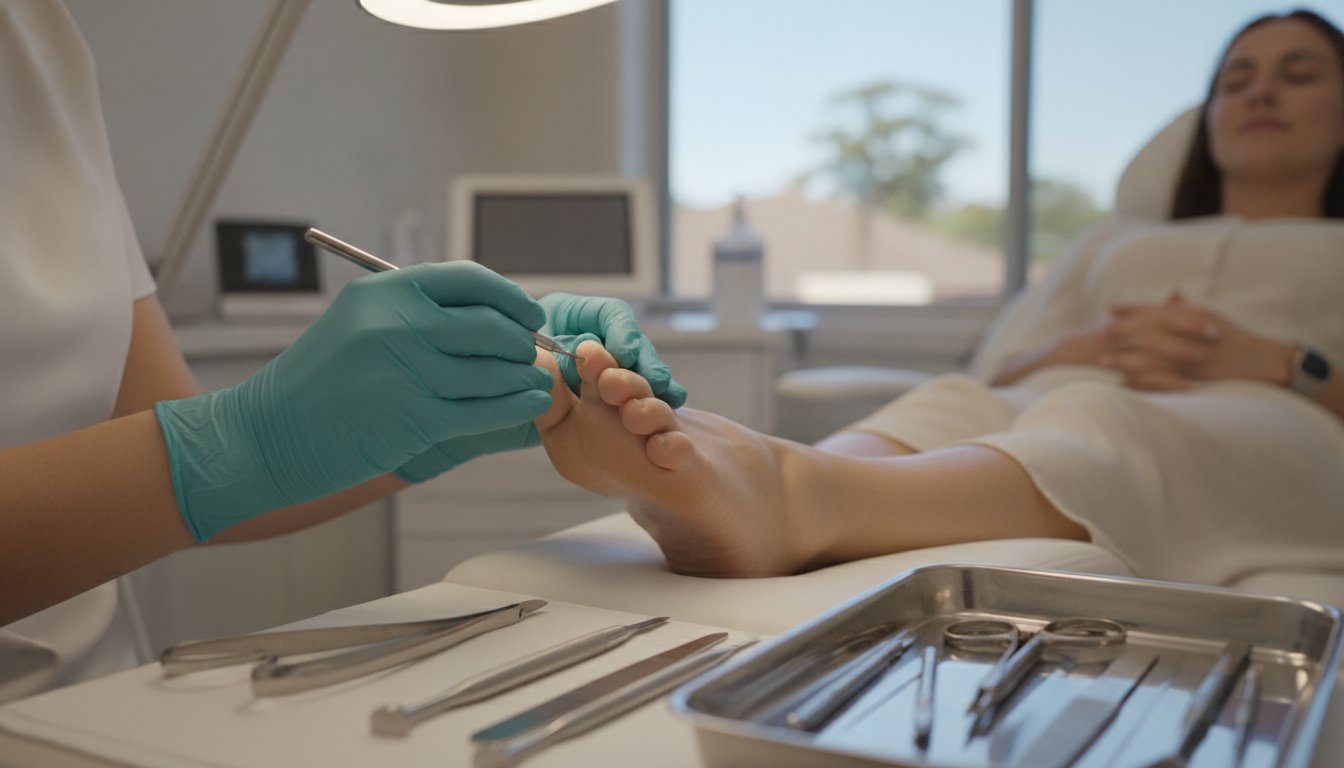
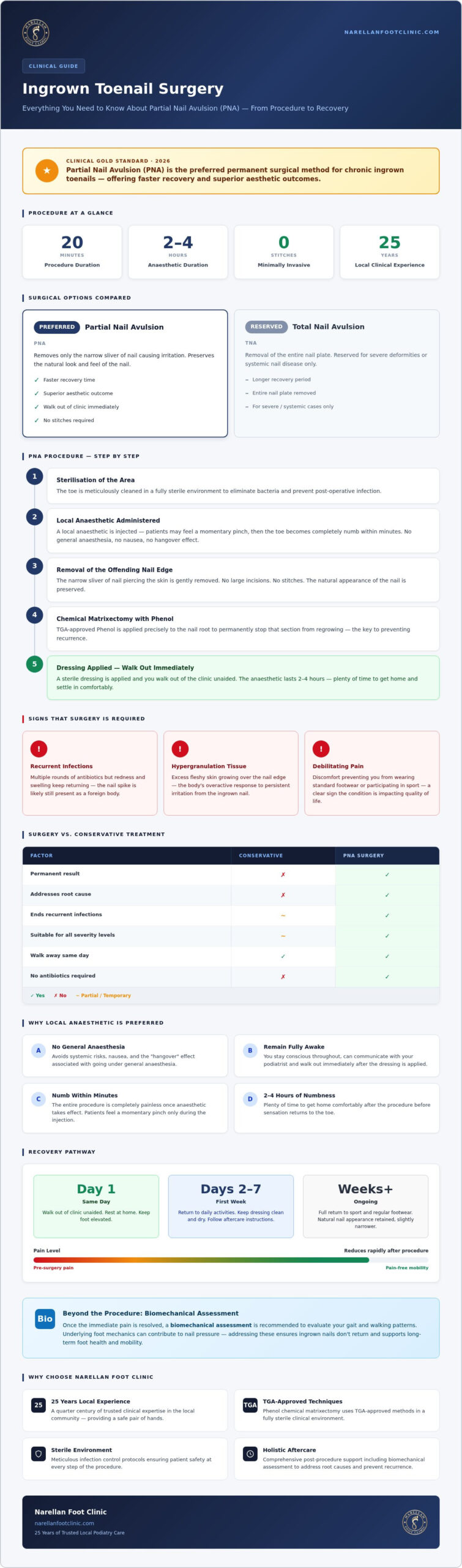
A Partial Nail Avulsion (PNA) is a refined, minor surgery performed in a clinical setting to provide permanent relief. Before the procedure begins, the toe is meticulously cleaned in a fully sterilised environment. This is a critical first step to eliminate bacteria and prevent post-operative infection. Once the area is prepared, a local anaesthetic is administered. While some patients feel a momentary pinch, the toe becomes completely numb within minutes, ensuring the remainder of the ingrown toenail surgery is entirely painless.
Why We Use Local Anaesthetic
Local anaesthesia is the preferred choice for podiatric procedures because it allows for immediate pain relief without the systemic risks of general anaesthesia. You won’t experience the “hangover” effect or nausea often associated with being “put under.” Most importantly, you remain fully awake and can safely walk out of the clinic immediately after we apply the dressing. The numbness typically lasts for two to four hours, giving you plenty of time to get home and settle in comfortably. If you’re feeling anxious about the process, the team at Narellan Foot Clinic is here to provide a calm and supportive environment.
With the toe completely numb, we gently remove the narrow sliver of nail that has been piercing the skin. Unlike older surgical methods that might involve large incisions or stitches, this modern approach is minimally invasive and preserves the natural look of the nail. After the offending edge is removed, we perform a chemical matrixectomy using Phenol. This TGA-approved chemical is applied precisely to the nail root to stop that specific section from regrowing.
The Role of Phenolisation in Success Rates
Phenolisation is what makes the results truly permanent. While simple “cutting only” methods often used by non-specialists have recurrence rates as high as 20% to 50%, clinical data shows that chemical cauterisation reduces this to less than 5%. It requires significant precision to protect the surrounding healthy tissue while effectively treating the nail matrix. When you are exploring ingrown toenail surgery options, phenolisation stands out as the clinical gold standard for long-term success. It ensures that the invading nail spike is gone for good, allowing the skin to heal without further interference.
The entire process usually takes less than an hour, including the time needed for the anaesthetic to take full effect. Once the procedure is complete, we apply a large, protective dressing to keep the area clean and cushioned. You’ll be provided with clear instructions on how to manage the toe over the next few days to ensure the best possible outcome.
Surgery vs. Conservative Treatment: Making the Right Choice
Most patients begin their journey toward relief with conservative management. This typically includes routine podiatry to clear the nail edge, salt baths, or taping techniques designed to pull the skin away from the nail. While these methods are excellent for minor, first-time occurrences, they often become a ‘band-aid’ solution for chronic sufferers. When the same painful spike returns every few weeks, it’s a sign that the nail’s growth pattern is fundamentally compromised.
Persistent irritation doesn’t just cause pain; it leads to chronic inflammation that can permanently thicken the surrounding skin and damage the nail bed. From a financial perspective, a one-off ingrown toenail surgery is often far more cost-effective than a lifetime of recurring appointments. By choosing a permanent correction, you’re investing in long-term wellness rather than simply managing a repeating cycle of discomfort and infection.
When is Surgery the Most Logical Step?
The decision to move toward a permanent solution usually happens when the “temporary relief” cycle becomes too burdensome to maintain. For many Australians, the shape of the nail is actually hereditary. A ‘pincer’ or highly curved nail shape simply cannot be corrected by cutting it straight across or wearing wider shoes. In these instances, the Clinical management of ingrown toenails suggest that surgical intervention is the most reliable path to success. Seeking professional help before a deep infection sets in ensures the procedure is straightforward and the recovery is swift.
Risks of Delaying Surgical Treatment
Postponing necessary ingrown toenail surgery isn’t just about enduring a bit of soreness; it carries genuine health risks. A simple ingrown nail can quickly escalate into cellulitis, a serious bacterial infection that spreads through the soft tissues of the foot. Chronic swelling also leads to permanent scarring of the nail fold, which makes the area even more prone to future issues. It is also worth noting that patients who experience recurring nail problems sometimes develop secondary conditions such as fungal infections; if you notice thickening or discolouration of the nail plate alongside your ingrown nail, laser treatment for toenail fungus may be a complementary clinical option worth discussing with your podiatrist.
Perhaps most importantly, chronic foot pain often changes the way you walk. If you subconsciously alter your gait to avoid pressure on a sore toe, you may inadvertently cause other issues, such as strain on your arches or shins. This can eventually complicate future heel pain treatment if the underlying biomechanical shift isn’t addressed. Taking decisive action now protects your overall mobility and keeps you moving comfortably.
Recovery and Aftercare: The Path to Pain-Free Mobility
The success of your ingrown toenail surgery doesn’t end when you leave the clinic; the first few days of aftercare are vital for ensuring the nail bed heals without complication. Immediately following the procedure, your primary focus should be on keeping the foot elevated and the clinical dressing completely dry for the first 24 to 48 hours. This initial rest period minimises swelling and allows the chemical treatment to settle effectively.
Most patients find that any post-operative discomfort is mild and easily managed with standard over-the-counter paracetamol. You won’t need heavy sedation or strong prescription painkillers. By the one-week milestone, you’ll return for your first assessment and redressing. This appointment allows your podiatrist to verify that the site is healing as expected and to provide a smaller, more manageable dressing as you transition back into standard footwear.
The First 72 Hours: Critical Care
During the first three days, the surgical site is at its most vulnerable. It’s essential to keep the area protected from moisture and bacteria. While it might be tempting to head to the beach or jump in the pool, you must avoid swimming or soaking the foot for at least the first week. Moisture can soften the healing tissue and increase the risk of infection. We recommend keeping the original dressing intact until your follow-up appointment unless instructed otherwise.
- Normal healing signs: You may notice a small amount of clear or slightly yellowish discharge on the dressing; this is a standard part of the inflammatory healing process.
- When to call us: If you experience throbbing pain that doesn’t respond to paracetamol, notice pus, or see redness spreading up the toe, contact the clinic for a review.
Returning to Sport and Work
Resuming your daily routine is usually a fast process, but it requires a staged approach. Most people return to desk-based work within 24 to 48 hours. However, for our local Narellan tradies who spend all day in heavy steel-capped boots, we often recommend a few extra days of light duties. The pressure and heat inside a work boot can irritate the surgical site if you return too early. Similarly, school children should stick to open-toed sandals or loose-fitting trainers before squeezing back into rigid school shoes.
Low-impact exercise, such as walking, is generally fine after the first few days. However, high-impact running or contact sports should be avoided for approximately two weeks. This allows the nail fold to strengthen sufficiently to handle the rigours of sudden movements. If you’re ready to resolve your foot pain permanently, you can book a consultation with the experienced team at Narellan Foot Clinic to discuss your surgical options and ensure a smooth recovery.
Why Choose Narellan Foot Clinic for Your Procedure?
Deciding where to undergo ingrown toenail surgery is a choice that affects your long-term comfort and peace of mind. At Narellan Foot Clinic, we’ve provided dedicated podiatric care to the Narellan and Macarthur community for over 25 years. This extensive experience means you aren’t just another patient; you’re a member of a community we’ve supported for decades. Our clinic prioritises a fully sterilised, modern medical environment, ensuring that every procedure meets the highest clinical standards for safety and hygiene.
Principal podiatrist David J. Miller and the expert team understand that the prospect of any surgical intervention can be stressful. We focus on creating a supportive atmosphere where your concerns are heard and your comfort is the primary objective. By combining technical precision with a gentle, patient-centric approach, we ensure that the transition from pain to relief is as seamless as possible.
A Trusted Local Sanctuary for Foot Health
Our clinic functions as a reliable sanctuary for those seeking a permanent end to foot discomfort. Because we understand the local lifestyle, from the needs of school children in Camden to tradies working across Campbelltown, we tailor our advice to suit your specific daily activities. We don’t just treat the nail in isolation. If your clinical assessment reveals that your walking pattern is contributing to recurring issues, we can integrate your recovery with custom orthotics. This holistic focus ensures that once your toe heals, it stays healthy for the long term. For patients living with diabetes, we also recommend a comprehensive biomechanical assessment Narellan diabetic foot check, as reduced circulation and sensation can significantly affect how the surgical site heals and how foot health is managed over time.
Financial Ease and Booking Convenience
We believe that accessing professional healthcare should be straightforward and transparent. To help manage the financial side of your care, we provide on-the-spot health fund claims through HICAPS. This allows you to receive your private health rebate immediately, reducing your out-of-pocket expenses at the time of your appointment. Additionally, for patients managed under a GP-led Chronic Disease Management plan, a partial Medicare rebate may be available for your clinical consultations.
Booking your initial assessment is simple, with clinic locations in Narellan, Blacktown, and Campbelltown designed to serve the broader region effectively. Our “safe pair of hands” promise means you’ll receive methodical, trustworthy care from a team that is genuinely invested in your results. If you’re ready to walk without hesitation, our professional team is here to guide you through every step of your ingrown toenail surgery journey. You can trust us to provide the expert care needed to get you back to your daily routine with confidence and ease.
Step Into a Future of Lasting Comfort
Living with the constant threat of a painful nail infection shouldn’t be your “normal.” As we’ve explored, ingrown toenail surgery is a sophisticated and permanent solution that moves you beyond the cycle of temporary fixes. By choosing a Partial Nail Avulsion, you’re opting for a gentle, clinically proven method that prioritises both your immediate relief and the long-term health of your feet. With the right aftercare, you can expect a swift return to your favourite activities without the nagging worry of recurrence.
At Narellan Foot Clinic, we provide a fully sterilised clinical environment backed by over 25 years of local experience. We understand the stress associated with foot pain; that’s why we offer a supportive “safe pair of hands” and the convenience of HICAPS on-the-spot claims to make your journey as easy as possible. It’s time to stop managing the pain and start resolving it. Book your Ingrown Toenail Assessment at Narellan Foot Clinic today and rediscover the simple joy of walking without hesitation. You deserve to move with confidence and ease again.
Frequently Asked Questions
Is ingrown toenail surgery painful?
The procedure itself is completely painless because we use a local anaesthetic to numb the entire toe before we begin. While you might feel a small initial pinch from the injection, you won’t feel any sharp sensations during the ingrown toenail surgery. After the anaesthetic wears off, most patients experience only a mild dull ache that is easily managed with standard paracetamol. Our team focuses on ensuring you feel relaxed and supported throughout.
How long does the PNA procedure take at the clinic?
You can expect to be in the clinic for approximately 45 to 60 minutes in total. This timeframe includes the initial preparation, the time required for the local anaesthetic to take full effect, the procedure itself, and the application of the protective dressing. The actual surgical component typically takes only 15 to 20 minutes. We work efficiently to ensure you can return home quickly while maintaining our high clinical standards of care.
Will my whole toenail be removed during the surgery?
In the vast majority of cases, we only remove the narrow sliver of nail that is causing the irritation rather than the whole nail. This is known as a Partial Nail Avulsion (PNA). This technique allows the rest of your nail to remain intact and look quite normal once it has fully healed. A Total Nail Avulsion, where the entire nail is removed, is a rare requirement reserved only for very severe deformities.
Can I drive myself home after the procedure?
It is strongly recommended that you arrange for a family member or friend to drive you home after your ingrown toenail surgery. Because your toe will be completely numb and wrapped in a large, bulky dressing, your ability to operate the pedals safely and quickly may be compromised. Most patients find it much more comfortable to sit in the passenger seat with their foot slightly elevated for the journey home to Narellan or Campbelltown.
How much time do I need to take off work or school?
Most people only need to take one or two days off to rest and keep their foot elevated after the procedure. If you have a desk-based job or can attend school in open-toed sandals, you can often return within 48 hours. However, if your role involves heavy lifting or requires you to wear rigid work boots, you might need a few extra days of light duties to ensure the surgical site isn’t irritated.
Does private health insurance cover ingrown toenail surgery?
Most Australian private health funds provide a rebate for this procedure under their podiatry extras cover. Because we use HICAPS at our clinic, we can process your claim on-the-spot, so you only need to pay the remaining gap at the time of your appointment. The exact amount covered depends on your specific policy and yearly limits. We suggest checking with your provider to confirm your eligibility for podiatric surgical procedures before your initial assessment.
What happens if the ingrown toenail grows back?
While recurrence is very rare when we use chemical phenolisation, we will assess the area thoroughly if the nail edge appears to return. Clinical data shows that this specific method has a success rate of over 95% for preventing regrowth. If a small spike does regrow, it can usually be addressed with a minor revision. We also look at your foot mechanics to see if custom orthotics could help reduce the pressure.
Can I have surgery if my toe is currently infected?
Yes, you can proceed with surgery even if the toe is currently infected. In many cases, removing the invading nail spike is the only way to allow the infection to resolve, as the nail acts as a constant irritant. We will thoroughly cleanse the area in our fully sterilised environment and may coordinate with your GP if antibiotics are required as part of your total recovery plan to ensure your safety.



12 Comments
[…] Recovery is typically straightforward with minimal downtime. Most patients find they can return to light daily activities within 24 to 48 hours. During the initial healing phase, we recommend wearing open-toed shoes or loose trainers to avoid any pressure on the dressing. Because phenolisation has a high success rate of approximately 98.5% in preventing recurrence, this small investment in time leads to a lifetime of relief. For a deeper dive into what to expect during the procedure, you can read our comprehensive guide on Ingrown Toenail Surgery: A Professional Guide to Permanent Relief. […]
[…] Sometimes, what appears to be a fungal change is actually a secondary infection caused by an ingrown toenail. When the nail edge pierces the skin, it creates a gateway for bacteria, leading to discolouration […]
[…] often leaves a small spike of nail behind, which can grow into the skin and eventually require ingrown toenail surgery to correct. Filing the surface too aggressively can also be counterproductive, as it may thin the […]
[…] and requires immediate professional attention. While home soaking might offer temporary comfort, ingrown toenail surgery provides a permanent fix by removing the small section of nail that is piercing the skin. […]
[…] similar to the untrained eye. When conservative measures fail to provide comfort, we identify when ingrown toenail surgery is the only permanent solution for recurring pain. For those living with chronic health conditions, […]
[…] any issues involving the skin or nails are the exclusive domain of podiatry. Whether you need ingrown toenail surgery or help with a stubborn fungal infection, these are clinical tasks podiatrists perform daily. […]
[…] often leads to deep infections and increased pain. For recurring issues, we provide safe, sterile ingrown toenail surgery in a controlled clinical environment. This minor procedure offers permanent relief, allowing your […]
[…] cases, neglecting a fungal nail can lead to secondary complications that might eventually require ingrown toenail surgery if the nail plate becomes too distorted and begins to pierce the surrounding skin. Early […]
[…] clinical environment is our highest priority, particularly when performing procedures like ingrown toenail surgery. We integrate these high standards of clinical safety with the modern efficiency of HICAPS […]
[…] lasting results. If you’re dealing with the sharp, throbbing pain of a recurring infection, ingrown toenail surgery offers a permanent, gentle solution performed right here in Narellan. We also embrace modern […]
[…] Skin hydration is equally vital for maintaining integrity. Applying a quality urea-based cream helps prevent painful heel fissures that can become entry points for infection. However, keep the cream away from the gaps between your toes, as excess moisture in these dark areas can encourage fungal growth. Proper nail maintenance is also critical; professional trimming prevents the complications that often lead to ingrown toenail surgery. […]
[…] There is a delicate balance to maintain here. Trimming your nails too short can lead to painful ingrown toenails, which aren’t just an inconvenience; they’re a significant risk to your training […]