
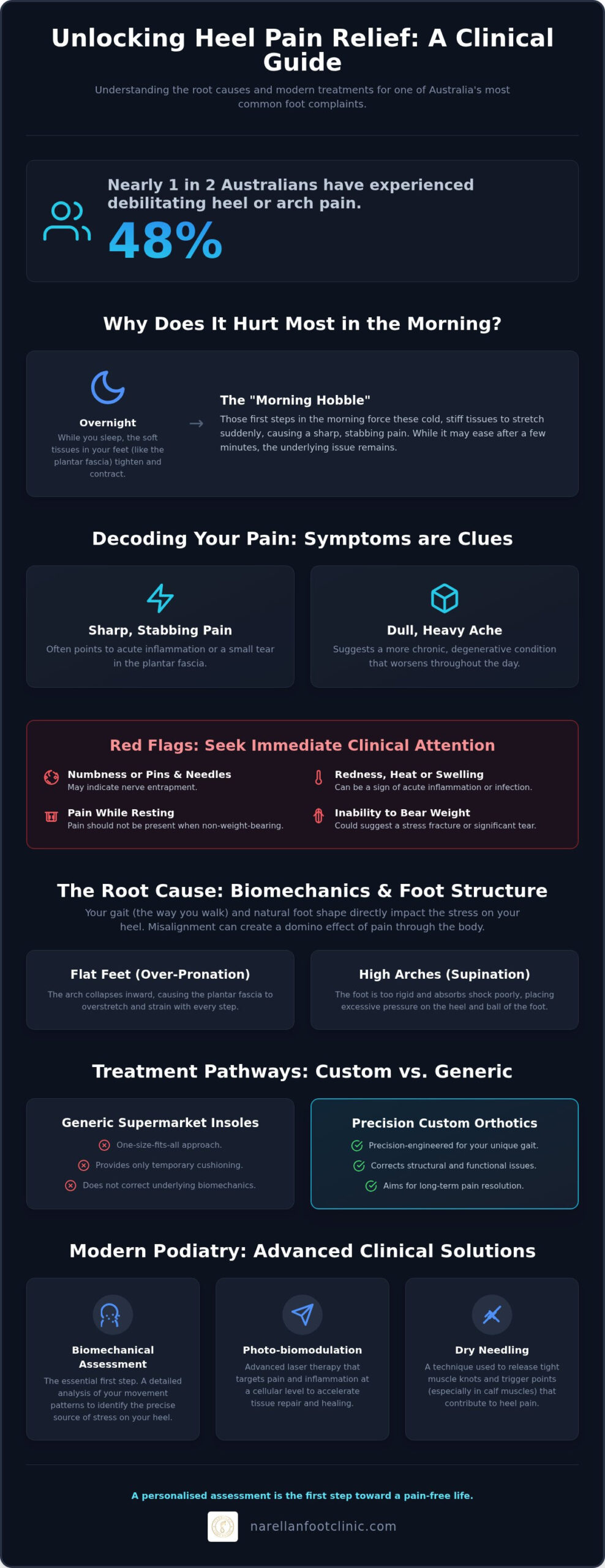
Did you know that nearly half of all Australians, approximately 48 per cent, have experienced debilitating heel or arch pain at least once? If you’re currently part of that group, you’re likely familiar with the sharp, stabbing sensation that greets your first steps every morning. It’s incredibly draining when you can’t walk the dog or enjoy a simple stroll without the fear of subsequent throbbing. Searching for an effective heel pain treatment often leads to a mess of conflicting online advice, making it hard to know if you should be resting or reaching for the foam roller.
We understand that you don’t want to just “manage” the discomfort; you want it gone for good. This guide provides the clinical clarity you’ve been looking for by uncovering the root causes of your specific pain and outlining professional, non-surgical pathways to recovery. We’ll examine how a detailed biomechanical assessment serves as the essential foundation for your journey back to pain-free movement and long-term wellness.
Key Takeaways
- Understand why that first-step morning pain occurs and what it reveals about your underlying foot health.
- Learn how a professional biomechanical assessment forms the essential foundation for a successful, personalised heel pain treatment plan.
- Discover the limitations of generic supermarket insoles compared to precision-engineered custom orthotics designed for your unique gait.
- Explore advanced, non-invasive clinical solutions like photo-biomodulation and dry needling that target pain at its source.
- Gain clarity on when to move beyond home remedies to seek expert care that helps you return to work and exercise without restriction.
Understanding Heel Pain: Why Every Step Matters
Heel pain is rarely a single disease. Instead, it’s a multifaceted clinical symptom that signals something is wrong with the complex mechanics of your foot. That sharp, familiar jab you feel when stepping out of bed is often referred to as the “morning hobble.” This happens because the soft tissues in your feet tighten and contract while you sleep. When you take those first steps, you’re essentially forcing these cold, stiff tissues to stretch before they’re ready. While the pain might dull after a few minutes of movement, the underlying issue remains unaddressed.
Living with chronic discomfort does more than just slow you down physically. It takes a significant toll on your mental wellbeing. When you can’t walk the dog, play with your grandkids, or finish a shift at work without throbbing pain, your world starts to shrink. Effective heel pain treatment requires moving beyond temporary fixes. A podiatrist’s role is to determine if your pain is structural, involving the bones and ligaments, or functional, caused by the way your foot moves during your gait. Identifying this distinction is the first step toward reclaiming your active lifestyle.
The Anatomy of the Heel
Your heel is anchored by the calcaneus, the largest bone in the foot. It’s designed to bear the brunt of your body weight with every step. Supporting this bone is the plantar fascia, a thick band of connective tissue that functions like a tension-bearing bowstring to maintain your arch. You can learn more about how this tissue becomes strained by researching Plantar fasciitis, which remains the most common cause of heel complaints. Protecting the calcaneus from the hard ground is a specialised fat pad. This pad acts as a natural shock absorber, but it can thin or shift over time, leading to deep, bruised sensations that differ from typical ligament pain.
Common Symptoms and Red Flags
The type of sensation you feel provides vital clues for your diagnosis. A sharp, knife-like pain usually points toward acute inflammation or a small tear in the fascia. In contrast, a dull, heavy ache that worsens throughout the day often suggests a more chronic, degenerative condition. The location of the pain is equally telling. Pain on the inside edge of the heel is typical of fascia issues, while pain at the very back of the heel often involves the Achilles tendon or the bursa.
While most heel issues are mechanical, certain “red flags” require immediate clinical attention. Please don’t ignore symptoms such as:
- Persistent numbness or a “pins and needles” sensation in the foot.
- Visible redness, heat, or significant swelling around the heel or ankle.
- Pain that is present even when you are non-weight-bearing or resting.
- An inability to bear any weight on the foot at all.
These signs may indicate nerve entrapment, stress fractures, or systemic inflammatory conditions. Early intervention is the key to preventing a manageable injury from becoming a permanent limitation on your mobility.
The Biomechanics of Pain: Identifying the Root Cause
Biomechanics is the study of how your bones, muscles, and tendons work together to produce movement. In your feet, this involves a complex coordination of 26 bones and dozens of soft tissue structures. When these components are aligned, they distribute your body weight evenly. However, even a minor misalignment can disrupt this balance, placing excessive stress on specific areas of the heel. This is why professional heel pain treatment must always begin with a deep understanding of your unique movement patterns.
Your gait, or the way you walk, directly influences the amount of pressure your heel must endure. If your foot doesn’t transition through the “heel strike” to “toe-off” phases correctly, the repetitive impact can lead to tissue damage. This often creates a domino effect. When you subconsciously change the way you walk to avoid heel pain, you may inadvertently place strain on your knees, hips, or lower back. Because “safe” movement patterns vary significantly between individuals, a solution that works for a friend might not be appropriate for your specific structural needs.
Plantar Fasciitis vs. Achilles Tendonitis
While both conditions cause significant discomfort, they affect different anatomical structures. Plantar fasciitis involves the connective tissue on the underside of the foot, whereas Achilles tendonitis affects the large tendon at the back of the heel. Both are frequently exacerbated by tight calf muscles, which limit the ankle’s range of motion and force the foot to compensate. However, the loading strategies used in recovery differ. For example, the diagnosis and treatment of plantar fasciitis often focuses on arch support, while Achilles issues may require specific heel lifts or eccentric loading exercises to strengthen the tendon.
The Role of Foot Structure (Flat Feet and High Arches)
Your natural arch height plays a pivotal role in how your foot absorbs shock. Flat feet are often associated with over-pronation, where the foot rolls inward excessively. This action overstretches the plantar fascia, pulling it away from the heel bone. Conversely, individuals with high arches often struggle with poor shock absorption. Instead of the foot flexing to dissipate energy, the impact travels directly into the heel, often leading to fat pad bruising or stress reactions. These structural issues often remain asymptomatic for years until a trigger, such as new shoes or an increase in activity, causes pain to flare up. A professional biomechanical assessment is often the clearest way to identify these specific triggers and prevent them from causing long-term damage.
Clinical vs. Home Treatment: When to See a Podiatrist
Many people start their journey toward relief with home remedies like the RICE method (Rest, Ice, Compression, Elevation). While ice can soothe acute inflammation and rest provides a temporary break, these methods rarely address the underlying mechanical failure. If you’ve been reaching for anti-inflammatories just to get through your morning walk, you’re merely masking symptoms. This approach can be counterproductive, as it often encourages you to continue activities that further damage the stressed tissues.
Supermarket “one-size-fits-all” orthotics are another common pitfall. These mass-produced inserts are designed for an “average” foot that doesn’t actually exist. Because they aren’t tailored to your specific arch height or gait, they can sometimes shift pressure to other parts of the foot, creating new problems. Relying on these generic solutions often delays the effective heel pain treatment you truly need, allowing a minor strain to develop into a chronic condition.
The Limits of DIY Care
Resting often fails to provide a permanent fix because it doesn’t change how your foot interacts with the ground. The moment you return to your normal routine, the same biomechanical stresses return. Aggressive stretching is another area where DIY care can go wrong. If your plantar fascia is acutely inflamed, forcing it to stretch can create micro-tears, worsening the injury. A professional approach, such as the expert care provided by Footfall Podiatry, ensures that you’re loading the tissue at the right time and in the right way to promote actual healing rather than just temporary comfort.
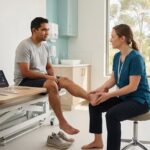
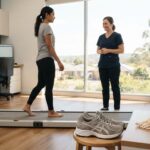
Seeking help from an experienced podiatrist is the most efficient path to recovery. During a professional consultation, we move beyond just looking at where it hurts. We use tools like video gait analysis to identify hidden movement flaws that are invisible to the naked eye. This diagnostic process evaluates your muscle strength, joint range of motion, and even your shoe wear patterns to build a complete clinical picture.
Professional heel pain treatment provides you with a clear, evidence-based timeline for recovery. Instead of guessing which online stretch might work, you receive a targeted plan that addresses the root cause of your discomfort. This methodical approach prevents you from wasting months on ineffective remedies and ensures you can return to your daily activities with confidence and ease.
Modern Podiatry Solutions: From Laser to Orthotics
Modern heel pain treatment has moved far beyond simple rest and ice. Today, we utilise a sophisticated blend of medical technology and manual therapy to target specific stages of the healing cycle. This approach doesn’t just manage your symptoms; it addresses the physical stressors that caused the injury in the first place. By integrating advanced diagnostics with gentle, non-invasive treatments, we can create a pathway toward long-term wellness and physical freedom.
We focus on the transition from a state of worry to one of comfort. This involves a logical progression where we first calm the inflammation and then correct the underlying mechanical flaws. By combining different therapies, we ensure that your recovery is thorough and that the results are lasting, allowing you to return to work and exercise without the constant need to “manage” discomfort.
Custom Orthotic Therapy
Maintaining a safe physical environment at home is also vital for your long-term mobility. If you’re looking to upgrade your outdoor surfaces, you can explore Project-based residential concrete installation and repair fees to ensure your paths and driveways are level and supportive for your feet.
Just as specialised podiatry care restores your physical freedom, other clinical services can enhance your personal confidence and long-term wellbeing. For those interested in permanent grooming solutions, you can learn more about North Bay Electrology and their professional approach to hair removal.
Maintaining independence in later life often requires a multifaceted approach; for those interested in dedicated senior support, you can learn more about Earth Angels Home Care and their personalised in-home care services.
For athletes and active individuals seeking expert guidance on injury rehabilitation, Clínica Bernáldez Sportme provides comprehensive clinical resources on managing sports-related conditions and joint recovery.
To gain further insights into specialised injury recovery and orthopaedic health, read more about The Orthopaedic & Sports Medicine Institute.
Beyond physical mobility, maintaining your confidence through specialised wellness treatments is equally important; for expert advice on scalp and hair health, check out 諾貝爾活髮科研中心 (Nobel Hair).
Retail insoles often fail because they lack the precision required to correct complex gait issues. In contrast, custom orthotics are medical devices prescribed from your unique biomechanical data. During the prescription process, we map exactly where your foot needs support and where pressure needs to be redistributed. This ensures that your heel pain treatment is as effective as possible from day one. These specialised devices allow the damaged tissues in your heel to rest and recover even while you remain active, providing a level of correction that generic products simply cannot match.
Photo-biomodulation and Dry Needling
While orthotics manage your foot’s structure, other modern therapies focus on repairing the soft tissues. Photo-biomodulation, or laser therapy, uses specific wavelengths of light to stimulate cellular repair and reduce inflammation. It’s a gentle, painless process that speeds up the body’s natural healing response at a microscopic level. The experience is entirely non-invasive and highly results-focused, making it an excellent option for those seeking a modern alternative to traditional injections. The same advanced laser technology used in heel pain recovery is also available as a laser treatment for toenail fungus, offering a safe and effective clinical solution for stubborn nail infections without the systemic side effects of oral medications.
We often combine laser therapy with dry needling for foot pain, which involves the precise insertion of fine needles into myofascial trigger points in the calf and foot. This technique helps to release deep-seated muscle tension that often pulls on the heel bone. The combination of these technologies creates a comprehensive healing environment. If you are ready to explore a personalised path to recovery, book your biomechanical assessment today to see which modern solutions are right for you.
Finding Relief at Narellan Foot Clinic
Narellan Foot Clinic has served as a reliable sanctuary for those seeking relief for over 25 years. Led by David J. Miller, the practice combines decades of clinical experience with a warm, empathetic approach that prioritises your comfort. We understand that physical discomfort is inherently stressful, which is why we’ve created a professional environment that is fully sterilised and equipped with modern technology. Much like the precision care offered by Bright Sight Eye Specialists for vision health, our goal is to move you from a state of worry to a place of physical ease through a methodical and effective heel pain treatment plan.
Efficiency is a core part of our service, ensuring your path to recovery is as smooth as possible. We offer on-the-spot HICAPS claims, allowing you to process your private health fund rebate immediately after your appointment. For patients with an EPC referral from their GP, we also facilitate Medicare claims, including the current 2026 rebate of $63.40. This streamlined process ensures that you can focus entirely on your recovery rather than administrative hurdles.
Your journey begins with a calming, thorough assessment designed to uncover the root cause of your struggle. We move at a pace that feels comprehensive but never sluggish, mirroring the efficiency of a professional consultation. During this time, we’ll discuss your history and perform the detailed biomechanical checks required to understand your foot’s unique needs. Please remember to bring your regular footwear to this appointment. The wear patterns on your everyday shoes provide vital clues about your gait and help us refine your personalised recovery path.
Booking Your Appointment in Narellan
We are proud to support local residents across Narellan, Campbelltown, and Penrith. Our centre is conveniently located to provide expert care without the need for long-distance travel. Whether you’re dealing with a recent flare-up or chronic discomfort that has persisted for years, we’re here to help you return to your daily activities without hindrance. Taking the first step toward physical freedom is simple with our easy booking options and dedicated support staff who are ready to assist you. If you are also experiencing sharp toe pain alongside your heel discomfort, our guide to ingrown toenail surgery explains how a quick, permanent clinical procedure can resolve recurring nail pain for good.
Book your biomechanical assessment at Narellan Foot Clinic today.
Take Your First Step Toward Lasting Comfort
You don’t have to live with the daily dread of those first morning steps. We’ve explored how understanding your foot’s unique biomechanics is the key to moving beyond temporary fixes. Whether your discomfort stems from structural issues or functional strain, a professional approach ensures you receive a plan tailored to your specific needs. Effective heel pain treatment is about more than just managing symptoms; it’s about restoring your physical freedom through advanced clinical care.
At Narellan Foot Clinic, we bring over 25 years of local experience and modern techniques like Photo-biomodulation and Dry Needling to every consultation. With on-the-spot HICAPS claims available, accessing expert care is both simple and efficient. Our team is ready to guide you from a state of worry to one of comfort and ease. Book an Appointment at Narellan Foot Clinic to begin your journey back to pain-free movement. We’re here to help you return to the activities you love with absolute confidence.
Frequently Asked Questions
Is heel pain treatment covered by Medicare or private health funds?
Yes, most private health funds provide rebates for podiatry services, and we offer on-the-spot HICAPS claims for your convenience. If you have a chronic condition, you may be eligible for a Medicare rebate of $63.40 through an Enhanced Primary Care (EPC) plan from your GP. We facilitate these claims directly at our clinic, ensuring your focus remains on recovery rather than administrative paperwork.
How long does it take to see results from professional heel pain treatment?
While every patient is unique, most people begin to feel significant relief within two to four weeks of starting their personalised treatment plan. Chronic conditions that have persisted for months may require a longer recovery period of three to six months to achieve full tissue healing. Consistency with your prescribed exercises and wearing your custom orthotics is the most reliable way to speed up this timeline.
Can I still exercise while undergoing treatment for plantar fasciitis?
You can usually continue to stay active, but we often recommend modifying your routine during the initial stages of heel pain treatment. High-impact activities like running or jumping may need to be replaced with low-impact options such as swimming or cycling. This adjustment prevents further micro-tears in the plantar fascia while allowing you to maintain your fitness and mental wellbeing as your foot heals.
What is the difference between custom orthotics and chemist shop insoles?
Custom orthotics are precision-engineered medical devices designed specifically for your unique foot structure and gait pattern. Unlike generic “one-size-fits-all” insoles found in chemist shops, custom versions redistribute pressure exactly where you need it most. They are crafted from durable materials based on detailed biomechanical data, providing the specific corrective support required to address the root cause of your discomfort rather than just adding soft cushioning.
Does dry needling for foot pain hurt?
Most patients describe dry needling for foot pain as a unique sensation rather than a painful one. You might feel a dull ache or a brief “twitch response” as the needle interacts with a myofascial trigger point in your calf or foot. This discomfort typically lasts only a few seconds and is followed by a significant release in muscle tension. It is a gentle, modern technique used to improve mobility and reduce overall pain levels.
Why is my heel pain worse after I sit down for a while?
This sensation is known as post-static dyskinesia. When you sit or rest, the plantar fascia and calf muscles naturally contract and tighten. Upon standing, these tissues are suddenly forced to stretch and bear your full body weight, leading to that sharp, stabbing pain. This is a classic sign that the tissues are under excessive strain and requires a professional assessment to determine the best heel pain treatment pathway.
When should I consider surgery for my heel pain?
Surgery is considered a last resort and is rarely necessary for most patients. Research suggests that over 90 per cent of heel pain cases resolve successfully with non-invasive clinical interventions such as custom orthotics, laser therapy, and targeted exercises. We generally only discuss surgical options if a comprehensive, professional treatment plan has been followed consistently for at least six to twelve months without significant improvement in your daily mobility. Patients who do require a foot-related procedure, such as ingrown toenail surgery, are often reassured to find that modern podiatric techniques are far gentler and quicker than they anticipated.
Are flat feet always the cause of heel pain?
Flat feet are a common contributor, but they are certainly not the only cause of heel discomfort. Individuals with high arches often experience pain because their feet struggle to absorb shock effectively, leading to increased pressure on the heel bone. Other factors, such as tight calf muscles, poor footwear choices, or sudden changes in activity levels, can trigger pain regardless of your arch height. A biomechanical assessment identifies your specific risk factors.


20 Comments
[…] to overwork. We frequently see a direct link between restricted ankle mobility and the need for heel pain treatment, as the calf muscles and plantar fascia strain to stabilise a wobbly foundation. Don’t fall […]
[…] needling the calf muscles, we reduce this mechanical stress. This forms a vital part of a broader heel pain treatment plan, especially for chronic cases where traditional stretching hasn’t been enough. We […]
[…] cause other issues, such as strain on your arches or shins. This can eventually complicate future heel pain treatment if the underlying biomechanical shift isn’t addressed. Taking decisive action now protects […]
[…] gait or footwear. Our team is equipped to address related concerns, whether you’re seeking heel pain relief or require professional guidance on custom orthotics. We focus on mobility and relief for […]
[…] are performing. This initial conversation allows us to establish clear, personalised goals for your heel pain treatment, moving you from a state of worry toward a future of comfortable […]
[…] between temporary inflammation and chronic degenerative changes in the tissue. A professional heel pain treatment plan targets the root cause by correcting these movements rather than just masking the symptoms […]
[…] during running, walking, or sport. One of the most common reasons patients visit our clinic is for heel pain treatment. Conditions like plantar fasciitis or Achilles tendonitis are functional problems that often […]
[…] While the pain might dull as you move around, the underlying strain remains. Seeking professional heel pain treatment during these early stages is significantly more effective than waiting until the condition becomes […]
[…] tissue plantar fascia inflammation, as the management strategies differ significantly. Effective heel pain treatment starts with a precise mechanical diagnosis to understand how your foot structure influences these […]
[…] we can address both the root cause and the lingering symptoms. For example, a patient receiving heel pain treatment might use custom orthotics to reduce strain on the plantar fascia while simultaneously undergoing […]
[…] heel pain treatment plan we create is tailored to the individual’s specific needs. To further accelerate […]
[…] their muscles and tendons can become tight, pulling on this sensitive area during sport. Effective heel pain treatment often involves a combination of activity modification, specific stretching routines, and temporary […]
[…] muscle tightness in your calves or shins as they work harder to support your gait. We often use dry needling to release these trigger points and ensure your muscles aren’t pulling unevenly on the […]
[…] manual techniques to accelerate the healing process and provide faster relief. The benefits of dry needling for foot pain in releasing deep-seated tension in the calf muscles can be remarkable. This therapy, often […]
[…] do with HICAPS. This is a significant help for patients suffering from persistent conditions like heel pain, where a structured management plan is essential for lasting […]
[…] By identifying the specific mechanical cause, we can integrate gait correction into comprehensive heel pain treatment strategies. Correcting your movement doesn’t just manage the symptoms; it addresses the root […]
[…] calf. When excessive mechanical pull irritates the fibrous band supporting the arch, targeted heel pain treatment helps offload the plantar fascia while maintaining your conditioning. In the Achilles tendon, we […]
[…] For heel pain, the 2023 Clinical Practice Guideline for Heel Pain and Plantar Fasciitis gives dry needling a Grade B recommendation, indicating moderate evidence for reducing pain and improving function. A 2024 review of 12 randomised studies involving 781 people also reported improvements in pain and foot function, particularly when dry needling was combined with other care. These findings don’t mean it will suit every person or resolve every cause of heel pain. You can read more about assessment and care options in this heel pain treatment guide. […]
[…] your foot to understand what could be contributing. Heel pain can also have other causes. Read our heel pain treatment guide for a broader […]
[…] cramps occur alongside heel pain, this heel pain treatment guidance offers related information to discuss as part of your […]