

That sharp, stabbing sensation in your heel the moment your feet hit the floor each morning isn’t just a sign of getting older. It’s a clear distress signal from your body’s complex internal machinery. You might have already tried switching your shoes or using generic gel inserts, only to find that aching arches still cut your afternoon walk short. It is exhausting to deal with persistent pain when you aren’t sure whether you need professional orthotics or just a different brand of runners. A detailed biomechanical assessment is the first step toward ending that confusion by mapping out the structural blueprint of how you move.
We understand how physical discomfort can limit your lifestyle and create unnecessary stress. This guide will show you how a comprehensive evaluation identifies the root cause of your pain to restore your comfort and long term mobility. You’ll discover exactly what happens during a clinical examination and how a personalised treatment plan can get you back to walking or running without hesitation. With over 25 years of experience serving the Narellan community, we focus on providing a clear diagnosis and a safe pair of hands to guide your recovery. From advanced gait analysis to custom solutions, we’re here to help you transition from a state of worry to a life of ease and physical freedom.
Key Takeaways
- Understand how a biomechanical assessment acts as a structural blueprint to uncover the hidden causes of persistent foot and leg pain.
- Learn how your feet influence your body’s kinetic chain and why issues like rolling in can lead to discomfort in your knees or hips.
- Explore the clinical process used to evaluate joint mobility and muscle strength to ensure an accurate diagnosis of your condition.
- Discover how identifying specific mechanical strains can finally resolve stubborn issues like plantar fasciitis or Achilles tendonitis.
- See how a patient-centric approach and decades of experience lead to a tailored plan for your long term comfort and mobility.
What is a Biomechanical Assessment and Why is it Necessary?
Many people assume a visit to the podiatrist is strictly for surface-level issues like skin or nails. However, a biomechanical assessment is a specialised evaluation that looks far deeper into the structure and function of your lower limbs. It examines the intricate way your muscles, bones, and joints interact during movement. Biomechanics is the mechanical study of living organisms’ movement. By treating the body as a connected system, this evaluation identifies why certain areas are under too much stress. It is widely considered the diagnostic ‘gold standard’ for pinpointing the source of chronic pain. While elite athletes often use these checks to improve performance, they are just as important for anyone who finds daily activities uncomfortable.
Whether you’re a busy professional or a grandparent wanting to stay active, understanding your internal mechanics is the first step toward lasting relief. It’s about finding the “why” behind the ache and moving toward a solution that works for your specific lifestyle.
The Difference Between a General Consultation and a Biomechanical Check
A standard podiatry appointment usually focuses on external care. While trimming nails or managing corns is important, these treatments don’t address why your heel hurts every time you step out of bed. A biomechanical assessment shifts the focus to internal mechanics. A standard ‘quick look’ frequently misses the root cause of arch pain because it doesn’t account for how your joints move under pressure. In this context, your podiatrist acts as a movement specialist. We look at the structural foundation of your body to find why pain persists. This thorough approach ensures we aren’t just placing a temporary bandage on a structural problem.
When Should You Book an Assessment?
You don’t need to wait for a major injury to seek help. Recognising ‘red flags’ early can prevent long term damage. Consider booking an appointment if you experience persistent morning foot stiffness that takes time to ‘warm up’ or recurring sports injuries that happen on the same side of the body. Deep, aching pain in your arches after a day on your feet is another sign that your alignment might be off.
A common misconception is that having ‘flat feet’ or ‘high arches’ is a problem on its own. In reality, these foot types are only concerning if they lead to mechanical inefficiency. A professional movement assessment helps determine if your unique foot structure is contributing to your discomfort or if your body is compensating in ways that cause strain elsewhere. We position ourselves as a safe pair of hands for the Macarthur community, helping you navigate these concerns with clarity and confidence.
Understanding the Kinetic Chain: How Your Feet Affect Your Alignment
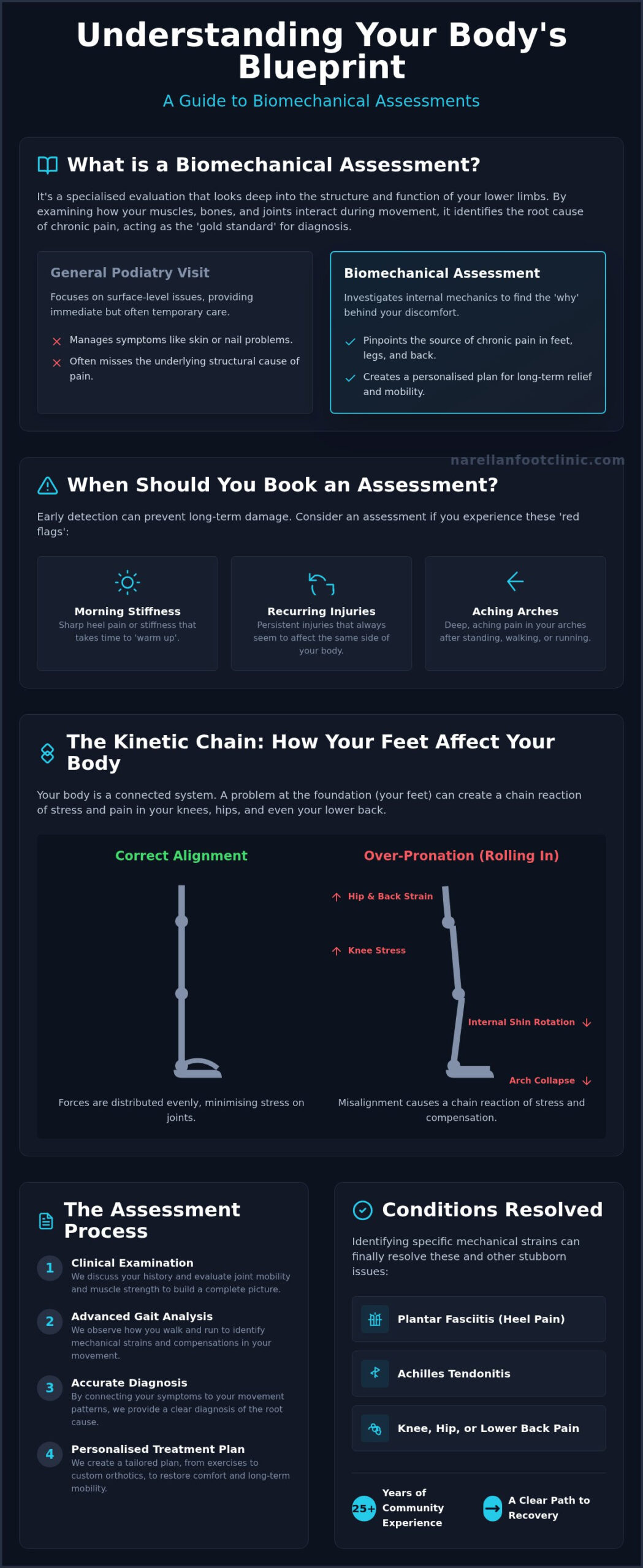
The human body functions as a single, interconnected unit often referred to in clinical circles as the kinetic chain. Think of it like a series of gears; if the bottom gear is out of alignment, every gear above it has to work harder or spin at an awkward angle. When we conduct a biomechanical assessment, we aren’t just looking at your toes. We’re tracing the path of force from the ground up through your ankles, knees, hips, and lower back. This holistic view is why a foot check is often the missing piece of the puzzle for chronic leg discomfort.
A common issue we see is over-pronation, or the excessive “rolling in” of the foot. When your arch collapses, it forces the tibia (shin bone) to rotate internally. This rotation travels up to the knee and then the femur (thigh bone), which can pull the pelvis out of its natural position. If you’ve been struggling with nagging lower back pain or hip stiffness that hasn’t responded to other treatments, the root cause might actually be sitting in your shoes. Addressing the foundation often provides the relief you’ve been searching for higher up the leg.
Common Compensations and ‘Load’ Management
The body is remarkably clever at avoiding pain, but this often leads to “cheating” or compensation. If one foot isn’t functioning correctly, you’ll subconsciously shift your weight to the other side. This creates an asymmetry that we carefully measure by comparing the left and right sides of your gait. We need to determine if your pain stems from a structural abnormality, like a limb length discrepancy, or a muscle weakness that can be corrected with targeted exercises. Identifying these “cheats” is vital to stopping secondary injuries before they start.
The Science of Pressure Distribution
When your alignment is off, your body distributes weight unevenly. Excessive pressure on specific points often manifests as stubborn corns, thick calluses, or even stress fractures in the metatarsals. According to the American Society of Biomechanics, the study of these forces is essential for understanding how to protect our joints from long term wear and tear. By using biomechanics to redistribute this load, we can protect vulnerable joints and improve your overall comfort. If you are tired of persistent aches, a biomechanical assessment can provide the blueprint needed to organise a personalised treatment plan. It’s about ensuring every step you take is efficient and pain free.
The Step-by-Step Biomechanical Assessment Process
Every successful recovery begins with a clear understanding of your individual journey. During the initial clinical history discussion, we take the time to listen to your story, from when the pain first appeared to how it limits your movement today. This conversation is vital for building a complete picture of your health. It ensures we aren’t just treating a symptom but addressing the person behind the pain. This patient-centric approach is what makes our clinic a safe pair of hands for the Macarthur community.
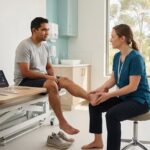
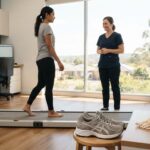
Following the discussion, we perform a non-weight bearing examination. While you’re seated or lying down, we check the range of motion in each joint and assess your muscle strength. This allows us to identify structural issues without the interference of gravity. We then transition to a weight-bearing assessment. By observing how you stand and align yourself while stationary, we can see how your foundation supports your entire body weight. Finally, we conduct a gait analysis. Watching you walk or run allows us to see your mechanics in motion, which is the cornerstone of a thorough biomechanical assessment.
Clinical Testing and Gait Analysis
When we observe your gait, we’re looking for specific markers like stride length and how your foot strikes the ground. These details help us understand if you are absorbing shock correctly. Muscle testing identifies ‘lazy’ or overactive muscles that might be forcing other parts of your body to compensate. We often ask patients to perform functional movements like squats or lunges. These movements highlight how your body manages load and where the kinetic chain might be breaking down. It’s a methodical way to ensure we find the exact cause of your discomfort.
Footwear Assessment: Why Your Shoes Matter
The shoes you wear every day provide a wealth of information about your movement patterns. We encourage you to bring in your most-worn pairs, including work boots, runners, and casual shoes. The wear patterns on your soles serve as a physical ‘map’ of your biomechanics. They show us exactly where you are placing the most pressure and how your foot interacts with the ground. This helps us provide precise advice on footwear selection, ensuring you find the right ‘centre’ of support for your unique foot type. Choosing the correct shoes is an essential part of your journey toward physical freedom.
Conditions Resolved Through Biomechanical Analysis
Identifying the precise cause of discomfort is the only way to move from temporary relief to a permanent solution. For many patients, conditions like plantar fasciitis are more than just heel pain; they are the result of constant mechanical strain on the connective tissue. By using a biomechanical assessment, we can see exactly where the arch is failing and why the fascia is being overstretched. Similarly, Achilles tendonitis often stems from an improper pull of the calf muscles on the heel bone. We look at the way your foot strikes the ground to determine if your tendon is under unnecessary tension with every step.
Chronic issues like shin splints and stress fractures are frequently caused by poor shock absorption on hard Australian surfaces like concrete or bitumen. We analyse your gait to find ways to reduce this impact and protect your bone health. Even structural changes like bunions and hammer toes can be managed more effectively through better alignment. While we cannot always reverse these changes without surgery—as seen in complex corrective procedures discussed by Local Foot Doc—improving how you distribute weight can significantly slow their progression and reduce daily irritation. It’s about providing a safe pair of hands to manage your long term comfort.
Flat Feet and Arch Pain Treatment
It is a common myth that every person with flat feet requires treatment. In our clinic, we focus on ‘dysfunctional’ feet rather than just the height of the arch. If your arch collapse is causing internal rotation or leading toward mid-foot arthritis, intervention becomes necessary. A professional assessment allows us to design custom orthotics for chronic pain that provide the specific medial support your body needs. This tailored approach ensures your feet work efficiently, preventing the ‘wear and tear’ that often leads to joint degradation over time.
Sports Injuries and Performance Optimisation
For those who love to stay active, preventing overuse injuries is the key to consistent training. We help runners and athletes improve their efficiency by identifying subtle imbalances before they lead to a sideline injury. If you are currently dealing with running foot pain, understanding the precise mechanical cause is essential for a safe and lasting recovery. During your biomechanical assessment, we might identify muscle-related issues that would benefit from dry needling to release tension and restore range of motion. This holistic approach combines structural support with functional recovery. If you are ready to return to the activities you love without the constant worry of pain, you can book your biomechanical assessment at Narellan Foot Clinic today. With David J. Miller’s 25 years of experience, you are in expert hands.
Why Choose Narellan Foot Clinic for Your Assessment?
Selecting the right practitioner for your foot health is a decision that impacts your daily comfort and long term mobility. At Narellan Foot Clinic, we’ve spent over 25 years serving the Macarthur community, providing a “safe pair of hands” for those dealing with persistent pain. Principal podiatrist David J. Miller brings decades of clinical experience to every consultation, ensuring that your concerns are met with seasoned expertise. We’ve built our reputation on a patient-centric philosophy where we listen to your story first before moving toward a diagnosis. This empathetic approach helps alleviate the stress often associated with physical discomfort.
Our clinic is committed to using modern, evidence-based techniques to achieve the best possible outcomes. A biomechanical assessment in our rooms isn’t a rushed process. It is a methodical investigation into your unique movement patterns. To make your visit as seamless as possible, we provide on-the-spot HICAPS and Medicare claims. This convenience allows you to focus entirely on your recovery journey rather than worrying about paperwork or delayed rebates. We believe that professional healthcare should be accessible, transparent, and focused on your individual needs.
Custom Orthotics and Personalised Care Plans
We firmly believe that there is no such thing as a ‘one size fits all’ solution in podiatry. Every individual has a distinct gait and structural foundation. If our findings indicate that you require additional support, we specialise in precision-crafted custom orthotics designed to address chronic pain. These devices are designed based on the specific data gathered during your biomechanical assessment to ensure they perfectly complement your foot type. Our commitment to your care continues long after your initial fitting. We provide ongoing support and adjustments to ensure your orthotics continue to provide the comfort and physical freedom you deserve.
Book Your Assessment in Narellan Today
Taking the first step toward a life without foot or leg pain can feel daunting, but you don’t have to navigate it alone. Our friendly and supportive team operates within a fully sterilised clinical environment, prioritising your safety and well-being at every turn. We’ve helped thousands of local residents return to walking, running, and daily activities without the burden of sharp heel pain or aching arches. It’s time to transition from a state of worry to one of ease. Book your biomechanical assessment at Narellan Foot Clinic today and discover the difference that professional, personalised care can make for your health.
Restore Your Mobility and Move Toward Physical Freedom
Understanding the internal mechanics of your body is the most effective way to end the cycle of persistent foot and leg pain. By identifying how your kinetic chain influences every step, a biomechanical assessment provides the structural blueprint needed for long term relief. This process moves you beyond temporary fixes and toward a clear diagnosis that addresses the root cause of your discomfort. Whether you are an active runner dealing with running foot pain or simply want to walk through the day without aching arches, professional intervention is the key to lasting wellness.
With 25 years of clinical experience in Narellan, Principal Podiatrist David J. Miller offers a safe pair of hands for your recovery. Our clinic combines seasoned expertise with the convenience of on-the-spot HICAPS claims, ensuring your path to better health is as smooth as possible. You don’t have to settle for daily discomfort or confusion over your footwear choices. Book your clinical biomechanical assessment with our experienced Narellan team today and take the first step toward a pain free lifestyle. We are here to support your return to full mobility and comfort.
Frequently Asked Questions
How long does a biomechanical assessment take?
A comprehensive biomechanical assessment typically takes between 45 and 60 minutes to complete. This timeframe allows us to discuss your clinical history, perform a physical examination, and conduct a detailed gait analysis while you walk or run. We ensure there is enough time to explain our findings and discuss a personalised treatment plan without you feeling rushed.
What should I wear to my biomechanical appointment?
You should wear comfortable, loose-fitting clothing that allows us to see your knees and ankles clearly, such as shorts or leggings. It’s also vital to bring your most-worn footwear, including your work shoes, casual pairs, and exercise runners. Seeing the wear patterns on your actual shoes provides essential data for our analysis and helps us understand how your feet interact with the ground during your daily activities.
Do I need a GP referral for a biomechanical assessment?
You don’t need a GP referral to book an appointment as a private patient. Most people simply contact us directly to begin their journey toward relief. However, if you are seeking a rebate through a Medicare Chronic Disease Management plan, your GP will need to provide the relevant paperwork before your visit. We suggest checking with your doctor if you have a long term condition that might qualify for this scheme.
Will I definitely need orthotics after the assessment?
Not every patient requires custom orthotics after their evaluation. The goal of the assessment is to find the root cause of your pain, which might be resolved through specific stretching exercises, footwear changes, or dry needling. We only recommend orthotic therapy if we identify a structural or functional issue that cannot be managed effectively through other conservative treatments. Our focus is always on the most efficient path to your recovery.
Can a biomechanical assessment help with knee or hip pain?
Yes, an assessment is often the key to resolving persistent knee or hip discomfort. Because the body works as an interconnected kinetic chain, a misalignment in your feet can force your knees and hips to compensate, leading to strain. By correcting your foundation, we can often reduce the stress on these higher joints and provide lasting relief from pain that hasn’t responded to other local treatments.
Is the cost of the assessment covered by private health insurance?
Most private health insurance plans with “Extras” cover will provide a rebate for your consultation. Because policies vary significantly between providers, we recommend checking your specific level of cover for podiatry services. For your convenience, we offer on-the-spot HICAPS claims, meaning you’ll only need to pay the gap amount at the time of your appointment.
What is the difference between a podiatrist and a physiotherapist for gait analysis?
While both professionals analyse movement, a podiatrist specialises specifically in the intricate structure and function of the foot and ankle. We focus heavily on how the 26 bones and dozens of joints in each foot contribute to your overall alignment. This specialised knowledge is particularly important if your treatment requires custom orthotic therapy, as podiatrists are the primary experts in designing and prescribing these medical devices. The foundation of such clinical expertise is built in quality educational institutions; for instance, you can discover Narowal Medical College to see how medical professionals are being trained to serve their communities.
How often should I have my biomechanics reviewed?
We generally recommend a biomechanical assessment review every 12 to 24 months for most adults to ensure your alignment remains optimal. However, if you are an athlete with a high training volume or if you’re managing a chronic condition, more frequent check-ups might be necessary. Your podiatrist will provide a specific follow-up schedule based on your personalised treatment plan and how quickly your body responds to intervention.


47 Comments
[…] Joey 0 comments […]
[…] thorough biomechanical assessment is the cornerstone of our clinical approach. This detailed evaluation allows us to identify the […]
[…] a meticulous process. It begins long before any manufacturing occurs, starting with a comprehensive biomechanical assessment. This diagnostic phase is where your podiatrist acts as a detective to uncover the specific […]
[…] which can eventually lead to unexplained hip or lower back pain. This is why a comprehensive biomechanical assessment is so important for effective arch pain treatment. We don’t just look at the spot that hurts; […]
[…] expenses. If you’re concerned about your child’s walking pattern, a professional biomechanical assessment is the first step toward a tailored solution. This clinical oversight ensures the devices are […]
[…] help from an experienced podiatrist is the most efficient path to recovery. During a professional consultation, we move beyond just […]
[…] address the underlying mechanical flaws that caused the injury in the first place. This is why a biomechanical assessment is considered the gold standard for any effective plantar fasciitis treatment. It allows us to look […]
[…] 25 years of local experience to every consultation. Before we begin, we perform a comprehensive biomechanical assessment. This allows us to pinpoint exactly which muscles are overworking or dysfunctional. In Australia, […]
[…] persistent pain that lasts longer than two weeks despite your best efforts to rest. A professional biomechanical assessment is the most reliable way to find a solution. It allows a podiatrist to analyse your gait and foot […]
[…] behind the pain. David J. Miller brings over 25 years of clinical experience to every biomechanical assessment, ensuring that your diagnosis is grounded in decades of local expertise. This process is entirely […]
[…] skin heals correctly and stays healthy. Once the immediate pain is resolved, we often recommend a biomechanical assessment to evaluate your gait. This holistic approach ensures that any underlying walking patterns […]
[…] nail growth occurs from the base, not the tip, so this does nothing to help. For those requiring a diabetic foot assessment or those with poor circulation, DIY cutting is particularly dangerous. A small nick can lead to […]
[…] with compromised circulation or underlying health conditions. We strongly recommend a professional diabetic foot assessment for anyone with diabetes who notices nail changes, as what seems like a minor cosmetic issue can […]
[…] cellulitis, a deep skin infection that requires urgent medical attention. During our professional diabetic foot assessments, we prioritise identifying these fungal risks early to prevent avoidable hospitalisations. We act […]
[…] the way you walk is the hidden culprit behind your nail changes. A biomechanical assessment helps us identify if your gait is causing your toes to claw or strike the ground in a way that […]
[…] key part of our service is a thorough biomechanical assessment Narellan patients find incredibly insightful. We analyse your gait and foot structure to see where pressure […]
[…] new pair of walking shoes can alter how pressure is distributed across your feet. In these cases, a biomechanical assessment allows us to analyse your gait and redistribute pressure effectively. This proactive approach […]
[…] callus or blister always appears in the same spot, it’s rarely a coincidence. Often, a biomechanical assessment is needed to reveal how your unique gait is distributing pressure. By addressing the way your foot […]
[…] Simply removing the corn provides temporary relief, but the underlying pressure remains. We use a Biomechanical Assessment to identify these mechanical failures. By understanding the “why” behind the pressure, […]
[…] allows the skin lines to pass through or around it. If you’re struggling to tell them apart, biomechanical assessments provide a professional way to determine if your pain is caused by a pressure-related corn or a […]
[…] more than just deactivating a knot. We always integrate these sessions with a comprehensive biomechanical assessment. This ensures we identify the underlying movement patterns that caused the tension in the first […]
[…] to ask: What are orthotics? At their core, they’re tools to improve function. A professional biomechanical assessment is the essential first step to determine exactly how your alignment needs to be […]
[…] helps us determine if you’re at a higher risk of injury without knowing it. Additionally, a biomechanical assessment is performed to see how your feet and legs move together. We look for gait issues or structural […]
[…] core of a biomechanical assessment is gait analysis. This involves carefully observing you as you walk to identify subtle […]
[…] endure the most daily stress. All these findings are meticulously integrated into a personalised biomechanical assessment report. This document doesn’t just list symptoms; it explains the structural […]
[…] use a biomechanical assessment to create a functional map of your lower limbs. During this stage, we test the flexibility of your […]
[…] in finding the “why” behind your discomfort. This often involves a comprehensive biomechanical assessment to observe your gait and identify misalignments. By using tools like custom orthotics, a podiatrist […]
[…] see a foot doctor aren’t found in the pain you feel, but in the objects you use every day. A biomechanical assessment is a comprehensive clinical process that involves analysing how your bones, muscles, and joints […]
[…] Biomechanical Assessment: A Professional Guide to Foot and Leg Pain Relief involves a comprehensive evaluation of your joint range of motion and muscle strength. We […]
[…] making it harder for them to navigate uneven surfaces or keep up with friends. A detailed biomechanical assessment provides a clear picture of how your child’s feet and legs are working together, helping us build […]
[…] bone to knit, it doesn’t address the reason the bone failed in the first place. This is why a biomechanical assessment is considered the gold standard in modern podiatry. By evaluating your posture, joint range of […]
[…] In contrast, Sever’s pain is located specifically at the back of the heel. A professional biomechanical assessment is vital to ensure your child isn’t following a treatment plan designed for an adult injury. […]
[…] Gait analysis is a vital part of our diagnostic process. We observe how your child stands, walks, and runs to see how their feet interact with the ground. This visual assessment helps us identify alignment issues, such as excessive rolling in or a collapsed arch, that might be placing extra strain on the growth plates. We also check for more subtle factors like leg length discrepancies or pelvic tilts that could be contributing to recurring discomfort. For a deeper look at the technical aspects of this process, you can explore our biomechanical assessment guide. […]
[…] time for a new pair. If you are unsure if your current shoes are still supportive, a professional biomechanical assessment can help identify if your gear is contributing to your […]
[…] and most comprehensive health plans provide a rebate for these devices. However, a professional biomechanical assessment is typically the necessary first step for making an orthotic claim. This assessment allows our […]
[…] chronic heel, knee, or hip pain, the cause might be hidden in your gait. A professional biomechanical assessment is the most effective way to uncover these mechanical inefficiencies. By visiting a podiatrist […]
[…] advanced digital assessment tools to see what the eye misses. This objective data allows for highly specialised biomechanical assessments that transform your subjective discomfort into treatable, measurable […]
[…] Apply your private health benefits towards specialised diagnostic services, such as an in-depth biomechanical assessment to evaluate walking patterns and joint […]
[…] specialised testing beyond a standard review. In these cases, clinicians schedule a dedicated biomechanical assessment to analyse complex lower limb movement […]
[…] unaddressed, returning to sport invariably restarts the pain cycle. Undergoing a detailed clinical biomechanical assessment isolates the precise kinetic dysfunctions driving tissue failure, allowing us to build an […]
[…] child needs orthotics. Narellan Foot Clinic lists biomechanical assessment among its services; its biomechanical assessment guide provides broader context on this type of […]
[…] A biomechanical assessment can examine how your feet and legs move and whether movement factors may be relevant to your symptoms. It doesn’t assume that movement is the cause, but can help inform a personalised discussion about suitable care. Learn more in this biomechanical assessment guide. […]
[…] The physical assessment may include observing how you stand and walk, checking ankle and foot mobility, and considering how the area responds to movement or loading. These findings are considered alongside your symptoms, rather than used in isolation to label a condition or promise a particular treatment. Read more about what a biomechanical assessment involves. […]
[…] a closer look at what this type of assessment involves, read our biomechanical assessment guide. Together, the findings can help a podiatrist discuss suitable next steps, rather than selecting […]
[…] episodes seem connected to how you walk, stand or load your feet, a biomechanical assessment guide explains how foot and lower-limb movement may be considered during an assessment. If recurring […]
[…] more detail on what a structured assessment can involve, read our biomechanical assessment guide. If movement or posture concerns are affecting your routine, a biomechanical assessment in Narellan […]
[…] may need different factors considered from someone seeking advice about a nail concern. This professional guide to biomechanical assessment explains how examining foot mechanics may contribute to understanding certain concerns. The […]